Last updated: October 2026 · Written by Martin Travis
The best way to lower cortisol is to fix what keeps it high: protect your sleep, keep most exercise moderate, have caffeine only in the morning, drink less alcohol, practise slow breathing, get morning daylight and spend time outdoors and with people you trust. No drink, detox or supplement replaces these. If symptoms persist, see your GP.
“Lower your cortisol” is everywhere right now, from cortisol cocktails and cortisol detox plans to warnings about cortisol face and cortisol belly. Some of it is useful and some of it is noise. Here is an honest, UK-focused look at what the research actually shows, what to skip, and when high cortisol is a medical problem rather than a stress problem.
Key takeaways
- Cortisol is a hormone you need. The aim is a healthy daily rhythm, high in the morning and low at night, not crushing it.
- You cannot “detox” cortisol with one drink. The cortisol cocktail is essentially an electrolyte drink, and “cortisol blocker” supplements don’t block cortisol.
- The biggest levers are sleep, sensible exercise intensity, less caffeine late in the day, less alcohol, slow breathing, time outdoors and good company.
- Ashwagandha has small trials showing lower cortisol than placebo, but the FSA is reviewing its safety and it is not for everyone.
- Rounder face, weight around the middle with thin arms and legs, easy bruising and stretch marks together are a reason to see your GP, as they can point to Cushing’s syndrome.
- There is no single normal cortisol level: it depends on the time of day and the lab. Cortisol tests are for diagnosing specific conditions, through your GP, not for checking everyday stress.
General information, not medical advice. Persistent symptoms should be checked by your GP.
What cortisol is and what “high cortisol” means
Cortisol is a hormone made by your adrenal glands. You need it. It follows a daily rhythm: it rises sharply in the first half hour after waking to get you going, then falls through the day so it is low by bedtime. It also rises when you are under pressure, which is a normal and useful part of the fight or flight response.
The problem is not cortisol itself but a rhythm that has gone flat or stays high into the evening, usually because of poor sleep, long-running stress or habits that keep the body on alert. So the goal is not to crush cortisol, but to help it rise and fall the way it should. If you want to understand the wider picture first, our guide to the physical and mental symptoms of stress is a good place to start.
What does high cortisol mean?
People use “high cortisol” to mean two very different things:
- Everyday stress. Cortisol running higher than it should for weeks because of poor sleep, pressure at work, late caffeine or drinking. This is common, it isn’t a diagnosis, and it usually responds to the changes in this guide.
- A medical condition. Cushing’s syndrome, where the body has too much cortisol all the time. The NHS describes it as rare. It is usually caused by long-term, high-dose steroid medicine, and less often by a non-cancerous growth on the pituitary or adrenal glands.
Treatment for medically high cortisol depends on the cause and is led by your GP and a hormone specialist. The NHS lists gradually reducing steroid medicine (when that is the cause), medicine to control how much cortisol the adrenal glands make, surgery or radiotherapy for a growth, and, rarely, removing both adrenal glands. Lifestyle changes don’t treat Cushing’s syndrome, which is why the signs in the testing section are worth knowing.

Our pick
Magnesium Glycinate Sleep Complex
Magnesium Glycinate Sleep Complex is a berry drink powder with 290mg of magnesium a scoop from bisglycinate and citrate, plus glycine and L-theanine. Magnesium contributes to a reduction of tiredness and fatigue.
Add Magnesium Glycinate Sleep Complex to bag See ingredients and reviews
Vegan and made in the UK. Free UK delivery over £45, 14-day returns on unopened items.
Subscribe £22.49One-off £29.99
View productWhat raises cortisol levels?
Most of the things that push cortisol up are everyday ones, and a short rise is normal. It becomes a problem when the triggers stack up day after day, or when a medical cause keeps cortisol high all the time.
| What raises it | What the research or NHS says |
|---|---|
| Acute stress | A review of 208 lab studies found stressful tasks raised cortisol, most of all when they felt out of your control or involved being judged by others. |
| Short or poor sleep | One night of partial or no sleep left evening cortisol 37% to 45% higher the next day. See our guide to sleep deprivation. |
| Hard exercise | Moderate to hard sessions raise cortisol for a short time afterwards. Easy exercise barely moves it. The short rise is a normal part of training. |
| Caffeine | Caffeine raises cortisol, and an afternoon dose pushes it up again even in regular coffee drinkers. |
| Alcohol | Heavier drinking is linked with higher cortisol and a flatter daily rhythm. |
| Crash dieting | In a 3-week trial of 121 women, those restricted to 1,200 calories a day produced more cortisol overall than those eating normally, and counting calories raised how stressed they felt. |
| Serious illness | The body makes more cortisol when it is seriously ill. In one intensive care study, cortisol production was 83% higher than in matched healthy people, and the body cleared it more slowly. |
| Night shift work | A 2026 review of 8 studies found nurses on fixed night shifts had higher cortisol and a disrupted daily rhythm compared with day-shift nurses, although the studies had a high risk of bias. |
| Steroid medicine | Taking high doses of steroid medicine, such as prednisolone, for a long time is the most common cause of Cushing’s syndrome. Never stop steroids without talking to your doctor. |
| Cushing’s syndrome | A rare condition where the body has too much cortisol, sometimes caused by a non-cancerous growth on the pituitary gland. The NHS says it is much more common in women than in men. |
For most people the first six are the ones to work on, and they are covered in the next section. Long-running stress can also show up in other ways, from burnout to changes in cholesterol, and work is a common driver: see stress at work for your options in the UK.
How to lower cortisol: 12 evidence-based ways
These are ranked roughly by how much difference they are likely to make for most people. The first eight have the most direct evidence on cortisol; the last four are useful extras with smaller or less direct effects. The studies behind each one are listed in the sources at the end.
| What | What the research found | Try this |
|---|---|---|
| 1. Sleep | In a lab study, one night of partial or no sleep left evening cortisol 37% to 45% higher the next day, and delayed its night-time drop by at least an hour. | Aim for a regular bedtime and wake time, even at weekends. |
| 2. Exercise intensity | 30 minutes of easy exercise barely moved cortisol, while moderate to hard sessions raised it by about 40% to 83% straight afterwards. That short rise is normal, not harmful. | Make most of your week walking and easy to moderate exercise, and keep hard sessions for days you have slept well. |
| 3. Caffeine timing | Caffeine raised cortisol. Regular coffee drinkers built some tolerance in the morning, but an afternoon dose still pushed cortisol up again. | Keep coffee, energy drinks and strong tea to the morning. |
| 4. Alcohol | In the UK Whitehall II study, cortisol in men rose about 3% for each weekly unit, and heavy drinkers had a flatter daily rhythm. | Have more alcohol-free days and swap the nightcap. |
| 5. Slow breathing and meditation | A review of 45 controlled trials found focused-attention meditation reduced cortisol. An 8-week slow belly-breathing programme lowered cortisol compared with no training. | 5 minutes of slow breathing once or twice a day. |
| 6. Time outdoors in nature | Urban adults who spent 20 to 30 minutes somewhere green saw cortisol fall faster than its normal daily decline. | A lunchtime walk in a park counts. |
| 7. People you trust | Men who had support from a close friend before a stressful task produced less cortisol in response to it. | Talk it through before a big day, not just after. |
| 8. Morning daylight | Light after waking boosts the normal morning cortisol rise, which is the healthy end of the rhythm. | Open the curtains or get outside early; keep evenings dim. |
| 9. Yoga | A meta-analysis of 42 trials found practices that included yoga postures were linked with lower evening and waking cortisol than other active activities, although the programmes varied a lot. | A beginner class or a 20-minute video two or three times a week. |
| 10. Steady eating, not crash diets | Restricting women to 1,200 calories a day for 3 weeks raised their total cortisol output. | Eat regular meals. If you want to lose weight, go slowly. |
| 11. A Mediterranean-style diet | In an 18-month trial of 294 adults (mostly men), both Mediterranean-style diets lowered fasting morning cortisol slightly, while standard healthy-eating advice did not. Nothing had changed at 6 months. | Make vegetables, beans, wholegrains, nuts, olive oil and oily fish your everyday base. |
| 12. Music | A review of 104 trials found music interventions reduced physical signs of stress, including hormone levels, by a modest amount. | 10 to 20 minutes of music you find calming, with your phone put away. |
Sleep comes first
If you only change one thing, make it sleep. Short or broken sleep keeps cortisol higher into the next evening, which then makes it harder to fall asleep: a loop many people recognise. Our sleep hygiene guide covers the practical steps, how to fix your sleep schedule gives a 7-day reset, and if you wake up feeling unrefreshed, see why you might be waking up tired.
Exercise: move more, but don’t punish yourself
The NHS lists being active as one of its top stress busters, and a temporary rise in cortisol after a hard session is part of how training works. The issue is stacking lots of high-intensity sessions on top of poor sleep and a stressful job. If you feel wired and exhausted, swap a couple of hard workouts for walks, cycling or yoga for a few weeks and see how you feel.
Caffeine and alcohol
Both are easy to underestimate. Caffeine later in the day can keep cortisol up into the afternoon; our guide on whether caffeine causes anxiety explains how much is too much, and how long caffeine lasts helps you pick a cut-off time. Alcohol may feel relaxing at the time, but heavier drinking is linked with a less healthy cortisol pattern, and it disturbs sleep too (see alcohol and sleep). If you want a warm evening drink that isn’t wine, our damp lifestyle guide has ideas.
For simple breathing and daily habits that calm a stressed body, see nervous system regulation and breathwork for beginners, and for quick techniques you can use today, see how to relieve stress quickly.
How to lower cortisol fast, and how long it takes
There is no way to flush cortisol out of your body in minutes, and anything promising that is marketing. What you can do quickly is switch off the stress response that is driving it, so your cortisol starts falling on its own.
- Slow breathing. The NHS suggests breathing slowly into your belly, in through the nose for a count of 5 and out for a count of 5, for at least 5 minutes. Our box breathing guide gives another simple pattern.
- Get outside. Even 20 minutes somewhere green is a good reset.
- Talk to someone. A call with a friend before a stressful event is worth more than you would think.
- Skip the extra coffee. Another cup when you are already on edge adds to the load.
- Move gently. A brisk walk or stretching rather than an all-out workout.
How long does it take to lower cortisol?
Think weeks to months, not hours. Sleep works fastest: one bad night raises cortisol the next evening, so a run of good nights can start to help within days. Most of the other studies in this guide ran for longer: the breathing programme for 8 weeks, the ashwagandha trials for 8 to 9 weeks, the omega 3 trial for 4 months, and the Mediterranean diet trial showed no change at 6 months and a small one at 18 months. Give any change at least a month before you judge it.
How to keep cortisol levels low
The aim is not a permanently low level, which would leave you flat and tired, but a healthy rhythm: up in the morning, down by bedtime. A high reading soon after waking is normal, so “how to lower cortisol in the morning” is really about getting the evening right. These daily habits keep the rhythm on track.
- Same wake time every day, weekends included, with daylight soon after waking. Our guide to your circadian rhythm explains why.
- Caffeine in the morning only.
- Move most days, mostly walking or easy to moderate exercise, with hard sessions on days you have slept well.
- Alcohol-free days each week, and no nightcap.
- Five minutes of slow breathing once or twice a day, not only when you feel stressed.
- Time outdoors and with people you trust built into the week.
- Regular meals rather than skipping and bingeing.
- Dim lights and fewer screens in the evening, so the end of the day feels like the end of the day.
If you fall asleep fine but wake in the small hours and can’t drop off again, our guide to middle insomnia looks at why that happens and what to try.
How to lower cortisol in men
The same basics apply. Two findings are worth knowing: in the Whitehall II study the link between alcohol and higher cortisol showed up in men, and in a German stress-test study men showed a bigger rise than women in ACTH, the hormone that tells the adrenal glands to release cortisol. Cutting back on drinking and not stacking hard training on short sleep are good places to start. We have a separate guide to the signs of stress in men and what helps.
Foods that reduce cortisol: what the evidence shows
No food works like a medicine on cortisol. Lists of “cortisol lowering foods” online are mostly educated guesses. Here is what the research actually supports, with an honest rating of how strong it is.
| Food or drink | What the evidence shows | Evidence |
|---|---|---|
| Black tea | In a UCL trial, 75 men who drank black tea four times a day for 6 weeks had lower cortisol after a stressful task than those on a caffeinated placebo drink. | Moderate (one good trial) |
| Mediterranean-style diet | A small fall in morning cortisol after 18 months in a trial of 294 adults, mostly men. | Moderate, small effect |
| Oily fish (omega 3) | A 4-month trial of 138 adults found 2.5g a day of omega 3 supplements gave 19% lower cortisol during a stress test than placebo. Fish itself wasn’t tested. | Some (supplement trial) |
| Vitamin C-rich foods | 3,000mg a day of vitamin C for 14 days helped cortisol recover faster after a stress test, but didn’t shrink the overall rise. That dose is far more than food provides. | Limited |
| Yoghurt, kefir and fermented foods | A review of 46 probiotic trials found a small fall in cortisol, but the evidence was rated low certainty. Foods weren’t tested. | Low |
| Magnesium-rich foods | Spinach, nuts and wholemeal bread are good sources. There is no strong evidence they lower cortisol directly, but magnesium contributes to normal psychological function. | No direct evidence |
| Coffee and energy drinks | Caffeine raises cortisol, especially later in the day. Keep it to the morning. | Raises cortisol |
| Alcohol | Heavier drinking is linked with higher cortisol and a flatter daily rhythm. | Raises cortisol |
| Very low-calorie diets | 1,200 calories a day for 3 weeks raised total cortisol output in women. | Raises cortisol |
| Cortisol cocktail | No evidence it lowers cortisol. See below. | None |
A simple cortisol-friendly day of eating
There is no special “cortisol diet”, but if you want a template built around the evidence above, a day might look like this:
- Breakfast: porridge with berries, nuts and a spoon of yoghurt, with your coffee or tea before midday.
- Lunch: lentil and vegetable soup or a bean salad with olive oil and wholemeal bread.
- Afternoon: fruit and a handful of nuts. Black tea contains caffeine, so have it earlier if you are sensitive.
- Dinner: salmon, mackerel or sardines (or tofu) with greens, potatoes or brown rice.
- Evening: a caffeine-free herbal tea rather than a nightcap.
For more on food sources, see our guides to foods high in magnesium, omega 3, vitamin C and probiotics. If stress sends you to the biscuit tin, sugar cravings and emotional eating explain what is going on.
Supplements to reduce cortisol: what the evidence says
Short answer: no supplement is allowed to claim it lowers cortisol in the UK. Ashwagandha has the most research, with several small 8 to 9 week trials finding lower cortisol than placebo. Omega 3, phosphatidylserine and L-theanine each have one or two small positive trials, and magnesium has no strong evidence for cortisol. The effects are modest, so treat any cortisol supplement as an extra, not the fix.
Supplements work best alongside the basics above rather than instead of them, and none of them is allowed to claim it lowers cortisol in the UK (more on that below). Here is what the research shows for the ones people ask about most.
| Supplement | What trials found | Strength of evidence | Safety notes |
|---|---|---|---|
| Ashwagandha | Several small trials found lower cortisol than placebo after 8 to 9 weeks. A review of 12 trials (1,002 people) found lower stress scores. | The best of the bunch, but rated low certainty | Under FSA safety review: liver, thyroid, pregnancy |
| Phosphatidylserine | In 75 men, 400mg a day with phosphatidic acid for 6 weeks calmed the cortisol response to a stress test, but only in the most chronically stressed. In 10 men, 600mg a day for 10 days lowered the cortisol peak after exercise. | Limited, small trials in men | Check with your GP or pharmacist if you take medication |
| Omega 3 | In 138 adults, 2.5g a day for 4 months gave 19% lower cortisol during a stress test than placebo. | Some, one good trial | Check with your GP or pharmacist if you take medication |
| L-theanine | In 34 adults, a drink based on L-theanine reduced the cortisol response to a stressful task 3 hours later. The drink contained other nutrients too. | Limited | Check with your GP or pharmacist if you take medication |
| Magnesium | No strong evidence it lowers cortisol in healthy people. A review describes a two-way link between low magnesium and stress. | Indirect | Keep supplements to 400mg a day or less |
| Probiotics | A review of 46 trials found a small fall in cortisol, rated low certainty. | Low | Check with your GP or pharmacist if you take medication |
Ashwagandha
Ashwagandha is the herb with the most direct research on cortisol. Several small, placebo-controlled trials in stressed adults have measured it:
- Chandrasekhar and colleagues (2012): 64 adults took 300mg of root extract twice a day for 60 days. Serum cortisol was lower than in the placebo group.
- Salve and colleagues (2019): 60 adults took 250mg or 600mg a day for 8 weeks. Serum cortisol fell in both ashwagandha groups.
- Lopresti and colleagues (2019): 60 adults took 240mg a day for 60 days. Morning cortisol fell more than with placebo.
These trials were small and short, used specific branded extracts, and were mostly run in India. A 2022 review pooling 12 trials found lower stress and anxiety scores than placebo, but rated the certainty of the evidence as low. Herbs like ashwagandha have no authorised health claims in the UK, so we describe the research rather than promise results.
How big are the effects?
Smaller than the “cortisol supplement” adverts suggest. A 2025 review pooled 7 ashwagandha trials that measured cortisol in 488 people: on average cortisol fell by about 1.2 micrograms per decilitre (roughly 32 nmol/L) more than with placebo. That is small next to a normal morning range in the hundreds, and people didn’t clearly report feeling less stressed. A 2026 review of 23 trials (1,706 people) also found lower cortisol, plus a small rise in the thyroid hormone T4: another reason to see your GP first if you have a thyroid condition. Trials mostly used 240mg to 600mg a day; see how much ashwagandha per day.
Ashwagandha safety: the Food Standards Agency asked for evidence on ashwagandha supplements in 2024 and its independent Committee on Toxicity is reviewing the safety data, including effects on thyroid hormones and possible liver effects. The FSA hasn’t published formal consumer advice yet, but while the review continues it told Which? in June 2026 that it would advise people with pre-existing liver conditions and pregnant women to avoid ashwagandha supplements. Liver injury is rare but real: a 2023 Indian case series described 8 people with liver injury from single-ingredient ashwagandha products, and the 3 who already had liver disease died. Speak to your GP first if you have a thyroid or liver condition or take any medication, and stop taking it and get medical advice if your skin or the whites of your eyes turn yellow, your pee is darker than usual or your skin is itchy. Ashwagandha supplements are for adults, not under 18s. We don’t recommend our products during pregnancy or breastfeeding. See ashwagandha side effects and our UK safety review for the detail.
If you decide it suits you, our guide on when to take ashwagandha covers timing, and adaptogens for energy compares the other popular options. We also look at the research on ashwagandha for men, ashwagandha for women and ashwagandha and sleep.
Magnesium
There is no strong evidence that magnesium supplements lower cortisol in healthy people, so we won’t claim it. What is established is that magnesium contributes to normal psychological function, to the normal functioning of the nervous system and to a reduction of tiredness and fatigue. The NHS says adults need 270mg (women) to 300mg (men) a day, mostly from food, and that 400mg a day or less from supplements is unlikely to cause harm. Read more in magnesium for anxiety, magnesium glycinate and magnesium for sleep.
Omega 3, L-theanine and phosphatidylserine
These three turn up in a lot of “cortisol support” blends. Each has one or two promising trials, summarised in the table above, but nothing like the evidence you would want before relying on them. Omega 3 is the easiest to get from food: the NHS recommends at least 2 portions of fish a week, including 1 of oily fish. Our guide to L-theanine covers its wider research.
Our products
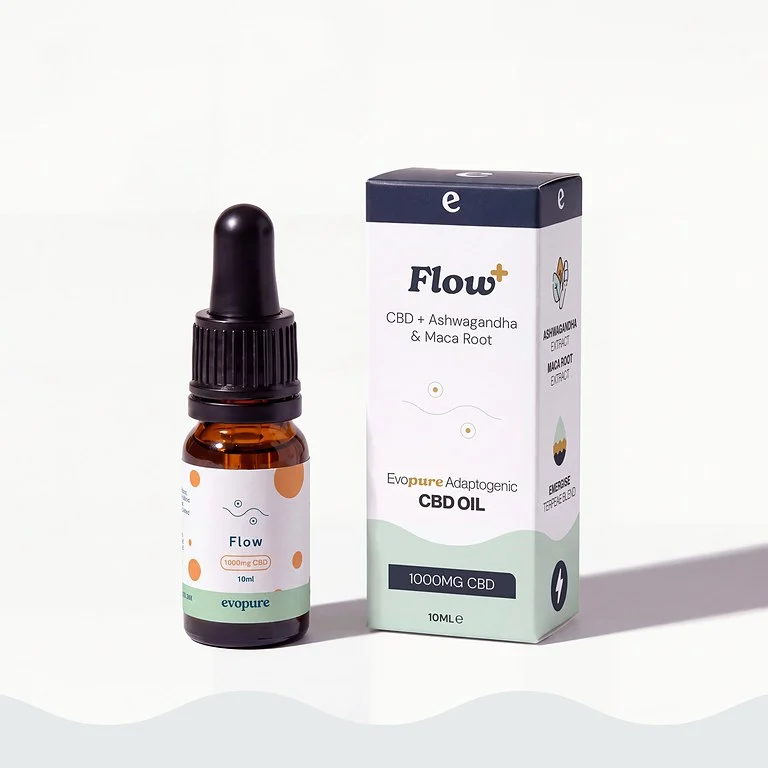
None of our products is a cortisol blocker, and we don’t claim any of them lowers cortisol. If you want to build an evening routine around the basics, these are the products people most often ask us about. Our Magnesium Glycinate Sleep Complex combines magnesium bisglycinate and citrate with glycine, L-theanine, chamomile, passionflower, hops and oat straw, and magnesium contributes to normal psychological function and to a reduction of tiredness and fatigue. Our Reishi Mushroom Adaptogenic Complex is a reishi hot chocolate made with cacao, a warm alternative to an evening glass of wine; it contains a little natural caffeine from the cacao, so have it earlier in the day if you are sensitive. Our Flow CBD Oil blends broad spectrum CBD with ashwagandha and maca in MCT oil; because it contains ashwagandha, the safety points above apply to it too. CBD isn’t a treatment for stress or any condition.
The FSA’s 10mg a day figure is precautionary advice rather than a legal limit, set while longer-term safety research continues. At Evopure we think it is a very cautious figure, and many adults use more. If you go above it, increase slowly, and check with your GP or pharmacist first if you take any medication.
All our products are for adults (18+) only. We don’t recommend our products during pregnancy or breastfeeding.
For trial-by-trial detail on each one, including KSM-66 and Sensoril, rhodiola and vitamin C, see our guide to the supplements to lower cortisol and who should avoid them.
Cortisol blockers, cortisol detox and the cortisol cocktail
What is a cortisol blocker?
Supplements sold as “cortisol blockers” are usually blends of the ingredients in the table above, such as ashwagandha, phosphatidylserine, magnesium, L-theanine or holy basil. Despite the name, they don’t block cortisol. The evidence for each ingredient is limited, and a blend is rarely tested as a whole.
In Great Britain, food supplements can only make health claims that appear on the government’s register of authorised claims. That register contains no authorised claim about lowering cortisol, and claims such as magnesium helping “resistance to mental stress” and L-theanine for “alleviation of psychological stress” have been rejected. So treat any “cortisol blocker” label as marketing, not a promise.
Real cortisol-lowering medicines do exist, but they are prescription-only and used by hormone specialists to treat Cushing’s syndrome, alongside surgery and other treatments chosen for each patient, with regular blood tests. They aren’t used for everyday stress. If you are worried that your cortisol is genuinely high, see your GP rather than buying a blocker.
Does a cortisol detox work?
You can’t “detox” cortisol. Your body breaks cortisol down and clears it all the time, and there is no food, tea, patch or cleanse shown to speed that up. Most cortisol detox plans and diet plans are a mix of sensible habits (more sleep, regular meals, less caffeine and alcohol) and supplements or products with little evidence. Keep the habits and skip the rest. Be wary of any plan built on very low calories: in the 1,200-calories-a-day trial above, cortisol went up, not down. For a “cortisol detox diet plan”, use the cortisol-friendly day of eating above instead. Thinking of a test kit to check? Read what home cortisol tests can tell you first.
Does the cortisol cocktail work?
The viral cortisol cocktail is usually orange juice, coconut water, a pinch of salt and cream of tartar. It is essentially a pleasant electrolyte drink. There is no good evidence that it lowers cortisol. It is harmless for most people, but do not expect it to do the heavy lifting. For the recipe, a lower-sugar version and who should avoid it, see our full guide to the cortisol cocktail.
How to reduce cortisol levels in women
There isn’t a separate method for women: the same basics work. A few points are worth knowing.
- Your cycle. In a German study of 81 adults, women’s saliva cortisol response to a stress test was higher in the second half of the cycle (the luteal phase), similar to men’s, and lower in the first half and in women on the pill. Total blood cortisol didn’t differ, so this is about how much “free” cortisol is active, not a reason to time your life around your cycle. If you notice stress hits harder before your period, that may be part of it; see insomnia before your period and whether stress can delay your period.
- Perimenopause and menopause. The NHS lists trouble sleeping, anxiety, low mood and weight gain around the stomach as common symptoms. These overlap with what social media calls “high cortisol”, so falling hormones rather than cortisol may be the main driver. Our guides to perimenopause symptoms and perimenopause and sleep cover what helps, and your GP can talk you through options such as HRT.
- Cushing’s syndrome is much more common in women than in men, so changes such as irregular or stopped periods, a rounder face or weight building on the tummy with thinner arms and legs should be checked by your GP rather than put down to stress.
For the full list of signs, see high cortisol symptoms in women, and for a puffy or rounder face, see cortisol face: what it is and what it isn’t.
iIf you are pregnant or breastfeeding, stick to the lifestyle basics and speak to your midwife, GP or pharmacist before taking any supplement. We don’t recommend our products during pregnancy or breastfeeding.
Does cortisol cause belly fat or weight gain?
Partly, but less than social media suggests. “Cortisol belly” is a label, not a diagnosis. There is a real link between cortisol and where fat is stored: in one study of 59 women, those who carried more weight around the middle released more cortisol under repeated stress and got less used to it. But that study shows an association, and most weight around the middle comes down to the usual factors: diet, activity, sleep, alcohol, age and, for women, the hormonal changes of menopause. Very high cortisol from Cushing’s syndrome or long-term steroid medicine does cause weight gain, which is why that pattern needs a GP.
So the honest answer to “how do I lower cortisol to lose belly fat” is the same list as above. Better sleep, less alcohol, regular movement including some strength work and steadier eating help both your stress levels and your waistline. No supplement melts belly fat. We go into the detail in cortisol belly: is it real and what actually helps, and sleep and weight loss explains why short sleep makes weight harder to shift. If you are in perimenopause or menopause, our guide to menopause weight gain goes further.
iThe exception: if weight is building up on your tummy, upper back and face while your arms and legs get thinner, see your GP, as that pattern is a sign of Cushing’s syndrome.
Signs of high cortisol, testing and normal ranges
Terms like cortisol face and cortisol belly are social-media labels, not diagnoses. Feeling stressed, tired and wired is not the same as a medical cortisol problem. Genuinely high cortisol from a medical cause is uncommon, but it does exist, and it is called Cushing’s syndrome. The NHS lists these signs, which usually develop gradually:
- more fat on the neck, upper back, chest and tummy, with thinner arms and legs
- a red, round face
- bruising easily, and stretch marks on the tummy, hips, breasts and under the arms
- muscle weakness, especially in the upper arms and legs
- low sex drive, mood changes such as irritability, anxiety or low mood
- irregular or stopped periods, and excess hair growth
The most common cause is taking high-dose steroid medicine, such as prednisolone, for a long time. Less often it is a non-cancerous growth on the pituitary or adrenal glands. See your GP if you have these symptoms, particularly if you take steroids. Do not stop taking steroid medicine without talking to your doctor first.
Can cortisol levels be tested?
Yes, if your GP thinks a hormone condition could be behind your symptoms. On the NHS, cortisol is tested to look for a specific condition, not to measure everyday stress.
- Suspected Cushing’s syndrome (too much cortisol). Your GP can arrange for cortisol to be checked in a sample of your blood, urine or saliva. If it is high, you may be referred to a hormone specialist (endocrinologist) for further tests, which can include blood tests and scans.
- Suspected Addison’s disease (adrenal glands not making enough hormones). This is also rare. Your GP will refer you to a specialist, who may do a Synacthen test, where blood samples are taken before and after an injection to see how well your adrenal glands are working.
How to measure cortisol levels
Because cortisol changes hour by hour, doctors don’t rely on a single random blood test to look for Cushing’s syndrome. Specialist guidance recommends starting with one of these:
- A urine test, usually collecting all your urine over 24 hours to measure the total cortisol you make in a day.
- A late-night saliva test, taken at a set time when cortisol should be at its lowest.
- A dexamethasone suppression test, where cortisol is checked after a dose of a steroid tablet that should switch your own production down.
One test is rarely the whole story. The same guidance recommends that anyone with an abnormal result sees an endocrinologist and has a second, different test. Saliva tests used by hospitals are read against that lab’s own reference value.
Is a cortisol test kit worth it?
For most people, no. Home saliva kits sold online are not how the NHS diagnoses a cortisol condition. Cortisol moves hour by hour, and a bad night, a coffee or a stressful morning can all push it up, so one home reading can’t tell you whether something is wrong, and a “high” result on its own is not a diagnosis. If you are worried, start with your GP, and take a list of your symptoms and any medicines you use, including steroids.
Even hospitals confirm an abnormal result with a second, different test, so one kit result is not enough to act on. If a kit says your cortisol is “low”, don’t take anything to raise it. Genuinely low cortisol (Addison’s disease) is rare. See your GP if you have extreme tiredness, weight loss, dizziness when you stand up, darker patches of skin or cravings for salty food, and call 999 if those symptoms suddenly get much worse. If what you are really feeling is tired, wired and on edge, our guide to stress symptoms is a better starting point than a test.
Cortisol levels range: what is normal?
There isn’t one normal cortisol level. What counts as normal depends on the time of day the sample was taken and on the lab that tests it. Blood cortisol is highest in the morning, soon after waking, and falls through the day, so a morning result and an afternoon result are judged against different ranges. NHS labs make this point themselves: University Hospitals Sussex says the time of the sample must be taken into account because of cortisol’s daily rhythm.
To show how much ranges vary, here are two NHS lab examples for blood (serum) cortisol. They are for illustration only and are not a way to check your own result.
| NHS lab | Sample time | Reference range |
|---|---|---|
| University Hospitals Sussex | Morning (6am to 10am) | 133 to 537 nmol/L |
| University Hospitals Sussex | Afternoon (4pm to 8pm) | 68 to 327 nmol/L |
| Worcestershire Acute Hospitals | 9am | 185 to 624 nmol/L |
Labs can use different testing methods and set their own ranges, so a number that is normal at one lab may sit outside the range at another. Your doctor reads your result against the range on your own lab report, alongside your symptoms and the time the sample was taken. Cortisol tests are ordered by doctors when they suspect a specific condition such as Cushing’s syndrome or Addison’s disease, not as a general stress check.
For more on the symptoms people search for, see high cortisol symptoms in women and cortisol face. If stress has been building for months and you feel empty or detached, read our guide to burnout symptoms too.
Related guides
- Adrenal fatigue symptoms and what’s really going on.
- Stress, cortisol and emotional eating.
- Does holy basil lower cortisol?
- Cortisol belly: is it real and what actually helps.
- Cortisol has a flip side: see happy hormones for the habits that support dopamine, serotonin, oxytocin and endorphins.
- Walking is an easy place to start. See Japanese walking: how to do it and a 4-week plan.
- For a simple week of daily habits to start with, follow our Stress Awareness Week 5-day plan.
- Ashwagandha or magnesium for cortisol and stress.
- Whether stress raises your cholesterol.
- What the ashwagandha sleep trials found.
- Yoga nidra: a step-by-step script for a gentle way into yoga.
- For the cortisol and stress-scale results from ashwagandha trials, and which extract they used, see does ashwagandha help with anxiety?
- Wondering whether reishi lowers cortisol? The one human trial that measured it found no change; see does reishi make you sleepy or calm.
- For the cortisol trials and the safety caveats, see what ashwagandha does.
- Want a goal for November? See what Movember is and how to do it in 2026.
- Thinking about CBD as part of a calmer routine? Our guide to the best CBD oil for anxiety in the UK covers what to check before you buy and how to choose by time of day.
- Lion’s mane and reishi are often marketed for stress; our guide to mushrooms for anxiety sets out how limited the human evidence is.
- If you try ashwagandha, see how long it takes to work and how long it stays in your system.
Sources 49
- NHS. Cushing’s syndrome.
- NHS. 10 stress busters.
- NHS. Addison’s disease.
- NHS. Symptoms of menopause and perimenopause.
- University Hospitals Sussex Pathology. Cortisol (serum).
- Worcestershire Acute Hospitals NHS Trust. Cortisol.
- Leeds Teaching Hospitals NHS Trust. Cortisol (and cortisone) in saliva.
- Department of Health and Social Care. Great Britain nutrition and health claims (NHC) register.
- Nieman LK et al (2008). The diagnosis of Cushing’s syndrome: an Endocrine Society Clinical Practice Guideline. J Clin Endocrinol Metab.
- Nieman LK et al (2015). Treatment of Cushing’s syndrome: an Endocrine Society Clinical Practice Guideline. J Clin Endocrinol Metab.
- Dickerson SS, Kemeny ME (2004). Acute stressors and cortisol responses: a theoretical integration and synthesis of laboratory research. Psychol Bull.
- Boonen E et al (2013). Reduced cortisol metabolism during critical illness. N Engl J Med.
- Go UR, Choi H (2026). Effects of shift work on cortisol levels among nurses: a systematic review. Psychol Health Med.
- NHS. Steroids.
- NHS. Breathing exercises for stress.
- NHS. Vitamins and minerals: others (magnesium).
- NHS. Fish and shellfish.
- Food Standards Agency. Summary of responses to call for evidence on ashwagandha.
- Which? (2026). Ashwagandha: stress buster or health risk? (includes the FSA’s statement).
- Leproult R et al (1997). Sleep loss results in an elevation of cortisol levels the next evening. Sleep.
- Hill EE et al (2008). Exercise and circulating cortisol levels: the intensity threshold effect. J Endocrinol Invest.
- Lovallo WR et al (2005). Caffeine stimulation of cortisol secretion across the waking hours in relation to caffeine intake levels. Psychosom Med.
- Badrick E et al (2008). The relationship between alcohol consumption and cortisol secretion in an aging cohort. J Clin Endocrinol Metab.
- Pascoe MC et al (2017). Mindfulness mediates the physiological markers of stress: systematic review and meta-analysis. J Psychiatr Res.
- Pascoe MC, Thompson DR, Ski CF (2017). Yoga, mindfulness-based stress reduction and stress-related physiological measures: a meta-analysis. Psychoneuroendocrinology.
- Ma X et al (2017). The effect of diaphragmatic breathing on attention, negative affect and stress in healthy adults. Front Psychol.
- Hunter MR et al (2019). Urban nature experiences reduce stress in the context of daily life based on salivary biomarkers. Front Psychol.
- Heinrichs M et al (2003). Social support and oxytocin interact to suppress cortisol and subjective responses to psychosocial stress. Biol Psychiatry.
- Thorn L et al (2004). The effect of dawn simulation on the cortisol response to awakening in healthy participants. Psychoneuroendocrinology.
- de Witte M et al (2020). Effects of music interventions on stress-related outcomes: a systematic review and two meta-analyses. Health Psychol Rev.
- Tomiyama AJ et al (2010). Low calorie dieting increases cortisol. Psychosom Med.
- Alufer L et al (2023). Long-term green-Mediterranean diet may favor fasting morning cortisol stress hormone; the DIRECT-PLUS clinical trial. Front Endocrinol.
- Steptoe A et al (2007). The effects of tea on psychophysiological stress responsivity and post-stress recovery. Psychopharmacology.
- Madison AA et al (2021). Omega-3 supplementation and stress reactivity of cellular aging biomarkers: an ancillary substudy of a randomized, controlled trial in midlife adults. Mol Psychiatry.
- Brody S et al (2002). A randomized controlled trial of high dose ascorbic acid for reduction of blood pressure, cortisol, and subjective responses to psychological stress. Psychopharmacology.
- Jain M et al (2024). Effect of probiotics supplementation on cortisol levels: a systematic review and meta-analysis. Nutrients.
- Epel ES et al (2000). Stress and body shape: stress-induced cortisol secretion is consistently greater among women with central fat. Psychosom Med.
- Kirschbaum C et al (1999). Impact of gender, menstrual cycle phase, and oral contraceptives on the activity of the hypothalamus-pituitary-adrenal axis. Psychosom Med.
- Chandrasekhar K et al (2012). A prospective, randomized double-blind, placebo-controlled study of safety and efficacy of a high-concentration full-spectrum extract of ashwagandha root. Indian J Psychol Med.
- Salve J et al (2019). Adaptogenic and anxiolytic effects of ashwagandha root extract in healthy adults. Cureus.
- Lopresti AL et al (2019). An investigation into the stress-relieving and pharmacological actions of an ashwagandha extract. Medicine (Baltimore).
- Albalawi AA (2025). Dual impact of ashwagandha: significant cortisol reduction but no effects on perceived stress: a systematic review and meta-analysis. Nutr Health.
- Fornalik M et al (2026). Hormonal modulation with Withania somnifera: systematic review and meta-analysis of randomized-controlled trials. Planta Med.
- Akhgarjand C et al (2022). Does ashwagandha supplementation have a beneficial effect on the management of anxiety and stress? A systematic review and meta-analysis of randomized controlled trials. Phytother Res.
- Philips CA et al (2023). Ashwagandha-induced liver injury: a case series from India and literature review. Hepatol Commun.
- Hellhammer J et al (2014). A soy-based phosphatidylserine/phosphatidic acid complex (PAS) normalizes the stress reactivity of hypothalamus-pituitary-adrenal-axis in chronically stressed male subjects. Lipids Health Dis.
- Starks MA et al (2008). The effects of phosphatidylserine on endocrine response to moderate intensity exercise. J Int Soc Sports Nutr.
- White DJ et al (2016). Anti-stress, behavioural and magnetoencephalography effects of an L-theanine-based nutrient drink. Nutrients.
- Pickering G et al (2020). Magnesium status and stress: the vicious circle concept revisited. Nutrients.
This guide is general information, not medical advice.