

















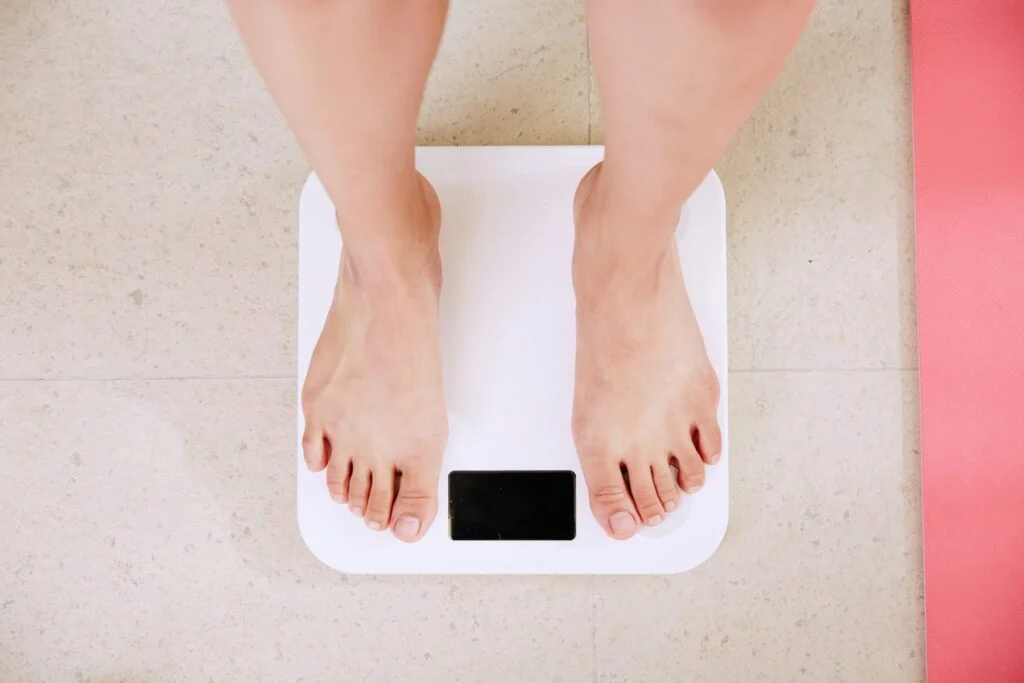
Last updated: October 2026
Yes, sleep and weight are closely linked. Short or poor sleep raises hunger hormones, boosts cravings for high-calorie food, gives you more late-night hours to snack and leaves you too tired to be active. Better sleep won’t melt fat on its own, but it makes eating well and moving more easier. Most adults need 7 to 9 hours.
Below: the research, how poor sleep changes appetite, sleep apnoea and weight-loss injections, a practical plan, and an honest look at supplements and teas.
A kinder way to look at it: weight is shaped by many things, including genes, health conditions, medicines, hormones, money and time. If poor sleep is making your weight harder to manage, that isn’t a failure of willpower. Sleep is worth looking after for its own sake.
Does sleep affect weight? What the research shows
The link is consistent, though much of the evidence shows an association rather than proof of cause.
- Short sleepers are more likely to live with obesity. A University of Warwick meta-analysis of more than 600,000 people found short-sleeping adults had about 55% higher odds of obesity, though the authors noted cause and effect is hard to prove (Cappuccio, 2008).
- Short sleep makes people eat more. A King’s College London review of controlled studies found people ate about 385 extra calories a day after partial sleep loss, with no matching rise in the calories they burned (Al Khatib, 2017).
- Sleeping more can mean eating less. In a trial of 80 adults with overweight who usually slept under 6.5 hours, one sleep-hygiene coaching session added about 1.2 hours a night. With no diet advice, they ate about 270 fewer calories a day than the comparison group and lost a little weight (Tasali, 2022).
Put simply: poor sleep tilts the odds towards weight gain, and better sleep removes a hidden obstacle.
Why poor sleep affects your weight
Several things change at once when you’re short on sleep:
| Hormone or behaviour | What happens with short sleep | Source |
|---|---|---|
| Ghrelin (the “I’m hungry” hormone) | Rose by 28% after two days of short sleep | Spiegel, 2004 |
| Leptin (the “I’m full” hormone) | Fell by 18% | Spiegel, 2004 |
| Hunger and appetite | Hunger up 24%; appetite for calorie-dense, starchy and sugary foods up 33 to 45% | Spiegel, 2004 |
| Food choices in the brain | Decision-making areas quietened while the amygdala became more reactive, and people wanted more high-calorie foods | Greer, 2013 (Nature Communications) |
| Total calories eaten | About 385 kcal a day more, with no real change in calories burned | Al Khatib, 2017 |
| Late-night snacking | Extra eating after dinner; average gain of 0.8kg over a five-night “work week” of short sleep | Markwald, 2013 |
| Fat lost while dieting | 55% less fat lost on the same diet with 5.5 hours in bed instead of 8.5 | Nedeltcheva, 2010 |
Being awake longer does burn a little more energy (about 5% more in one study), but people ate more than enough to cancel it out (Markwald, 2013). Tiredness matters too: when you’re running on empty, exercise is the first thing to go and a sugary snack feels like the answer. See why sugar cravings happen and emotional eating.
Stress often sits in the middle, which is why “cortisol belly” gets so much attention online. For the wider effects of short nights, see sleep deprivation: symptoms and effects.
Sleep while you’re trying to lose weight
If you’re already eating less, sleep may affect what you lose. In one controlled study, 10 adults with overweight followed the same reduced-calorie diet for two weeks, once with 8.5 hours in bed and once with 5.5 hours (Nedeltcheva, 2010):
- With more sleep, they lost 1.4kg of fat. With less sleep, only 0.6kg.
- With less sleep, more of the weight lost came from lean tissue (2.4kg vs 1.5kg).
- They also felt hungrier on short sleep.
It was a small, short study, so treat the numbers with caution. But cutting sleep to fit in early gym sessions or late work can work against your efforts.
If you’ve built up a backlog of short nights, see sleep debt and how to recover. During the menopause, poor sleep and weight changes often arrive together: see menopause weight gain.
How much sleep do you need?
The NHS says adults need 7 to 9 hours a night on average. There’s no special “weight-loss” number; the aim is enough good-quality sleep that you don’t feel constantly tired during the day, which the NHS describes as a sign you’re probably not getting enough.
More isn’t always better. If you regularly sleep well beyond 9 hours and still wake tired, mention it to a GP rather than treating long sleep as a goal. Consistency matters as much as hours: a regular bedtime and wake time keeps your body clock steady. See how to reset your circadian rhythm.
Sleep apnoea and weight
Obstructive sleep apnoea is when your airway narrows during sleep, so your breathing stops and starts. The NHS lists obesity, a large neck, alcohol, smoking and sleeping on your back among the things linked to it. Signs include loud snoring, gasping at night and daytime exhaustion.
The NHS says sleep apnoea can sometimes be treated with lifestyle changes like losing weight, stopping smoking and cutting down on alcohol, and that these may be all you need if it’s mild. Many people also need a CPAP machine, free on the NHS if you need it.
Untreated sleep apnoea is linked to high blood pressure, stroke and type 2 diabetes, so see a GP rather than waiting it out. See our guide to sleep apnoea symptoms, tests and treatment.
Weight-loss injections and sleep
Many people now search for the “best GLP-1 for weight loss and sleep apnoea”. That’s a question for your GP or specialist, not a website. The NHS describes weight-loss medicines called GLP-1 and GIP agonists, such as semaglutide, tirzepatide and liraglutide, which reduce appetite and help you feel fuller for longer. They’re prescription-only, given alongside diet and activity advice.
The NHS lists sleep apnoea among the reasons to see a GP about your weight, so if you snore heavily or wake exhausted, mention it. If you get a private prescription, the NHS advises buying only from a registered pharmacy, as fake weight-loss medicines are sold online. Feeling tired is a listed common side effect of tirzepatide: see sleep problems on weight-loss injections.
A 7-step plan for better sleep and a healthy weight
- Keep the same wake time every day. The NHS suggests keeping your routine the same, even on days off.
- Get daylight early. Time outside soon after you wake helps set your body clock, so you feel sleepy at the right time at night.
- Finish your main meal 2 to 3 hours before bed. The NHS advises against a big meal late at night. A small, light snack is fine if you’re hungry. See is eating before bed bad?
- Watch the evening drinks. Alcohol may help you nod off, but it fragments sleep and adds calories. The NHS advises avoiding alcohol and caffeine in the hours before bed. See alcohol and sleep.
- Set a caffeine cut-off. Caffeine lingers for hours. Keep tea, coffee and energy drinks to the morning and early afternoon.
- Build a wind-down. The NHS suggests relaxing for at least an hour before bed. Try low light, no work emails and something calming: a bath, a book, stretching or breathing. Our 60-minute bedtime routine for adults walks you through it.
- Move in the day. The NHS recommends regular exercise during the day for better sleep. Even a daily walk counts.
Be patient with yourself. The NHS advises aiming to lose weight steadily, about 0.5 to 1kg a week, and reminds people that changing habits takes time.
Best supplement, tea or hot chocolate for sleep and weight loss?
Honest answer: no supplement, tea or hot chocolate causes weight loss. At best, they make an evening routine more enjoyable.
- Magnesium: reviews of around 30 trials found no meaningful effect on body weight overall. See does magnesium help with weight loss?
- CBD: there’s no good evidence that CBD at everyday amounts helps you lose weight. See CBD for weight loss: what the research says.
- Berberine: popular online for weight loss, but average losses in trials are small and it interacts with many medicines, so speak to a GP or pharmacist first. See berberine: benefits, weight loss claims and side effects.
- Herbal teas: caffeine-free teas such as chamomile are a calorie-free swap for a late snack or glass of wine.
- Hot chocolate: a cosy ritual, but most contain sugar and a little caffeine from cocoa. Enjoy it as a treat.
- Sleep meditation and hypnosis: guided audio can help some people switch off, but we haven’t found good evidence that a hypnosis track causes weight loss.
Our two evening products are made for a wind-down ritual. Neither is a weight-loss product.
Our Magnesium Glycinate Sleep Complex combines magnesium bisglycinate and citrate with glycine, L-theanine, chamomile, passionflower, hops and oat straw. Magnesium contributes to the reduction of tiredness and fatigue and to normal psychological function.
Our Reishi Mushroom Adaptogenic Complex is a reishi hot chocolate made with reishi mushroom extract, cacao, maca, coconut milk powder and coconut sugar. Cacao contains a little natural caffeine, so it isn’t caffeine-free, and the coconut sugar makes it a treat to enjoy, not a weight-loss drink.
When to see a GP
- You snore loudly, stop breathing or gasp at night, or feel very tired every day.
- You’ve had trouble sleeping for weeks and it’s affecting your daily life.
- You’d like help to lose weight, or your weight is affecting conditions such as diabetes, blood pressure or joint pain.
- You’ve gained or lost weight without trying.
- Your relationship with food feels out of control, for example regular binge eating.
A GP can check for causes such as sleep apnoea or medicine side effects, and refer you to NHS weight management support.
For an easy, well-studied walking routine, see Japanese walking.
FAQs
Does sleep help you lose weight?
Not on its own, but it helps. Enough sleep keeps hunger hormones steadier, reduces cravings and late-night snacking, and gives you energy to stay active. In one trial, people who slept about an hour longer ate around 270 fewer calories a day.
Can lack of sleep cause weight gain?
It can contribute. Short sleep raises ghrelin, lowers leptin and increases appetite for high-calorie food. Studies show people eat more when sleep-deprived, and short sleepers are more likely to live with obesity, although weight has many causes.
How many hours of sleep do I need to lose weight?
There’s no special number for weight loss. The NHS says adults need 7 to 9 hours on average. Aim for enough sleep that you wake refreshed, at regular times.
Do you burn fat while you sleep?
Your body keeps using energy overnight to breathe, repair and keep you warm, but sleep isn’t a fat-burning hack. Its real value is making the next day’s hunger, food choices and energy easier to manage.
Does losing weight help sleep apnoea?
It can. The NHS says sleep apnoea can sometimes be treated with lifestyle changes like losing weight, stopping smoking and drinking less alcohol, though many people also need a CPAP machine. See a GP if you think you have it.
What is the best supplement for sleep and weight loss?
No supplement causes weight loss. Magnesium contributes to the reduction of tiredness and fatigue and can be part of an evening routine, but the foundations are regular sleep, balanced meals and daily activity.
Sources
- Spiegel K et al (2004). Sleep curtailment in healthy young men is associated with decreased leptin levels, elevated ghrelin levels, and increased hunger and appetite. Annals of Internal Medicine.
- Cappuccio FP et al (2008). Meta-analysis of short sleep duration and obesity in children and adults. Sleep.
- Nedeltcheva AV et al (2010). Insufficient sleep undermines dietary efforts to reduce adiposity. Annals of Internal Medicine.
- Markwald RR et al (2013). Impact of insufficient sleep on total daily energy expenditure, food intake, and weight gain. PNAS.
- Greer SM et al (2013). The impact of sleep deprivation on food desire in the human brain. Nature Communications.
- Al Khatib HK et al (2017). The effects of partial sleep deprivation on energy balance: a systematic review and meta-analysis. European Journal of Clinical Nutrition.
- Tasali E et al (2022). Effect of sleep extension on objectively assessed energy intake among adults with overweight in real-life settings: a randomized clinical trial. JAMA Internal Medicine.
- NHS. Sleep apnoea.
- NHS. Overweight and obesity in adults.
- NHS. Insomnia.
- NHS. Tirzepatide.
This guide is general information, not medical advice. Evopure makes the Magnesium Glycinate Sleep Complex and the Reishi Mushroom Adaptogenic Complex.






















