Last updated: 13 November 2026
Stress can raise your risk of a stroke, but it is rarely the only cause. In the large INTERSTROKE study, people who reported stress at home or at work had about two to almost three times the odds of a stroke. Stress is thought to act partly through blood pressure and habits such as smoking, drinking and poor sleep.
Below: what the research actually found, how stress and blood pressure fit together, the main UK stroke risk factors, how to spot a stroke or a mini-stroke (TIA), how to tell it apart from a panic attack, and the NHS steps that lower your risk. This is general information, not medical advice.
Call 999 straight away if you notice any sign of a stroke: a face that has dropped on one side, weakness in one arm, or slurred or muddled speech. Call 999 even if the symptoms stop after a few minutes, as that can be a TIA (mini-stroke). Do not drive yourself to A&E.
Can stress cause a stroke?
Stress is not known to cause a stroke directly. A stroke happens when the blood supply to part of the brain is cut off by a clot or a bleed. What studies show is that people under long-term stress have strokes more often, partly because stress raises blood pressure and makes unhealthy habits more likely.
The Stroke Association explains it simply: feeling stressed can raise your blood pressure for a short time, and it usually goes back to normal when you relax. But if you are stressed often, you may eat less healthily, drink more alcohol or lose sleep, and over time those things can lead to high blood pressure. High blood pressure is the biggest single risk factor for stroke and plays a part in about half of all strokes.
The NHS also lists “feeling stressed over a long period” among the things that raise your risk of high blood pressure. Our guide to whether stress causes high blood pressure covers that link in detail.
What the INTERSTROKE study found
INTERSTROKE is one of the largest studies of what raises stroke risk. Researchers compared 13,462 people who had just had a first stroke with 13,488 similar people who had not, across 32 countries, recruited between 2007 and 2015.
The main 2016 analysis in The Lancet found that ten risk factors people can change accounted for about 90% of the population risk of stroke. High blood pressure was the biggest. “Psychosocial factors”, a group that included stress and low mood, were also on the list, and the researchers estimated they were linked to about 17% of strokes in the study population.
A 2022 analysis of the same study looked at stress in more detail. Compared with people who reported no stress:
| What people reported | Odds of a stroke | In plain English |
|---|---|---|
| More stress at home | 1.95 | About twice the odds |
| More stress at work | 2.70 | Almost three times the odds |
| A stressful life event in the past year | 1.31 | About a third higher |
| Feeling more in control at home | 0.73 | About a quarter lower |
People who felt more in control of their life at home and at work had lower odds of stroke, and the link between stress and stroke was weaker in that group. The researchers suggested this sense of control may be worth targeting.
How strong is the evidence?
It is a link, not proof of cause. INTERSTROKE asked people about stress after their stroke, so memory and mood may colour the answers, and stressed people may differ in ways a study cannot fully measure. Even so, the findings fit with a 2015 review of 14 studies, 10 of which followed people forward in time, which found stress was linked to about a third higher risk of stroke overall.
A separate INTERSTROKE analysis looked at the hour before a stroke. Being angry or emotionally upset in that hour was linked to about 37% higher odds of a stroke, compared with the same time on the day before. That is a short-term trigger on top of underlying risk, not a reason to fear every argument.
How stress links to blood pressure
When you feel under pressure, your body releases adrenaline and cortisol. Your heart beats faster and your blood pressure rises, ready for action. This is the fight or flight response, and it is meant to settle once the moment passes.
The longer-term problem is what stress does to everyday habits. People under constant pressure often:
- smoke or drink more
- eat more salty, sugary or fatty food
- move less and sit more
- sleep badly, which is linked to raised blood pressure, and in some people to sleep apnoea
Over years, high blood pressure narrows and stiffens blood vessels. The Stroke Association explains that this makes clots more likely, which can cause an ischaemic stroke or a TIA, and that high blood pressure can also damage vessels inside the brain and lead to a bleed (a haemorrhagic stroke).
High blood pressure rarely has symptoms, so the only way to know your numbers is to get them checked. See our UK blood pressure chart by age, and whether high blood pressure makes you tired. Long-term stress shows up in other ways too: our guide to signs of chronic stress covers them, and stress and cholesterol looks at another stroke risk factor.
Stroke risk factors in the UK
The NHS says you are more likely to have a stroke if you:
- are over 50
- are from a Black or South Asian background
- have high blood pressure, diabetes, high cholesterol or atrial fibrillation (an irregular heartbeat)
- have had a TIA (mini-stroke) before
- have sickle cell disease
- have an unhealthy lifestyle, such as smoking, drinking a lot of alcohol, a poor diet or not moving much
- have migraines
- take the combined contraceptive pill, had pre-eclampsia in pregnancy or have recently given birth
The Stroke Association adds family history, and points out that stroke is not only an older person’s problem: one in four strokes in the UK happens to people of working age.
iAn irregular heartbeat can be a sign of atrial fibrillation, so if you notice your heart racing or fluttering often, see our guide to heart palpitations and mention it to your GP.
Signs of a stroke: FAST
The Stroke Association and the NHS use FAST to spot the three most common signs of a stroke:
- Face: can the person smile? Has their mouth or eye drooped?
- Arms: can they raise both arms fully and keep them there?
- Speech: can they speak clearly and understand what you say? Is their speech slurred?
- Time: call 999 if you see any one of these signs.
Other signs to take seriously include sudden weakness or numbness down one side of the body, blurred vision or loss of sight in one or both eyes, confusion or memory loss, sudden dizziness or a fall, and a sudden, severe headache. The NHS says to call 999 even if the symptoms have stopped, and not to drive yourself to A&E.
What is a TIA or mini-stroke?
A transient ischaemic attack (TIA) is caused by a temporary disruption in the blood supply to part of the brain. The symptoms are like a stroke but last a few minutes to a few hours and fully go within 24 hours. The NHS calls it a warning sign that you may be at risk of a full stroke in the near future, so call 999 even if you feel fine again. If you think you had a TIA earlier and didn’t get help at the time, make an urgent GP appointment.
Stroke or panic attack?
The NHS lists numbness or pins and needles, dizziness, a racing heartbeat and shortness of breath among the physical symptoms of a panic attack, which can feel frightening. Stroke symptoms are usually sudden and often affect one side of the body: a face that droops on one side, an arm that won’t lift, slurred speech or loss of vision. If you are not sure which it is, treat it as a stroke and call 999.
Never try to rule out a stroke yourself. Once you have been checked and know it was anxiety, our guides on how to stop a panic attack, pins and needles and anxiety and anxiety dizziness explain what is going on.
How to lower your stroke risk
The NHS and the Stroke Association agree on the steps that make the biggest difference:
- Know your blood pressure. Many pharmacies offer free checks if you are 40 or over. Adults aged 40 to 74 without certain long-term conditions should be invited to a free NHS Health Check every 5 years, which looks at your risk of stroke, heart disease, type 2 diabetes and kidney disease.
- Take prescribed medicines. If you have high blood pressure, diabetes, high cholesterol or atrial fibrillation, take your medicines as prescribed, and never stop them without talking to your GP first.
- Stop smoking. Your GP or pharmacy can point you to free local support.
- Be active. The NHS suggests at least 150 minutes of exercise a week.
- Keep alcohol down. Avoid regularly drinking more than 14 units a week.
- Eat a balanced diet with less salt, and stay a healthy weight.
- Get checked early if you are at higher risk. The Stroke Association says people from Black, Chinese or South Asian families can have a diabetes check from the age of 25.
Reading about supplements for blood pressure? Our guide to magnesium and blood pressure sets out what the trials show and who should check first. No supplement replaces blood pressure medicine.
Ways to manage stress day to day
Because stress feeds into blood pressure and habits, easing it is part of a healthy lifestyle, even if it is not a treatment on its own. Simple things that help many people:
- Slow breathing: a few minutes of the NHS breathing exercise when you feel tense. Our guide to breathing exercises for anxiety has five to try.
- A wind-down routine: progressive muscle relaxation or a short walk after work.
- Sleep: regular bed and wake times.
- Work: if the pressure comes from your job, see stress at work: your rights and what to do and the signs of burnout.
- Talking: NHS Talking Therapies lets you refer yourself in England, and your GP can help if stress is affecting your daily life.
Building a calmer evening routine?
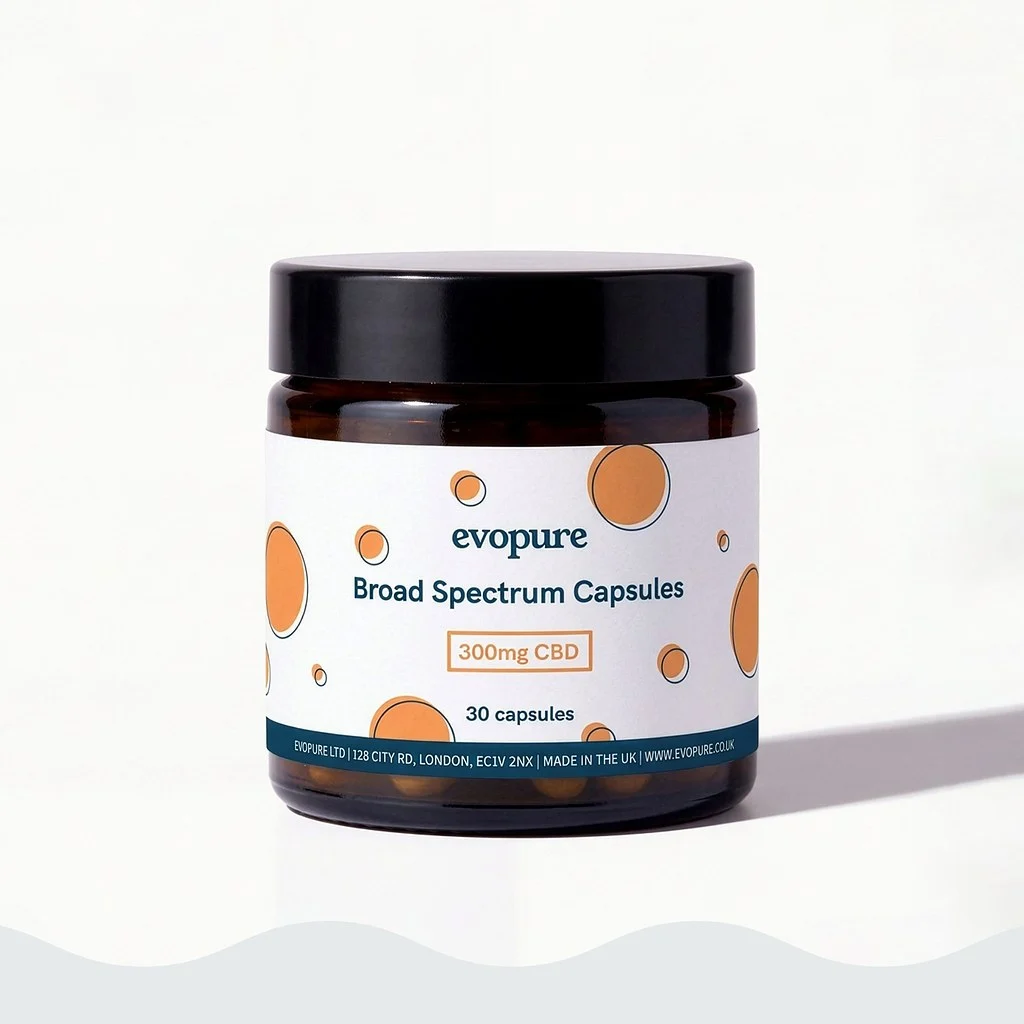
CBD Capsules Broad Spectrum
Alongside the steps above, some adults add Evopure’s Broad Spectrum CBD Capsules: one measured 10mg capsule, so there is nothing to measure. They are vegan, 0% THC and third-party lab tested, and rated 4.7 out of 5 from 125 verified ratings on the product page (via Lipscore, checked 13 November 2026). CBD is not a way to lower your stroke risk or a treatment for stress.
Add Broad Spectrum CBD Capsules 10mg to bag or choose another strength
Check with your GP or pharmacist first, especially with blood thinners, blood pressure tablets or heart medicines. Read CBD and blood thinners and CBD and blood pressure medication before you start. Adults only. We don’t recommend our products during pregnancy or breastfeeding.
Subscribe and save 25% on your first order, then 20%. New to Evopure? Join our emails for 20% off a one-off first order. Free UK delivery over £40.
Subscribe from £18.74One-off from £24.99
View productThe FSA’s 10mg a day figure is precautionary advice rather than a legal limit, set while longer-term safety research continues. At Evopure we think it is a very cautious figure, and many adults use more. If you go above it, increase slowly, and check with your GP or pharmacist first if you take any medication.
Sources 9
- NHS. Stroke symptoms and What causes a stroke (checked 13 November 2026).
- NHS. Transient ischaemic attack (TIA) (checked 13 November 2026).
- NHS. Panic disorder (checked 13 November 2026).
- NHS. High blood pressure and NHS Health Check (checked 13 November 2026).
- Stroke Association. Stroke signs and symptoms, Types and causes of stroke, High blood pressure and Managing risk (checked 13 November 2026).
- O’Donnell MJ, et al. Global and regional effects of potentially modifiable risk factors associated with acute stroke in 32 countries (INTERSTROKE). Lancet. 2016.
- Reddin C, et al. Association of psychosocial stress with risk of acute stroke. JAMA Netw Open. 2022.
- Smyth A, et al. Anger or emotional upset and heavy physical exertion as triggers of stroke: the INTERSTROKE study. Eur Heart J. 2022.
- Booth J, et al. Evidence of perceived psychosocial stress as a risk factor for stroke in adults: a meta-analysis. BMC Neurol. 2015.
iThis guide is general information, not medical advice. If you’re worried about your stroke risk or your stress levels, speak to your GP or pharmacist. Evopure makes CBD oils, CBD capsules and a magnesium drink powder.