











Last updated: October 2026
Movember runs from 1 to 30 November 2026. It raises money and awareness for men’s mental health and suicide prevention, prostate cancer and testicular cancer. You can grow a moustache, walk or run 60km, or host an event. It is also a good month to check your own sleep, stress, energy and health checks.
Below: this year’s campaign, the NHS checks behind each cause, how to support a mate, where to get help, and a 30-day checklist.
Movember 2026 at a glance: 1 to 30 November. Start clean-shaven and grow a Mo, walk or run 60km over the month, host a get-together, or set your own challenge. The 2026 campaign asks you to “Make a Growmitment” and bring a friend along.
What is Movember?
Movember is a men’s health charity and a yearly campaign that has run every November for more than 20 years. People grow moustaches (a “Mo”), move, host events and fundraise, and the money goes to projects on three causes: mental health and suicide prevention, prostate cancer and testicular cancer.
According to Movember, men die nearly five years earlier than women, mostly from preventable causes.
Movember 2026 dates and theme
Movember 2026 runs for the whole of November, from Sunday 1 November to Monday 30 November. This year’s campaign is called Make a Growmitment: a commitment to change men’s health, ideally made with a friend, either by fundraising or by donating.
Evopure isn’t affiliated with Movember. If you want to donate or sign up, go straight to Movember’s own UK website.
The three causes and the checks behind them
| Cause | What to do | Who it’s for |
|---|---|---|
| Prostate cancer | Know the symptoms; talk to a GP | Mainly men over 50 |
| Testicular cancer | Check your testicles monthly | Anyone with testicles |
| Mental health | Talk, check in, get support early | Everyone |
| Overall health | Book your NHS Health Check | Ages 40 to 74 (England) |
Prostate cancer: know the signs
The NHS says prostate cancer often has no symptoms at first. When symptoms do show, they are mostly about peeing: straining or difficulty starting, a weak or “stop start” flow, needing to go urgently or often, peeing at night, or feeling you haven’t finished. An enlarged prostate often causes these too, but get them checked.
Your risk is higher if you are over 50, from a Black African or African Caribbean background, or have a family history of prostate cancer. You can ask your GP about a PSA blood test even without symptoms. It can’t diagnose cancer on its own, so your GP will talk through whether it is right for you.
Testicular cancer: a one-minute monthly check
Movember describes testicular cancer as the most common cancer in young men, and highly curable when found early. The NHS suggests checking about once a month, ideally during or after a warm bath or shower. Support your scrotum in one hand and gently roll each testicle between your thumb and fingers. They should feel smooth and firm but not hard, and it’s normal for one to hang lower. See a GP about any lump, swelling, heaviness, ache or change that isn’t normal for you.
The NHS Health Check at 40 to 74
If you live in England and are aged 40 to 74 without certain existing conditions, you should be invited for a free NHS Health Check every 5 years. It takes about 20 to 30 minutes and checks your blood pressure, cholesterol, weight and lifestyle, then gives you your risk of heart disease and stroke over the next 10 years. If you haven’t had one, ask your GP practice. See also supplements for men over 40 and 50.
Men’s mental health in the UK
Many men find it hard to talk about how they feel, and the figures show why that matters. In England and Wales, the suicide rate for men in 2024 was 17.6 per 100,000, about three times the rate for women (5.7). The highest rate was in men aged 50 to 54.
Common signs that someone is struggling include withdrawing from friends, sleeping badly, drinking more, losing interest in things, irritability and seeming flat or not themselves. Low mood that lasts more than a couple of weeks is a reason to see a GP. See low mood. The good news is that help works, and it is easier to reach than many men think.
How to support a man who is struggling
You don’t need to be an expert. Movember’s mental health advice uses a simple four-step approach called ALEC, developed by the charity R U OK?:
- Ask: start with how he’s doing and mention any changes you’ve noticed. “You haven’t seemed yourself lately. Are you OK?”
- Listen: give him your full attention, don’t judge, and don’t try to fix everything.
- Encourage action: suggest small steps such as better sleep, getting outside or talking to someone he trusts. If he has felt low for more than two weeks, encourage him to see a GP.
- Check in: follow up in a few days with a call or a message, and keep doing it.
Side by side often works better than face to face: many men open up more easily on a walk or while doing something together.
Where to get help
If you or someone else is in danger now: call 999 or go to A&E. If you need help urgently but it isn’t an emergency, call NHS 111 or ask your GP for an emergency appointment.
- Samaritans: call 116 123, free, 24 hours a day, every day.
- CALM (Campaign Against Living Miserably): call 0800 58 58 58, 5pm to midnight every day, or use webchat on its website.
- Shout: text SHOUT to 85258, 24 hours a day.
- NHS Talking Therapies: adults in England can refer themselves, without going through a GP, for help with low mood, worry, anxiety and stress.
- Your GP: for anything that has lasted a few weeks or is affecting your sleep, work or relationships.
Reaching out isn’t weakness. It’s the most practical step there is.
Stress and burnout
Stress in men often shows up in the body first: poor sleep, tight shoulders, headaches, a short fuse, more drinking, or feeling wired but tired. Long stretches can tip into burnout.
We cover this in depth in stress in men, with the signs to look for in stress symptoms and burnout symptoms. The dull but reliable basics: movement, daylight, a steady bedtime, less alcohol and talking. See how to relieve stress.
Men and sleep: snoring, sleep apnoea and 7 to 9 hours
An expert panel for the US National Sleep Foundation recommends 7 to 9 hours a night for adults. Short sleep makes stress, mood and energy harder to manage.
Snoring and sleep apnoea
A systematic review of 24 studies found obstructive sleep apnoea is more common in men, and rises with age and higher body weight. The NHS lists the signs: loud snoring, breathing that stops and starts, gasping or choking noises, waking a lot, and feeling very tired, foggy or moody during the day. If your partner has noticed these, take them along to the GP. Sleep apnoea can be serious if it isn’t treated, and you may need to tell the DVLA. See sleep apnoea and how to stop snoring.
Easy sleep wins
- Keep the same wake-up time, even at weekends.
- Get outside in daylight in the morning, especially as the days shorten.
- Cut caffeine after lunchtime and keep alcohol for earlier in the evening, or skip it.
- Put the phone away 30 to 60 minutes before bed.
More in sleep hygiene and how to fall asleep fast.
Energy: movement, food and alcohol
Move more (Movember makes it easy)
The NHS recommends at least 150 minutes of moderate activity a week, or 75 minutes of vigorous activity, plus strength work on at least 2 days. Movember’s 60km Move challenge works out at 2km a day, which is a brisk 20 to 25 minute walk. Try Japanese walking to make walks count.
Eat enough protein
Protein at each meal supports the strength work above. Our guide to how much protein you need has simple amounts, and creatine explains one of the best-studied gym supplements.
Watch the drinking
The NHS low-risk guideline for men and women is no more than 14 units a week, spread over 3 or more days, with several drink-free days. Alcohol can help you nod off but tends to break up sleep later in the night (see alcohol and sleep). Cutting back? Our Dry January guide works in November too.
A little everyday support
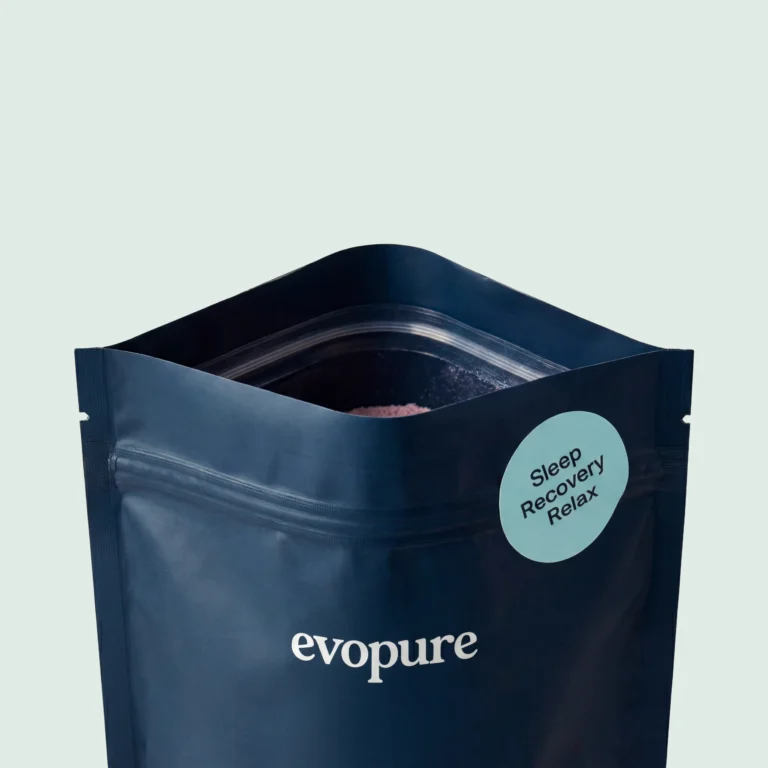
Supplements don’t replace the basics, but some men add a few to their routine. Our Magnesium Glycinate Sleep Complex is an evening drink with magnesium bisglycinate and citrate, L-theanine, glycine and chamomile. Magnesium contributes to a reduction of tiredness and fatigue and to normal psychological function. See magnesium for men for how much you need.
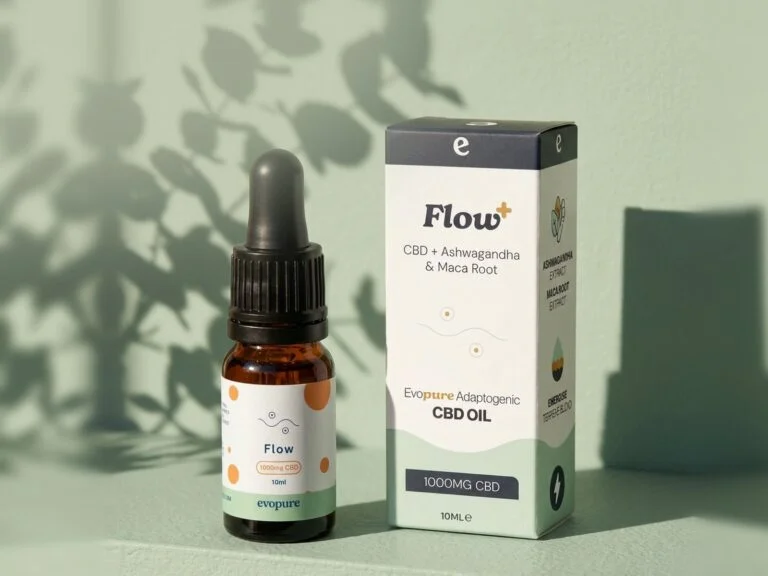
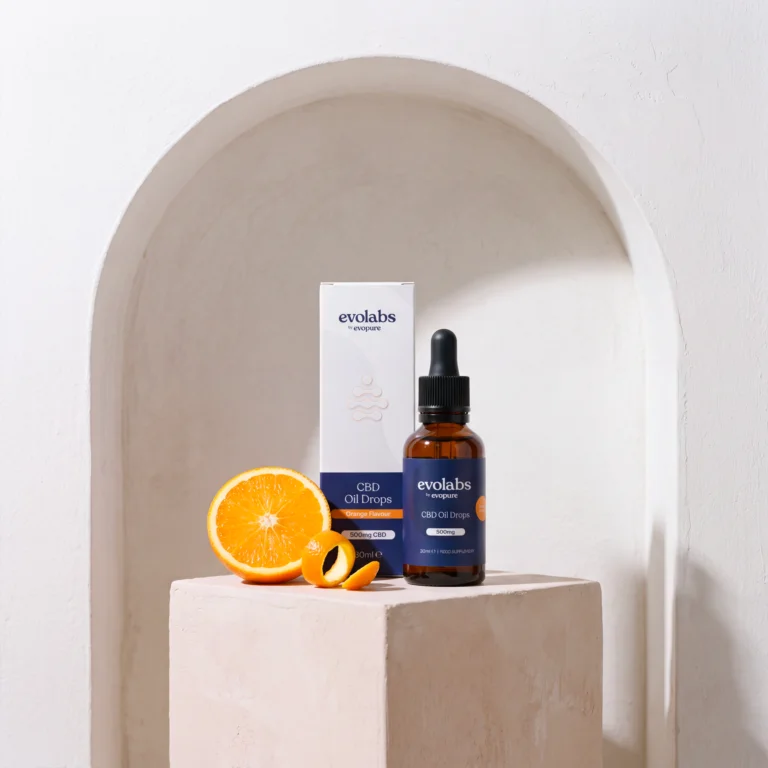
Our Flow CBD Oil combines broad spectrum CBD with ashwagandha and maca in MCT oil, for men who want a daytime drop as part of their routine (more on the herb in ashwagandha for men). CBD isn’t a treatment for stress or any condition. The FSA’s 10mg a day figure is precautionary advice rather than a legal limit, set while longer-term safety research continues. At Evopure we think it is a very cautious figure, and many adults use more. If you go above it, increase slowly, and check with your GP or pharmacist first if you take any medication.
If you are swapping a few pints for something warm, our Reishi Mushroom Adaptogenic Complex is a hot chocolate made with reishi mushroom extract, cacao and maca. It contains a little natural caffeine from the cacao, so have it earlier in the evening rather than right before bed. All our products are for adults only.
Ways to take part in Movember 2026
- Grow a Mo: start clean-shaven on 1 November and grow a moustache all month, using it to start conversations and raise money.
- Move for mental health: walk or run 60km over November, in one go or bit by bit. Movember says it stands for the 60 men lost to suicide around the world every hour.
- Host a Mo-ment: a quiz, curry night or five-a-side match.
- Mo Your Own Way: set your own challenge, such as a personal best, a month off social media or a big hill walk.
Anyone can take part, including women, teams and workplaces. Sign up and fundraise through Movember’s official UK site so the money goes to the charity.
Your 30-day Movember checklist
Small, repeatable steps beat a big plan. Pick one or two a week.
| Week | Body | Mind | Check |
|---|---|---|---|
| 1 (1 to 7 Nov) | Walk 2km a day | Text one mate | Testicle self-check |
| 2 (8 to 14 Nov) | Fixed wake-up time | 10 minutes outside daily | Book NHS Health Check (40+) |
| 3 (15 to 21 Nov) | Strength work twice | Ask someone “how are you really?” | Note any peeing changes |
| 4 (22 to 30 Nov) | 3 drink-free days | Talk to someone you trust | See a GP about anything new |
FAQs
When is Movember 2026?
Movember 2026 runs from 1 to 30 November 2026. If you are growing a moustache, start clean-shaven on 1 November.
What is the Movember 2026 theme?
The 2026 campaign is called Make a Growmitment: a commitment to change men’s health by fundraising or donating, ideally with a friend.
What does Movember raise money for?
Three causes: men’s mental health and suicide prevention, prostate cancer and testicular cancer.
Is Movember the same as No Shave November?
No. No Shave November is a separate campaign. Movember is run by the Movember charity, is about growing a moustache from clean-shaven, and funds men’s health projects.
Can women take part in Movember?
Yes. Anyone can walk or run 60km, host an event or set their own challenge through Mo Your Own Way.
How can I support men’s mental health?
Use ALEC: ask how he is, listen without judging, encourage small steps or a GP visit, and check in again. In a crisis, call 999, NHS 111 or Samaritans on 116 123.
What health checks should men have in the UK?
Check your testicles monthly, see a GP about any peeing changes, and if you are 40 to 74 in England, have an NHS Health Check every 5 years.
Sources
- Movember UK. Ways to support Movember and How to spot the signs of poor mental health.
- NHS. Prostate cancer symptoms and causes.
- NHS. How to check your testicles.
- NHS. NHS Health Check.
- Office for National Statistics (2025). Suicides in England and Wales: 2024 registrations.
- NHS. Help for suicidal thoughts and Find NHS Talking Therapies.
- Senaratna CV et al (2017). Prevalence of obstructive sleep apnea in the general population: a systematic review. Sleep Medicine Reviews.
- Hirshkowitz M et al (2015). National Sleep Foundation’s sleep time duration recommendations. Sleep Health.
- NHS. Sleep apnoea, physical activity guidelines and the risks of drinking too much.
This guide is general information, not medical advice. Evopure is not affiliated with Movember. Evopure makes the Magnesium Glycinate Sleep Complex, Flow CBD Oil and Reishi Mushroom Adaptogenic Complex.