Last updated: October 2026
Ashwagandha is an Ayurvedic herb whose root extract is mainly used for stress. Trials suggest it may lower stress and anxiety scores and modestly improve sleep, and one small trial found bigger strength gains with training. The evidence is promising but rated low certainty, and in the UK its safety is under FSA review, so some people should avoid it.
Below: what ashwagandha is, the research by benefit, how to take it, who should avoid it, and how we use it.
What is ashwagandha?
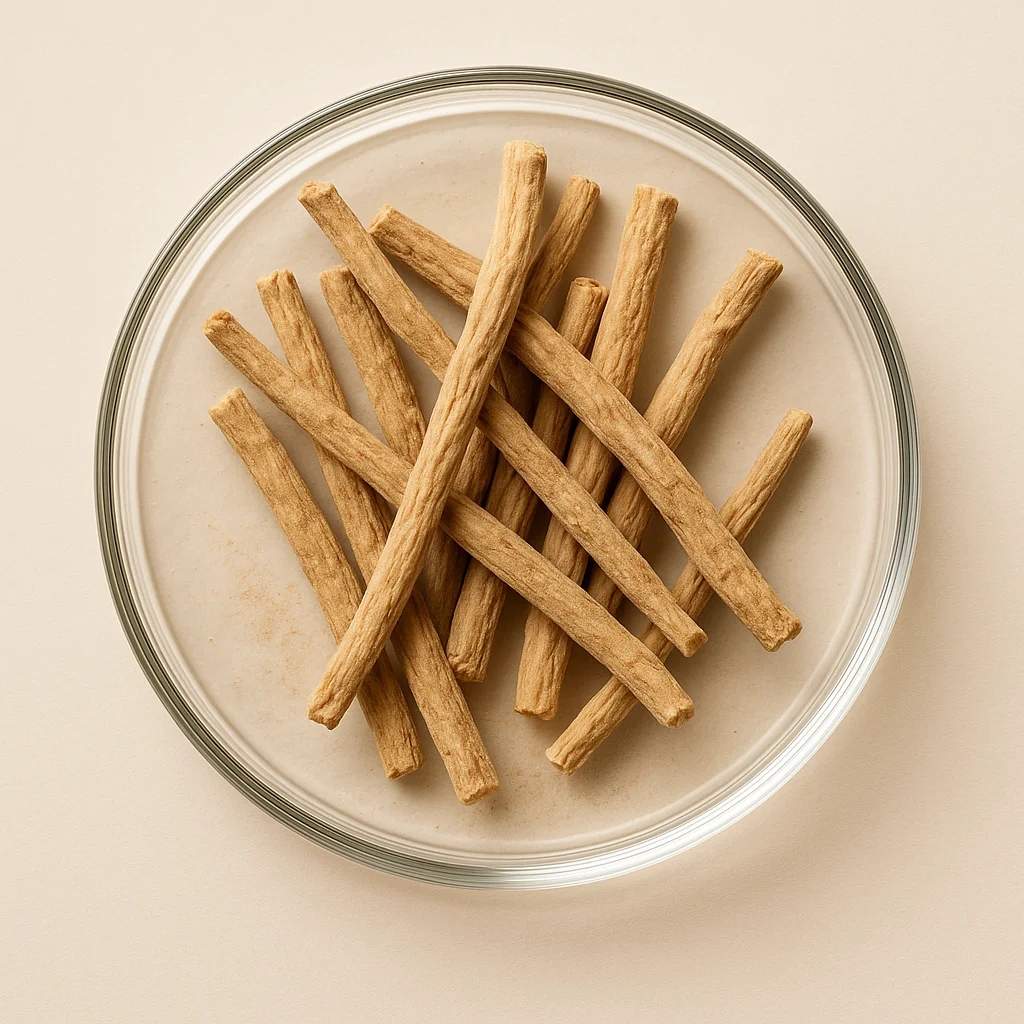
Ashwagandha (Withania somnifera) is a small shrub used in Ayurvedic medicine for centuries. Supplements mostly use extracts of the root, standardised to compounds called withanolides. It’s often described as an “adaptogen”, a traditional term for herbs said to help the body cope with stress.
Ashwagandha benefits: the research
| Benefit | Study | What it found |
|---|---|---|
| Stress and anxiety | Review of 12 trials, 2022 (about 1,000 people) | Lower stress and anxiety scores than placebo; low-certainty evidence |
| Stress | Trial, 2019 (60 stressed adults, 60 days) | Lower anxiety scores and morning cortisol than placebo |
| Sleep | Review of 5 trials, 2021 | Small improvement in sleep, larger in people with insomnia, at 600mg or more for 8 weeks |
| Strength | Trial, 2015 (57 men new to weight training, 8 weeks) | Greater gains in muscle strength and size than placebo |
Most trials were small, short, and often funded by extract makers. Ashwagandha has no authorised health claims in the UK. See ashwagandha vs magnesium and ashwagandha vs rhodiola.
How to take ashwagandha
- Form: root extract, with the amount and plant part stated.
- Dose: trials mostly used 250 to 600mg of extract a day.
- Timing: evening suits many people; some split it morning and evening. See when to take ashwagandha.
- How long: trials ran for about 8 weeks. Take breaks rather than using it indefinitely.
Safety and who should avoid it
The FSA’s toxicity committee is reviewing reports of liver, thyroid and blood sugar effects, with no outcome yet. Avoid ashwagandha if you are:
- pregnant, breastfeeding or trying to conceive
- under 18
- living with liver disease or a thyroid condition
- taking thyroid, diabetes, blood pressure, sedative or immune-suppressing medicines, unless your doctor agrees
Stop and see your GP if you notice yellow skin or eyes, dark urine or itching. Read our ashwagandha UK safety review and ashwagandha side effects.
How we use ashwagandha
Our Flow CBD Oil combines broad spectrum CBD with ashwagandha root and maca for daytime use. If you’d rather avoid ashwagandha, our Broad Spectrum CBD Oil contains only CBD and MCT oil. See CBD and ashwagandha. The FSA’s 10mg a day figure for CBD is precautionary advice rather than a legal limit, set while longer-term safety research continues. At Evopure we think it is a very cautious figure, and many adults use more. If you go above it, increase slowly, and check with your GP or pharmacist first if you take any medication. We don’t recommend our products during pregnancy or breastfeeding.
FAQs
What does ashwagandha do?
Trials suggest it may lower stress and anxiety scores and modestly improve sleep. The evidence is promising but low certainty.
How long does ashwagandha take to work?
Most trials ran for about 8 weeks before measuring results.
Is ashwagandha safe?
Many healthy adults tolerate it in short trials, but the FSA is reviewing reports of liver and thyroid effects, and some groups should avoid it.
Should I take ashwagandha in the morning or at night?
Either. Many people prefer the evening; follow the product label.
Does ashwagandha increase strength?
One small 2015 trial in men new to weight training found greater strength and muscle gains alongside resistance training.
Sources
- Akhgarjand C et al. Does ashwagandha supplementation have a beneficial effect on the management of anxiety and stress? A systematic review and meta-analysis. Phytother Res, 2022.
- Lopresti AL et al. An investigation into the stress-relieving and pharmacological actions of an ashwagandha extract. Medicine, 2019.
- Cheah KL et al. Effect of ashwagandha extract on sleep: a systematic review and meta-analysis. PLoS One, 2021.
- Wankhede S et al. Examining the effect of Withania somnifera supplementation on muscle strength and recovery. J Int Soc Sports Nutr, 2015.
- FSA. Summary of responses to call for evidence on ashwagandha, 2026.