Last updated: October 2026
Holy basil, or tulsi (Ocimum tenuiflorum), is an Ayurvedic herb used for stress. A few small human trials suggest it may modestly ease perceived stress, but claims that it “balances cortisol” go beyond the evidence. It looks reasonably safe short term, but check with your GP or pharmacist first if you take medicines, are pregnant or trying to conceive.
Below: what the research really shows, how it compares with ashwagandha, tea vs capsules, and who should avoid it.
What is holy basil?
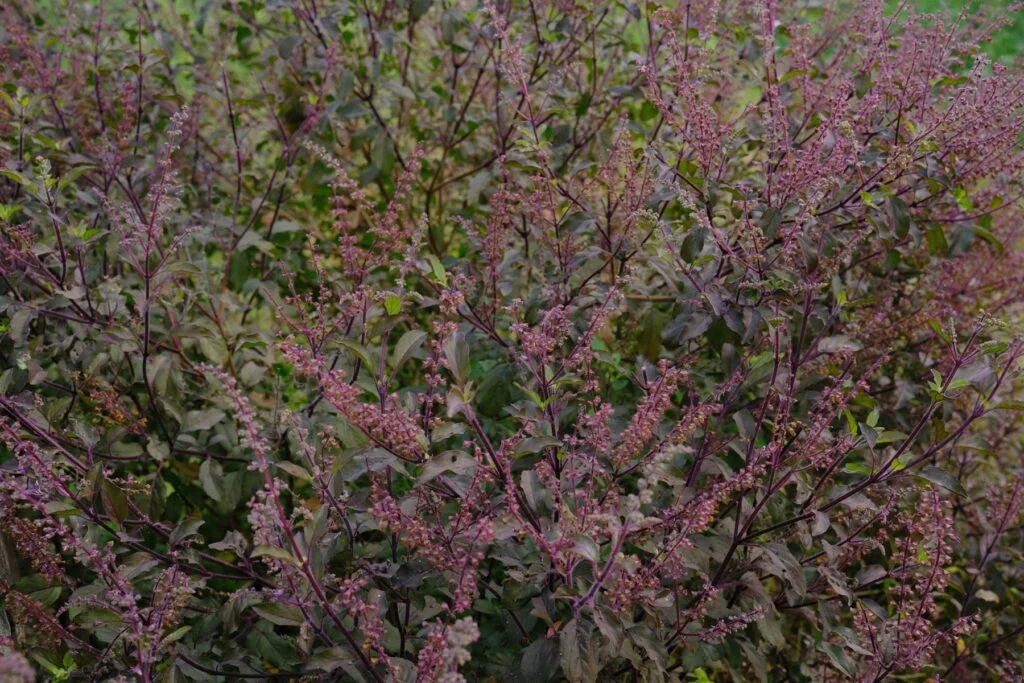
Holy basil is a leafy plant in the mint family, native to India, where it is called tulsi and has been used in Ayurvedic tradition for centuries. Its botanical name is Ocimum tenuiflorum (you’ll also see the older name Ocimum sanctum). Holy basil and tulsi are the same plant, so “holy basil vs tulsi” is really a question about names, not a comparison.
It is sold as an adaptogen, a loose term for herbs said to help the body handle stress. It isn’t a medical category. See our guide to adaptogens for energy.
| Holy basil (tulsi) | Sweet basil | Thai basil | |
|---|---|---|---|
| Botanical name | Ocimum tenuiflorum | Ocimum basilicum | Ocimum basilicum var. thyrsiflora |
| Taste | Peppery, clove-like | Sweet, mild | Aniseed, liquorice |
| Main use | Herbal tea, supplements, Thai stir-fries (kra pao) | Italian cooking, pesto | Thai and Vietnamese cooking |
| Sold as a supplement? | Yes | Rarely | No |
If you want to grow it, holy basil is frost-tender in the UK, so treat it as a sunny windowsill or greenhouse plant from spring to autumn.
What the research says
A 2017 systematic review found 24 human studies of tulsi, all with favourable results. But only 8 had a placebo group, most were small and low quality, and the longest lasted 13 weeks. The MSD Manual is blunter: it says there are no high-quality human studies showing holy basil works for any health condition.
| Use | What the studies found | Strength of evidence |
|---|---|---|
| Perceived stress | Two placebo-controlled trials (150 and 100 adults, 6 to 8 weeks) found bigger falls in stress scores than placebo. A smaller 4-week trial in 40 young adults found no difference in stress. | Limited but promising |
| Anxiety | One study of 35 adults with generalised anxiety disorder, with no placebo group. | Weak |
| Sleep | Self-reported sleep problems improved in the two stress trials. No trial has looked at sleep as the main outcome. | Weak |
| Cortisol | One 8-week trial found lower hair cortisol. A review of 52 plant trials found the effect of most herbs on stress hormones unclear. | Weak and inconsistent |
| Blood sugar | Several small, mostly low-quality trials in type 2 diabetes reported lower glucose. | Limited; matters mainly as a medicine caution |
| Weight loss | One small trial in adults with obesity. | Very weak |
Holy basil for stress
The two best trials both used branded extracts. In a 2012 Indian study, 150 adults with everyday stress took 1,200mg a day or a placebo for six weeks; symptoms such as exhaustion and sleep problems fell more with holy basil. In a 2022 Australian trial, 100 stressed adults took 125mg twice a day or a placebo for eight weeks, and perceived stress scores improved more with holy basil. Encouraging, but two trials of two different products is a thin base. For practical ways to bring stress down, see how to relieve stress and stress symptoms.
Holy basil for anxiety
The only anxiety-specific study gave 35 adults with generalised anxiety disorder 500mg of leaf extract twice a day for 60 days. Their scores fell, but with no placebo group we can’t know how much was the herb. Holy basil is not a treatment for anxiety. If worry is affecting your daily life, see your GP, who can talk you through options including NHS talking therapies. Our guide to natural supplements for anxiety compares what has been studied.
Holy basil for sleep
Sleep has only been measured as a side question. If sleep is your main goal, see our round-up of the best teas for sleep, including chamomile and lemon balm.
Does holy basil lower cortisol?
Not reliably, on current evidence. The claim rests largely on the 2022 Australian trial, where hair cortisol was lower after eight weeks and salivary cortisol rose less during a laboratory stress test. Interesting, but it’s one trial of one extract in 100 people, and much of the wider research on holy basil has been in animals and cells.
A 2022 systematic review of 52 human trials of plants and stress hormones concluded that, for most herbs, the effect on cortisol was unclear. Its most consistent finding was a morning cortisol-lowering effect from ashwagandha, not holy basil. So treat labels promising to “balance cortisol” with caution.
Sleep, routine, movement and alcohol matter more. Read our guides on how to lower cortisol naturally and high cortisol symptoms in women, and our look at the viral cortisol cocktail.
Holy basil vs ashwagandha
They’re often sold side by side, but they are very different plants with different evidence and different safety questions.
| Holy basil (tulsi) | Ashwagandha | |
|---|---|---|
| Plant and part used | Ocimum tenuiflorum leaves (mint family) | Withania somnifera root (nightshade family) |
| Stress evidence | A handful of small trials, including two positive placebo-controlled stress trials | Larger: a 2024 meta-analysis pooled 9 randomised trials with 558 people |
| Cortisol evidence | One trial | The most consistent of any herb in a 2022 review |
| UK safety status | Sold as a food supplement and herbal tea; no specific UK safety review | Sold as a food supplement, but under FSA safety review over liver, thyroid and blood sugar reports |
| Main cautions | Pregnancy and conceiving, diabetes medicines, blood thinners, surgery, underactive thyroid | Pregnancy, breastfeeding, liver or thyroid conditions, and several medicines |
| Who it may suit | People who want a gentle daily tea ritual, or who want to avoid ashwagandha | People who want the most-studied option and have checked the safety advice |
Before choosing ashwagandha, read our ashwagandha UK safety review and ashwagandha side effects. For more on what it is, see what ashwagandha does, and for other comparisons, ashwagandha vs rhodiola and reishi vs ashwagandha.
Can you take them together? Many blends do, but the pair hasn’t been tested head to head or on its own, and both may lower blood sugar. Check with a pharmacist first if you take any medicine.
Tea, capsules or extract?
| Form | What it is | Doses used in studies |
|---|---|---|
| Tea | Dried leaves or tea bags, steeped in hot water | None: no trial in the 2017 review tested tea |
| Leaf powder capsules | Ground dried leaf | Roughly 1g to 3g a day, mostly in diabetes studies |
| Standardised extract | A concentrated extract, often branded | 125mg twice a day; 500mg twice a day; 400mg three times a day |
These are research doses, not recommendations: follow the label and don’t take more than it says. All the stress trials used capsules, so the evidence doesn’t transfer neatly to tea.
Holy basil tea is the gentlest way to try it. Pure tulsi tea contains no tea leaves, so it’s naturally caffeine-free, but check blends, as some add green or black tea. Steep a bag or a teaspoon of dried leaf in just-boiled water for five to ten minutes.
When to take it: trials gave capsules once or twice a day, often after meals, for six to eight weeks. No time of day has been shown to be better.
Side effects and who should avoid it
The MSD Manual says holy basil seems safe for most adults for up to eight weeks, with nausea and diarrhoea the side effects most often mentioned. Safety beyond eight weeks hasn’t been studied. Avoid it, or speak to your GP or pharmacist first, if any of these apply:
- Pregnancy or trying to conceive: in animal studies, large doses reduced implantation and the chance of a pregnancy reaching full term, and a rat study found holy basil leaf extract raised progesterone in a way the authors linked to impaired fertility. It’s not known whether this happens in people, so avoid it.
- Breastfeeding: safety hasn’t been studied, so avoid it.
- Diabetes medicines: holy basil may lower blood sugar, which could add to the effect of insulin or sulfonylureas such as gliclazide or glimepiride and cause a hypo. Don’t take it without speaking to your diabetes team.
- Blood thinners: it may slow blood clotting, so it could raise the risk of bruising and bleeding with warfarin, heparin, clopidogrel or aspirin.
- Surgery: because of the possible bleeding risk, tell your surgical team and ask when to stop it before an operation.
- Underactive thyroid: it may lower thyroxine levels.
- Children: there’s no safety data for supplements in children, so don’t give holy basil capsules or extracts to under-18s unless a doctor advises it. All Evopure products are for adults only.
Stop taking it and see your GP if you notice anything unusual, such as unexplained bruising or signs of low blood sugar.
Holy basil in the UK
In the UK, holy basil is sold as a herbal tea, a food supplement and, at Asian supermarkets, as a fresh cooking herb (often labelled Thai holy basil or kra pao). As a food supplement it isn’t a licensed medicine, and there are no authorised health claims for holy basil on the GB nutrition and health claims register. Be wary of UK labels promising it will “balance cortisol”, “beat anxiety” or “burn fat”.
If you buy it, choose a product that names the species (Ocimum tenuiflorum or sanctum), states the extract strength and can show third-party lab testing.
If you’re exploring adaptogens
We don’t sell holy basil, but two products in our range feature other adaptogens. Our Flow CBD Oil combines broad spectrum CBD with ashwagandha root and maca, made for daytime use. Ashwagandha isn’t suitable for everyone, so read our ashwagandha UK safety review first, especially if you have a liver or thyroid condition or take medication. The FSA’s 10mg a day figure is precautionary advice rather than a legal limit, set while longer-term safety research continues. At Evopure we think it is a very cautious figure, and many adults use more. If you go above it, increase slowly, and check with your GP or pharmacist first if you take any medication.
Our Reishi Mushroom Adaptogenic Complex is a reishi hot chocolate made with cacao and coconut sugar. The cacao contains a little natural caffeine, so it isn’t caffeine-free. For more on mushrooms, see our functional mushrooms UK guide.
All our products are for adults (18+), and we don’t recommend our products during pregnancy or breastfeeding.
Related guides
- For an evening adaptogen, see our reishi mushroom guide, including its side effects.
- Rhodiola rosea, a more energising adaptogen.
- Black seed oil: benefits and side effects.
FAQs
Is holy basil the same as tulsi?
Yes. Tulsi is the Hindi name for holy basil, Ocimum tenuiflorum (also called Ocimum sanctum). It’s a different plant from the sweet basil used in Italian cooking.
Does holy basil lower cortisol?
The evidence is weak. One 8-week trial found lower hair cortisol, but a review of 52 plant trials found the effect of most herbs on cortisol unclear.
Is holy basil good for sleep?
Self-reported sleep problems improved in two stress trials, but no study has looked at sleep as its main outcome. A caffeine-free tulsi tea can be part of a calm evening routine.
Is holy basil better than ashwagandha for stress?
Ashwagandha has more research, including a meta-analysis of 9 trials. But it is under FSA safety review, and the two herbs have different cautions, so check the safety advice for both.
Can I take holy basil every day?
Studies have given it daily for up to 13 weeks, and it seems safe for most adults for up to 8 weeks. Longer-term safety hasn’t been studied. Check with your GP or pharmacist if you take any medicines.
Can children take holy basil?
There’s no safety data for holy basil supplements in children, so don’t give capsules or extracts to under-18s unless a doctor advises it. Evopure products are for adults only.
Sources
- Jamshidi N, Cohen MM (2017). The clinical efficacy and safety of tulsi in humans: a systematic review of the literature. Evidence-Based Complementary and Alternative Medicine.
- Lopresti AL et al (2022). A randomized, double-blind, placebo-controlled trial investigating the effects of an Ocimum tenuiflorum (holy basil) extract on stress, mood, and sleep in adults experiencing stress. Frontiers in Nutrition.
- Saxena RC et al (2012). Efficacy of an extract of Ocimum tenuiflorum (OciBest) in the management of general stress. Evidence-Based Complementary and Alternative Medicine.
- Bhattacharyya D et al (2008). Controlled programmed trial of Ocimum sanctum leaf on generalized anxiety disorders. Nepal Medical College Journal.
- Lopresti AL et al (2022). Modulation of the hypothalamic-pituitary-adrenal (HPA) axis by plants and phytonutrients: a systematic review of human trials. Nutritional Neuroscience.
- Arumugam V et al (2024). Effects of ashwagandha (Withania somnifera) on stress and anxiety: a systematic review and meta-analysis. Explore.
- Agrawal P et al (1996). Randomized placebo-controlled, single blind trial of holy basil leaves in patients with noninsulin-dependent diabetes mellitus. International Journal of Clinical Pharmacology and Therapeutics.
- Poli V, Challa C (2019). A comparative study of eugenol and Ocimum sanctum leaf extract on the antifertility effect in female albino rats. Journal of the Chinese Medical Association.
- MSD Manual Consumer Version. Holy basil.
- Department of Health and Social Care. Great Britain nutrition and health claims (NHC) register.
This guide is general information, not medical advice. Evopure makes Flow CBD Oil and the Reishi Mushroom Adaptogenic Complex. We don’t sell holy basil.