Last updated: October 2026
Probiotics are live bacteria and yeasts, taken as supplements or in foods such as live yoghurt. They aren’t a general gut tonic: the evidence is strain-specific. They’re most likely to help prevent diarrhoea while you take antibiotics, and some people with IBS benefit if they try one for at least 4 weeks. Most healthy people don’t need one.
Below: the evidence for each use, what probiotics don’t do, probiotics vs prebiotics and fermented foods, how to choose one, the best time to take them, side effects and who should be careful.
Our honest position: Evopure doesn’t sell a probiotic, so this guide names no brands. It’s here to help you decide whether one is worth trying, and how to pick one on the evidence.
What are probiotics?
The agreed international definition is “live microorganisms which when administered in adequate amounts confer a health benefit on the host”. In plain English: living bacteria or yeasts shown to do something useful, at a dose that does it.
The NHS notes they’re often called “good” or “friendly” bacteria. The idea is that they help restore the balance of bacteria in your gut when an illness or treatment has upset it.
The most common types are:
- Lactobacilli, such as Lactobacillus rhamnosus, acidophilus and plantarum.
- Bifidobacteria, such as Bifidobacterium lactis and Bifidobacterium longum.
- Saccharomyces boulardii, a yeast rather than a bacterium.
Each probiotic has three parts to its name: genus, species and a strain code (letters and numbers after the species). The strain matters, because two strains of the same species can behave very differently. In the UK, probiotics are generally classed as food, not medicine, so they don’t go through the testing medicines do.
For the bigger picture on your gut, including fibre and the gut-brain link, see our guide to gut health.
Do probiotics work? The evidence by use
Some do, for some things. It depends which strain, for what, and at what dose. Here is what the best reviews show.
| Use | What studies show | Quality of evidence | What to look for |
|---|---|---|---|
| Diarrhoea from antibiotics (adults) | A 2021 review of 42 trials (11,305 adults) found about 37% lower risk. Benefit was clearer where the risk was moderate or high to begin with | Moderate | Lactobacilli or bifidobacteria at the dose used in trials, started with the antibiotic |
| Diarrhoea from antibiotics (children) | A Cochrane review of 33 trials: 8% of children taking probiotics got diarrhoea vs 19% without. Higher doses (5 billion CFU a day or more) worked better | Moderate | Ask a pharmacist or GP first for children |
| Preventing C. diff with antibiotics | A 2025 Cochrane review of 38 trials: C. diff diarrhoea in 1.6% vs 3.2%. About 65 people need to take one to prevent one case | Low | Mainly relevant to people at higher risk, such as older adults in hospital |
| IBS | Certain strains and combinations seemed to help overall symptoms and tummy pain, but which ones work is still unclear | Low to moderate | NICE: try one product for at least 4 weeks at the maker’s dose |
| Constipation | A review of 14 trials found about 1.3 more bowel movements a week, mainly with Bifidobacterium lactis. Studies were mixed and at high risk of bias | Low | Fibre and fluids first; a 4-week trial if you want to try |
| Colds and chest infections | A 2022 Cochrane review found fewer people got at least one cold or similar infection (risk about 24% lower), and episodes were about a day shorter | Low | Most trials ran for over 3 months |
| Eczema | The NHS says there is no evidence probiotics help treat eczema | None for treatment | See a GP or pharmacist |
| Weight loss | A review of 105 papers found about 0.9kg more weight loss in overweight (not obese) people. Small, and not a weight loss tool | Low | Not worth buying for this |
Two caveats. Many trials are small, short or industry-funded: the 2025 Cochrane review noted company links in 28 of its 47 studies. And the NHS points out that products tested in trials can differ a lot from those on the shelf.
When a probiotic is most likely to help
During a course of antibiotics
This is where the evidence is strongest. Antibiotics also disturb the normal bacteria in your gut, and the NHS lists diarrhoea as a common side effect. The British Dietetic Association (BDA) suggests starting a probiotic when you start the antibiotics and carrying on for at least a week after the course ends.
Don’t stop or skip antibiotic doses because of tummy upset. The NHS advises asking for an urgent GP appointment or using NHS 111 if you have diarrhoea while taking, or after recently taking, antibiotics, as it can be a sign of C. diff infection. If you also use CBD, see our guide to CBD and antibiotics.
Irritable bowel syndrome (IBS)
NICE, which sets clinical guidance in England, says people with IBS who choose to try probiotics should take the product for at least 4 weeks while monitoring the effect, at the dose the manufacturer recommends. The NHS IBS page says much the same: try probiotics for a month. The BDA adds that if one doesn’t work, try another or stop, because they won’t work for everybody.
Stress plays a big part in IBS-type symptoms too; see anxiety stomach. For other options ranked by evidence, see supplements for digestion, and for the research on CBD, CBD and IBS.
Constipation and travel
For constipation, the BDA suggests trying a product containing Bifidobacterium lactis for 4 weeks, then switching or stopping if nothing changes. Fibre, fluids and activity come first; see magnesium for constipation for how magnesium citrate fits in. For travellers’ diarrhoea, the BDA notes a review showing probiotics can reduce the chance of getting it, with Saccharomyces boulardii one of the options studied.
What probiotics don’t do
Probiotic marketing often promises far more than the research supports. The NHS says there’s little evidence for many of the health claims made about them. In particular:
- A general “gut reset”. Probiotic bacteria mostly pass through rather than moving in for good, and there’s no good evidence a course “resets” a healthy gut. The BDA’s view is that if you are healthy, a probiotic supplement is unlikely to benefit you.
- Detox. Your liver and kidneys do that job. No probiotic has been shown to “flush toxins”.
- Weight loss. The effect in reviews is under 1kg on average, and only in some groups. Be wary of any gut product sold for weight loss, a theme we also cover in our guide to berberine.
- Fix bloating on its own. Bloating has many causes. See magnesium for bloating.
- Replace a varied diet. Plants, fibre and fermented foods do more for most people’s gut than any capsule. Trendy gut products such as sea moss are no shortcut either.
Probiotics vs prebiotics vs fermented foods
These words get mixed up all the time. Here is the difference.
| Type | What it is | Examples | Evidence |
|---|---|---|---|
| Probiotic | Specific live microbes with evidence of a benefit at a set dose | Supplements naming a strain; some yoghurts and fermented milk drinks | Good for a few uses (above), strain by strain |
| Prebiotic | Fibres that feed the bacteria already in your gut | Onions, garlic, asparagus, artichoke, chicory root | Chicory inulin has an authorised claim: it contributes to normal bowel function by increasing stool frequency (at 12g a day) |
| Postbiotic | Inactivated (non-living) microbes or their parts that give a health benefit | A newer category, mostly in supplements and some foods | Early |
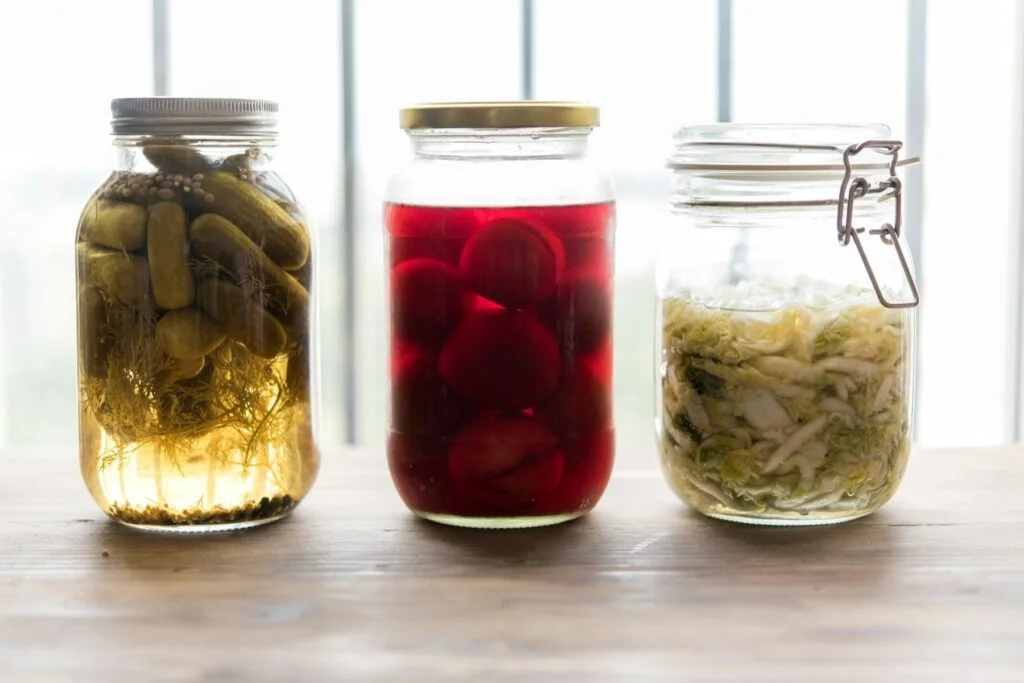
| Fermented food | Food made through the growth of microbes; may or may not still contain live ones | Live yoghurt, kefir, unpasteurised sauerkraut and kimchi, miso, kombucha | Promising for diet quality; not the same as a tested probiotic |
Kefir, yoghurt, sauerkraut and kimchi
Fermented foods are a food-first way to add live microbes. In a small Stanford study, 36 healthy adults ate either a high-fibre or a high-fermented-food diet for 17 weeks; the fermented food group saw their gut bacteria become more diverse and some inflammation markers fall. That’s encouraging, but it’s one small study.
Not all fermented foods contain live microbes. Fermented vegetables that have been heat-treated or pasteurised, such as many shelf-stable jars, and baked bread such as sourdough have no live microbes left. For live cultures, choose chilled, unpasteurised versions and yoghurt labelled “live” or “contains live cultures”. The BDA notes that kefir and kombucha may contain helpful microbes but aren’t counted as probiotics, because the evidence for specific benefits is lacking.
Kefir or a probiotic supplement? For everyday eating, kefir and other fermented foods in a varied diet make sense (see food and mood). For a specific job, such as cover during antibiotics, a supplement with a named, studied strain at a known dose is the evidence-based choice.
Prebiotics in practice: the NHS says most UK adults eat about 20g of fibre a day against a recommended 30g. Getting there with fruit, vegetables, beans and wholegrains feeds your own gut bacteria. Kiwi is a good example; see kiwi for sleep.
Probiotics vs digestive enzymes
They do different jobs. Digestive enzymes help break down food. For example, the NHS says taking a lactase supplement before food or drink containing lactose may reduce or prevent symptoms for some people with lactose intolerance. Probiotics are live microbes, not enzymes.
Probiotics vs antibiotics
Antibiotics kill bacteria to treat an infection; probiotics add live microbes. Never use a probiotic instead of a prescribed antibiotic. They can be taken alongside each other, as above.
How to choose a probiotic in the UK
If you’ve decided to try one, use this checklist rather than the front of the box.
- Full strain names on the label. Look for genus, species and strain code for every microbe. “Contains friendly bacteria” or a species name alone isn’t enough to match it to research.
- Evidence for that strain, for your reason. A strain studied for antibiotic diarrhoea may do nothing for IBS. A pharmacist or dietitian can help you check.
- The amount (CFU). CFU means colony forming units, the number of live microbes. More isn’t always better, but the dose should match what worked in studies. In the children’s Cochrane review, 5 billion CFU a day or more worked better than lower doses. Check whether the figure is guaranteed “until end of shelf life” or only “at manufacture”.
- Storage. The BDA says to store probiotic foods and supplements as the label says, because temperature affects how many live microbes are left. Some need the fridge; others are shelf-stable.
- Expect new names. In 2020, scientists split the Lactobacillus genus into 25 groups, so you may see names such as Lactiplantibacillus plantarum (previously Lactobacillus plantarum) or Lacticaseibacillus. It’s the same microbe with a new label.
Why UK labels say so little: no health claim for any probiotic supplement is authorised in Great Britain. The only authorised claim involving live bacteria is that live cultures in yoghurt or fermented milk improve lactose digestion of the product in people who have difficulty digesting lactose. UK advertising guidance, drawing on Department of Health and Social Care guidance, says the word “probiotic” itself could at the very least count as a general health claim, which is why many packs say “live cultures” instead. So a quiet label doesn’t mean a product is useless, and a loud one doesn’t mean it works: look up the strain.
Best time to take probiotics
The most important thing is taking it every day, at a time you’ll remember. There’s little research in people on timing. A laboratory model of the gut (not a human study) found the bacteria in one product survived best when taken with a meal or up to 30 minutes before one, ideally a meal containing some fat, and worst when taken 30 minutes after eating. The yeast Saccharomyces boulardii wasn’t affected by meal timing.
A sensible approach:
- Morning or evening: either is fine. With breakfast is easy to remember.
- With antibiotics: start alongside the course, carry on for at least a week after, and follow the label on spacing it from your antibiotic doses. Ask your pharmacist if unsure.
- How long to try: for IBS or constipation, give one product at least 4 weeks before judging it, then stop if it hasn’t helped.
Probiotic side effects
For most people with a healthy immune system, probiotics are safe and side effects are mild. The ones people notice are digestive, especially in the first few days:
- wind (flatulence)
- bloating
- looser stools or, less often, constipation
- nausea or tummy cramps
In the children’s Cochrane review, side effects were reported by 4% of children on probiotics vs 6% on the comparison, and no serious side effects were linked to probiotics. The 2025 C. diff review found side effects were, if anything, slightly less common with probiotics (10.9% vs 12.2%). These effects are usually mild and often settle. If symptoms are bad, last more than a couple of weeks, or you get a rash, stop and speak to a pharmacist.
Who should be careful
Because probiotics are live microbes, they can rarely cause infections in vulnerable people. Speak to your doctor first if any of these apply:
- A weakened immune system, for example during chemotherapy, after an organ transplant or with medicines that suppress immunity. Both the NHS and the BDA advise checking with a doctor first.
- A central line or other long-term catheter. In a Belgian review of 10 cases of bloodstream infection with Saccharomyces yeast, 7 people had a central venous line and 6 had been prescribed a Saccharomyces boulardii probiotic. Half died. The authors added that older age should also count against these products.
- Serious illness or intensive care. In a Dutch trial in people with predicted severe acute pancreatitis, 16% of those given a probiotic mix died vs 6% on placebo. Probiotics in hospital should only be given on medical advice.
- Premature babies. In 2023 the US Food and Drug Administration warned that probiotics given to premature babies in hospital have been linked to serious, sometimes fatal infections. Never give a probiotic to a premature or newborn baby unless their medical team advises it.
- Children, pregnancy and breastfeeding. Ask a GP, midwife or pharmacist before giving a probiotic to a child or taking one while pregnant or breastfeeding.
- Gut symptoms that need checking. Blood in your poo, unexplained weight loss, diarrhoea for more than 7 days or a change in bowel habit that doesn’t settle need a GP, not a supplement.
Where Evopure fits
We’ll be straight with you: Evopure doesn’t sell a probiotic, and none of our products is a gut health product. For most people, the gut basics are food first: fibre, plants, fermented foods, fluids, sleep and movement. Our guides to boosting your immune system, vitamin C and zinc cover more of the everyday basics.
If magnesium is part of your healthy routine, our Magnesium Glycinate Sleep Complex is an evening drink made with magnesium bisglycinate and citrate, glycine and L-theanine. Magnesium contributes to normal psychological function and to the reduction of tiredness and fatigue. It’s for adults only, and we don’t recommend our products during pregnancy or breastfeeding. For more on the form we use, see magnesium glycinate.
FAQs
Are probiotics worth taking?
For specific uses, sometimes. The best evidence is for preventing diarrhoea during antibiotics, and some people with IBS benefit. For healthy people with no gut problems, a probiotic supplement is unlikely to add much.
What is the best time to take probiotics?
Take it at the same time every day. Lab research suggests bacteria survive best when taken with a meal or up to 30 minutes before one. Follow the label, especially if you’re also taking antibiotics.
How long do probiotics take to work?
For IBS, NICE advises trying one product for at least 4 weeks while monitoring the effect. With antibiotics, start at the same time as the course and continue for at least a week after.
Can probiotics make you bloated?
Yes, wind and bloating are the most common side effects, especially in the first few days. They usually settle. If they don’t after a couple of weeks, stop and speak to a pharmacist.
Should I take probiotics with antibiotics?
It’s reasonable for most healthy adults. Reviews show probiotics lower the risk of antibiotic diarrhoea. Check with a pharmacist first if you’re unwell, have a weakened immune system or are in hospital.
Is kefir better than a probiotic supplement?
They do different jobs. Kefir is a nutritious fermented food that adds a mix of live microbes. A supplement with a named, studied strain is better for a specific purpose, such as antibiotic cover.
What is the difference between probiotics and prebiotics?
Probiotics are live microbes. Prebiotics are fibres, such as inulin in onions, garlic and chicory, that feed the bacteria already in your gut. Most people benefit from more prebiotic fibre in their diet.
Sources
- NHS. Probiotics.
- NICE. Irritable bowel syndrome in adults: diagnosis and management (CG61), recommendation 1.2.1.6.
- NHS. IBS: diet, lifestyle and medicines.
- British Dietetic Association. Probiotics and gut health: food fact sheet.
- NHS. C. difficile and Antibiotics: side effects.
- Esmaeilinezhad Z, et al. Probiotics for the prevention of Clostridioides difficile-associated diarrhea in adults and children. Cochrane Database Syst Rev. 2025 (PMID 40931979).
- Guo Q, et al. Probiotics for the prevention of pediatric antibiotic-associated diarrhea. Cochrane Database Syst Rev. 2019 (PMID 31039287).
- Goodman C, et al. Probiotics for the prevention of antibiotic-associated diarrhoea: a systematic review and meta-analysis. BMJ Open. 2021 (PMID 34385227).
- Ford AC, et al. The efficacy of prebiotics, probiotics, synbiotics and antibiotics in irritable bowel syndrome. Aliment Pharmacol Ther. 2018 (PMID 30294792).
- Dimidi E, et al. The effect of probiotics on functional constipation in adults. Am J Clin Nutr. 2014 (PMID 25099542).
- Zhao Y, et al. Probiotics for preventing acute upper respiratory tract infections. Cochrane Database Syst Rev. 2022 (PMID 36001877).
- Koutnikova H, et al. Impact of bacterial probiotics on obesity, diabetes and non-alcoholic fatty liver disease related variables. BMJ Open. 2019 (PMID 30928918).
- Hill C, et al. ISAPP consensus statement on the scope and appropriate use of the term probiotic. Nat Rev Gastroenterol Hepatol. 2014 (PMID 24912386); Salminen S, et al. ISAPP consensus statement on postbiotics. 2021 (PMID 33948025); Marco ML, et al. ISAPP consensus statement on fermented foods. 2021 (PMID 33398112).
- Wastyk HC, et al. Gut-microbiota-targeted diets modulate human immune status. Cell. 2021 (PMID 34256014).
- Tompkins TA, et al. The impact of meals on a probiotic during transit through a model of the human upper gastrointestinal tract. Benef Microbes. 2011 (PMID 22146689).
- Zheng J, et al. A taxonomic note on the genus Lactobacillus. Int J Syst Evol Microbiol. 2020 (PMID 32293557).
- Poncelet A, et al. Saccharomyces cerevisiae fungemia: risk factors, outcome and links with S. boulardii-containing probiotic administration. Infect Dis Now. 2021 (PMID 33934809).
- Besselink MG, et al. Probiotic prophylaxis in predicted severe acute pancreatitis. Lancet. 2008 (PMID 18279948).
- US Food and Drug Administration. FDA raises concerns about probiotic products sold for use in hospitalized preterm infants. 2023.
- GOV.UK. Great Britain nutrition and health claims (NHC) register; ASA/CAP. Food: probiotic claims.
- NHS. How to get more fibre into your diet and Lactose intolerance.
This guide is general information, not medical advice. Evopure does not sell a probiotic. Evopure makes the Magnesium Glycinate Sleep Complex.