Last updated: October 2026
Omega 3s are a family of fats you need from food: ALA from plants, and EPA and DHA, found mainly in oily fish. EPA and DHA contribute to the normal function of the heart, with a daily intake of 250mg. The NHS advises at least 2 portions of fish a week, including 1 of oily fish.
Below: the three types, the best foods, who might need a supplement, what the big trials found, fish oil vs cod liver oil, dose, timing, side effects and safety.
Food first. One 140g portion of grilled mackerel gives about 4g of EPA and DHA: more than two weeks’ worth of the 250mg a day linked to the heart claim. If you don’t eat fish, algae oil is the vegan route. Evopure doesn’t sell omega 3, so this is a straight guide.
What is omega 3? ALA, EPA and DHA explained
Omega 3s are polyunsaturated fats. Three matter most:
- ALA (alpha-linolenic acid): the plant form, in linseed, chia, walnuts, hemp seeds and rapeseed oil.
- EPA (eicosapentaenoic acid): in oily fish, fish oil, cod liver oil, krill oil and some algae oils.
- DHA (docosahexaenoic acid): in oily fish, fish oils and algae oil.
EPA and DHA are the “long-chain” forms most research is about. Your body turns only a little ALA into EPA, and hardly any into DHA (more below).
Omega 3 vs fish oil: omega 3 is the type of fat; fish oil is one source of it. Products vary a lot, so the figure that matters on a label is EPA plus DHA per daily dose, not the total amount of oil.
Omega 3 vs omega 6: omega 6 (mainly linoleic acid, from vegetable oils, nuts and seeds) is the other essential fat. SACN, the government’s nutrition advisers, found most people in the UK don’t eat enough fish, particularly oily fish. That’s the gap worth closing, so we’d choose a plain omega 3 over a 3-6-9 blend.

Our pick
Magnesium Glycinate Sleep Complex
Magnesium Glycinate Sleep Complex is a berry drink powder with 290mg of magnesium a scoop from bisglycinate and citrate, plus glycine and L-theanine. Magnesium contributes to a reduction of tiredness and fatigue.
Add Magnesium Glycinate Sleep Complex to bag See ingredients and reviews
Vegan and made in the UK. Free UK delivery over £45, 14-day returns on unopened items.
Subscribe £22.49One-off £29.99
View productWhat does omega 3 do? The authorised health claims
In Great Britain, only claims on the government register can be made for foods and supplements. The authorised omega 3 claims, with their conditions:
| Authorised claim | Daily intake needed |
|---|---|
| EPA and DHA contribute to the normal function of the heart. | 250mg EPA and DHA |
| DHA contributes to maintenance of normal brain function. | 250mg DHA |
| DHA contributes to the maintenance of normal vision. | 250mg DHA |
| DHA and EPA contribute to the maintenance of normal blood triglyceride levels. | 2g EPA and DHA |
| DHA and EPA contribute to the maintenance of normal blood pressure. | 3g EPA and DHA |
| ALA contributes to the maintenance of normal blood cholesterol levels. | 2g ALA |
For the 2g and 3g claims, the register adds that you shouldn’t exceed 5g of EPA and DHA a day from supplements. Just as telling is what’s missing: claims that omega 3 supports joints, mood or the immune system were assessed and not authorised. That matches the trials below.
How much omega 3 do you need a day? (UK)
UK advice is about food rather than milligrams: at least 2 portions of fish a week, including 1 of oily fish, with a portion about 140g cooked. That’s the NHS line, endorsed by SACN.
| Figure | Amount |
|---|---|
| NHS fish advice (adults) | 2 portions a week, 1 of them oily |
| British Dietetic Association supplement dose, if you take one | About 450mg EPA and DHA a day |
| Linked to the heart claim | 250mg EPA and DHA a day |
| Most from supplements (GB register) | 5g EPA and DHA a day |
Men and women get the same advice, with one ceiling: girls and women who are planning a pregnancy, pregnant or breastfeeding should have no more than 2 portions of oily fish a week. Higher doses aren’t automatically better, because heart-rhythm risk rises with dose (see safety).
How much omega 3 should I take a day?
There’s no official UK daily amount for EPA and DHA. Two portions of fish a week, 1 of them oily, gives about 450mg a day, the figure behind SACN’s advice. Most supplement labels give 250 to 1,000mg of EPA and DHA a day, and EFSA says up to 5g a day combined is safe for adults.
Check the EPA plus DHA line on the label, not the total fish oil: a 1,000mg capsule of standard fish oil often holds only about 300mg. If you’re pregnant, avoid cod liver oil and other fish liver oils, which contain vitamin A. If you take a blood thinner, talk to your GP first (see safety).
Best omega 3 foods (UK portions)
The NHS calls oily fish the richest source of long-chain omega 3. Figures from the UK government’s food composition data (CoFID), adding EPA and DHA together:
| Food | Portion | EPA + DHA |
|---|---|---|
| Mackerel, grilled | 140g | about 4.2g |
| Kippers, grilled | 140g | about 3.3g |
| Salmon, farmed, grilled | 140g | about 3.2g |
| Herring, grilled | 140g | about 2.1g |
| Rainbow trout, baked | 140g | about 1.8g |
| Sardines, canned in brine, drained | 90g (a small tin) | about 1.8g |
| Red salmon, canned in brine | 100g | about 1.3g |
| Mussels, cooked | 100g | about 0.5g |
| Tuna, canned in brine | 100g | about 0.3g |
| Cod, baked | 140g | about 0.2g |
One portion of most oily fish a week averages out at 250mg a day or more. Tinned tuna doesn’t count as oily fish (the NHS says so, and the numbers show why), but tinned sardines, pilchards, mackerel and salmon do. The NHS also lists oily fish among the few food sources of vitamin D: see vitamin D in winter, and our guide to brain foods.
Plant omega 3 foods, and omega 3 for vegans
Plants give you ALA, not EPA or DHA. ALA per typical portion (CoFID, with USDA data for chia, hemp and linseed):
| Food | Portion | ALA |
|---|---|---|
| Chia seeds | 15g (1 tbsp) | about 2.7g |
| Hemp seeds, shelled | 30g (3 tbsp) | about 2.6g |
| Linseed (flaxseed), ground | 10g (1 tbsp) | about 2.3g |
| Walnuts | 30g | about 2.2g |
| Rapeseed oil | 1 tbsp (about 14g) | about 1.3g |
| Edamame beans, boiled | 80g | about 0.3g |
| Olive oil | 1 tbsp (about 14g) | about 0.1g |
| Coconut oil | 1 tbsp | 0g |
A spoonful of ground linseed or chia, or a handful of walnuts, reaches the 2g of ALA a day linked to the cholesterol claim.
How much ALA turns into EPA and DHA?
Not much. A University of Southampton review of tracer studies found conversion to EPA is limited in men and further conversion to DHA is very low. Women convert a little more, possibly because of oestrogen. The authors concluded ALA is a limited source of the long-chain forms.
The vegan answer: algae oil
Algae oils are a vegetarian source of DHA, and some contain EPA too, so check the label. The British Dietetic Association notes algae-only supplements suit vegetarians and vegans, and that some eggs, milks, yoghurts, breads and spreads have omega 3 added. The NHS lists vitamin D, B12, iodine, selenium and calcium as other nutrients vegans should plan for: see B12 deficiency symptoms and zinc.
Do you need an omega 3 supplement?
Most people don’t if they eat oily fish most weeks. The British Dietetic Association says omega 3 supplements aren’t recommended for the UK general population, because evidence of benefit is inconclusive. For some conditions, the evidence for eating seafood is stronger than for capsules.
A supplement may make sense if you:
- Rarely or never eat oily fish. The BDA suggests about 450mg of EPA and DHA a day, roughly what one to two fish portions a week provide.
- Are vegan or vegetarian. Choose algae oil and keep up the ALA foods.
- Are pregnant or breastfeeding. Ask your midwife or GP, and never take cod liver oil (see pregnancy).
- Have high triglycerides. See your GP rather than self-dosing: prescription omega 3 medicines are different products, tested and dosed differently.
iFor children, ask your GP or health visitor and don’t give adult supplements. Food-wise, the NHS says boys can have up to 4 portions of oily fish a week and girls up to 2.
Omega 3 benefits: what the big trials actually show
Many “benefits” come from studies of people who eat more fish, who tend to live healthier lives anyway. Randomised capsule trials are a tougher test:
| Claim | What the trials show | Verdict |
|---|---|---|
| Prevents heart attacks and strokes | VITAL and ASCEND: no clear effect on major events. Cochrane 2020: little or no effect overall; possible slight drop in coronary heart disease | Small at best |
| Lowers triglycerides | Cochrane 2020: about 15% lower, more at higher doses | Yes |
| Fish oil lowers cholesterol | Cochrane 2020: little or no effect on blood fats other than triglycerides | No |
| Lifts depression | Cochrane 2021: small effect, unlikely to be clinically meaningful, very low certainty | Unproven |
| Eases dry eyes | DREAM trial: no better than an olive oil placebo after a year | Unlikely |
| Helps ADHD in children | Cochrane 2023: no effect on parent-rated symptoms (high certainty) | Unlikely |
| Helps joint pain | Small effect in rheumatoid arthritis; no clear effect in osteoarthritis | Depends on the arthritis |
Heart health: VITAL, ASCEND and Cochrane
- VITAL (2019): 25,871 US men aged 50 and over and women aged 55 and over took 1g of marine omega 3 or placebo for a median 5.3 years. No significant difference in major cardiovascular events or cancer.
- ASCEND (2018): 15,480 UK adults with diabetes but no heart disease took 1g capsules or olive oil for 7.4 years. Serious vascular events: 8.9% vs 9.2%, no significant difference.
- Cochrane (2020): 86 trials, 162,796 people. Little or no difference to deaths, cardiovascular events or strokes. Coronary heart disease events may fall slightly: about 167 people would need to take it for one to benefit (low-certainty evidence).
NICE, whose guidance doctors in England follow, says not to offer omega 3 compounds to prevent cardiovascular disease. The exception is a prescription form of purified EPA (icosapent ethyl), used with a statin for some people with raised triglycerides.
Mood, eyes, ADHD and joints
- Depression: the 2021 Cochrane review (35 studies) found a small effect, judged unlikely to be clinically meaningful, and no difference in remission. Diet as a whole still matters: see food and mood, and if your mood has been low for weeks, read low mood vs depression and talk to your GP.
- Dry eyes: DREAM gave 535 people with moderate to severe dry eye 3,000mg of EPA and DHA or olive oil. After 12 months, both groups improved about equally.
- ADHD: the 2023 Cochrane review (37 trials) found high-certainty evidence of no effect on parent-rated symptoms, inattention or hyperactivity. See ADHD and sleep for practical help.
- Joints: a 2017 meta-analysis of 42 trials found a small drop in pain in rheumatoid arthritis but no clear effect in osteoarthritis; overall evidence was low quality. See our joint pain guide.
- Brain: DHA contributes to maintenance of normal brain function, with 250mg a day. Whether extra capsules sharpen memory in people who already eat well is far less clear. If you feel foggy, start with brain fog.
Fish oil vs cod liver oil (and krill and algae oil)
| Type | Contains | Watch out for |
|---|---|---|
| Fish oil | EPA and DHA | Check EPA plus DHA per dose |
| Cod liver oil | EPA and DHA, plus varying vitamins A and D | Vitamin A: not in pregnancy; counts towards the 1.5mg daily limit |
| Krill oil | EPA and DHA as phospholipids | Check EPA plus DHA per dose |
| Algae oil | DHA, and EPA in some | Vegan; check it has EPA if you want both |
The vitamin A issue. UK food tables list pure cod liver oil at about 18,000 micrograms of vitamin A per 100g: roughly 800 micrograms in a 5ml teaspoon. Adults need 600 to 700 micrograms a day, and the NHS says your total from food and supplements shouldn’t go over 1.5mg a day, as long-term intakes above that may affect bone health. In pregnancy, the NHS says don’t take cod liver oil or supplements containing vitamin A (retinol).
So which is better? For omega 3 alone, a plain fish oil or algae oil is simpler, because you aren’t stacking vitamin A. If vitamin D is what you’re after, a dedicated vitamin D supplement is easier to dose: see the best time to take vitamin D.
Best time to take omega 3
There’s no good evidence that morning or night matters. Taking it with a meal that contains some fat does: in a classic study, EPA absorption from standard fish oil rose from 69% to 90% with a higher-fat meal, and absorption from the “ethyl ester” form tripled to about 60%.
- Pick the meal you’ll remember: consistency beats timing.
- If fishy burps bother you, take it with your biggest meal or split the dose.
- Bin oil that smells rancid.
- Taking several supplements? Some minerals compete for absorption: see magnesium and calcium.
Omega 3 side effects and safety
Side effects are usually mild: fishy burps, an unpleasant taste, bad breath, heartburn, nausea, stomach discomfort or diarrhoea, and less often headache or smelly sweat. In the big trials, serious side effects were no more common than with placebo. If you’re allergic to fish, ask a pharmacist before taking fish or krill oil; algae oil is fish-free. For other digestive questions, see gut health and probiotics.
Blood thinners
The BNF says prescription omega 3 and anticoagulants such as warfarin, apixaban and rivaroxaban can each increase the risk of bleeding, and gives the same warning for clopidogrel and aspirin. Supplements contain EPA and DHA too. VITAL found no excess bleeding at 1g a day, but if you take any blood-thinning medicine, check with your pharmacist or GP first.
Atrial fibrillation (irregular heartbeat)
- A 2021 meta-analysis of 7 trials (81,210 people, average age 65) linked omega 3 supplements to a 25% higher relative risk of atrial fibrillation: 49% in trials using more than 1g a day, 12% at 1g or less.
- In January 2024 the MHRA listed atrial fibrillation as a common side effect of prescription omega 3 medicines in people with heart disease or heart risk factors, with the highest risk at 4g a day. It says it can’t advise on dietary supplements, because the trials didn’t test them.
Our take: stick to label doses, don’t take high-dose omega 3 to “protect your heart” without your doctor, and see a GP if you notice palpitations, dizziness, breathlessness or unusual tiredness. More on heart palpitations.
Omega 3 in pregnancy: fish, mercury and cod liver oil
NHS fish advice changes if you’re planning a pregnancy, pregnant or breastfeeding:
- Oily fish: no more than 2 portions a week, because pollutants in oily fish can build up and may affect a baby’s development in the womb.
- Shark, swordfish and marlin: don’t eat them if you’re pregnant or trying to be. Some fish contain more mercury, which can harm a developing baby’s nervous system. Children under 16 should avoid them too.
- Tuna: no more than 4 cans or 2 steaks a week when trying or pregnant; no limit while breastfeeding.
- Fish liver oil: avoid unless your GP advises otherwise.
Omega 3 supplements in pregnancy are a question for your midwife. A 2018 Cochrane review of 70 trials (19,927 women) found fewer preterm births with omega 3 (11.9% vs 13.4% without, before 37 weeks), though pregnancies running past 42 weeks became slightly more common. Fish oil or algae oil is the type to discuss, never cod liver oil.
Sustainability: the NHS describes sustainable fish as caught or farmed in ways that let stocks replenish, and says eating a wider range of fish helps protect future supplies. Smaller oily fish such as sardines, sprats, herring and mackerel are worth adding to the mix, and algae oil skips fish altogether.
Does Evopure sell omega 3?
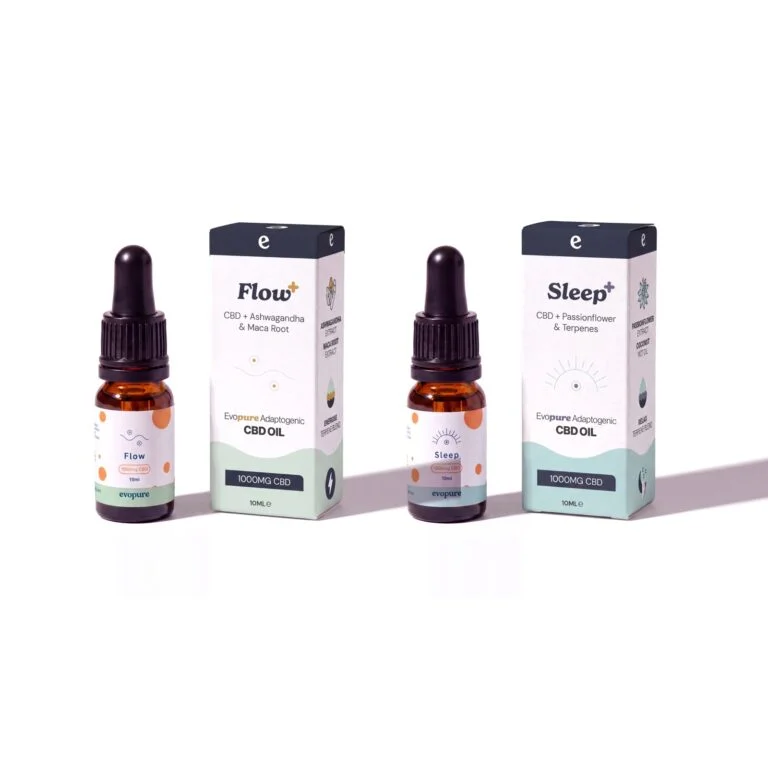
No. Evopure doesn’t make an omega 3 supplement. Our CBD oils use MCT oil as the carrier, and MCT oil isn’t a source of omega 3, so don’t count it towards your intake (more in MCT vs hemp seed vs olive oil).
The supplement the NHS does suggest for everyone in a UK winter is vitamin D: a daily 10 microgram supplement in autumn and winter. See vitamin D in winter and vitamin C for your other winter basics.
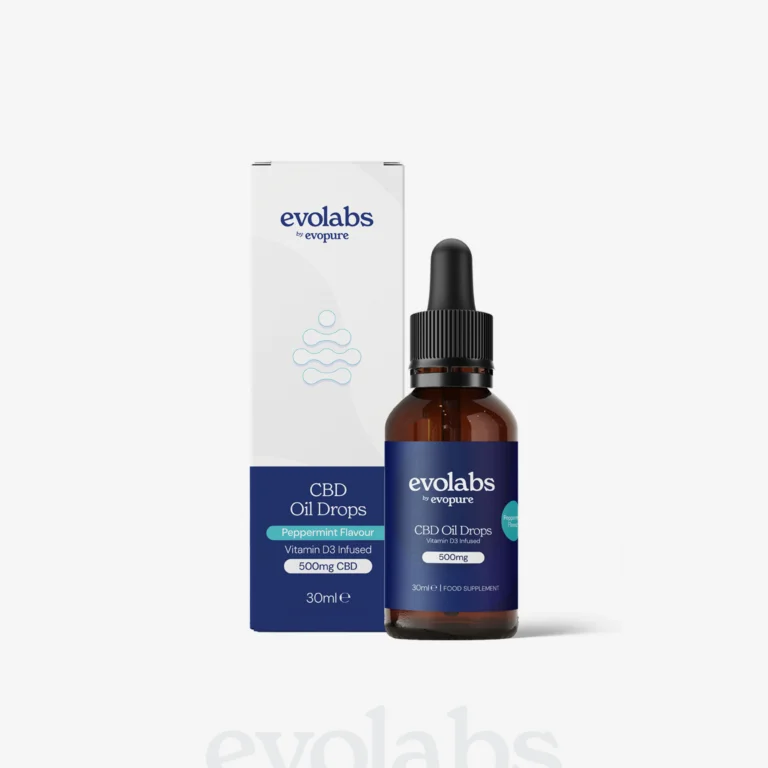
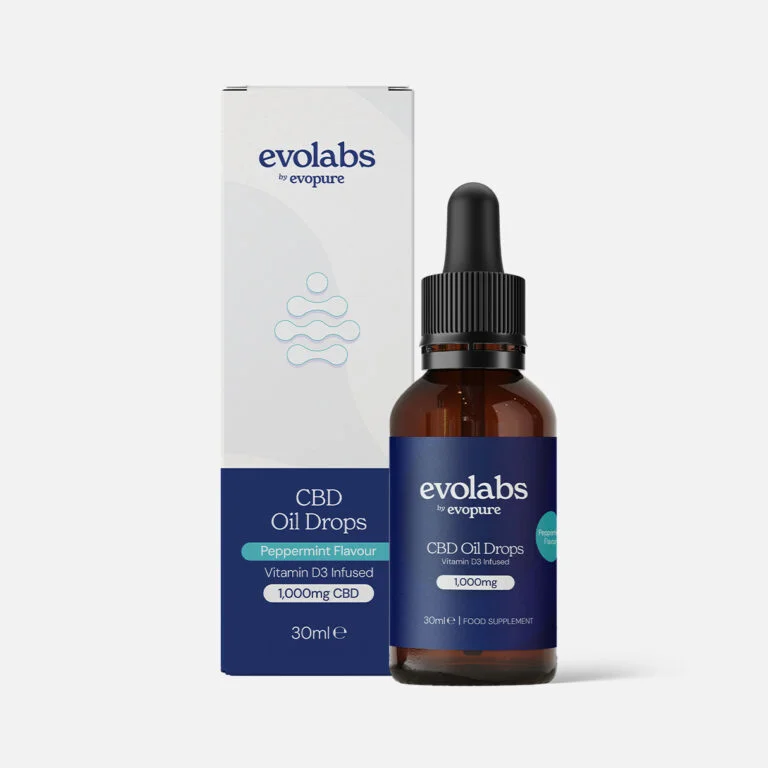
If you already use CBD oil, our Evolabs Mint CBD Oil with vitamin D3 adds 10 micrograms (200% NRV) of vegan, algae-based vitamin D3 per half pipette, the NHS daily amount, to high-quality, tested CBD. Vitamin D contributes to the normal function of the immune system and to the maintenance of normal bones. It contains no omega 3, and the CBD itself has no authorised health claims.
The FSA’s 10mg a day figure is precautionary advice rather than a legal limit, set while longer-term safety research continues. At Evopure we think it is a very cautious figure, and many adults use more. If you go above it, increase slowly, and check with your GP or pharmacist first if you take any medication.
Our Magnesium Glycinate Sleep Complex is a caffeine-free evening drink with magnesium bisglycinate and citrate. Magnesium contributes to a reduction of tiredness and fatigue and to normal psychological function. It contains no omega 3.
Our products are for adults (18+) only. We don’t recommend our products during pregnancy or breastfeeding.
Related guides
- If you are weighing up a wider routine, see supplements for men over 40.
- For a wider look at what is worth taking, see supplements for women over 40.
- For what does help, see our guide to dry eye remedies based on NHS self-care advice.
- Wondering about glucosamine vs fish oil? See does glucosamine work?
- For one of the easiest plant sources of ALA, see chia seeds: benefits, nutrition and how much a day.
- Flaxseed is one of the richest plant sources of ALA: see flaxseed benefits, ground vs whole and flaxseed oil.
- Avocado fat is mostly monounsaturated rather than omega-3. See what avocado is good for.
- The vitamins and minerals with authorised immune claims.
- For how omega-3 ranks against other options, see natural supplements for anxiety, ranked by evidence.
- In one 4-month trial, omega 3 supplements were linked with lower cortisol during a stress test; see how to lower cortisol for how that fits with sleep, exercise and diet.
- Anti-inflammatory foods and a simple 7-day meal plan.
- For how fish oil compares with turmeric, collagen and glucosamine, see our guide to supplements for joint pain.
- For CBD and joints, read CBD for arthritis and joint pain: does it help?
- Oily fish is also the richest food source of vitamin D: see what foods contain vitamin D.
Sources 22
- NHS. Fish and shellfish.
- NHS. Vitamin A and Vitamins and supplements in pregnancy.
- GOV.UK. GB nutrition and health claims register and Composition of Foods Integrated Dataset (CoFID).
- SACN. Advice on fish consumption: benefits and risks.
- EFSA. Scientific Opinion on the Tolerable Upper Intake Level of EPA, DHA and DPA. EFSA Journal, 2012.
- British Dietetic Association. Omega-3: food fact sheet.
- NICE. Cardiovascular disease: risk assessment and reduction (NG238).
- MHRA. Omega-3-acid ethyl ester medicines: dose-dependent increased risk of atrial fibrillation. Drug Safety Update, 2024.
- BNF (NICE). Omega-3-acid ethyl esters and interactions.
- NCCIH. Omega-3 supplements: what you need to know.
- Manson JE et al. Marine n-3 fatty acids and prevention of cardiovascular disease and cancer (VITAL). N Engl J Med, 2019.
- ASCEND Study Collaborative Group. Effects of n-3 fatty acid supplements in diabetes mellitus. N Engl J Med, 2018.
- Abdelhamid AS et al. Omega-3 fatty acids for the primary and secondary prevention of cardiovascular disease. Cochrane, 2020.
- Appleton KM et al. Omega-3 fatty acids for depression in adults. Cochrane, 2021.
- DREAM Study Research Group. n-3 fatty acid supplementation for the treatment of dry eye disease. N Engl J Med, 2018.
- Gillies D et al. Polyunsaturated fatty acids for ADHD in children and adolescents. Cochrane, 2023.
- Senftleber NK et al. Marine oil supplements for arthritis pain. Nutrients, 2017.
- Gencer B et al. Marine omega-3 supplementation and risk of atrial fibrillation. Circulation, 2021.
- Burdge GC, Calder PC. Conversion of alpha-linolenic acid to longer-chain fatty acids in human adults. Reprod Nutr Dev, 2005.
- Lawson LD, Hughes BG. Absorption of EPA and DHA from fish oil taken with a high-fat meal. Biochem Biophys Res Commun, 1988.
- Middleton P et al. Omega-3 fatty acid addition during pregnancy. Cochrane, 2018.
- Also referenced: NHS, The vegan diet; USDA FoodData Central values for chia seeds, flaxseed and hulled hemp seeds (FDC 170554, 169414, 170148).
This guide is general information, not medical advice. Evopure makes the Evolabs Mint CBD Oil with vitamin D3 and the Magnesium Glycinate Sleep Complex. Evopure does not sell an omega 3 product, and neither product contains omega 3.