Last updated: 10 November 2026
The NHS says men need 300mg of magnesium a day and women 270mg, and most people can get that from food. From supplements, 400mg or less a day is unlikely to cause harm. These figures are elemental magnesium, not the compound weight: 1,000mg of magnesium glycinate gives only about 141mg of magnesium.
Below: UK amounts by age, glycinate label maths, which product fits, women, men, sleep, food and safe limits.
How much magnesium per day, in 30 seconds: 300mg a day (men) or 270mg (women), mostly from food. Keep supplements to 400mg or less a day, take them with food, and check with your GP or pharmacist first if you have kidney disease or take regular medication.
How much magnesium should you take a day?
The NHS says men need 300mg of magnesium a day and women 270mg, from food and supplements added together. If you take a supplement, keep it to 400mg or less a day. These are amounts of elemental magnesium, the figure in the nutrition table, not the weight of the compound such as magnesium glycinate.
UK government figures give a daily amount, the Reference Nutrient Intake (RNI), for every age group. It is enough for nearly everyone in that group, from all sources added together, and it means elemental magnesium, not the weight of a supplement compound.
| Age | Men and boys | Women and girls |
|---|---|---|
| 1 to 3 years | 85mg | 85mg |
| 4 to 6 years | 120mg | 120mg |
| 7 to 10 years | 200mg | 200mg |
| 11 to 14 years | 280mg | 280mg |
| 15 to 18 years | 300mg | 300mg |
| 19 to 64 years | 300mg | 270mg |
| 65 to 74 years | 300mg | 270mg |
| 75 and over | 300mg | 270mg |
There is also a lower figure, the LRNI: 190mg a day for men and 150mg for women. It is enough for only a small minority, so regularly eating less than it means your intake is very likely too low.
Many people in the UK miss the target. In the National Diet and Nutrition Survey (2019 to 2023), women aged 19 to 64 averaged 224mg a day from food, about 83% of the 270mg target, and 15% ate less than the LRNI. Men averaged 273mg, and 20% fell below theirs. Teenage girls fare worst: 48% of girls aged 11 to 18 ate less than the LRNI.
iChildren: most get enough from food and milk. If you’re thinking about a supplement for a child, read our guide to magnesium for kids and speak to a pharmacist first. Our products are for adults (18+) only.
iPregnancy: if you’re pregnant or breastfeeding, read magnesium in pregnancy and check with your midwife or GP before taking any supplement. We don’t recommend our products during pregnancy or breastfeeding.
Our pick
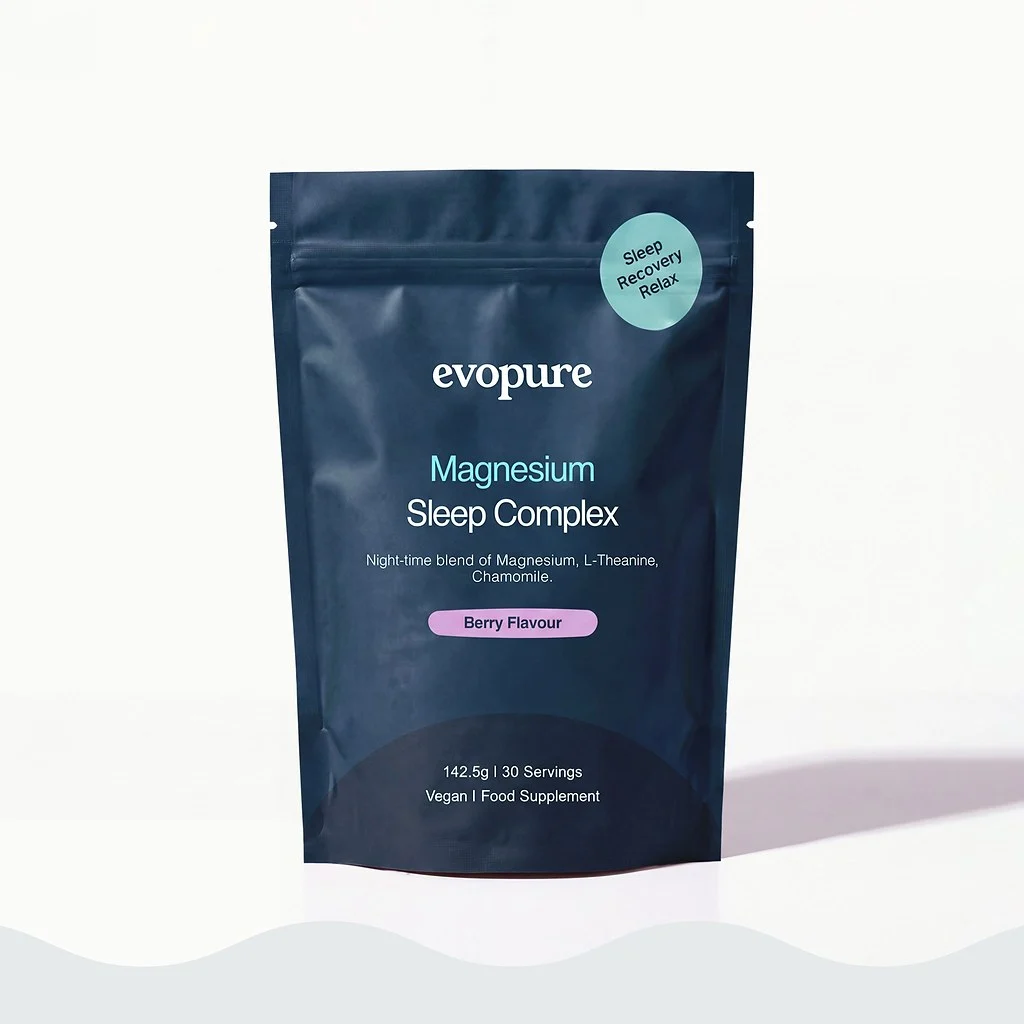
Magnesium Glycinate Sleep Complex
Magnesium Glycinate Sleep Complex is a berry drink powder with 290mg of magnesium a scoop from bisglycinate and citrate, plus glycine and L-theanine. Magnesium contributes to a reduction of tiredness and fatigue.
Add Magnesium Glycinate Sleep Complex to bag See ingredients and reviews
Vegan and made in the UK. Subscribe and save 25% on your first order, then 20%. New to Evopure? Join our emails for 20% off a one-off first order. Free UK delivery over £45, 14-day returns on unopened items.
Subscribe £22.49One-off £29.99
View productHow much magnesium glycinate should I take daily?
Count the elemental magnesium, not the glycinate weight. Magnesium bisglycinate, the usual “glycinate”, is only about 14% magnesium, so 1,000mg of the compound gives about 141mg. Typical supplement doses are 100 to 350mg of magnesium a day, with all supplements kept to 400mg or less, as the NHS advises.
| The label says | Magnesium you get | Share of a woman’s 270mg |
|---|---|---|
| “Magnesium glycinate 500mg” | about 70mg | about a quarter |
| “Magnesium glycinate 1,000mg” | about 141mg | about half |
| “Magnesium glycinate 2,000mg” | about 282mg | all of it, and a bit more |
| “Magnesium 100mg (as bisglycinate)” | 100mg | just over a third |
- Glycinate and citrate together: add the two elemental figures.
- For sleep, the largest recent trial used 250mg of elemental magnesium a day as bisglycinate, about 1,770mg of the compound (more in the sleep section).
Always use the elemental figure in the nutrition table, as some glycinates are buffered with magnesium oxide. Our guide to magnesium glycinate vs bisglycinate explains why the two names mean the same compound, and our full magnesium glycinate guide covers timing and side effects.
Which Evopure product fits your routine?
If food doesn’t get you to 270 or 300mg, a small top-up is all most people need. Checked against our product page in October 2026:
| Option | Magnesium | Suits | What to know |
|---|---|---|---|
| Magnesium Glycinate Sleep Complex, our evening drink | 290mg a 4.75g scoop, a little over the NHS amount for women | A berry drink as part of a wind-down | With glycine, L-theanine and herbal extracts. Start with a third of a scoop |
| A magnesium tablet or capsule (we don’t make one) | Varies: check the elemental figure | People who’d rather swallow a pill | Easy to overshoot when you add a multivitamin |
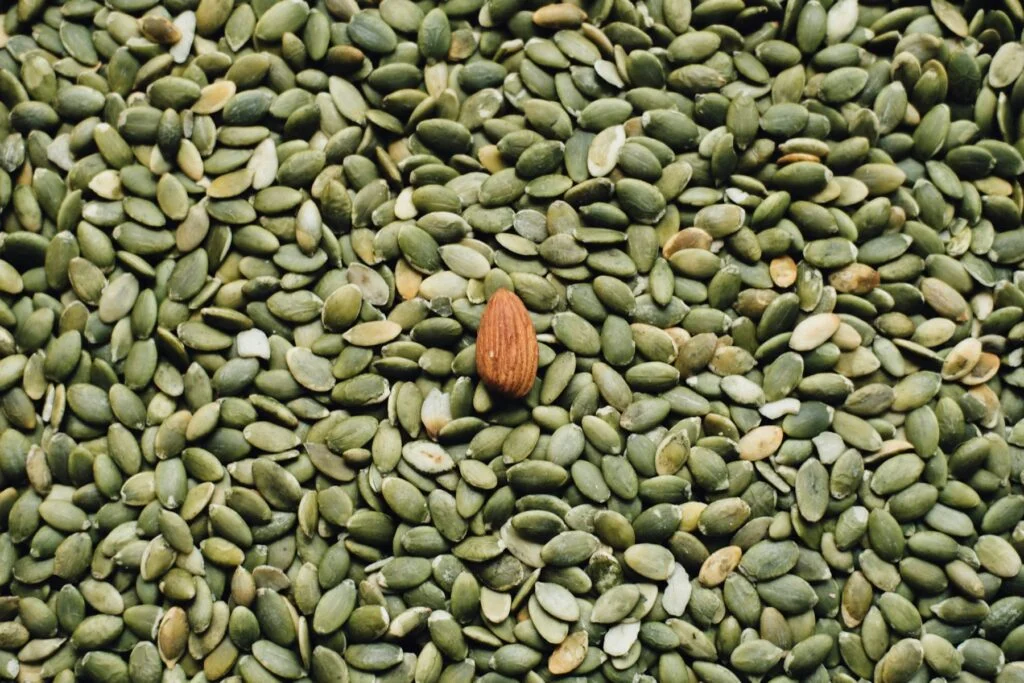
| Food first: foods high in magnesium | 30g of pumpkin seeds gives 165mg | Anyone whose diet has room to improve | No supplement limit applies to magnesium naturally in food |
Magnesium contributes to a reduction of tiredness and fatigue. One scoop leaves room within the NHS 400mg supplement guide; if you also take a multivitamin, add up the total. The herbal extracts have no authorised health claims. Adults (18+) only.
Value: each pack gives around 30 evening servings. Subscribe and Save lowers the price of every delivery, and you can skip, pause or cancel any time.
What you get with the Sleep Complex:
- Vegan, alcohol-free and made in the UK.
- Tracked Royal Mail delivery across the UK, dispatched the same day if you order before 3pm Monday to Thursday (delivery details).
- Unopened, unused items can be returned within 14 days (returns policy).
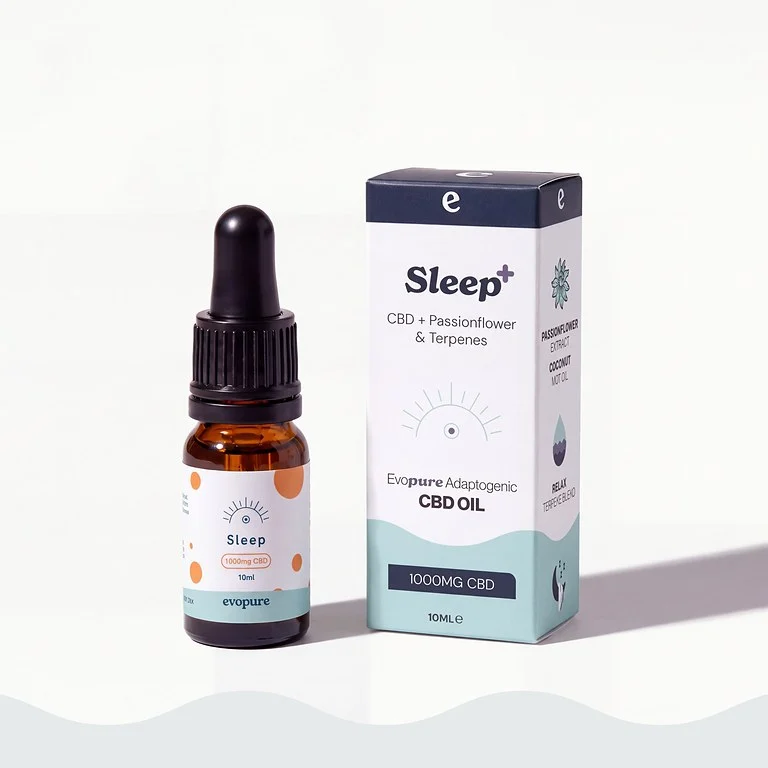
It’s a food supplement, not a medicine, and we don’t claim it treats poor sleep or any condition. Ready to choose? Try the Magnesium Glycinate Sleep Complex if an evening drink suits you. Also below, with no magnesium: Reishi Mushroom Adaptogenic Complex, a reishi hot chocolate (it contains a little natural caffeine), and Sleep CBD Oil with Passion Flower.
The FSA’s 10mg a day figure is precautionary advice rather than a legal limit, set while longer-term safety research continues. At Evopure we think it is a very cautious figure, and many adults use more. If you go above it, increase slowly, and check with your GP or pharmacist first if you take any medication.
How much magnesium per day for a woman or a man?
Women: women need 270mg of magnesium a day from age 19, the NHS says, and the figure doesn’t change at 40, 50, 60 or 70. What changes is how easy it is to reach. In the survey, women aged 65 to 74 averaged 241mg and women 75 and over averaged 231mg, both under target. Our guides to magnesium for women and magnesium for menopause cover each life stage.
Men: 300mg a day from age 19, with no change for men over 50, 60 or 70. Regular drinking makes a shortfall more likely (see below). See magnesium for men for the full picture.
Why do some sites say 320mg or 420mg? Those are US amounts, about 420mg for men and 320mg for women. In the UK, go by 300mg and 270mg.
Magnesium contributes to a reduction of tiredness and fatigue, normal muscle function and normal psychological function. These are among its authorised health claims in Great Britain.
How much magnesium should you take as a supplement?
A supplement is a top-up for the gap between what you eat and your daily target, so you usually need less than the full 270 or 300mg.
- If you eat wholegrains, nuts, seeds, beans and greens most days, you may not need a supplement at all.
- If your diet is patchy, 100 to 300mg of elemental magnesium a day usually covers the gap.
- Don’t go above 400mg a day from supplements. The NHS says 400mg or less a day is unlikely to cause any harm, and that high doses (more than 400mg) for a short time can cause diarrhoea.
The NHS 400mg and the EFSA 250mg figures
You may also see 250mg quoted as a limit. That comes from the European Food Safety Authority (EFSA), which sets a tolerable upper level of 250mg a day for adults for magnesium from supplements, fortified foods and water. It doesn’t include the magnesium naturally in food and drink. The UK figure most people are given is the NHS one.
In practice, staying around 100 to 250mg from supplements keeps you inside both. Remember to add up every product you take: a multivitamin, a “sleep” blend and a separate magnesium tablet can quietly reach 400mg between them. The magnesium and vitamin D and magnesium and calcium guides explain how to combine them.
If you already take a multivitamin, check its label first: it may already contain some magnesium. See are multivitamins worth taking for the bigger picture.
Elemental magnesium: how to read a label
Magnesium in supplements is always bound to something else, such as glycine or citric acid. The big number on the front of the pack is often the weight of the whole compound, and only part of it is magnesium. Every daily amount in this guide is elemental magnesium.
On a UK label, look for the line in the nutrition table that says “Magnesium” with a %NRV next to it, often written “magnesium (from magnesium bisglycinate)”. That is the elemental figure. The NRV used on labels is 375mg, so 100mg of magnesium shows as about 27% NRV.
| Form | Roughly how much is magnesium | Magnesium in a 500mg dose of the compound | Compound needed for 100mg magnesium |
|---|---|---|---|
| Glycinate (bisglycinate) | 14% | about 70mg | about 710mg |
| Citrate | 16% | about 80mg | about 620mg |
| Malate | 16% | about 78mg | about 645mg |
| Chloride (hexahydrate) | 12% | about 60mg | about 835mg |
| Taurate | 9% | about 45mg | about 1,120mg |
| L-threonate | 8% | about 41mg | about 1,210mg |
| Oxide | 60% | about 300mg | about 165mg |
We worked these out from each compound’s molecular formula. Real products vary, because some forms are hydrated and some “glycinate” products are buffered with magnesium oxide, so always go by the elemental figure on the label.
A high percentage doesn’t mean better absorption. Oxide packs in the most magnesium per tablet, yet one small study found only about 4% of it was absorbed, compared with much more from chloride, lactate and aspartate. For a side-by-side of every form, see 12 types of magnesium or glycinate vs citrate vs threonate.
How much magnesium for sleep?
There is no official “sleep dose” of magnesium, and no authorised health claim linking magnesium to sleep. Here’s what the research shows.
- A 2025 trial gave 155 adults who reported poor sleep either 250mg of elemental magnesium a day as bisglycinate or a placebo. After four weeks, insomnia scores improved a little more on magnesium, but the researchers rated the effect as small. People who ate less magnesium to start with seemed to gain most.
- A 2021 review of three small trials in 151 older adults found people fell asleep about 17 minutes sooner on magnesium than on placebo. Total sleep time didn’t change significantly, and the evidence was rated low to very low quality.
iThe largest recent trial used 250mg of elemental magnesium, inside the NHS supplement guide, not a mega-dose. More is not better, and magnesium isn’t a treatment for insomnia. If poor sleep is affecting your daily life, see your GP.
How much magnesium glycinate should I take for sleep?
Sleep trials have used about 250 to 500mg of elemental magnesium a day, but the NHS says 400mg or less a day from supplements is unlikely to cause harm, so 200 to 350mg is a sensible range for most adults. For glycinate, 250mg of magnesium means about 1,770mg of magnesium bisglycinate on the label.
The 500mg figure comes from a 2012 trial in 46 older adults with insomnia, above the NHS guide; the 2025 trial in 155 adults used 250mg as bisglycinate. Many people take it with their evening meal or an hour or two before bed. One 4.75g serving of our Magnesium Glycinate Sleep Complex gives 290mg. If you have kidney disease, check with your GP first.
Magnesium doesn’t knock you out like a sleeping pill; see does magnesium make you sleepy? and the best magnesium for sleep. If restless legs keep you up, read magnesium for restless legs, and for stress and worry, magnesium for anxiety.
Food first: how to reach your daily amount
The NHS says you should be able to get all the magnesium you need from a varied, balanced diet. Figures below are from USDA FoodData Central, for typical UK portions.
| Food and portion | Magnesium |
|---|---|
| Pumpkin seeds, roasted, 30g | 165mg |
| Almonds, roasted, 30g | 84mg |
| Cashews, roasted, 30g | 78mg |
| Spinach, boiled, 90g | 78mg |
| Brown rice, cooked, 180g | 70mg |
| Dark chocolate (70 to 85%), 25g | 57mg |
| Black beans, cooked, 80g | 56mg |
| Porridge oats, 40g dry | 55mg |
| Wholemeal bread, 2 slices (70g) | 53mg |
A sample day: porridge (55mg), two slices of wholemeal toast (53mg), a handful of almonds (84mg), brown rice with beans and spinach at dinner (204mg). That’s nearly 400mg, comfortably past either target, with no supplement. See foods high in magnesium for the full list; many also appear in our high fibre foods guide.
Magnesium from food can’t give you “too much” in the way supplements can: EFSA’s 250mg limit doesn’t apply to magnesium naturally present in food.
Who might be running low?
Mild shortfalls often cause no obvious symptoms. You’re more likely to be low if you:
- eat few wholegrains, nuts, seeds, beans or greens
- drink alcohol regularly. A review found drinking can make the kidneys pass two to three times more magnesium
- take a proton pump inhibitor (such as omeprazole or lansoprazole) long term. The UK medicines regulator says low magnesium has been reported, mostly after a year or more of treatment, and doctors may check your level
- take some diuretics (water tablets), which the same warning flags too
- are a teenage girl or an older adult, the groups whose intakes fall shortest in UK survey data
The regulator lists muscle twitches, tremors, vomiting, tiredness and loss of appetite as symptoms to see a doctor about. Your GP can check your magnesium with a blood test. Read the signs of magnesium deficiency for the full list, and magnesium for energy if tiredness is your main reason for asking.
Can you take too much magnesium? Side effects
Yes, from supplements. The NHS says 400mg or less a day from supplements is unlikely to cause harm, and that more than 400mg for a short time can cause diarrhoea. Magnesium from food isn’t a concern for healthy people, because the kidneys clear what you don’t need. Very high doses can be dangerous.
EFSA’s more cautious limit for supplements is 250mg a day. The first side effects of too much are almost always in your gut:
- Diarrhoea and loose stools. This is the most common side effect. Citrate and oxide are the forms most likely to do it, which is why they are also used as laxatives (see magnesium for constipation).
- Stomach cramps, wind or bloating, especially on an empty stomach. Our magnesium for bloating guide explains when magnesium can make bloating worse.
- Feeling sick. The US Office of Dietary Supplements lists diarrhoea, nausea and stomach cramps as the effects of high doses from supplements or medicines.
Can magnesium glycinate cause diarrhoea? It can, though it is generally reported to be gentler than citrate or oxide. If it happens, cut back, take it with food or split it into two smaller doses.
Can you overdose on magnesium?
Yes, but it is rare. A magnesium overdose (hypermagnesaemia) mostly happens with very high doses from supplements, laxatives or antacids, usually several thousand milligrams a day, and especially with kidney disease, because healthy kidneys clear the extra. It isn’t a risk from food. Keeping supplements to the NHS 400mg a day guide makes it very unlikely.
The BNF lists the signs of very high blood magnesium as nausea, vomiting, flushing, thirst, low blood pressure, drowsiness, confusion, muscle weakness and an irregular heartbeat. The Office of Dietary Supplements adds difficulty breathing, and notes that a few deaths from very high magnesium have been reported.
When to get help: call 999 if someone has difficulty breathing, chest pain, a very slow or irregular heartbeat or is hard to wake after taking magnesium. Call NHS 111 or your GP if you have vomiting, confusion, drowsiness or weakness after a high dose, especially with kidney problems, or if diarrhoea doesn’t settle once you cut back. If a child swallows supplements, call NHS 111 straight away.
Kidney disease: your kidneys clear extra magnesium. The BNF advises caution with magnesium in kidney problems because of the risk of high levels, and to avoid it when kidney function is severely reduced. Don’t take magnesium supplements with kidney disease unless your doctor says so. More in our guides to magnesium side effects and how long magnesium stays in your body.
Medicines to space out from magnesium
Magnesium can stop some medicines being absorbed properly. The BNF gives these timings:
| Medicine | Examples | BNF advice |
|---|---|---|
| Tetracycline antibiotics | Doxycycline, lymecycline, minocycline, oxytetracycline | Separate by at least 2 to 3 hours |
| Alendronic acid (bisphosphonate) | For osteoporosis | Take it at least 30 minutes before magnesium |
| Risedronate (bisphosphonate) | For osteoporosis | Separate by at least 2 hours |
| Ibandronic acid (bisphosphonate) | For osteoporosis | Avoid magnesium for at least 6 hours before and 1 hour after |
iIf you take any regular medicine, ask your pharmacist to check timings before you start magnesium.
When and how to take magnesium
- Take it with food. It’s kinder to your stomach.
- Split bigger amounts. If you take more than about 200mg, try half in the morning and half in the evening rather than all at once.
- Pick a time you’ll stick to. Being consistent matters more than the clock. Many people take glycinate in the evening as part of a wind-down routine; see the best time to take magnesium.
- Start low and build up over a few days, so you can spot any stomach upset.
- Review after a few weeks. If your diet improves, you may need less.
Choosing between powders, tablets and capsules? Powders make it easy to take a smaller amount; see magnesium powder vs tablets and our best magnesium supplement UK guide.
Related guides
- Sprays and lotions don’t count towards this, as little gets through the skin: see does magnesium spray work?
- How many Trip Mindful Blend drinks a day fit within the NHS guide.
- If you take a blend, check the elemental figure rather than the blend weight, as our magnesium complex guide explains.
- How much magnesium is in Home Bargains supplements.
- How much magnesium is in Vitabiotics Ultra Magnesium.
- For worked label examples, see Holland and Barrett magnesium: compound mg vs elemental mg.
- Some capsules are low dose: Wild Nutrition magnesium gives 80mg in two capsules.
- See how this adds up across one brand’s range in Solgar magnesium.
- Dilute forms need big doses: you need about 1,540mg of magnesium orotate for 100mg of magnesium.
- Label maths matters here: New Leaf magnesium glycinate lists 1,040mg on the front but provides 208mg of magnesium.
- Some single tablets come close to the 400mg guide on their own, such as Tesco’s 375mg magnesium.
- Labels can be confusing: a Zooki magnesium sachet lists 2,000mg of glycinate but gives 200mg of magnesium.
- To see how label doses add up, read our look at Viridian magnesium labels.
- Many labels say 375mg, which is the NRV; see how that adds up in our Healthspan magnesium guide.
- Taking a multivitamin as well? See our Aldi magnesium guide on adding up the total.
- Some combined tablets already reach 400mg on their own, such as Natures Aid calcium, magnesium and zinc.
- Our Nutravita magnesium guide shows how 2,175mg of glycinate becomes 300mg of magnesium.
- Labels that say “1 to 4 capsules a day” can go above 400mg: see how this works for Pure Encapsulations magnesium glycinate.
- Taking a powder? See how much magnesium is in a scoop of magnesium glycinate powder.
- Taking a multi-form blend? Here’s how to work out the magnesium in a 12 in 1 complex.
- Brand names can mislead: New Nordic magnesium glycinate “600mg” gives 240mg of magnesium per two tablets.
- Bisglycinate is only about 14% magnesium, so see how much magnesium is in magnesium bisglycinate before you count your dose.
- If you also take ashwagandha, our guide to taking ashwagandha and magnesium together covers timing and who should avoid the pair.
- A “500mg magnesium glycinate” capsule is mostly glycine, though still well short of the 3g studied in glycine for sleep trials.
- To see these numbers applied to one product, read our label maths for GLOV Magnesium Complex, which lists 300mg per serving.
- For later life, our guide to magnesium for older adults covers what changes after 65, the best type and kidney and medicine checks.
- For magnesium alongside vitamin D, B12 and zinc, see the best supplements for men over 50.
- For the full picture by age, see our guide to supplements for women over 40, 50 and 60.
- Once you know the amount that suits you, our Black Friday supplement deals from 27 to 30 November are a good time to stock up.
- Drinks count too: our magnesium drink guide lists how much magnesium UK cans, shots and powders give per serving.
- For label maths on budget supplements, see Home Bargains magnesium.
-
Worked example: Nutrition Geeks magnesium gives 384mg in two capsules, just under 400mg on its own.
-
For a worked example of the 400mg question on a gummy label, see SPNutrition magnesium gummies.
- Prescription doses are written in mmol: a 4mmol magnesium glycerophosphate tablet gives 97.2mg of magnesium.
Next step
Magnesium Glycinate Sleep Complex
If you’ve worked out you’d like a daily top-up, Magnesium Glycinate Sleep Complex gives 290mg magnesium (77% NRV) per 4.75g serving from bisglycinate and citrate, plus 500mg glycine and 100mg L-theanine, within the NHS 400mg a day guide for supplements. Magnesium contributes to a reduction of tiredness and fatigue.
Add Magnesium Glycinate Sleep Complex to bag See ingredients and reviews
Subscribe and save 25% on your first order, then 20%. New to Evopure? Join our emails for 20% off a one-off first order. Free UK delivery over £45. If you take any regular medicines, check with your GP or pharmacist first. We don’t recommend our products during pregnancy or breastfeeding.
Subscribe £22.49One-off £29.99
View productSources 17
- NHS. Vitamins and minerals: others (magnesium).
- Public Health England. Government Dietary Recommendations (2016), tables 5 and 6.
- Office for Health Improvement and Disparities. National Diet and Nutrition Survey 2019 to 2023 (chapter 5 tables 5.26 and 5.41).
- EFSA. Summary of Tolerable Upper Intake Levels (magnesium, from SCF 2001).
- Regulation (EU) No 1169/2011 as retained in GB. Annex XIII: nutrient reference values.
- Department of Health and Social Care. Great Britain nutrition and health claims (NHC) register.
- BNF. Magnesium interactions and magnesium glycerophosphate (renal impairment, side effects).
- NIH Office of Dietary Supplements. Magnesium: fact sheet for health professionals (health risks from excessive magnesium).
- MHRA. Proton pump inhibitors in long-term use: reports of hypomagnesaemia.
- Schuster J, et al. Magnesium bisglycinate supplementation in healthy adults reporting poor sleep: a randomized, placebo-controlled trial. Nat Sci Sleep, 2025.
- Abbasi B, et al. The effect of magnesium supplementation on primary insomnia in elderly: a double-blind placebo-controlled clinical trial. J Res Med Sci, 2012.
- Mah J, Pitre T. Oral magnesium supplementation for insomnia in older adults. BMC Complement Med Ther, 2021.
- Firoz M, Graber M. Bioavailability of US commercial magnesium preparations. Magnes Res, 2001.
- Romani AM. Magnesium homeostasis and alcohol consumption. Magnes Res, 2008.
- Zhang W, Zhao Y. Global dietary magnesium deficiency: prevalence, underlying causes, health consequences, and strategic solutions. Int J Vitam Nutr Res, 2025 (US RDA figures).
- PubChem. Magnesium bisglycinate and other compound records (molecular weights used for the elemental magnesium table).
- USDA. FoodData Central (SR Legacy entries 170557, 170158, 170571, 168463, 169704, 170273, 173735, 173904, 172688).
This guide is general information, not medical advice. Evopure makes the Magnesium Glycinate Sleep Complex.