Last updated: October 2026
L-theanine is an amino acid from tea. Its best-supported benefit is sharper attention for an hour or two: a single 200mg dose sped up reaction times across 31 trials, and pairing it with caffeine improved accuracy on demanding tasks. Effects on stress and sleep are small, anxiety results weren’t significant, and it has no authorised UK health claims.
It isn’t an essential nutrient and isn’t used to build protein. You’ll find it in green and black tea, and as capsules, powders or one ingredient in sleep and focus blends. Facts checked October 2026.

Our evening magnesium
Magnesium Glycinate Sleep Complex
Magnesium Glycinate Sleep Complex is a berry drink powder with 290mg of magnesium per serving, plus glycine, L-theanine and herbs. Vegan and made in the UK. Compare our range.
Add Magnesium Glycinate Sleep Complex to bag See ingredients and reviews
Vegan and made in the UK. Free UK delivery over £45, 14-day returns on unopened items.
Subscribe £22.49One-off £29.99
View productL-theanine benefits: the evidence at a glance
The best guide is a 2026 meta-analysis of 31 randomised trials with 1,168 people. Here is each area people search for, what the studies actually measured, and how much weight the results can bear.
| Area | What studies looked at | Strength | Caveat |
|---|---|---|---|
| Attention | A single 200mg dose taken 30 to 60 minutes before reaction-time tests (2026 meta-analysis) | Moderate: the most consistent finding | Short-term lab tasks in healthy adults |
| Focus with caffeine | About 100 to 250mg L-theanine with 40 to 150mg caffeine, tested over 1 to 2 hours (trials and a 2025 meta-analysis) | Small to moderate | Wide uncertainty; caffeine does much of the work |
| Sleep | Self-rated sleep in 18 trials, 897 people (2025 meta-analysis) | Small | Many trials tested blends, not L-theanine alone |
| Stress | Stress ratings after a single dose or 200 to 400mg a day (2020 review of 9 trials; 2026 meta-analysis) | Weak to modest | The 2026 result leant on studies at high risk of bias |
| Anxiety | Anxiety scores across trials (2026 meta-analysis) | Not significant overall | Not a treatment for anxiety |
| Tiredness | Fatigue scores (2026 meta-analysis) | No significant effect | Few trials measured it |
| Blood pressure | Blood pressure during stressful tasks, 14 people (2012) | Very limited | One small study |
| ADHD | Sleep measures in 98 boys aged 8 to 12 (2011) | Very limited | Children, not adults; not a treatment |
In short: a real but short-lived effect on attention, and small or uncertain results elsewhere. Several trials were also funded by, or used tablets supplied by, tea or L-theanine makers, which is worth keeping in mind with small effects. That is also why no UK brand can legally call these “benefits” on a label (see UK rules). For how L-theanine stacks up against creatine, omega-3 and herbal options, see our guide to the best supplements for focus and concentration.
Which Evopure product fits your routine?
We don’t sell L-theanine on its own; it is one ingredient in our evening drink. Choose by routine.
| Routine | Product | What’s in it | What to know |
|---|---|---|---|
| Evening drink | Magnesium Glycinate Sleep Complex | Berry powder: 290mg magnesium per 4.75g scoop, glycine, L-theanine, herbs | L-theanine amount not stated. About 30 scoops a pouch |
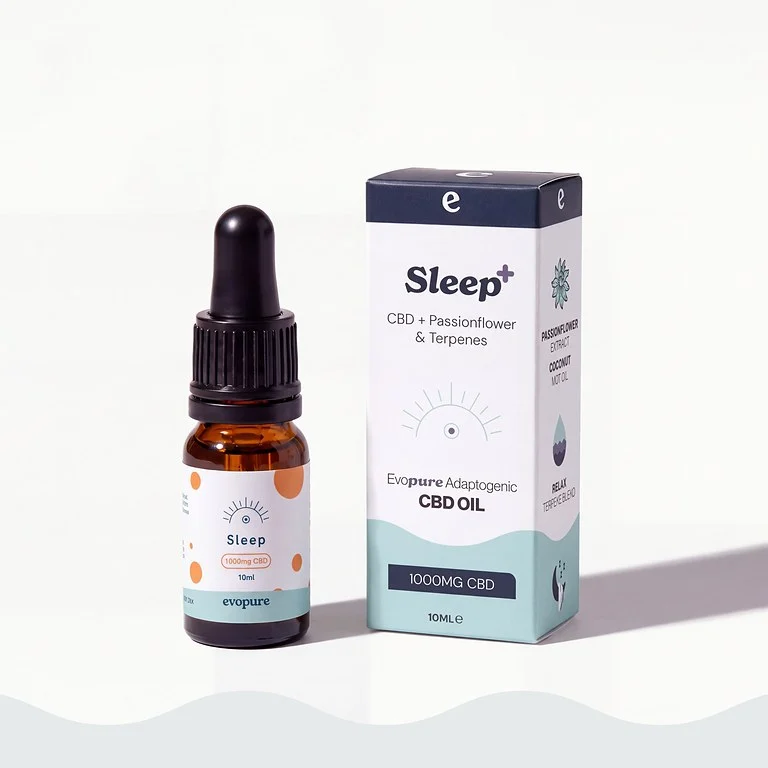
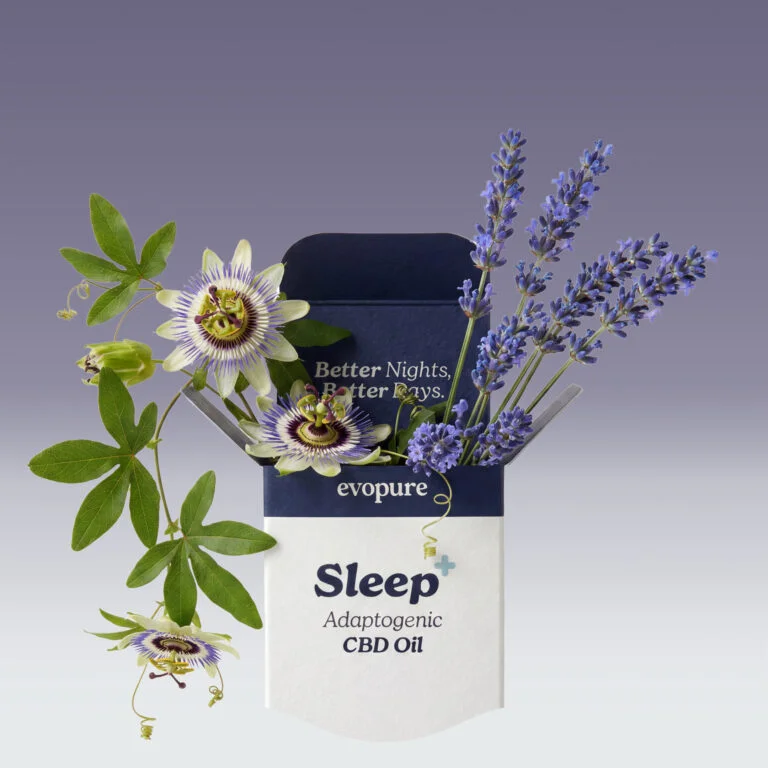
| Evening drops | Sleep CBD Oil | Broad spectrum CBD, passion flower; 500mg or 1,000mg | No L-theanine. 4 or 2 drops for 10mg CBD |
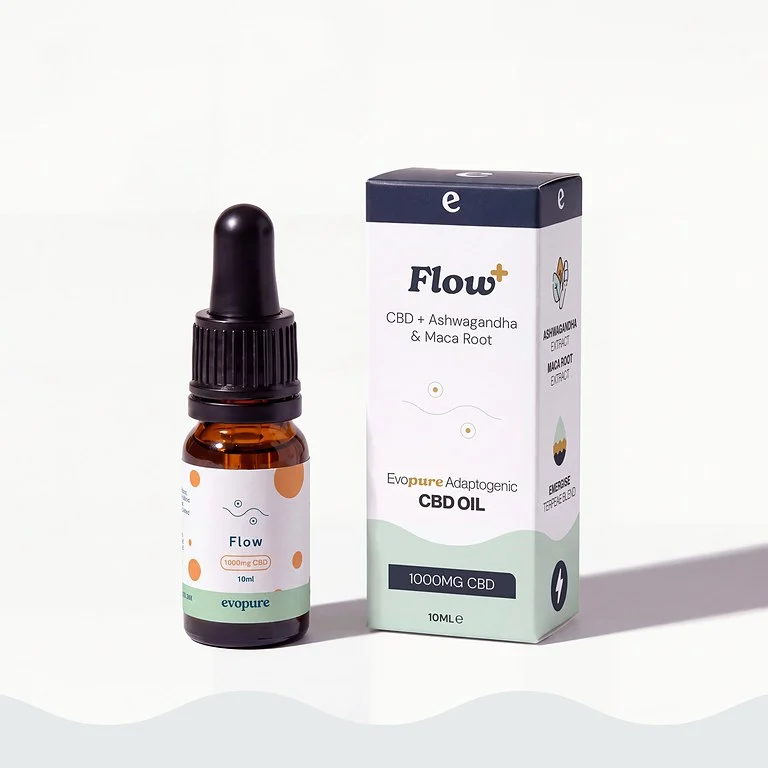
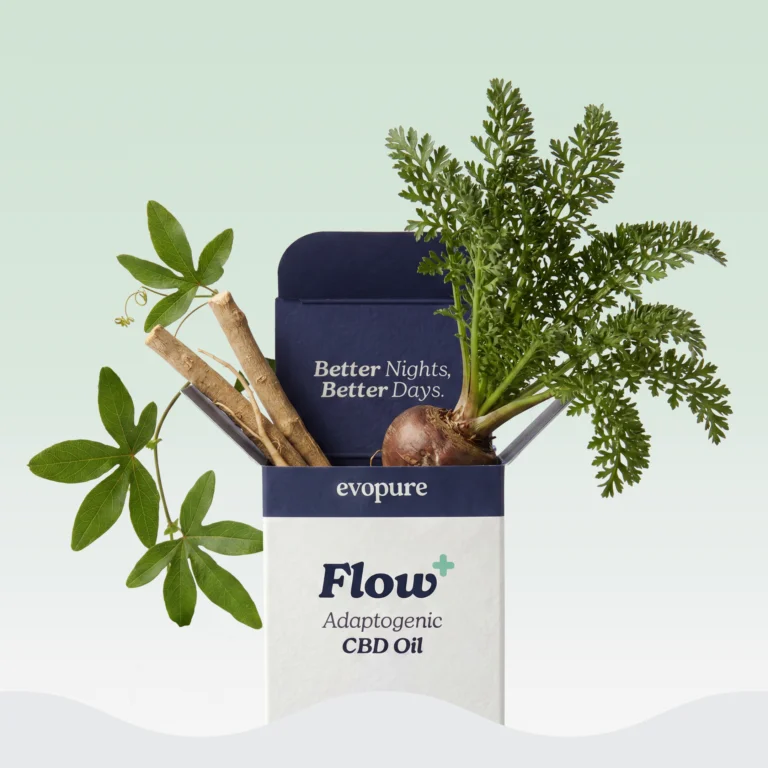
| Morning | Flow CBD Oil | Broad spectrum CBD, ashwagandha, maca; 500mg or 1,000mg | No L-theanine. Ashwagandha caution below |
| L-theanine alone | A single-ingredient capsule (not ours) | Usually 100 to 200mg a capsule | Check the points below |
Our drink’s label lists L-theanine without an amount, near the end. UK labels must list ingredients in order of weight, so expect less than the 200mg used in trials. Magnesium contributes to normal psychological function and to a reduction of tiredness and fatigue; L-theanine and the herbs have no authorised claims. Compare formats in our best magnesium drinks UK guide.
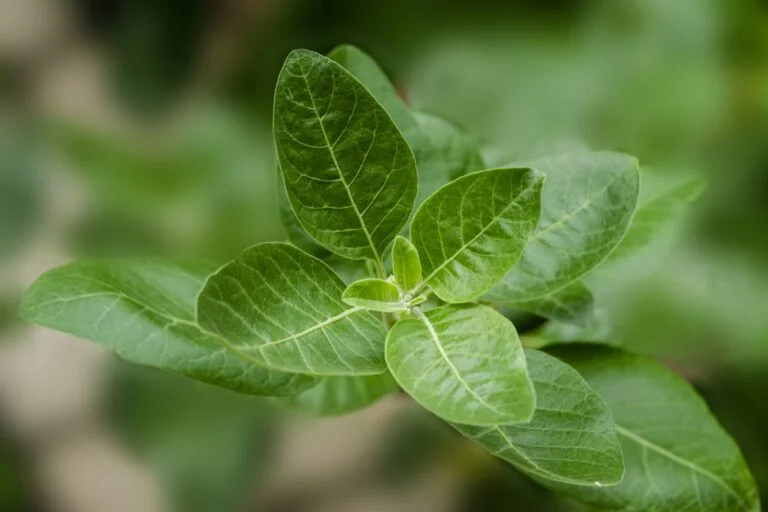
Ashwagandha in Flow: avoid it if you are pregnant or breastfeeding, have a thyroid, liver or autoimmune condition, are due to have surgery, or take regular medication without checking with your GP or pharmacist.
The FSA’s 10mg a day figure is precautionary advice rather than a legal limit, set while longer-term safety research continues. At Evopure we think it is a very cautious figure, and many adults use more. If you go above it, increase slowly, and check with your GP or pharmacist first if you take any medication.
Buying L-theanine alone? Look for the mg per capsule, no “proprietary blend”, caffeine stated in mg, batch testing, and no stress or sleep promises (not authorised UK claims).
Value: a Sleep Complex pouch lasts a month of evenings; for the oils, the 1,000mg bottles cost less per mg of CBD. Subscribe and Save lowers every order: skip, pause or cancel any time.
- Our CBD products: every batch third-party tested at ISO 17025 labs; request a batch report on our lab testing page.
- CBD oils: broad spectrum and THC free on each batch report, on the FSA public list, linked to validated applications.
- Made in the UK, vegan and alcohol-free.
- Tracked Royal Mail, dispatched the same day before 3pm Monday to Thursday (delivery). Unopened, unused items returnable within 14 days (returns).
They’re food supplements, not medicines. We don’t recommend our products during pregnancy or breastfeeding; adults (18+) only. Try the Sleep Complex as an evening drink, Sleep CBD Oil for drops at night, or Flow in the morning.
Does L-theanine make you sleepy?
Not like a sleeping tablet. In trials, 200mg taken 30 to 60 minutes before testing sped up reaction times rather than sedating people. A few people report mild drowsiness, so see how it affects you first.
How long does L-theanine take to work?
Quickly: in a study of 12 adults, blood levels peaked about 50 minutes after 100mg, from capsules or green tea alike. Attention effects were measured over the next 1 to 2 hours; sleep and stress changes after 4 weeks of daily use.
L-theanine and caffeine: the 2:1 stack
Tea naturally contains both, and the pairing has the most consistent trial results. The popular 2:1 ratio matches Owen’s trial (100mg L-theanine, 50mg caffeine), but it isn’t a proven best: trials used about 1.7:1 to 2.4:1.
- Owen, 2008: 27 adults. 100mg L-theanine with 50mg caffeine improved speed and accuracy on an attention-switching task at 60 minutes, and reduced distraction in a memory task.
- Giesbrecht, 2010: 44 young adults. 97mg L-theanine with 40mg caffeine improved task-switching accuracy and self-rated alertness. Other tasks didn’t change.
- Haskell, 2008: 250mg L-theanine with 150mg caffeine improved several speed and accuracy measures. L-theanine on its own raised “headache” ratings in that study.
- Payne, 2025: a review of 50 trials found small to moderate differences in attention and mood in the first 2 hours, with confidence intervals that often left the size, and even the direction, of the effect uncertain.
L-theanine on its own also showed a small to moderate effect on reaction time in that 2025 review, in line with the 2026 meta-analysis. It doesn’t cancel out caffeine, though. Caffeine stays in your system for hours, so a late coffee with L-theanine can still cost you sleep: see how long caffeine lasts. If coffee leaves you jittery, read does caffeine cause anxiety? before adding more. If you’re trying to cut down instead, caffeine withdrawal explains what to expect.
L-theanine for sleep: what trials found
The honest answer is a small effect at best. A 2025 meta-analysis of 18 trials (897 people) found small improvements in how quickly people felt they fell asleep, in daytime functioning and in overall self-rated sleep quality. The authors flagged that few studies used “pure” L-theanine; many tested it in blends, so it’s hard to say which ingredient did what. All of these outcomes were self-reported rather than measured in a sleep lab.
In a 4-week Japanese trial of 30 healthy adults, 200mg a day lowered sleep questionnaire scores compared with placebo. L-theanine isn’t a sleeping tablet and isn’t a treatment for insomnia; if poor sleep has lasted more than a few weeks, speak to your GP. For the other options and how they compare, see natural sleep aids ranked by evidence and magnesium for sleep.
L-theanine for stress and anxiety
A 2020 systematic review of 9 trials concluded that 200 to 400mg a day may be associated with lower stress ratings in people under pressure, while calling for longer and larger studies. The 2026 meta-analysis found only a modest drop in acute stress after a single dose, largely driven by studies at high risk of bias.
For anxiety, the same meta-analysis found results inconsistent and not significant overall. L-theanine isn’t a treatment for anxiety or any anxiety disorder. If anxiety is affecting your daily life, speak to your GP. See natural supplements for anxiety, ranked by evidence for how it compares with other options.
L-theanine and ADHD
The research is small and mostly in children. In a 6-week trial of 98 boys aged 8 to 12 with ADHD, 400mg a day improved some wrist-monitor measures of sleep, while the time taken to fall asleep didn’t change. There is no good evidence in adults. L-theanine isn’t a treatment for ADHD, and anyone on stimulant medication should check with their GP, pharmacist or ADHD team first (see medicines). See ADHD and sleep.
How much L-theanine did studies use?
This is what the trials used, not personal dosing advice. Follow the label on the product you buy.
| Area studied | Dose used in trials | Timing in trials |
|---|---|---|
| Attention, on its own | 200mg, single dose | 30 to 60 minutes before the task |
| Focus, with caffeine | 97 to 250mg L-theanine with 40 to 150mg caffeine | Measured over the next 1 to 2 hours |
| Stress | 200 to 400mg a day | Single doses or daily |
| Sleep | 200mg a day in the 4-week trial | Daily for several weeks |
Most trials used 100 to 400mg a day and ran for days or weeks, so long-term data is limited.
How much L-theanine is in tea?
Less than most people think. A 2025 laboratory study measured about 12mg of L-theanine in a 200ml cup of black or green tea, with less in white and oolong. Brewing temperature made little difference to L-theanine, while longer brewing raised both L-theanine and caffeine. At that rate you’d need around 16 cups to reach the 200mg used in trials, with a lot of caffeine along the way.
Matcha contains more because you drink the whole powdered leaf: see matcha benefits and green tea benefits. If you want the ritual without the caffeine in the evening, see the best caffeine-free teas for sleep.
L-theanine side effects and medicines
L-theanine is generally well tolerated. The 2026 meta-analysis of 31 trials reported no serious adverse events, and the side effects reported are mild, mainly headache, with occasional drowsiness. Is it safe to take every day? Daily doses of 200 to 400mg were used for up to 8 weeks in trials, but safety data beyond a few months is limited.
- Blood pressure medicines: L-theanine might lower blood pressure, so taking it with blood pressure medication could push it too low. Speak to your pharmacist first.
- Stimulant medicines (including ADHD medicines): L-theanine might reduce how well stimulant medication works. Check with your GP or pharmacist before combining them.
- Sedatives and sleeping tablets: combinations haven’t been well studied, so ask your pharmacist before adding any supplement.
- Caffeine: L-theanine products often contain caffeine too. Count it towards your daily caffeine total.
Pregnancy, breastfeeding and children
There isn’t enough reliable information on L-theanine supplements in pregnancy or breastfeeding, so they are best avoided unless your midwife or GP advises otherwise. We don’t recommend our products during pregnancy or breastfeeding. Our products are for adults (18+) only; ask your GP before giving any supplement to a child.
L-theanine vs magnesium, GABA, ashwagandha and CBD
| Ingredient | What it is | Authorised GB health claim? | Read more |
|---|---|---|---|
| L-theanine | Amino acid from tea | No | This guide |
| Magnesium | Essential mineral | Yes, including normal psychological function and a reduction of tiredness and fatigue | Magnesium glycinate explained |
| Glycine | Amino acid, also in our evening drink | No | Glycine for sleep |
| GABA | Amino acid and brain messenger | No | GABA vs L-theanine |
| Ashwagandha | Ayurvedic herb | No | Ashwagandha UK safety review |
| CBD | Compound from hemp, sold as a food supplement | No | CBD and anxiety research |
L-theanine and magnesium are often combined in evening blends, including ours. There is little direct research on the combination, and no known reason not to take them together. Melatonin is a different case: in the UK it’s a prescription medicine, as explained in melatonin in the UK.
Our Magnesium Glycinate Sleep Complex is a magnesium product first, with L-theanine as one of the smaller ingredients (see above). A 200mg trial-style dose would mean a single-ingredient supplement.
Is L-theanine legal in the UK?
Yes, as a food supplement ingredient. Under GB novel food rules, a food not eaten to a significant degree in the UK or EU before 15 May 1997 needs authorisation. The EU novel food catalogue, which UK guidance points to as an indicative source, lists L-theanine from green tea as usable in food supplements, while other foods need authorisation.
Health claims are a separate matter. L-theanine claims for cognitive function, psychological stress, normal sleep and menstrual discomfort were assessed and are listed as non-authorised on the GB register. So a UK brand promising that L-theanine “reduces stress” or “improves sleep” isn’t using an authorised claim, which is why this guide describes the research rather than promising results.
Related guides
- For how L-theanine compares with other options people try, see our guide to supplements and habits to reduce cortisol.
- L-theanine is a common ingredient in sleep capsules; check the label gives the amount per daily dose.
- L-theanine also turns up in US melatonin gummies such as Lemme Sleep, which isn’t sold in the UK.
- If you take Mounjaro, read L-theanine, magnesium and sleep on Mounjaro first and check with your pharmacist.
- Many evening blends pair L-theanine with magnesium; see when to take magnesium for sleep for timing.
- For a morning and evening routine with two supplements, see ashwagandha and magnesium at night or in the morning.
- L-theanine often turns up in blended drinks; our magnesium supplement powder guide explains what to check on those labels.
- L-theanine with caffeine is one of the few natural nootropics with reasonable evidence for attention.
- For another much-searched option, see does ashwagandha help with anxiety.
Sources 18
- Gerolymos C et al. Cognitive and affective effects of L-Theanine: a systematic review and meta-analysis of 31 randomized trials. Mol Psychiatry, 2026.
- Bulman A et al. The effects of L-theanine consumption on sleep outcomes: a systematic review and meta-analysis. Sleep Med Rev, 2025.
- Payne ER et al. Effects of tea or its bioactive compounds L-theanine or L-theanine plus caffeine on cognition, sleep, and mood in healthy participants. Nutr Rev, 2025.
- Williams JL et al. The effects of green tea amino acid L-theanine consumption on the ability to manage stress and anxiety levels: a systematic review. Plant Foods Hum Nutr, 2020.
- Hidese S et al. Effects of L-theanine administration on stress-related symptoms and cognitive functions in healthy adults. Nutrients, 2019.
- Owen GN et al. The combined effects of L-theanine and caffeine on cognitive performance and mood. Nutr Neurosci, 2008.
- Giesbrecht T et al. The combination of L-theanine and caffeine improves cognitive performance and increases subjective alertness. Nutr Neurosci, 2010.
- Haskell CF et al. The effects of L-theanine, caffeine and their combination on cognition and mood. Biol Psychol, 2008.
- Yoto A et al. Effects of L-theanine or caffeine intake on changes in blood pressure under physical and psychological stresses. J Physiol Anthropol, 2012.
- Lyon MR et al. The effects of L-theanine on objective sleep quality in boys with ADHD: a randomized, double-blind, placebo-controlled clinical trial. Altern Med Rev, 2011.
- Scheid L et al. Kinetics of L-theanine uptake and metabolism in healthy participants are comparable after ingestion of L-theanine via capsules and green tea. J Nutr, 2012.
- Cleveland Clinic. L-theanine: benefits, risks and side effects.
- GOV.UK. Food labelling: ingredients list.
- Ayakdaş G, Ağagündüz D. Determination of L-theanine and caffeine contents in tea infusions with different fermentation degrees and brewing conditions. Foods, 2025.
- RxList (Natural Medicines). Theanine: uses, side effects, interactions and safety.
- Department of Health and Social Care. Great Britain nutrition and health claims (NHC) register. GOV.UK.
- Food Standards Agency. Novel foods authorisation guidance. GOV.UK.
- Finnish Food Authority. Novel Food Catalogue of the European Commission.