


Last updated: October 2026
To sleep better, get up at the same time every day, get daylight in the morning, keep caffeine to before midday, go easy on alcohol, wind down for an hour without screens, and keep your bedroom cool, dark and quiet. These habits are called sleep hygiene. If you’ve had insomnia for months, CBT for insomnia works best.
This complete guide covers how much sleep you need, 12 sleep hygiene habits ranked by importance, a bedroom checklist, food and drink, a sample day, common sleep problems and where to start, supplements, sleep myths, and when to see a GP.
How much sleep do you need?
| Age | Typical sleep need (NHS) |
|---|---|
| Adults | 7 to 9 hours |
| Children | 9 to 13 hours |
| Toddlers and babies | 12 to 17 hours |
Needs vary from person to person. A good sign you’re getting enough is waking up refreshed and staying alert through the day. If you’re constantly tired, see why am I always tired?
What is sleep hygiene?
“Sleep hygiene” is the name sleep experts give to the everyday behaviours and environment that support good sleep. A 2015 review of the evidence found that each of the main habits, including exercise, managing stress, reducing noise, regular sleep timing and avoiding caffeine, nicotine and alcohol close to bed, is linked to better sleep. On its own, sleep hygiene education isn’t an effective treatment for chronic insomnia, but it’s the right foundation for everyone.
12 sleep hygiene habits
| Habit | Why it helps |
|---|---|
| 1. Same wake time every day | The single most powerful habit: it anchors your body clock |
| 2. Morning daylight | Sets your body clock so you feel sleepy at the right time |
| 3. Caffeine before midday | Caffeine stays in your system for hours. See caffeine and anxiety |
| 4. Go easy on alcohol | It breaks up sleep in the second half of the night. See hangxiety |
| 5. Move every day | Regular exercise improves sleep; finish hard workouts 2 to 3 hours before bed |
| 6. Finish eating 2 to 3 hours before bed | A heavy late meal can keep you awake |
| 7. Wind down for an hour | Dim lights, a warm shower, reading or music |
| 8. Screens off in the last hour | Keeps your mind from being stirred up. See revenge bedtime procrastination |
| 9. Cool, dark, quiet bedroom | Blackout blinds, earplugs or a fan |
| 10. Use your bed for sleep | Not for work or scrolling, so your brain links bed with sleep |
| 11. Get up if you can’t sleep | After about 20 minutes, do something calm in dim light |
| 12. Keep naps short and early | 10 to 20 minutes before 3pm. See power nap |
Your bedroom checklist
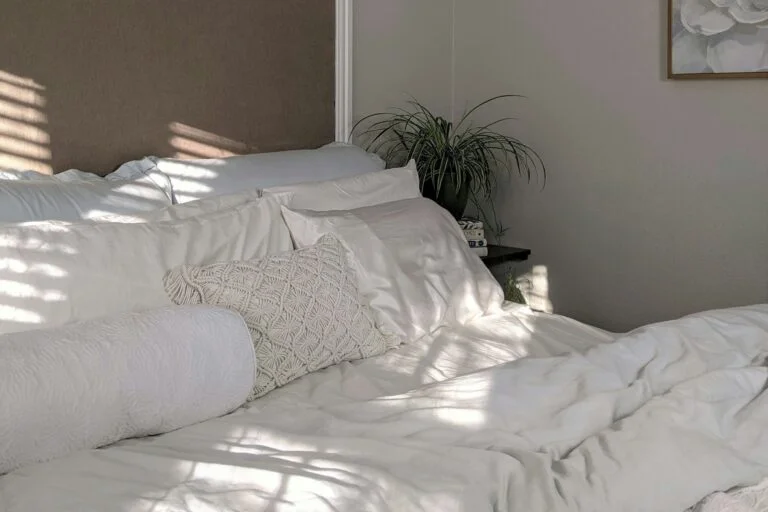
- Dark: blackout blinds or an eye mask; cover standby lights.
- Cool: slightly cooler than the rest of the house, with layers you can adjust.
- Quiet: earplugs, or a fan for steady background noise.
- Comfortable: a supportive mattress and pillows; replace them when they sag.
- Tidy and calm: no work piles or laundry in view.
- Phone out: charge it in another room and use a basic alarm clock.
Sharing a bed with a snorer or a night owl? See sleep divorce.
Food and drink for better sleep
| Helps | Doesn’t help |
|---|---|
| Regular meals, with your evening meal 2 to 3 hours before bed | Big, spicy or fatty meals late at night |
| A warm, caffeine-free drink as part of your wind-down | Coffee, tea, cola and energy drinks after midday |
| Enough water through the day, less in the last hour | Alcohol, which breaks up sleep later in the night |
| Foods with magnesium, such as nuts, seeds and leafy greens | Going to bed hungry |
See is hot chocolate good before bed?, the sleepy girl mocktail, tart cherry and sleep and foods high in magnesium.
A sample sleep-friendly day
| Time | What to do |
|---|---|
| 7am | Get up at the same time; open the curtains or get outside |
| Before noon | Last coffee or tea with caffeine |
| Lunchtime | A walk outside; a 10 to 20 minute nap if needed |
| 6 to 7pm | Exercise done; evening meal |
| 9.30pm | Screens off, lights dimmed, a warm drink, write tomorrow’s to-do list |
| 10.30pm | Bed when sleepy; a relaxation technique if your mind is busy |
Many people make a warm drink part of their wind-down. Magnesium contributes to the reduction of tiredness and fatigue and to normal psychological function. See magnesium for sleep and how to fall asleep fast.
Common sleep problems: where to start
| If you… | Read |
|---|---|
| Can’t fall asleep | How to fall asleep fast |
| Wake at 3am and can’t get back to sleep | Waking at 3am |
| Lie awake with racing thoughts | How to stop overthinking and anxiety at night |
| Have struggled for 3 months or more | Insomnia |
| Stay up late on your phone even when tired | Revenge bedtime procrastination |
| Jolt awake as you drift off | Hypnic jerks |
| Wake unable to move | Sleep paralysis |
| Wake hot and sweaty | Night sweats and perimenopause and sleep |
| Get cramps in bed | Leg cramps at night |
| Work nights or shifts | Shift work and sleep |
| Share a bed with a snorer | Sleep divorce |
| Struggle when the clocks change | Clocks going back |
| Feel tired all winter | Why am I so tired in winter? |
| Have a cold | How to sleep with a cold |
Sleep at different stages of life
| Stage | What changes | What helps |
|---|---|---|
| Teens | Body clocks shift later, so teens naturally feel sleepy later | Phones out of the bedroom, steady wake times, morning light |
| Busy working years | Stress, screens and long hours squeeze sleep | A fixed wind-down hour and boundaries on evening emails. See burnout |
| Perimenopause and menopause | Night sweats and waking in the night become common | A cool bedroom, layers, and a chat with your GP about HRT. See perimenopause and sleep |
| Older age | Sleep becomes lighter and more broken, and people often wake earlier | Daylight and activity in the day, short early naps only. See your GP about snoring or breathing pauses |
Do sleep supplements help?
Habits come first, but many people add a supplement to their evening routine. Here’s the honest picture:
| Supplement | What to know |
|---|---|
| Melatonin | Prescription-only in the UK. See melatonin in the UK |
| Magnesium | Magnesium contributes to normal psychological function and the reduction of tiredness and fatigue. Sleep research is mixed. See magnesium for sleep |
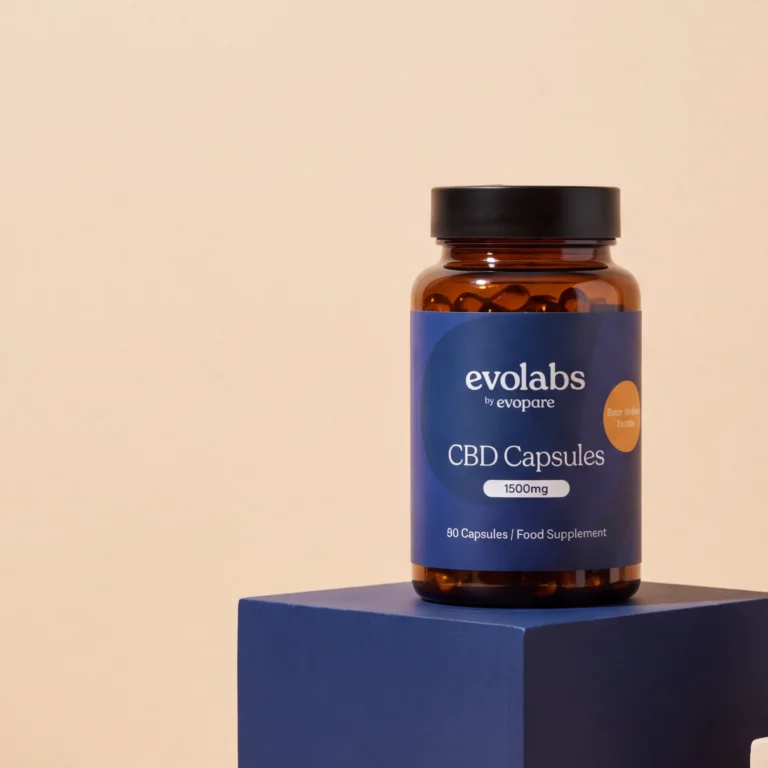
| CBD | Popular in evening routines; human sleep trials are limited. See choosing a CBD oil for sleep |
| Reishi, passionflower and herbs | Traditional evening choices with early research. See reishi for sleep and passionflower |
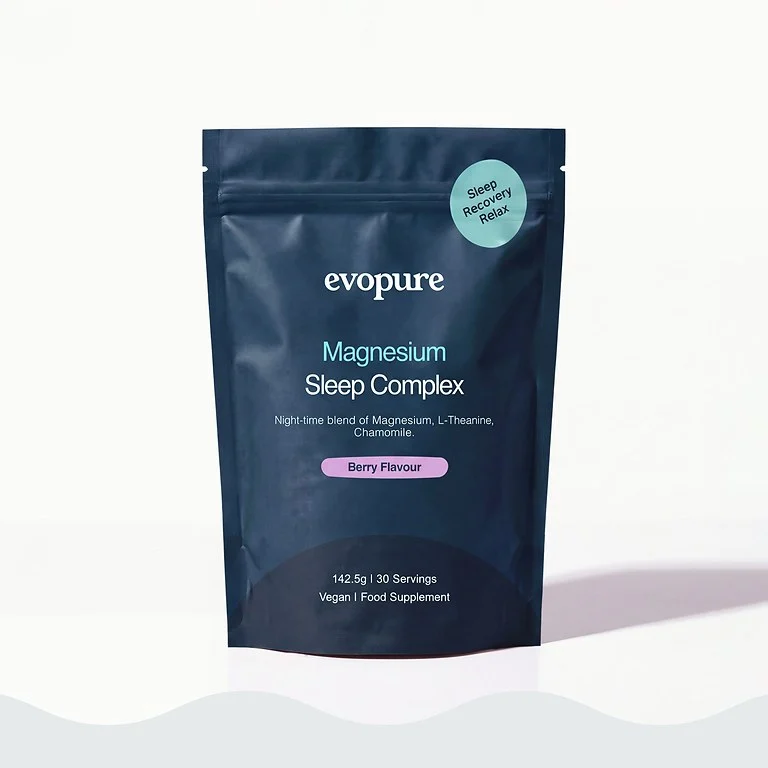
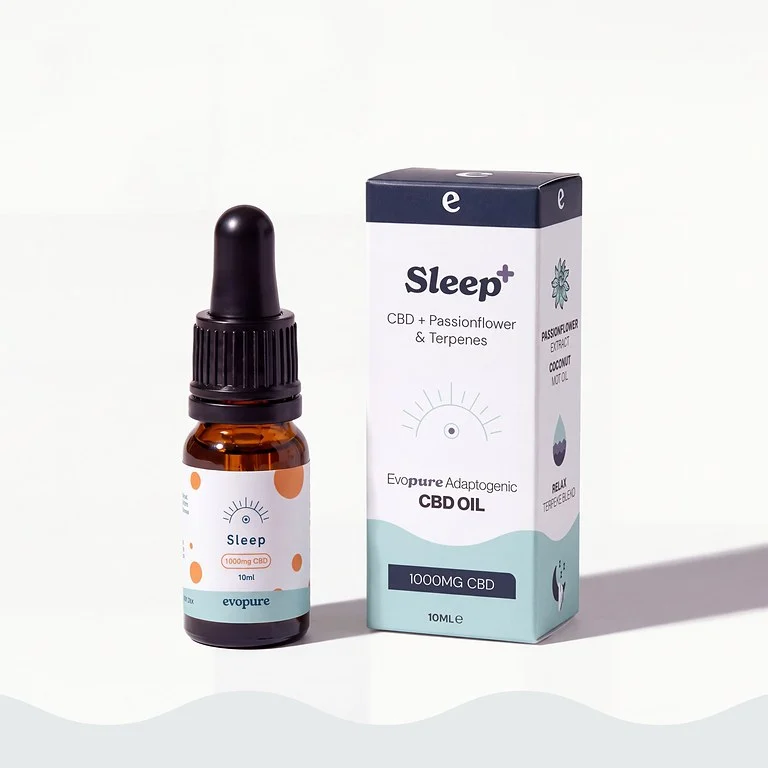
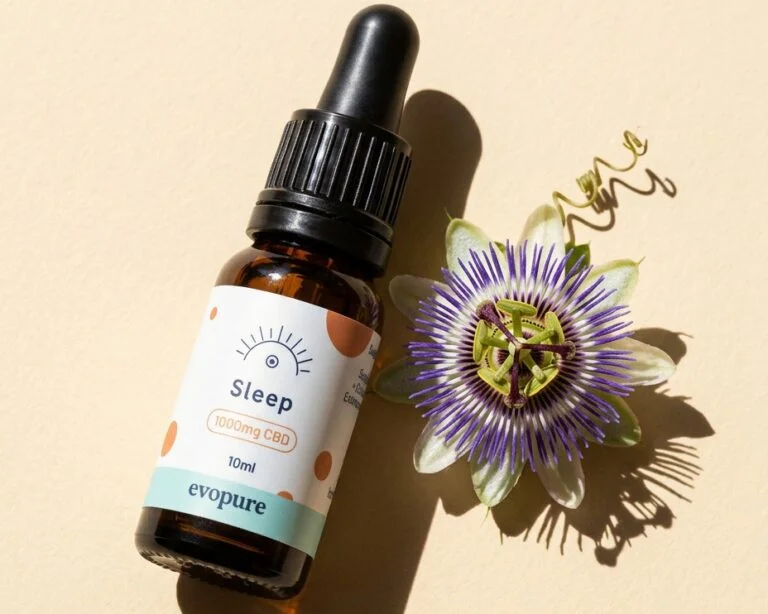
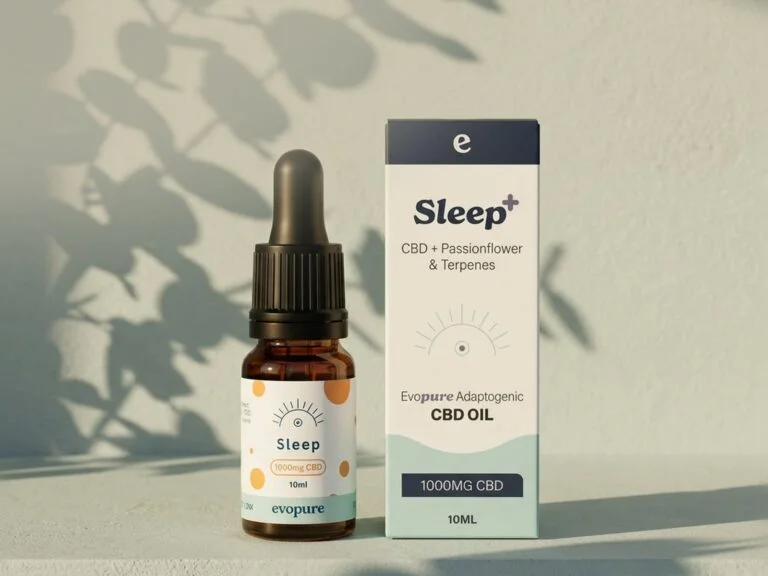
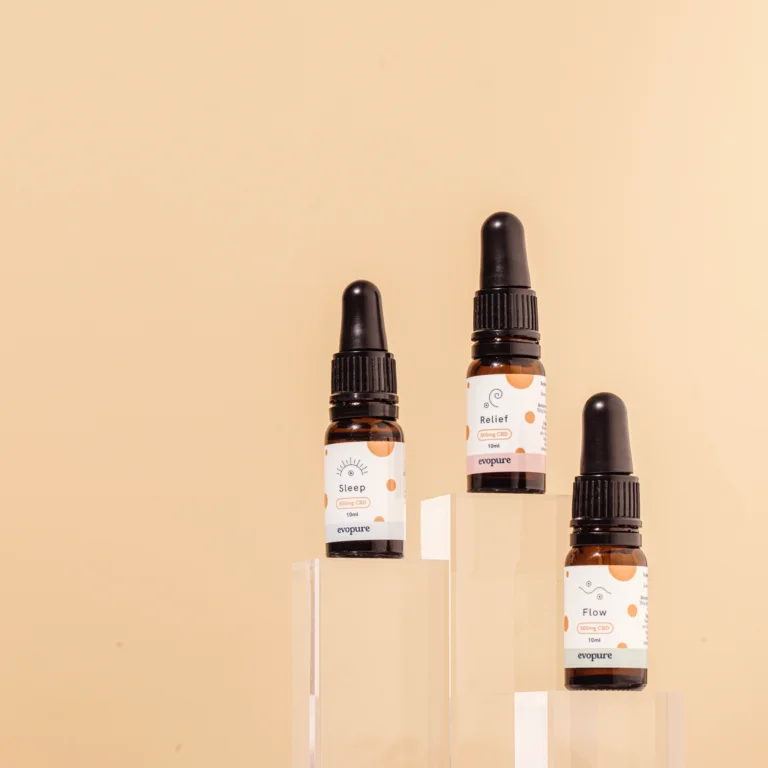
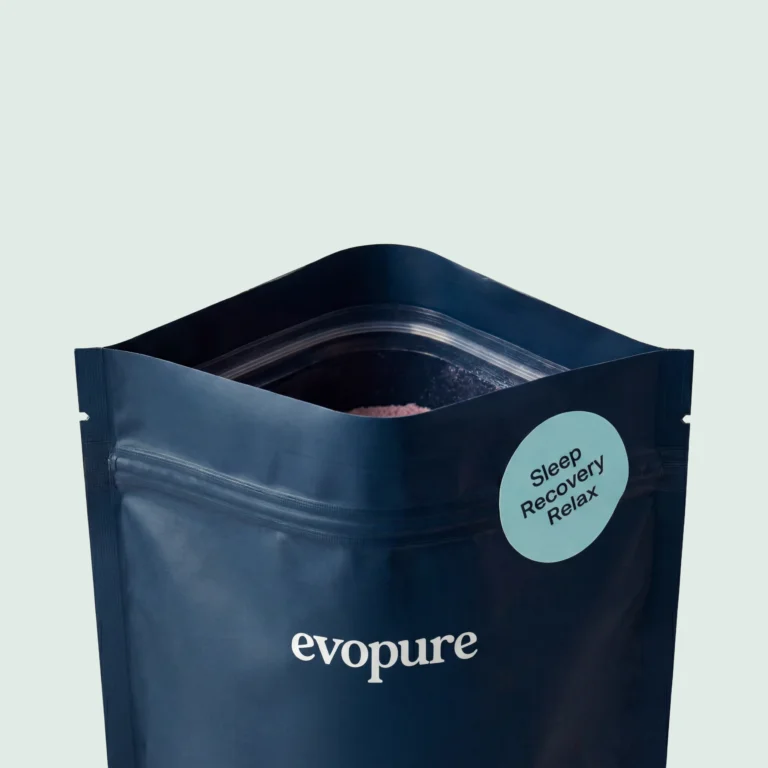
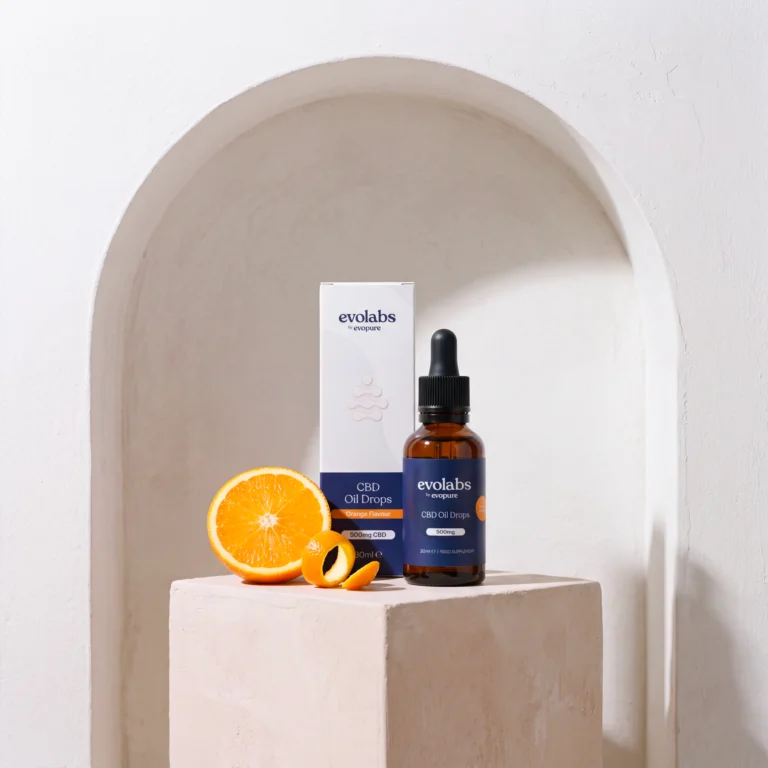
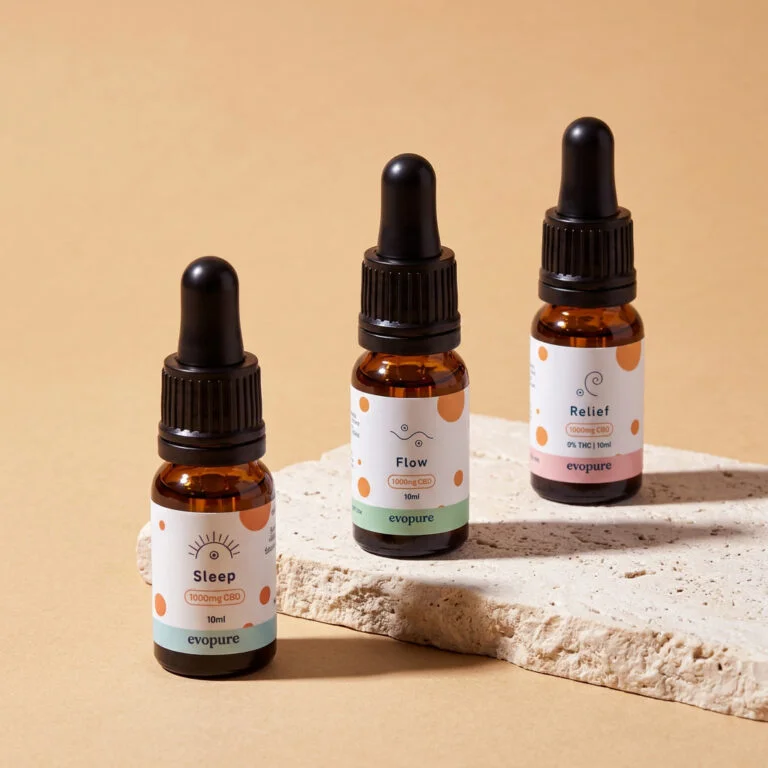
For a full comparison, see natural sleep aids ranked by evidence. Our Magnesium Glycinate Sleep Complex is a berry bedtime drink with L-theanine, and our Sleep CBD Oil pairs broad spectrum CBD with passion flower. The FSA’s 10mg a day figure for CBD is precautionary advice rather than a legal limit, set while longer-term safety research continues. At Evopure we think it is a very cautious figure, and many adults use more. If you go above it, increase slowly, and check with your GP or pharmacist first if you take any medication.
Sleep myths
| Myth | Fact |
|---|---|
| “A nightcap helps you sleep” | Alcohol may help you nod off, but it breaks up sleep later in the night |
| “I can catch up at the weekend” | Long lie-ins shift your body clock and make Monday harder. Keep wake times steady |
| “Everyone needs exactly 8 hours” | Most adults need 7 to 9; what matters is how you feel in the day |
| “Lying in bed awake is still resting” | It can train your brain to link bed with being awake. Get up after about 20 minutes |
| “Watching TV in bed helps me unwind” | Screens in bed keep your mind active. Unwind elsewhere, then go to bed |
When sleep hygiene isn’t enough
If you’ve had trouble sleeping at least 3 nights a week for 3 months or more, despite good habits, that’s chronic insomnia. The NHS recommends CBT for insomnia as the first treatment; ask your GP. Also see your GP if you snore loudly and stop breathing at night, have restless legs, or feel tired all the time despite enough sleep. See why am I always tired? and anxiety at night.
Related guides
- Bad dreams waking you? See nightmares.
- Body clock runs late? See night owl.
- Wondering about screens? See do blue light glasses work?
- Sauna for sleep: when to go so it doesn’t keep you up.
- How to become a morning person.
- If you’re doing a Winter Arc challenge, make sleep the first rule.
- Regular sleep times are also the first step in how to stop sleepwalking.
- For what to eat (and avoid) in the evening, see foods that help you sleep.
- How to stop talking in your sleep.
- If you use a wearable, our guide to sleep tracker accuracy and sleep scores explains which numbers to trust.
- How to get rid of dark circles, starting with sleep.
- Brown noise vs white noise for sleep.
- If ringing in your ears keeps you awake, see how to sleep with tinnitus.
- For what the science says about timing, see the best time to sleep and wake up.
- Lavender for sleep and how to use it safely.
- If you wake sneezing or with a blocked nose, your bedding may be the problem: see dust mite allergy.
- If you want to try a food habit too, see eating kiwi before bed for better sleep.
- If you can’t get the room fully dark, a sleep mask is a cheap fix; here’s what the research shows and how to choose one.
- If noise wakes you, read our guide to earplugs for sleeping and whether they’re safe every night.
- Keeping regular times is the core habit: see our sleep schedule reset plan.
- If silence keeps you awake, try a short, quiet playlist on a timer. See how to use music for sleep.
- Waking in the night is a separate problem: see how to stay asleep.
- If you’ve seen the trend online, our guide to sleepmaxxing rates the popular tips by evidence.
- Trending hacks like magnesium lotion on your feet for sleep have far less evidence than the basics here.
- Many of these habits make good presents too: see our sleep gifts guide for ideas.
- Bedtime drinks are part of the ritual rather than a fix; see does Horlicks help you sleep?
- Skip the viral fixes like boiled lettuce water and start with these habits.
FAQs
How can I sleep better at night?
Keep a fixed wake time, get morning daylight, stop caffeine by midday, limit alcohol, wind down for an hour without screens, and keep your bedroom cool, dark and quiet.
How much sleep do I need?
The NHS says most adults need 7 to 9 hours a night, children 9 to 13 hours, and toddlers and babies 12 to 17 hours.
What is sleep hygiene?
The daily habits and bedroom environment that help you sleep well, such as a fixed wake time, less caffeine and a dark, quiet bedroom.
What is the most important sleep hygiene rule?
Getting up at the same time every day, even after a bad night. It anchors your body clock and builds sleepiness for the next night.
Does sleep hygiene work for insomnia?
It’s a good foundation, but on its own it isn’t an effective treatment for chronic insomnia. CBT for insomnia works better.
How long before bed should I stop using screens?
About an hour. Use the time to wind down with dim lights, reading or music.
What temperature should my bedroom be?
Slightly cool. Use layers of bedding you can adjust rather than turning the heating up.
Sources
- Irish LA et al (2015). The role of sleep hygiene in promoting public health: a review of empirical evidence. Sleep Medicine Reviews.
- NHS. Insomnia.
- NHS Every Mind Matters. How to fall asleep faster and sleep better.
- Brooks A, Lack L (2006). A brief afternoon nap following nocturnal sleep restriction: which nap duration is most recuperative? Sleep.
This guide is general information, not medical advice. Evopure makes the Magnesium Glycinate Sleep Complex and Sleep CBD Oil. We don’t recommend our products during pregnancy or breastfeeding.