









Last updated: October 2026
Middle insomnia, also called sleep maintenance insomnia, means waking in the night and struggling to get back to sleep. Brief wakings between sleep cycles are normal. It counts as insomnia when it happens regularly and leaves you tired the next day. Start with a fixed wake time, no clock-watching, and getting up after about 20 minutes awake.
Below: what middle insomnia is, how it differs from other types, the common causes, what to do in the moment, how it is treated in the UK and when to see a GP.
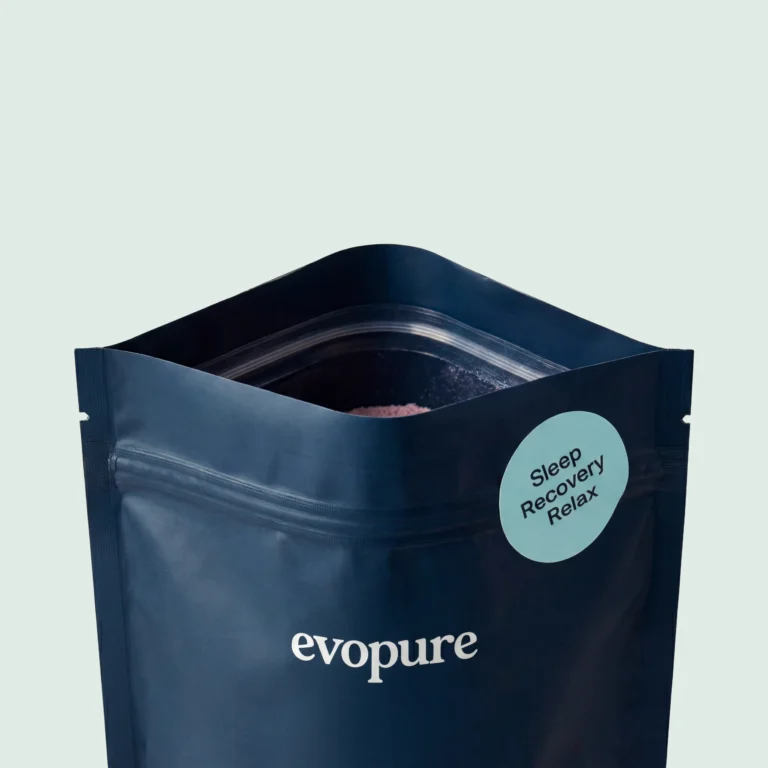
Part of your wind-down: our Magnesium Glycinate Sleep Complex is a berry-flavoured evening drink with magnesium bisglycinate and citrate (148mg magnesium per serving), glycine, L-theanine, chamomile, passionflower, hops and oat straw. Magnesium contributes to normal psychological function. It isn’t a treatment for insomnia. Vegan, made in the UK and tested by ISO 17025 accredited labs.
What is middle insomnia?
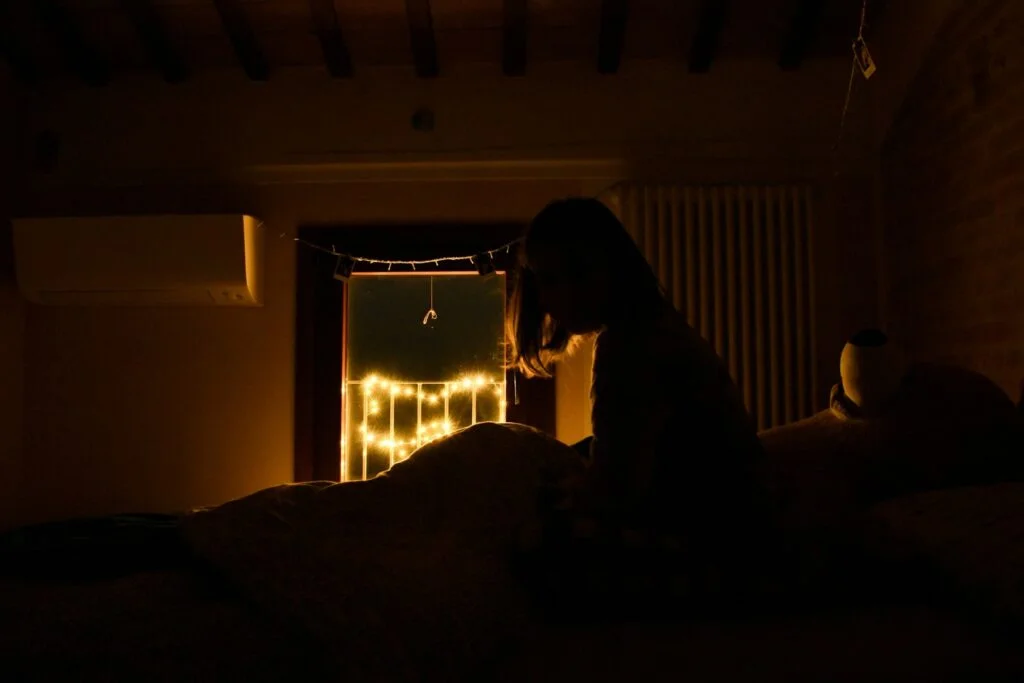
Middle insomnia is when falling asleep is fine but staying asleep is not. You wake in the small hours and lie awake, or wake several times and sleep only lightly in between. Doctors call it sleep maintenance insomnia. “Middle” means the problem sits in the middle of the night, not at bedtime or at dawn.
It is very common. In a telephone survey of 22,740 people in the UK, France, Germany, Italy and Spain, 31.2% said they woke at least 3 nights a week, and 7.7% had trouble getting back to sleep once awake. That second group felt the effects in the daytime far more than people who woke and drifted off again.
NHS inform puts insomnia of all kinds at around 1 in 3 people in the UK, and it is particularly common in older adults. See our insomnia guide.
Middle vs initial vs terminal insomnia
Insomnia is often split by when in the night it strikes. Your type points to the likely causes.
| Type | What happens | Often linked with |
|---|---|---|
| Initial (sleep onset) insomnia | You lie awake for a long time before you first drop off | Worry, a busy mind, late caffeine, screens, an irregular bedtime |
| Middle (sleep maintenance) insomnia | You fall asleep fine, then wake in the night and can’t get back to sleep, or wake many times | Alcohol, stress, needing the loo, hot flushes, pain, reflux, sleep apnoea, getting older |
| Terminal (early morning) insomnia | You wake much earlier than you mean to and can’t get back to sleep | Low mood and depression, an early body clock, early light, getting older |
The types overlap. In a large US survey, about 40% of people with regular night wakings also had other insomnia symptoms. If your main problem is dropping off at bedtime, start with why can’t I sleep? If it’s waking at the same time every night, our guide to waking up at 3am covers that pattern.
Is waking in the night normal?
Yes. Sleep runs in cycles of light sleep, deep sleep and dreaming (REM) sleep, repeated several times a night. Deep sleep is concentrated early on, so the second half of the night is lighter, and you come close to the surface between cycles. Most of these brief wakings are forgotten by morning.
People may once have slept in two blocks: historian Roger Ekirch has described references to a “first sleep” and “second sleep” in pre-industrial records. In a 1992 experiment, when volunteers moved from 16 hours of light a day to 10, their sleep often split into two bouts with 1 to 3 hours awake in between. A calm spell awake in the night doesn’t mean something is broken.
It becomes insomnia when it’s persistent and affects your day. NICE’s clinical summary defines insomnia as ongoing difficulty getting to sleep, staying asleep or with sleep quality, despite a proper chance to sleep, that causes daytime problems such as tiredness, low mood or poor concentration. It’s short-term if it has lasted under 3 months and long-term (chronic) if it happens at least 3 nights a week for 3 months or more.
What causes middle insomnia?
Most people have one or two clear triggers. The NHS lists stress, anxiety or depression, noise, temperature, alcohol, caffeine, long-term pain, sleep apnoea and the menopause among the causes of insomnia, and notes that many medicines can cause it too.
| Cause | Clues | What to try |
|---|---|---|
| Stress and worry | Your mind goes straight to work, money or a to-do list | An early-evening worry list and slow breathing. See anxiety at night |
| Alcohol | You drop off quickly, then wake hot, thirsty or restless | Alcohol-free nights and an earlier last drink. See alcohol and sleep |
| Caffeine | Tea, coffee, cola or energy drinks after lunch | The NHS advises none for at least 6 hours before bed |
| Needing to pee (nocturia) | You wake with a full bladder, then lie awake | Drink more earlier and less late on. See waking up to pee at night |
| Perimenopause and menopause | Night sweats, hot flushes, a racing heart | A cool room and light layers; talk to your GP. See below |
| Sleep apnoea | Loud snoring, gasping, breathing that stops and starts, very tired by day | See a GP. See sleep apnoea |
| Pain | Aching hips, back or joints wake you when you turn | Ask a pharmacist or GP about managing the pain at night |
| Reflux | Burning, coughing or a sour taste when lying down | Eat earlier and lighter in the evening |
| Too hot or too cold | Covers off, then on again | A cooler room and layered bedding |
| Light and noise | Early light round the blinds, traffic, a snoring partner | Blackout blinds, an eye mask or earplugs. See light sleeper |
| Medicines | Sleep changed after starting or changing a medicine | Ask your pharmacist. Don’t stop a prescribed medicine on your own |
| Low mood | Waking early, feeling flat, losing interest in things | Talk to your GP. See low mood |
In the European survey above, people with a painful condition or a mental health condition were more than four times as likely to struggle to get back to sleep.
What to do when you can’t get back to sleep
The aim is to stay calm and keep your brain in night mode.
- Don’t check the time. Counting the hours left switches your brain on. The NHS suggests keeping clocks out of view and your phone face down.
- Keep the lights low. If you get up to pee, use a dim night light and skip the screens on the way.
- Breathe slowly. A longer out-breath than in-breath helps you settle. Try 4-7-8 breathing.
- Park the thoughts. Keep a notepad by the bed and write a looping worry down in one line.
- Get up after about 20 minutes. NHS advice is to get up if you’re still awake after around 20 minutes, do something relaxing, and go back to bed when sleepy.
- Don’t sleep in. The NHS advises sticking to your regular hours after a bad night. A lie-in weakens the next night’s sleep drive.
For a full two-week routine, see how to stay asleep all night.
Middle insomnia treatment: CBT-I first
If better habits haven’t fixed it, the first treatment in the UK isn’t a pill. NICE describes cognitive behavioural therapy for insomnia (CBT-I) as the standard first treatment for long-term insomnia, after sleep hygiene advice. Its main parts:
- Stimulus control: bed is for sleep, and you get up if you’re lying awake.
- Sleep restriction: a shorter “sleep window” for a while to build sleep pressure, widened as sleep improves. Do this with guidance, and take care driving.
- Cognitive therapy: loosening the worries about sleep that keep you alert at night.
- Relaxation and sleep hygiene to support the rest.
It suits middle insomnia well. A review of 20 trials in 1,162 adults with chronic insomnia found CBT-I cut time awake after first falling asleep by about 26 minutes a night, and the gains seemed to last.
How to get it: ask your GP. The NHS says CBT may be offered face to face or through an online self-help programme. NICE recommends the digital CBT programme Sleepio for people who would otherwise be offered sleep hygiene advice or sleeping pills. It’s free for people living in Scotland; elsewhere, availability depends on your area.
Middle insomnia medication in the UK
Many “best medication for middle insomnia” answers online are from the US. In the UK the picture is more cautious:
- Sleeping pills: the NHS says GPs now rarely prescribe them, because of serious side effects and the risk of dependence, and then only for a few days or weeks at most.
- Pharmacy sleep aids: some contain an antihistamine and others herbal ingredients. The NHS says they can’t cure insomnia and may help for 1 to 2 weeks only. Some can make you drowsy.
- Daridorexant: NICE recommends this newer prescription medicine for adults with insomnia at least 3 nights a week for 3 months or more that badly affects their day, only if CBT-I hasn’t worked or isn’t available or suitable. It should be reviewed within 3 months.
- Melatonin: prescription-only in the UK. For insomnia it is licensed for short-term use in adults aged 55 and over, for up to 13 weeks. See melatonin in the UK.
If your sleep changed after starting a medicine, talk to your pharmacist or GP, and don’t stop it on your own.
Middle insomnia and perimenopause
The NHS lists problems getting to sleep or staying asleep among menopause and perimenopause symptoms, and notes they can be worse with night sweats. Some women also need to pee more often at night.
A cool bedroom and the habits above help, but don’t just put up with it: talk to your GP about treatment. See our guides to perimenopause and sleep and night sweats.
Does magnesium help middle insomnia?
We haven’t found a trial of magnesium for night waking specifically. A 2021 review found just 3 small trials in 151 older adults with insomnia. People on magnesium fell asleep about 17 minutes faster than on placebo, total sleep time didn’t change significantly, and the evidence was rated low to very low quality. In one of those trials (500mg a day, above the 400mg from supplements the NHS says is unlikely to cause harm), the drop in early waking was not statistically significant.
So magnesium isn’t a treatment for insomnia; CBT-I and the habits above come first. Some people like a magnesium drink as part of their evening routine. Our Magnesium Glycinate Sleep Complex gives 148mg of magnesium per serving from bisglycinate and citrate, with glycine, L-theanine, chamomile, passionflower, hops and oat straw. Magnesium contributes to normal psychological function and to a reduction of tiredness and fatigue.
The NHS says adults need 300mg of magnesium a day (men) or 270mg (women), and most of us can get this from food. Our products are for adults (18+). We don’t recommend our products during pregnancy or breastfeeding. If you take medication or have kidney problems, check with your GP or pharmacist first. For the forms compared, see best magnesium for sleep.
When to see a GP
See a GP if:
- changing your sleep habits hasn’t helped
- you’ve had trouble sleeping for months
- it’s affecting your daily life in a way that makes it hard to cope
- you snore loudly, gasp or choke in your sleep, or always feel very tired in the day (possible sleep apnoea)
- you wake very early and feel low, or have lost interest in things you usually enjoy
- you’re waking with night sweats, pain or needing to pee several times a night
Take a 2-week sleep diary (bedtime, wakings, wake time, caffeine, alcohol, how you felt) to your appointment.
If you sometimes wake unable to move or speak, see our guide to why you keep getting sleep paralysis.
Broken nights are a common reason for brain fog the next day.
FAQs
What is middle insomnia?
Middle insomnia, or sleep maintenance insomnia, means falling asleep fine but waking in the night and struggling to get back to sleep, or waking many times. It counts as insomnia when it happens regularly and affects your next day.
What is the difference between middle insomnia and terminal insomnia?
Middle insomnia is waking during the night and lying awake. Terminal insomnia is waking much earlier than you want in the morning and not getting back to sleep. Early morning waking can be linked with low mood, so mention it to your GP if it persists.
What is the best treatment for middle insomnia?
Cognitive behavioural therapy for insomnia (CBT-I) is the standard first treatment for long-term insomnia in the UK. It can be done face to face or through an online programme such as Sleepio. Ask your GP what is available in your area.
What medication is used for middle insomnia in the UK?
GPs rarely prescribe sleeping pills, and only for a few days or weeks. NICE recommends daridorexant for some adults with long-term insomnia when CBT-I hasn’t worked or isn’t available. Melatonin is prescription-only and licensed for short-term use in adults aged 55 and over.
Can perimenopause cause middle insomnia?
Yes. The NHS lists problems staying asleep among menopause symptoms, and night sweats can make them worse. Talk to your GP about treatment options.
Why can’t I get back to sleep after waking up to pee?
Bright lights, your phone and counting the hours until the alarm all wake your brain up. Use a dim night light, skip the clock and screens, and get up if you’re still awake after about 20 minutes.
Sources
- NHS. Insomnia.
- NHS inform. Insomnia.
- NICE Clinical Knowledge Summaries. Insomnia: definition.
- NICE (2023). Daridorexant for treating long-term insomnia (TA922).
- NICE (2022). Sleepio to treat insomnia and insomnia symptoms.
- NHS Every Mind Matters. How to fall asleep faster and sleep better.
- BNF (NICE). Melatonin.
- NHS. Menopause symptoms.
- NHS. Sleep apnoea.
- NHS. Vitamins and minerals: magnesium.
- Ohayon MM (2010). Nocturnal awakenings and difficulty resuming sleep: their burden in the European general population. Journal of Psychosomatic Research.
- Ohayon MM (2008). Nocturnal awakenings and comorbid disorders in the American general population. Journal of Psychiatric Research.
- Wehr TA (1992). In short photoperiods, human sleep is biphasic. Journal of Sleep Research.
- Trauer JM et al (2015). Cognitive behavioral therapy for chronic insomnia: a systematic review and meta-analysis. Annals of Internal Medicine.
- Ebrahim IO et al (2013). Alcohol and sleep I: effects on normal sleep. Alcoholism: Clinical and Experimental Research.
- Mah J, Pitre T (2021). Oral magnesium supplementation for insomnia in older adults: a systematic review and meta-analysis. BMC Complementary Medicine and Therapies.
- Abbasi B et al (2012). The effect of magnesium supplementation on primary insomnia in elderly: a double-blind placebo-controlled clinical trial. Journal of Research in Medical Sciences.
This guide is general information, not medical advice. Evopure makes the Magnesium Glycinate Sleep Complex.