





Last updated: October 2026
Ashwagandha doesn’t work straight away. In clinical trials, most stress and sleep scores were measured after 6 to 10 weeks of daily use, and one 30-day trial saw some sleep changes. Nothing shows an instant effect. Give it 4 to 8 weeks of consistent use before judging it, and review by 12 weeks.
How long ashwagandha takes: what the trials measured
| Outcome studied | When measured | Trial | Note |
|---|---|---|---|
| Memory and attention tests | 1 hour, then 30 days | Leonard, 2024 | Small lab study; not stress or sleep |
| Self-rated sleep | 30 days | O’Connor, 2022 | Sleep differed from placebo; stress didn’t clearly |
| Stress score | 4 and 8 weeks | Salve, 2019 | Clear difference only at 8 weeks |
| Sleep quality and sleep time | 6 weeks | Deshpande, 2020 | 120mg a day |
| Stress scales and cortisol | 60 days | Chandrasekhar, 2012 | 300mg twice a day |
| Anxiety rating and cortisol | Every 15 days to day 60 | Lopresti, 2019 | 240mg once a day |
| Time to fall asleep | 5 and 10 weeks | Langade, 2019 | Both groups improved; difference at 10 weeks |
| Sleep (5 trials pooled) | Various | Cheah, 2021 | Clearer at 8+ weeks and 600mg+ |
Honest timeline: small changes possible from about 4 weeks, clearer ones by around 8, if it suits you at all. See our complete guide to what ashwagandha does, or ashwagandha for sleep and what the anxiety research shows.
Ashwagandha in our range
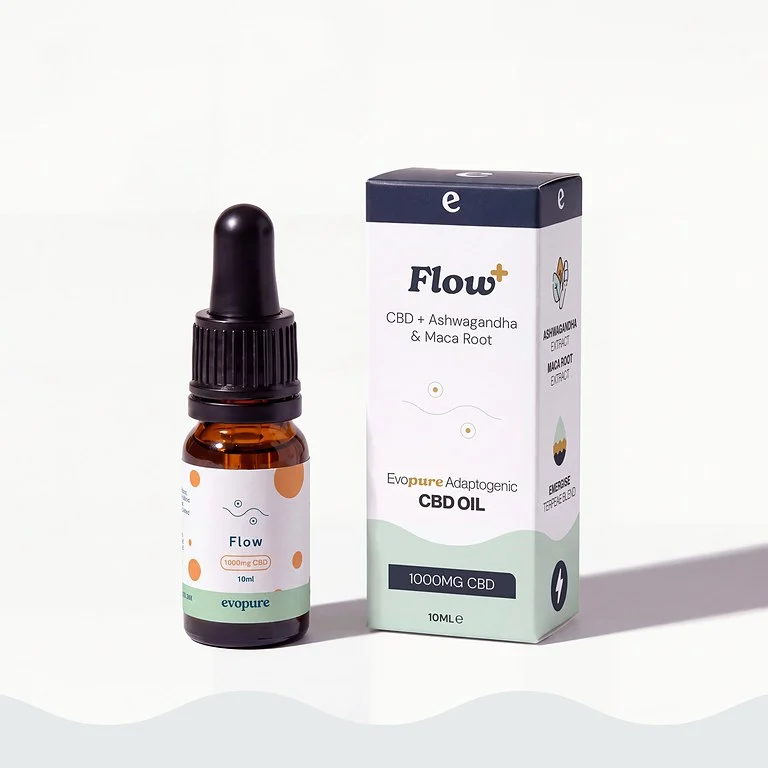
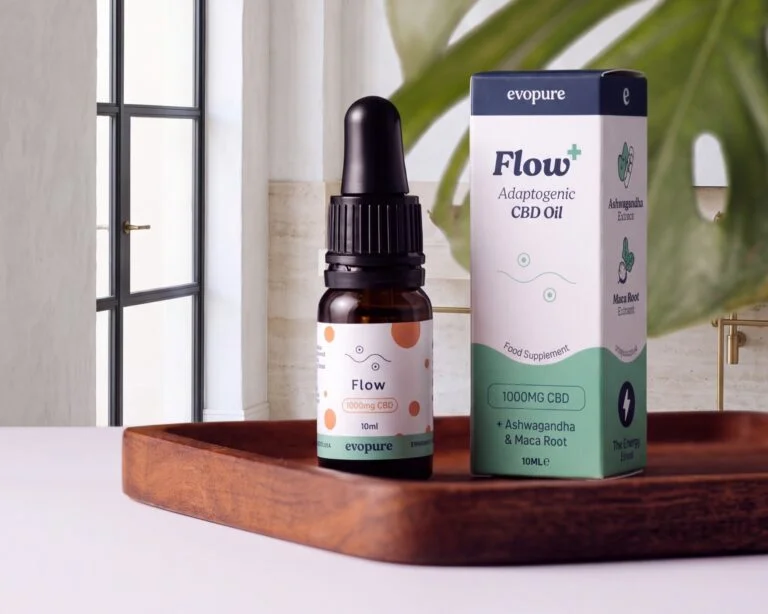
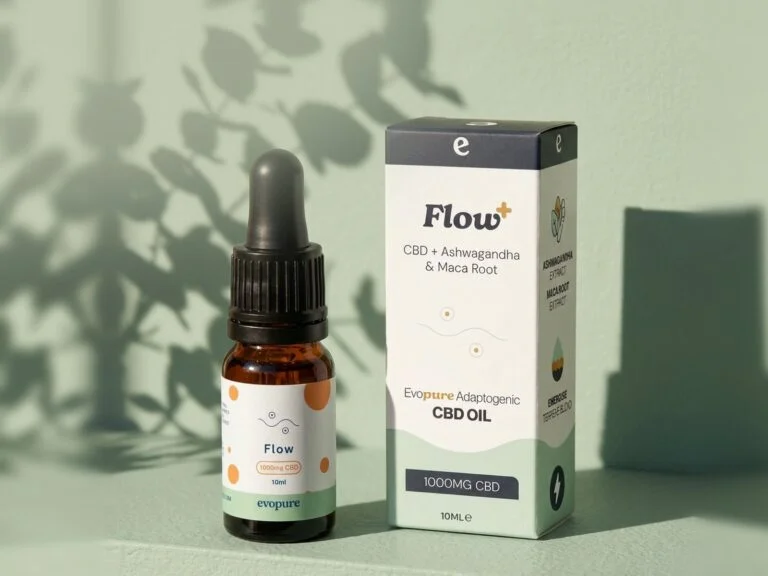
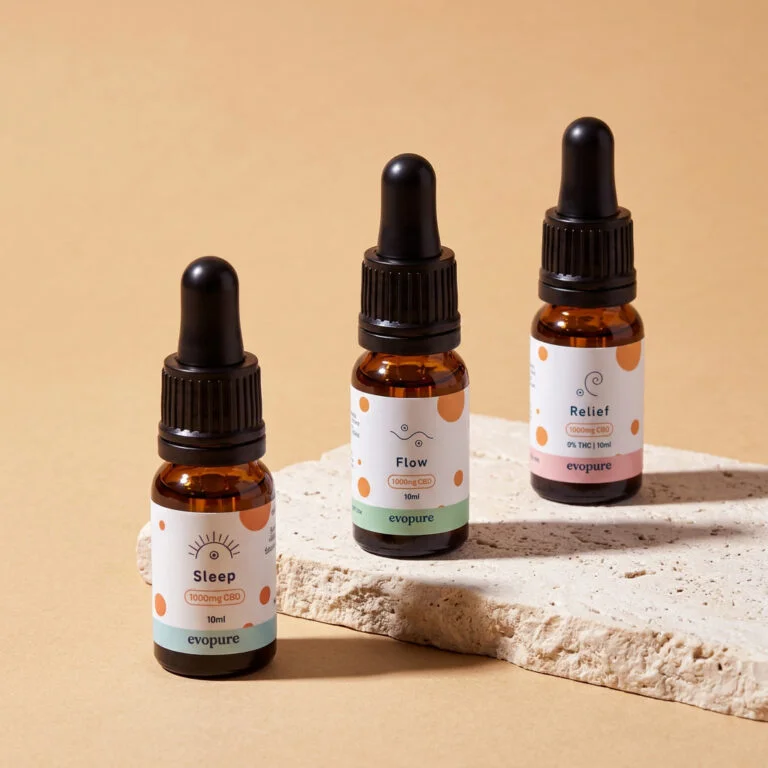
Our Flow CBD Oil with Ashwagandha and Maca combines broad spectrum CBD with ashwagandha extract, maca root extract and our Energise terpene blend in MCT oil. Its product page doesn’t state an ashwagandha amount, so it isn’t a way to copy a trial dose. Don’t add another ashwagandha product on top.
The FSA’s 10mg a day figure is precautionary advice rather than a legal limit, set while longer-term safety research continues. At Evopure we think it is a very cautious figure, and many adults use more. If you go above it, increase slowly, and check with your GP or pharmacist first if you take any medication.
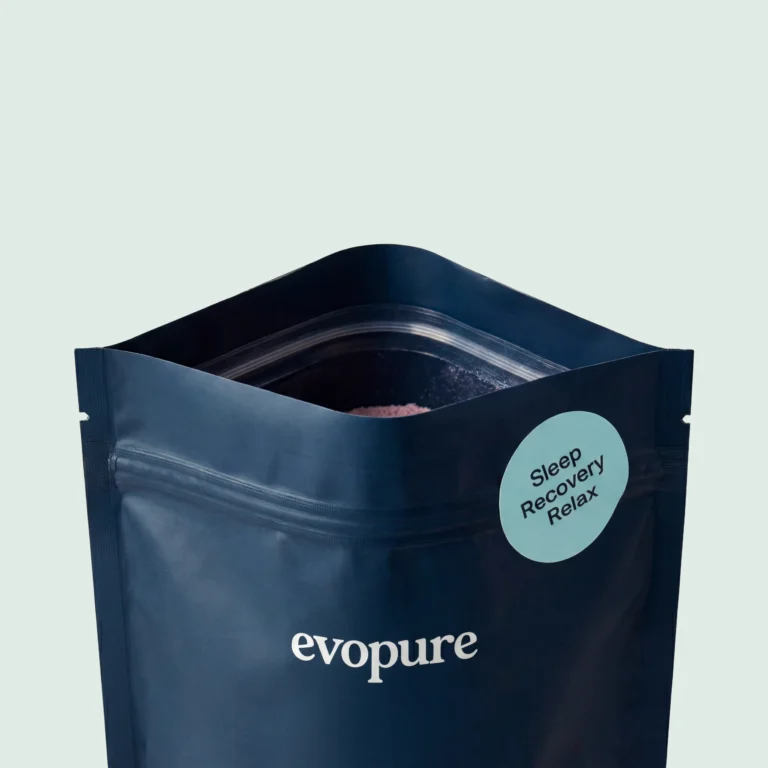
Prefer no ashwagandha? The Magnesium Glycinate Sleep Complex is a berry drink powder with 148mg magnesium (bisglycinate and citrate) per serving, plus glycine, L-theanine and herbs. Magnesium contributes to a reduction of tiredness and fatigue. The Reishi Mushroom Adaptogenic Complex is a reishi hot chocolate with organic cacao and maca; it contains a little natural caffeine. All our products are for adults (18+). We don’t recommend our products during pregnancy or breastfeeding.
Why ashwagandha isn’t instant
Ashwagandha isn’t a sleeping pill. It’s called an adaptogen, a traditional idea that a herb helps the body cope with stress, but ashwagandha has no authorised health claims in the UK. Research suggests it may help a little with stress and sleep scores over weeks, in some people.
In several trials morning cortisol, a stress hormone, fell over about two months, which fits a slow effect rather than a quick one. Feeling drowsy soon after a dose is a possible side effect, not what the trials measured. See how to lower cortisol naturally for habits that matter more.
What affects how long it takes
- Extract and dose. Trials used measured extracts, from 120mg to 700mg a day. KSM-66 at 300mg twice a day was used in several. Plain root powder is much weaker. See how much ashwagandha per day.
- Consistency. Every trial dosed daily, so skipped days aren’t what was tested.
- Form. No form is proven faster; see ashwagandha gummies vs capsules.
- Timing. Trials rarely tested time of day. Read when to take ashwagandha.
- Sleep habits. Late caffeine and irregular bedtimes will swamp a small effect. Start with sleep hygiene basics.
How to tell if ashwagandha is working
Keep a simple diary, starting a week before your first dose. Each evening note:
- stress, from 1 to 10
- bedtime, time to fall asleep and night wakings
- how rested you felt on waking, from 1 to 10
- any side effects
Compare weeks 4 and 8 with your baseline. Placebo groups improved in the trials too, so a diary keeps you honest.
When to stop or take a break
Most trials lasted 6 to 12 weeks. The US National Center for Complementary and Integrative Health (NCCIH) says it may be safe for up to about 3 months, but long-term safety isn’t known. So review it at 12 weeks: if you’ve noticed nothing, stop; to continue, take a break and ask your GP or pharmacist.
Stop sooner if you get stomach upset, diarrhoea or vomiting. In rare liver injury cases, yellow skin or eyes, itching, nausea and tiredness appeared 2 to 12 weeks in: stop and see a GP straight away. More in ashwagandha side effects.
UK safety and who should avoid it
Ashwagandha is legal as a UK food supplement, but the FSA is reviewing its safety. Its toxicity committee discussed a third draft statement on 8 September 2026; nothing had been published by late October 2026. Meanwhile the FSA advises pregnant women and people with liver conditions to avoid it. See our UK ashwagandha safety review.
Avoid it if you’re pregnant or breastfeeding, have a thyroid, autoimmune or liver condition, or have surgery coming up. On sedatives, thyroid, diabetes, blood pressure, epilepsy or immune-suppressing medicines? Ask your GP or pharmacist first. Using CBD too? Read CBD and ashwagandha together.
FAQs
Can ashwagandha work in a week?
Not reliably. No stress or sleep trial showed clear changes within a week; the earliest sleep difference we found came at 30 days.
Does ashwagandha make you sleepy straight away?
It isn’t a sleeping pill, but NCCIH lists drowsiness as a possible side effect. If it makes you drowsy, don’t drive, and take it in the evening.
When should I take ashwagandha for sleep?
Trials rarely tested timing. Several split the dose morning and evening; many people take it in the evening with food. Daily use matters more than the hour.
How long can you take ashwagandha for?
NCCIH says it may be safe for up to about 3 months, but long-term safety isn’t known, so review it at 12 weeks.
What happens when you stop taking ashwagandha?
Little is known: trials rarely followed people after stopping, and the authors of a 2019 trial said this needs studying. Keep your diary going for two weeks afterwards.
Sources
- Salve J (2019). Stress trial in healthy adults. PMID 32021735.
- Chandrasekhar K (2012). Stress and anxiety trial. PMID 23439798.
- Lopresti AL (2019). Shoden extract stress trial. PMID 31517876.
- Langade D (2019). Insomnia and anxiety trial. PMID 31728244.
- Deshpande A (2020). Sleep quality trial. PMID 32540634.
- O’Connor J (2022). Students: stress and sleep. PMID 35984871.
- Cheah KL (2021). Sleep meta-analysis. PMID 34559859.
- Leonard M (2024). Acute and repeated dosing. PMID 38931168.
- Björnsson HK (2020). Liver injury case series. PMID 31991029.
- NCCIH. Ashwagandha: usefulness and safety.
- FSA. Call for evidence on ashwagandha: summary, 25 June 2026.
- COT. Draft minutes of the 8 September 2026 meeting (item 5).
- Which? Ashwagandha: stress buster or health risk? (FSA statement), June 2026.
General information, not medical advice. Evopure makes Flow CBD Oil with Ashwagandha and Maca, the Magnesium Glycinate Sleep Complex and the Reishi Mushroom Adaptogenic Complex.