





Last updated: October 2026
To fall asleep fast, relax your body and quieten your mind: try the military method or 4-7-8 breathing, write tomorrow’s to-do list, and keep your bedroom cool and dark. If you’re still awake after about 20 minutes, get up and do something calm until you feel sleepy. A warm bath 1 to 2 hours before bed also helps.
Below: 12 techniques ranked by evidence, step-by-step guides to the military method, 4-7-8 breathing and the cognitive shuffle, what to avoid, and when poor sleep needs your GP.
How long should it take to fall asleep?
Most adults fall asleep within about 10 to 20 minutes. Regularly taking more than 30 minutes is a common sign of insomnia. Dropping off in under 5 minutes every night can mean you’re not getting enough sleep. The aim isn’t to be unconscious the second your head hits the pillow; it’s to stop lying awake for ages.
12 ways to fall asleep fast, ranked by evidence
| Technique | How to do it | Evidence |
|---|---|---|
| 1. Get up if you can’t sleep | After about 20 minutes awake, go to another room, keep lights low, return when sleepy | Strong: a core part of CBT for insomnia |
| 2. Fixed wake time | Get up at the same time every day, even after a bad night | Strong: builds sleep pressure for the next night |
| 3. Progressive muscle relaxation | Tense and relax each muscle group from toes to face | Good: a 2026 review of 14 trials found better sleep quality |
| 4. Warm bath or shower | At least 10 minutes, 1 to 2 hours before bed | Good: a review found it helped people fall asleep faster |
| 5. Write a to-do list | 5 minutes listing tomorrow’s tasks, as specifically as you can | Moderate: people fell asleep faster than those who wrote about tasks they’d finished |
| 6. Try to stay awake | Lie in the dark with eyes open and gently try not to sleep (“paradoxical intention”) | Moderate: a review found it reduced sleep anxiety |
| 7. Cool, dark, quiet bedroom | Blackout blinds, earplugs, a cooler room | Recommended by the NHS |
| 8. Military method | Relax your face, shoulders, arms and legs, then clear your mind | Popular; never tested in a trial, but it’s a form of muscle relaxation |
| 9. 4-7-8 breathing | In for 4, hold for 7, out for 8 | Little direct research; slow breathing is calming |
| 10. Cognitive shuffle | Picture random, unrelated objects | Early research only |
| 11. Screens off an hour before bed | Swap the phone for a book or audiobook | Recommended by the NHS |
| 12. Caffeine cut-off | No caffeine after midday or early afternoon | Good: caffeine stays in your system for hours |
The military sleep method, step by step
This technique comes from a 1981 book, Relax and Win, which described a routine taught to US Navy pilots. It claims high success rates after about 6 weeks of practice, but it has never been tested in a proper trial. It’s essentially a quick body scan, and muscle relaxation does have good evidence.
- Relax your face: forehead, jaw, tongue and the muscles around your eyes.
- Drop your shoulders as low as they’ll go, and let your arms go heavy, one side at a time.
- Breathe out slowly and relax your chest.
- Relax your legs: thighs, then calves, then feet.
- Clear your mind for 10 seconds by picturing a calm scene, such as lying in a canoe on a still lake, or repeating “don’t think” to yourself.
Practise it every night. Like any skill, it gets easier.
4-7-8 breathing
- Breathe out fully through your mouth.
- Breathe in quietly through your nose for a count of 4.
- Hold for a count of 7.
- Breathe out through your mouth for a count of 8.
- Repeat 4 times.
The long out-breath slows your breathing, which helps your body shift into “rest” mode. If holding for 7 feels uncomfortable, simply breathe in for 4 and out for 6. Stop if you feel dizzy.
The cognitive shuffle
Pick a random word, such as “bedtime”. For each letter, picture as many unrelated things as you can that start with it: b for banana, bicycle, bucket; e for elephant, envelope; and so on. The idea is to mimic the jumbled, dreamlike thinking that happens as you drift off, and to crowd out worries. Research is early, but many people find it useful when their mind is racing.
How to fall asleep when you’re anxious
- Do your worrying earlier. Spend 10 minutes in the early evening writing down worries and one next step for each.
- Write tomorrow’s to-do list at bedtime, so your brain can let go of it.
- Use a body-based technique, such as muscle relaxation or slow breathing, rather than trying to think your way to sleep.
- Stop clock-watching. Turn the clock away; checking the time feeds the worry.
See also anxiety at night, why you wake at 3am, does caffeine cause anxiety?, magnesium for anxiety and nervous system regulation. Big night ahead? See how to sleep on Christmas Eve.
What keeps you awake
| Habit | Why it delays sleep |
|---|---|
| Caffeine after midday | It blocks the brain chemical that builds sleepiness |
| Alcohol as a nightcap | It may help you drop off, but disrupts sleep later in the night. See Dry January |
| Lie-ins and long naps | They reduce the sleep pressure you need at bedtime |
| Scrolling in bed | It keeps your mind busy and pushes bedtime later. See revenge bedtime procrastination |
| A big meal or hard exercise late | Both can keep you alert; finish 2 to 3 hours before bed |
The clocks go back on 25 October, which can unsettle sleep for a week. See how to protect your sleep when the clocks change.
Do supplements help you fall asleep?
The habits above make the biggest difference, but some people like a supplement as part of a wind-down routine:
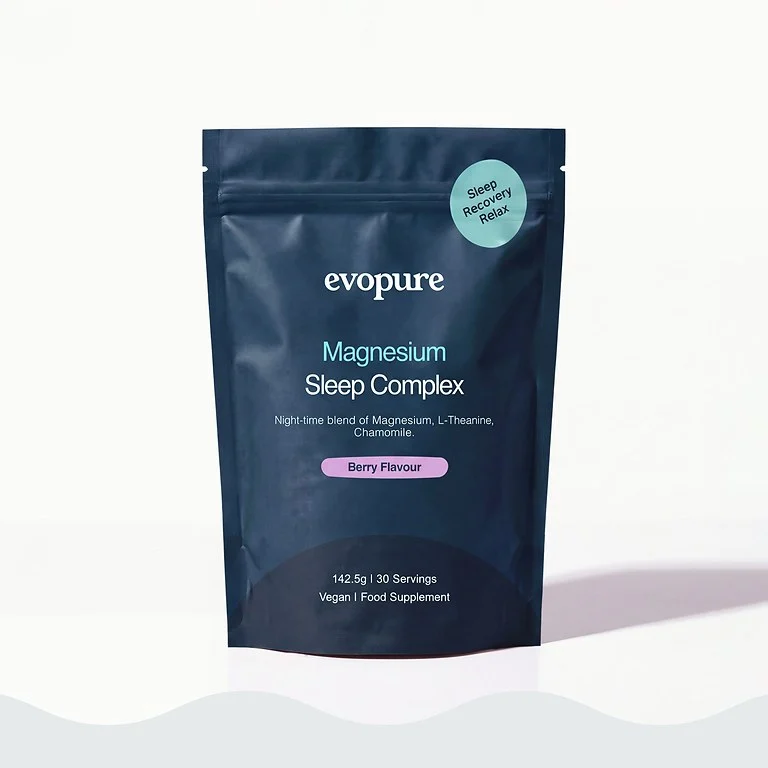
- Magnesium. A 2025 trial found a small improvement in sleep with magnesium bisglycinate in adults who slept poorly. Magnesium contributes to the reduction of tiredness and fatigue and to normal psychological function. See magnesium for sleep.
- Melatonin is prescription-only in the UK. See melatonin in the UK.
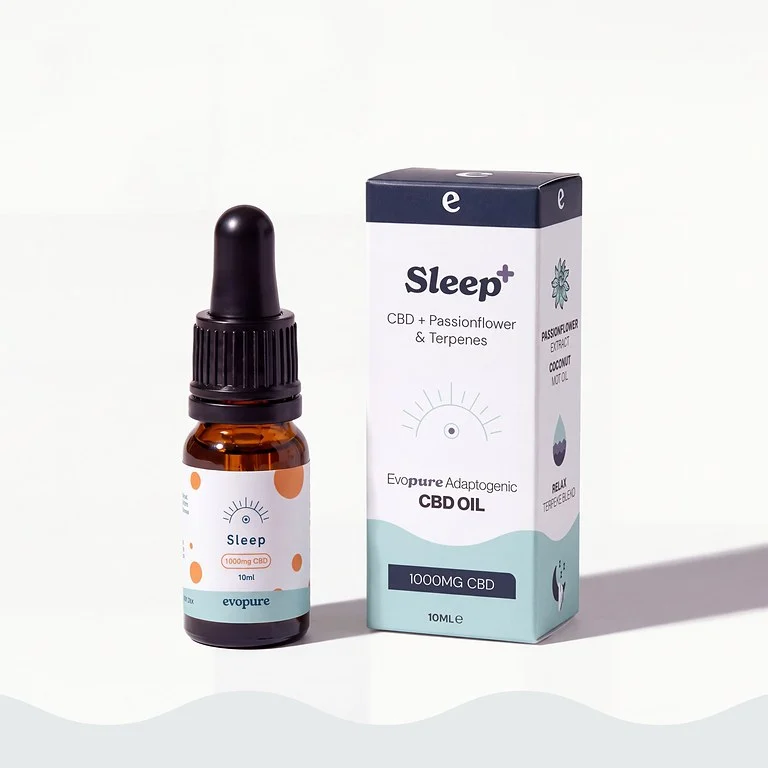
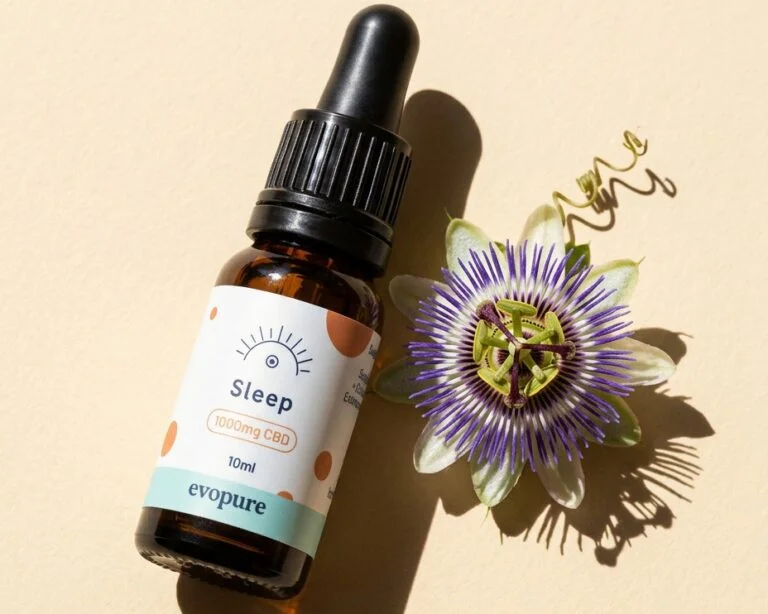
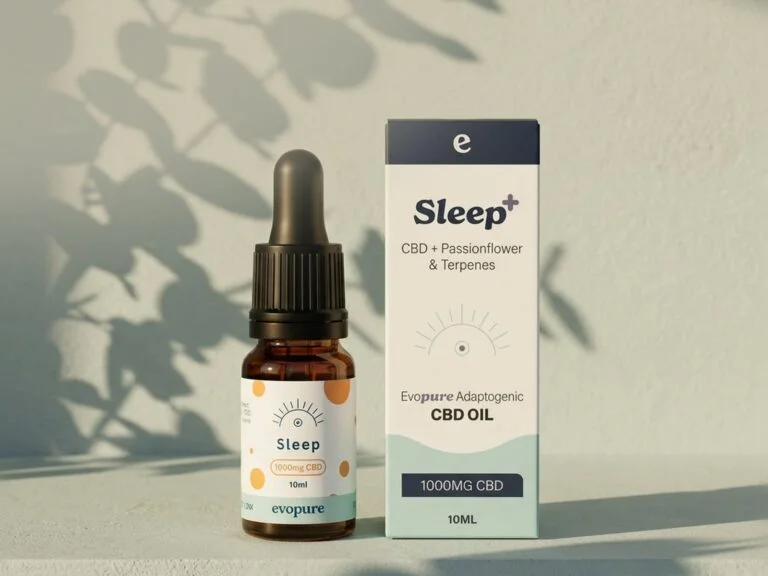
- CBD. Research on CBD and sleep is small and mixed. See CBD vs melatonin for sleep.
For a full comparison, see natural sleep aids ranked by evidence.
The FSA’s 10mg a day figure for CBD is precautionary advice rather than a legal limit, set while longer-term safety research continues. At Evopure we think it is a very cautious figure, and many adults use more. If you go above it, increase slowly, and check with your GP or pharmacist first if you take any medication.
When to see your GP
See your GP if trouble sleeping has lasted 3 months or more, is affecting your days, or comes with loud snoring, gasping or pauses in breathing at night. The NHS recommends CBT for insomnia as the first treatment, and it works better long term than sleeping tablets.
Related guides
- Blue light and sleep.
- Hungry at bedtime? Our guide to what to eat before bed to sleep lists the best bedtime snacks.
- White, pink or brown noise: which helps you sleep?
- Tempted by viral tricks? Here’s what the evidence says on lettuce water and sleep.
- If the quiet makes ringing in your ears stand out, try these steps for sleeping with tinnitus.
- If a busy mind keeps you up, try this simple sleep meditation you can do in bed.
- See also our body scan meditation guide, with a 3-minute version for bed.
- Is sleeping with socks on good or bad?
- If noise keeps you up, see earplugs for sleeping: do they work?
- Does ASMR help you sleep?
- Calm music before bed can help a busy mind settle. Read our guide to the best music for sleep.
- Still lying awake night after night? Work out the cause with our guide to why you can’t sleep.
- Warm feet help you drop off: see how to stop cold feet in bed.
- Falling asleep is easier at a time your body expects, so see the best time to sleep and wake up.
FAQs
What is the fastest way to fall asleep?
Relax your body with a technique like the military method or muscle relaxation, keep the room cool and dark, and get up if you’re still awake after about 20 minutes.
Does the military sleep method work?
It’s never been tested in a trial, but it’s a form of muscle relaxation, which does have good evidence for improving sleep. It gets easier with practice.
What is the 4-7-8 breathing method?
Breathe in for 4, hold for 7 and breathe out for 8, repeated 4 times. The long out-breath slows your breathing and helps you relax.
How do I fall asleep fast when I’m not tired?
Don’t force it. Do something calm in dim light until you feel sleepy, and keep your wake time fixed so you’re sleepier tomorrow night.
How do I fall asleep when my mind is racing?
Write tomorrow’s to-do list, try the cognitive shuffle, or use slow breathing. Turn the clock away so you’re not checking the time.
Sources
- NHS. Insomnia.
- NHS. Sleep and tiredness.
- Li K et al (2026). The effects of progressive muscle relaxation on sleep quality in adults: a systematic review and meta-analysis of randomized controlled trials. Frontiers in Public Health.
- Haghayegh S et al (2019). Before-bedtime passive body heating by warm shower or bath to improve sleep: a systematic review and meta-analysis. Sleep Medicine Reviews.
- Scullin MK et al (2018). The effects of bedtime writing on difficulty falling asleep: a polysomnographic study comparing to-do lists and completed activity lists. Journal of Experimental Psychology: General.
- Jansson-Fröjmark M et al (2022). Paradoxical intention for insomnia: a systematic review and meta-analysis. Journal of Sleep Research.
- Schuster J et al (2025). Magnesium bisglycinate supplementation in healthy adults reporting poor sleep. Nature and Science of Sleep.
This guide is general information, not medical advice. Evopure makes the Magnesium Glycinate Sleep Complex and Sleep CBD Oil.