Last updated: October 2026
Yes, you get an extra hour in bed this weekend. The clocks go back one hour at 2am on Sunday 25 October 2026, so 2am becomes 1am during Saturday night. Research suggests most of us don’t actually sleep that hour, though, and waking early all week can leave us more tired. A gradual shift helps.
Here is what really happens to your sleep when the clocks change, a simple five-day plan to make it painless, and what to do if you feel flat as the evenings draw in.

For your new evening routine
Magnesium Glycinate Sleep Complex is a berry drink with magnesium bisglycinate and citrate, L-theanine and chamomile, and magnesium contributes to a reduction of tiredness and fatigue. Prefer something warm? Our Reishi Mushroom Adaptogenic Complex makes a reishi hot chocolate (it contains a little natural caffeine, so have it earlier in the evening). Vegan and made in the UK.
Add Magnesium Glycinate Sleep Complex to bag See ingredients and reviews
Vegan and made in the UK. Free UK delivery over £45, 14-day returns on unopened items. Subscribe and save 25% on your first order, then 20%.
When do the clocks go back in 2026?
In the UK the clocks go back on the last Sunday in October. In 2026 that is Sunday 25 October. At 2am, the time becomes 1am, and we move from British Summer Time back to Greenwich Mean Time. So the extra hour comes during the night of Saturday 24 October, and Sunday morning is the first morning on the new time.
Phones and most smart devices change automatically. Oven clocks, car clocks and older alarm clocks usually need changing by hand.
The clocks go forward again on Sunday 28 March 2027.
| Clock change | Date | What happens |
|---|---|---|
| Clocks go back | Sunday 25 October 2026 | 2am becomes 1am: an extra hour in bed |
| Clocks go forward | Sunday 28 March 2027 | 1am becomes 2am: an hour less in bed |
| Clocks go back | Sunday 31 October 2027 | 2am becomes 1am: an extra hour in bed |
Dates from GOV.UK. It is always October in the UK, never November, and in 2026 the change comes the weekend before Halloween rather than on it.
Do we get an extra hour of sleep when the clocks go back?
On the clock, yes. When the clocks go back you gain an hour, so if you go to bed at your usual time on Saturday 24 October and get up at your usual time on Sunday, you have had an extra hour in bed.
Whether you actually sleep it is another matter, and mostly the answer is no. A review of the research from Liverpool John Moores University found little evidence that people actually sleep an extra hour on the night the clocks go back. Plenty of us stay up later instead, or wake at our usual body-clock time anyway.
The same review found something more surprising. In the days after the change, your body still expects to wake an hour “earlier” than the clock says. After five mornings of waking before you are ready, many people end the week with a small net loss of sleep, not a gain.
In short: the extra hour is real on the clock, but not always in your sleep. A little planning turns it into a genuinely easy week.
Why the clock change affects you
Your body runs on an internal clock, your circadian rhythm, which is set mainly by light. It tells you when to feel sleepy, when to wake and when to be hungry. When the clocks go back, the clock on the wall moves an hour overnight, but your body clock takes a few days to follow.
That mismatch is why, in the first week, you might:
- feel sleepy earlier in the evening
- wake up too early and struggle to drop back off
- feel hungry at odd times
- feel a bit flat, especially with darker late afternoons
If early waking is already a problem for you, our guide to waking at 3am is worth a read.
A 5-day plan to adjust to the clocks going back
The idea is simple: move your routine later by about 15 minutes a day before the change, so that by Sunday your body is already on the new time. Starting late? Even two or three nights of shifting helps.
| Day | Bedtime and wake time | Tip |
|---|---|---|
| Wednesday 21 Oct | 15 minutes later than usual | Push dinner back by 15 minutes too |
| Thursday 22 Oct | 30 minutes later | Get outside in daylight, ideally in the afternoon |
| Friday 23 Oct | 45 minutes later | Keep caffeine to the morning |
| Saturday 24 Oct | An hour later | Change the clocks before bed |
| Sunday 25 Oct | Your usual times, on the new clock | Get daylight early in the day and keep to your normal meal times |
Can’t shift your wake time because of work or school? Moving just your bedtime still helps.
Five habits that help all week
- Get daylight every day. Light is the strongest signal to your body clock. A walk outside, even on a grey day, helps.
- Keep the bedroom dark in the morning. If you are waking too early, blackout blinds stop early light from nudging you awake.
- Dim the lights an hour before bed. Screens and bright overhead lights keep your brain in daytime mode.
- Keep meals and caffeine regular. Your gut has its own clock, and regular meal times help it follow.
- Build a wind-down routine. The same few steps each evening tell your body the day is over.
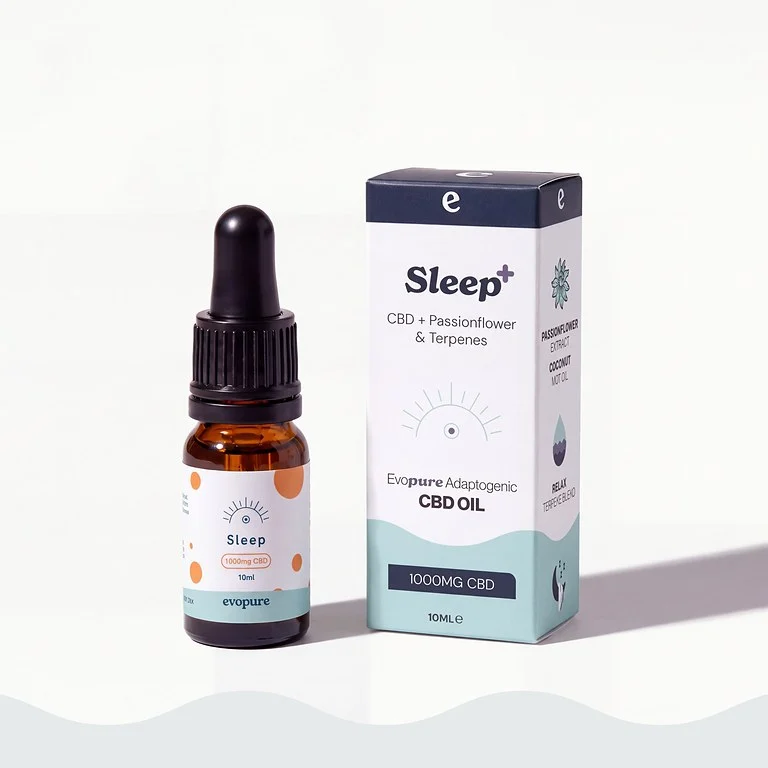
For many people, a warm magnesium drink is part of that routine. Our guide to magnesium for sleep explains which type to choose, how much to take and when, and our sleepy girl mocktail recipe turns it into something to look forward to. Others add a few drops of Sleep CBD Oil or a mug of reishi cacao (it contains a little natural caffeine, so have it earlier in the evening rather than right before bed).
A caffeine-free warm drink can be a useful signal that the day is winding down; our guide to the best tea for sleep ranks seven herbal teas by the evidence.
The FSA’s 10mg a day figure is precautionary advice rather than a legal limit, set while longer-term safety research continues. At Evopure we think it is a very cautious figure, and many adults use more. If you go above it, increase slowly, and check with your GP or pharmacist first if you take any medication.
Our products are for adults (18+) only. We don’t recommend our products during pregnancy or breastfeeding.
Babies and toddlers: adjusting their sleep
Young children often feel the change most, because their routines are so regular. A 7am waker can suddenly become a 6am waker. Two gentle approaches work for most families:
- Shift gradually: from the Wednesday before, move naps, meals and bedtime about 15 minutes later each day.
- Split the difference: after the change, put them to bed 30 minutes later for a few nights, then move to their normal time.
Blackout blinds and a toddler clock that changes colour at wake-up time can help too. Expect it to take up to a week to settle. Speak to your health visitor if sleep problems carry on.
How to cope with dark mornings
Dark mornings feel harder because light is the main signal your body clock uses to start the day. Light reaching your eyes tells the master clock in your brain that it is morning. When the alarm goes off in the dark, that signal is missing, so your body still behaves as if it is the middle of the night.
The clocks going back gives you lighter mornings for a few weeks, but sunrise then keeps getting later. The shortest day, Monday 21 December 2026, has only about 7 hours 50 minutes of daylight. The earliest sunsets come a few days before it and the latest sunrises a number of days after it, so mornings carry on getting darker even once the shortest day has passed.
What helps:
- Get light as soon as you wake. Open the curtains straight away and switch on bright lights rather than a bedside lamp.
- Wake to light, not darkness. A sunrise alarm clock brightens gradually before your alarm, and a SAD lamp gives you bright light over breakfast. If you buy a light box, the NHS says to choose one that is 10,000 lux, UV-free and UKCA or CE marked.
- Keep the same wake time every day, weekends included, so your body clock has something steady to follow.
- Get outside early. A short walk in daylight, even on a grey morning, is one of the simplest things to try. The NHS suggests getting as much natural daylight as you can in winter.
- Eat breakfast at a regular time. Regular meal times give your body clock another cue that the day has started.
- Time your caffeine. A morning coffee is fine, but keep your last one at least six hours before bed. In one study, caffeine taken six hours before bedtime still disrupted sleep.
If dark mornings come with low mood, tiredness and oversleeping that return every winter and get in the way of daily life, it may be seasonal affective disorder (SAD), and it is worth seeing your GP. For more on winter fatigue, read why you feel so tired in winter, and for a simple start to the day, try our morning routine for energy.
Why you feel more tired as the nights draw in
Once the clocks go back, it gets dark before 5pm in much of the UK. Less daylight affects your body clock, your mood and your energy, which is why so many people feel sluggish from late October onwards.
- Get as much daylight as you can. The NHS suggests natural light as one of the first things to try if winter affects your mood.
- Think about vitamin D. The NHS advises everyone in the UK to consider a daily 10 microgram vitamin D supplement in autumn and winter, when our skin can’t make enough from sunlight.
- Look after your magnesium intake. Magnesium contributes to a reduction of tiredness and fatigue. Pumpkin seeds, nuts, leafy greens and wholegrains are all good sources.
- Know the signs of SAD. If low mood, tiredness and oversleeping come back every winter and affect your daily life, it could be seasonal affective disorder, and it is worth talking to your GP.
For more ideas, read our guide to beating the winter blues, or try some natural sleep aids that won’t leave you groggy.
Related guides
- How to reset your body clock.
- Choosing a CBD oil for sleep.
- How to wake up early on dark mornings.
- Jet lag after a long flight.
- How your circadian rhythm works and how to reset it.
- Using the extra hour to reset? See the best time to go to bed.
- To work out your new bedtime from your alarm, use our sleep calculator.
- If lighter mornings wake you too early after the change, a sleep mask can help while your body clock adjusts.
- If your sleep is already off before the clocks change, start with how to fix your sleep schedule.
- As the nights get colder, see whether you can sleep with an electric blanket on.
- Reishi cacao for a cosy evening routine.
- If you feel flat in the week after the change, keep any nap short and early: see the best power nap length and time.
- Which form to pick? See vitamin D vs D3.
- Morning or night? See the best time to take vitamin D.
- Already taking ashwagandha? See when to take ashwagandha for sleep.
- Darker evenings also mean fireworks season: here’s how to help a dog scared of fireworks, from walk timings to a safe den.
- A warm mug at the same time each night can anchor the new routine; see does Horlicks help you sleep?
- On darker evenings, a camomile tea an hour before bed is an easy caffeine-free swap.

Next step
Mint CBD Oil With Vitamin D3 · Evolabs
If you’re following the NHS vitamin D advice this winter and use CBD too, Mint CBD Oil + Vit D3 gives 10µg vegan vitamin D3 (200% NRV) per half pipette, with 10mg of CBD in about 0.3ml (1,000mg, 30ml), third-party lab tested. Vitamin D contributes to the normal function of the immune system.
Add Mint CBD Oil + Vit D3 to bag See ingredients and reviews
Subscribe and save 25% on your first order, then 20%. New to Evopure? Join our emails for 20% off a one-off first order. Free UK delivery over £45. The FSA advises up to 10mg CBD a day: about 0.3ml. If you take any regular medicines, check with your GP or pharmacist first. We don’t recommend our products during pregnancy or breastfeeding.
Subscribe from £13.49One-off from £17.99
View productSources 10
- GOV.UK. When do the clocks change?
- Harrison Y (2013). The impact of daylight saving time on sleep and related behaviours. Sleep Medicine Reviews.
- NHS Every Mind Matters. Fall asleep faster and sleep better.
- NHS. Vitamin D.
- NHS. Seasonal affective disorder (SAD).
- NHS. Tiredness and fatigue.
- Blume C, Garbazza C, Spitschan M (2019). Effects of light on human circadian rhythms, sleep and mood. Somnologie.
- Drake C et al. (2013). Caffeine effects on sleep taken 0, 3, or 6 hours before going to bed. Journal of Clinical Sleep Medicine.
- Met Office. Winter: the coldest season.
- Royal Museums Greenwich. When is the winter solstice? and When is sunrise and sunset?
This article is general information, not medical advice.