Last updated: October 2026
The best time to sleep and wake up for most UK adults is asleep between 10pm and 11pm and up 7.5 or 9 hours later (5 or 6 sleep cycles), at the same times every day. Asleep at 10.30pm, that means waking at 6am or 7.30am. The UK average is about 10.30pm to 7am (checked October 2026).
Why 10pm to 11pm? A UK Biobank study of over 100,000 adults linked falling asleep in that hour with the lowest cardiovascular risk. But a steady schedule matters more than the exact hour, and your chronotype can shift your ideal window. Below: a bedtime chart, UK bed and wake times (weekdays and weekends), bedtimes by age and when to eat and exercise.
Best time to sleep and wake up: bedtime chart
Find the time you need to get up, then read across. Sleep runs in cycles of roughly 90 minutes, so 5 cycles is about 7.5 hours and 6 cycles about 9 hours. Each bedtime includes about 15 minutes to fall asleep. Our guide to REM sleep explains what happens in each cycle.
| If you wake at | Bed for 6 cycles (9 hours) | Bed for 8 hours | Bed for 5 cycles (7.5 hours) |
|---|---|---|---|
| 5am | 7.45pm | 8.45pm | 9.15pm |
| 5.30am | 8.15pm | 9.15pm | 9.45pm |
| 6am | 8.45pm | 9.45pm | 10.15pm |
| 6.30am | 9.15pm | 10.15pm | 10.45pm |
| 7am | 9.45pm | 10.45pm | 11.15pm |
| 7.30am | 10.15pm | 11.15pm | 11.45pm |
| 8am | 10.45pm | 11.45pm | 12.15am |
| 8.30am | 11.15pm | 12.15am | 12.45am |
| 9am | 11.45pm | 12.45am | 1.15am |
If you’re free to choose, these sleep and wake-up pairs fit the 10pm to 11pm window and give 5 or 6 full cycles (go to bed about 15 minutes earlier):
- Asleep at 10pm: wake at 5.30am or 7am.
- Asleep at 10.30pm: wake at 6am or 7.30am.
- Asleep at 11pm: wake at 6.30am or 8am.
For most people waking between 6am and 7.30am, that lands neatly in the 10pm to 11pm window. Cycle length varies from person to person, so use the chart as a starting point and adjust by 15 minutes either way until you wake up feeling clear. For more wake-up times, or to work forward from a bedtime, use our sleep calculator.
If you need to be up at 5am, a 9pm to 9.15pm bedtime gives you a full night. That’s hard to keep up if your body clock runs late, so read how to wake up early before setting the alarm.

Our pick
Magnesium Glycinate Sleep Complex
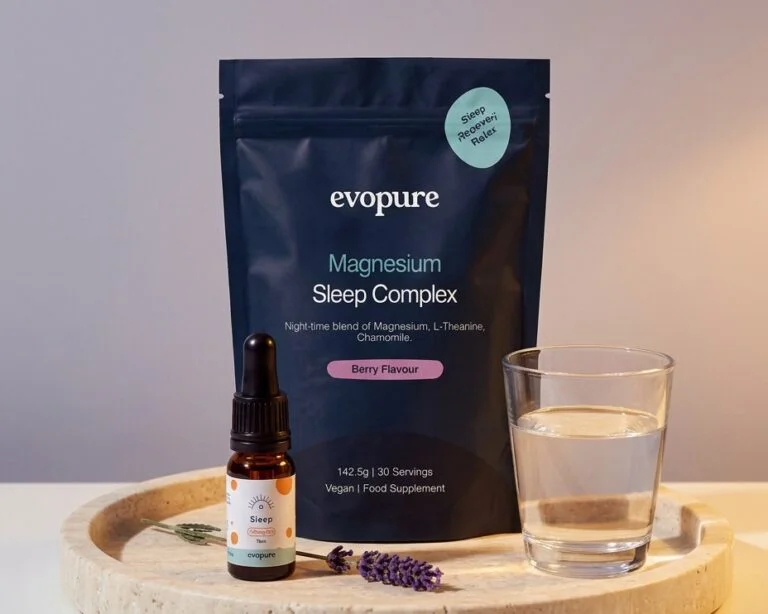
Magnesium Glycinate Sleep Complex is a berry drink powder with 290mg of magnesium a scoop from bisglycinate and citrate, plus glycine and L-theanine. Magnesium contributes to a reduction of tiredness and fatigue.
Add Magnesium Glycinate Sleep Complex to bag See ingredients and reviews
Vegan and made in the UK. Free UK delivery over £45, 14-day returns on unopened items.
Subscribe £22.49One-off £29.99
View productWhat time do most people go to bed and wake up in the UK?
Most people in the UK go to bed between about 10pm and 11pm and get up at around 7am. Those figures come from YouGov surveys of British adults, so they are what people say they do rather than measured sleep, but they sit neatly alongside the tracker data below.
What time do most people go to bed?
| Usual bedtime | Share of Britons |
|---|---|
| About 9.30pm or earlier | 12% |
| About 10pm to 11pm | 48% |
| About 11.30pm to 12.30am | 27% |
| About 1am or later | 11% |
Those are the results of the YouGov Sleep Study, published in 2022. It also found:
- Men go to bed later. 43% of men turn in from about 11.30pm onwards, compared with 32% of women.
- Younger adults go to bed later. 17% of 16 to 24 year olds go to bed at about 1am or later, compared with 8 to 9% of people aged 40 and over.
- Most people keep a routine. 71% always or usually go to bed at the same time each night.
What time do most people wake up? The UK average
A YouGov survey published in July 2025 found that the median time Britons get up is 7am, which was also the single most common answer. About two in three people (65%) typically get up between 6am and 8am, and 12% get up before 6am on a workday. People with children at home get up earlier, at a median of 6.45am (6.30am if the youngest is four or under), while retired people get up later, at a median of 8am.
Put together, a typical British night runs from roughly 10.30pm to 7am. We also sleep more than we used to: UK time-use diaries show average sleep rising from 7 hours 23 minutes in the 1970s to 8 hours 6 minutes in 2015, mainly because people went to bed about 30 minutes earlier and woke about 15 minutes later. Time in bed isn’t the same as time asleep, though. In YouGov’s survey, only a quarter of adults said they get 8 hours or more a night, and 13% said fewer than 6. If you want to see your own pattern, our guide to sleep trackers explains what they can and can’t tell you.
Weekdays vs weekends
Most recent surveys don’t split out weekends, but an older Ipsos MORI poll of 1,005 British adults (2007) did, and the shift is large:
| Habit | Weekdays | Weekends |
|---|---|---|
| Up before 7am | 62% | 34% |
| Up at 8am or later | 13% | 41% |
| In bed after midnight | 20% | 40% |
So most people sleep later at weekends. A small lie-in is fine, but a big swing works like a mini jet lag every Monday.
Why 10pm to 11pm? What the research says about the best time to sleep
The 10pm to 11pm figure comes from a UK Biobank study of more than 100,000 adults who wore a wrist activity tracker for a week. Researchers then followed them for an average of 5.7 years and looked at who developed heart and circulatory disease.
Want help building a wind-down for your new bedtime? Our CBD oil for sleep UK guide compares oils, capsules and magnesium by need.
Part of your evening routine?
Magnesium Glycinate Sleep Complex
Our Magnesium Glycinate Sleep Complex is a berry-flavoured drink powder with magnesium bisglycinate and citrate, L-theanine and glycine (290mg magnesium per serving). Magnesium contributes to a reduction of tiredness and fatigue. Vegan, made in the UK, for adults.
Subscribe £22.49One-off £29.99
View productPeople who fell asleep between 10pm and 10.59pm had the lowest rate of cardiovascular disease. Compared with them, the risk was:
| Time of falling asleep | Cardiovascular risk compared with 10pm to 10.59pm |
|---|---|
| Before 10pm | 24% higher |
| 10pm to 10.59pm | Lowest (the comparison group) |
| 11pm to 11.59pm | 12% higher |
| Midnight or later | 25% higher |
Two honest caveats. First, this was an observational study, so it shows a link, not proof that a 10pm bedtime protects your heart. People who go to bed very early or very late may differ in health, work and lifestyle in ways a study can’t fully account for. Second, it measured when people actually fell asleep, not when they got into bed. The link was also stronger in women than in men.
So treat 10pm to 11pm as a sensible target for most adults, not a rule. If you’re asleep by 11.30pm, wake at a steady time and feel fine during the day, you don’t need to overhaul anything. For the bigger picture of how your body clock sets these times, see our guide to the circadian rhythm.
Why consistency beats the perfect bedtime
Researchers increasingly think regular timing matters as much as, or more than, the hour on the clock. Another UK Biobank study tracked the sleep of about 61,000 adults and scored how consistent their sleep and wake times were from day to day. People with the most regular patterns had a 20% to 48% lower risk of dying during the follow-up period than the least regular group, and regularity predicted risk better than how long people slept. Again, this is an association rather than proof of cause.
A smaller study of 61 university students found that irregular sleepers had a body clock running about two and a half hours later than regular sleepers, judged by when their melatonin rose in the evening. They also got lower grades.
That fits NHS advice for poor sleep, which puts waking up and getting out of bed at the same time every day at the top of its list. In practice:
- Fix your wake time first, weekends included, within about an hour. Your bedtime will follow.
- Don’t sleep in after a bad night. The NHS advises sticking to your regular hours, and big weekend lie-ins push your body clock later. See sleep debt.
- Watch out for oversleeping, which can leave you groggy and push your body clock later. See oversleeping.
Researchers call the gap between your workday and weekend sleep times “social jetlag”. In a large study by Roenneberg and colleagues, more social jetlag was linked with a higher body mass index, beyond how long people slept. Keeping weekend wake-ups within about an hour of weekdays is the simple fix, and our sleep hygiene guide covers the other daily habits.
What time should I go to bed? Bedtimes by age
How much sleep you need changes with age, so the right bedtime does too. The NHS says that, on average, adults need 7 to 9 hours and children 9 to 13 hours. The US National Sleep Foundation’s expert panel gives more detailed ranges, shown below with the bedtime they point to if your alarm goes at 7am (including about 15 minutes to fall asleep).
| Age | Sleep needed | In bed by, for a 7am alarm |
|---|---|---|
| 6 to 13 | 9 to 11 hours | 7.45pm to 9.45pm |
| 14 to 17 | 8 to 10 hours | 8.45pm to 10.45pm |
| 18 to 64 | 7 to 9 hours | 9.45pm to 11.45pm |
| 65 and over | 7 to 8 hours | 10.45pm to 11.45pm |
These ranges are for healthy people, and some do well on a little more or less. If you wake naturally earlier, at 6am say, move each bedtime an hour earlier. Teenagers are covered in more detail below, and for any other wake-up time the sleep calculator does the sums for you.
Best time to wake up if you’re over 60
Body clocks tend to run earlier with age. A review of ageing and circadian rhythms notes that older adults generally sleep and wake earlier than young adults, and that more than a third report waking too early in the morning. With 7 to 8 hours the usual need from 65, a 10pm to 11pm bedtime and a 6am to 7am wake-up suits many people. Retired people in YouGov’s 2025 survey got up latest of all, at a median of 8am. If you wake at 4am or 5am and can’t get back to sleep, read why you wake up at 3am and middle insomnia, and see your GP if it affects your days.
What is the best time to wake up?
The best time to wake up is one you can keep every day, weekends included, that leaves 7 to 9 hours after you fall asleep. For most adults that means somewhere between 6am and 7.30am, which pairs with a 10pm to 11pm bedtime. The NHS advice for poor sleep is to wake up and get out of bed at the same time every day.
- Get up when the alarm goes. In YouGov’s sleep study, 40% of Britons hit snooze at least once, and 68% said they very or fairly often feel tired when they wake. If that sounds familiar, our guide to waking up tired covers the common causes.
- Get daylight soon after waking. Our morning routine for energy builds this in. On dark winter mornings, some people find a sunrise alarm clock makes getting up easier.
- Pick a time that suits your body clock. If you are a natural night owl, a 7.30am or 8am start with a later bedtime may be easier to keep than forcing a 6am alarm.
Is sleep before midnight better?
The old saying that an hour before midnight is worth two after it isn’t quite right. Your body packs as much deep sleep as it can into the start of your sleep, whenever that starts, while REM periods get longer towards morning. So someone who falls asleep at midnight still gets their deep sleep first.
Where late nights do cause trouble is when an early alarm cuts them short, or when they push your body clock later so you miss morning daylight. Regularly falling asleep after midnight and waking for work at 7am means short nights, and that adds up. Read more in deep sleep.
Early bird or night owl?
Your chronotype is your natural tendency to feel sleepy earlier or later. It’s partly genetic and changes with age: teenagers tend to run late and most people drift earlier as they get older. A natural night owl who feels wide awake at 10pm may sleep better with an 11.30pm bedtime and a later alarm, if work allows.
Night owls are common. In YouGov’s 2022 sleep study, 44% of Britons described themselves as night owls and 33% as early risers. Early risers were more likely to have a regular bedtime (85% compared with 60%) and to say they get enough sleep (50% compared with 37%). If you stay up late mainly to claw back some free time, read about revenge bedtime procrastination.
The goal is the same for everyone: enough hours, at roughly the same time, with daylight soon after you wake. If your late body clock clashes with your job, our night owl guide has a 3-week plan to shift it.
Best time to eat dinner and exercise for better sleep
| Habit | Best timing | Why |
|---|---|---|
| Dinner | Finish your main meal 2 to 3 hours before bed | The NHS advises against a big meal late at night. See eating before bed |
| Exercise | Earlier in the day, and not within about 4 hours of bed | The NHS advises regular exercise during the day, but not in the 4 hours before bed |
| Caffeine and alcohol | None in the 6 hours before bed | This is NHS advice for better sleep. See how long caffeine lasts |
| Naps | 10 to 20 minutes, before about 3pm | Late or long naps make it harder to sleep at night. See power naps |
| Screens | Off about an hour before bed | NHS Every Mind Matters suggests a calm, screen-free hour |
Then give yourself a wind-down. Our bedtime routine for adults sets out a simple 60-minute plan.
Best time to sleep for teenagers and students
Teenagers aren’t just being lazy. Oxford Health NHS Foundation Trust explains that in adolescence melatonin is released later at night, so bedtimes and wake times typically shift about 2 hours later. Most teens need about 8 to 10 hours, though it varies.
That makes an 11pm bedtime with a 7am alarm a common squeeze. The most useful habit is a steady sleep and wake time, including at weekends, with phones out of the bedroom. For university students the same applies: the irregular sleepers in the student study above had later body clocks and lower grades, so a regular schedule during exam season is worth more than late-night revision.
Best time to sleep if you work shifts
If you work nights or rotating shifts, there’s no 10pm option, so the principles change: protect one main block of sleep in a dark, quiet room, keep it at the same time on consecutive shifts, and use a short nap before a night shift. Our shift work sleep guide has a full night-shift plan.
How to move your bedtime earlier
If you currently fall asleep at 1am, jumping straight to 10.30pm rarely works. Shift in small steps instead:
- Move your alarm 15 to 30 minutes earlier every few days and keep it there, weekends included.
- Get outside within an hour of waking for 20 to 30 minutes of daylight.
- Dim lights and screens for the last hour of the evening.
- Only go to bed when you feel sleepy, as the NHS suggests. If you lie awake most nights, see insomnia.
The clocks went back on Sunday 25 October 2026, so now is a good time to reset your bedtime. See our clocks go back plan.
Some people add a supplement to their evening routine. Our Magnesium Glycinate Sleep Complex combines magnesium bisglycinate and citrate with glycine, L-theanine, chamomile, passionflower, hops and oat straw, made as a berry-flavoured drink. Magnesium contributes to a reduction of tiredness and fatigue and to the normal functioning of the nervous system. Read more in our guides to magnesium for sleep and the best time to take magnesium, or see the Magnesium Glycinate Sleep Complex.
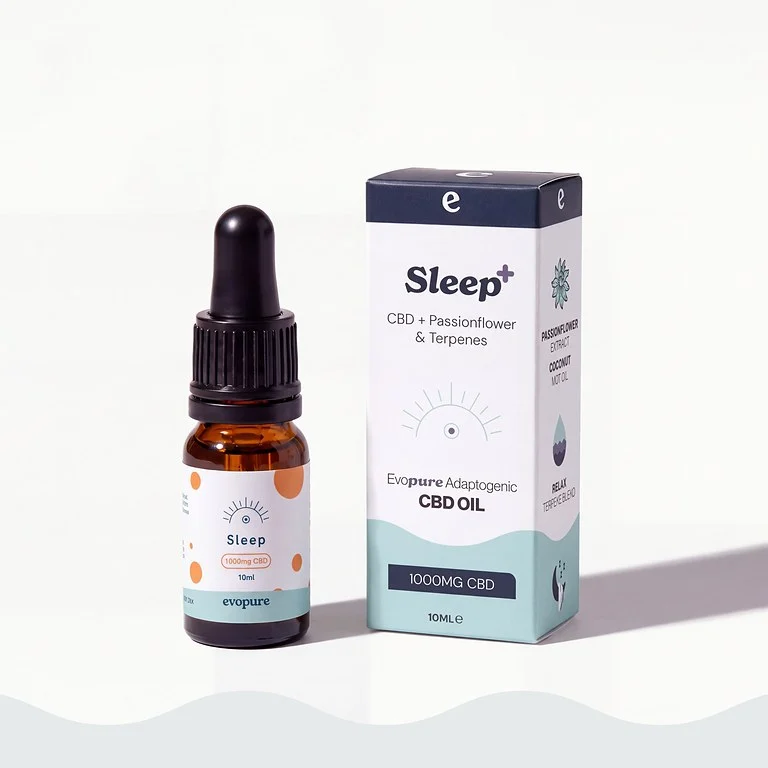
Others like a few drops of our Sleep CBD Oil, which combines broad spectrum CBD with passion flower and a terpene blend, as part of their wind-down. Our supplements are for adults only, and we don’t recommend our products during pregnancy or breastfeeding.
Related guides
- Once you have picked your times, our guide to resetting your sleep schedule shows how to get there.
- Melatonin is the hormone behind your body clock; for the tablets, see melatonin UK rules and doses.
- If your body clock has moved earlier with age, read why older people wake up early and how to gain back an hour.
The FSA’s 10mg a day figure for CBD is precautionary advice rather than a legal limit, set while longer-term safety research continues. At Evopure we think it is a very cautious figure, and many adults use more. If you go above it, increase slowly, and check with your GP or pharmacist first if you take any medication.
Sources 17
- Nikbakhtian S, et al. Accelerometer-derived sleep onset timing and cardiovascular disease incidence: a UK Biobank cohort study. European Heart Journal: Digital Health, 2021.
- Windred DP, et al. Sleep regularity is a stronger predictor of mortality risk than sleep duration: a prospective cohort study. Sleep, 2024.
- Phillips AJK, et al. Irregular sleep/wake patterns are associated with poorer academic performance and delayed circadian and sleep/wake timing. Scientific Reports, 2017.
- Lamote de Grignon Pérez J, et al. Sleep differences in the UK between 1974 and 2015: insights from detailed time diaries. Journal of Sleep Research, 2019.
- Hirshkowitz M, et al. National Sleep Foundation’s sleep time duration recommendations: methodology and results summary. Sleep Health, 2015.
- Cappuccio FP, et al. Meta-analysis of short sleep duration and obesity in children and adults. Sleep, 2008.
- Roenneberg T, et al. Social jetlag and obesity. Current Biology, 2012.
- Duffy JF, et al. Aging and circadian rhythms. Sleep Medicine Clinics, 2015.
- NHS. Insomnia.
- NHS Every Mind Matters. How to fall asleep faster and sleep better.
- National Sleep Foundation. How many hours of sleep do you really need?
- YouGov. YouGov Sleep Study part one: sleeping patterns. 2022.
- YouGov. YouGov Sleep Study part six: waking up in the morning. 2022.
- YouGov. What time do Britons get up in the morning? 2025.
- Ipsos MORI. Survey on sleep. 2007.
- Oxford Health NHS Foundation Trust. Why has it got harder to get to sleep?
- Cleveland Clinic. Sleep basics.
iThis guide is general information, not medical advice. If poor sleep goes on for months or affects your daily life, speak to your GP. Evopure makes the Magnesium Glycinate Sleep Complex.