Last updated: October 2026
Checked October 2026: for most adults, chamomile tea at night has few side effects. The most common is waking for a wee. A 2025 review of 72 trials found stomach upset and drowsiness were the main complaints, both mild. Allergy is rare, mostly in people who react to daisy-family plants, and it may interact with warfarin and sedatives.
This is our deep dive on chamomile (camomile, as many UK boxes spell it). For all the sleepy teas ranked, see our best tea for sleep guide.
Side effects of chamomile tea at night
The US National Center for Complementary and Integrative Health (NCCIH) says chamomile is likely safe in the amounts found in teas, and side effects are uncommon. A 2025 systematic review agrees: across 72 trials, only 65 side effects were reported among 2,896 people given chamomile, mostly stomach upset and drowsiness, and all were short-lived and not serious. Many trials recorded side effects poorly, and allergic reactions came from separate case reports.
| Possible effect | How common | What to do |
|---|---|---|
| Waking to wee | The most common | Drink it earlier and go before bed |
| Upset stomach or nausea | Uncommon; the most reported in trials | Try a weaker cup, or stop |
| Reflux or heartburn | Depends on you | A smaller mug, earlier |
| Allergy | Rare | Avoid if you react to ragweed, mugwort or daisies |
| Medicine interactions | Uncommon | Ask a pharmacist if you take warfarin, sedatives or the pill |
| Pregnancy | Little research | No more than 4 cups of herbal tea a day |
| Drowsy next day | Uncommon and mild | Look at sleep, alcohol and medicines first |
Waking up for a wee (and reflux)
This is about the liquid, not the chamomile. An NHS bladder service says waking once a night to pee is normal, more so with age, and advises drinking less in the evening. So keep the mug small, have it earlier and go to the loo before bed. If you’re up two or more times most nights, see waking up to pee at night and speak to your GP.
Want a bedtime drink with a nutrient behind it? Compare the best magnesium drinks in the UK, from cans to berry powders.
We found no research showing chamomile itself causes reflux; lying down after a large drink is the likelier trigger. The NHS suggests not eating within 3 or 4 hours of bed. See acid reflux at night and eating before bed.
Allergic reactions
Chamomile belongs to the daisy family, so people allergic to ragweed, chrysanthemums, marigolds or daisies are more likely to react, according to the NCCIH. Memorial Sloan Kettering Cancer Center lists asthma, an itchy rash and anaphylaxis among reported reactions, and a 1989 case report described anaphylaxis after a first cup in a boy with hay fever to mugwort and other pollens. Get urgent help for face or throat swelling or difficulty breathing.
Blood thinners, sedatives and other medicines
The NCCIH says interactions with warfarin and some medicines processed by the liver have been reported, that chamomile might add to the effect of sedatives, and that it might make birth control pills less effective. Memorial Sloan Kettering also lists antiplatelet medicines and ciclosporin. One published case describes serious bleeding in a woman on warfarin who used chamomile tea and lotion. If you take sleeping tablets, a blood thinner or any regular prescription, ask your GP or pharmacist first.
Side effects for women: hormones and the pill
The NCCIH says chamomile might have some effects similar to oestrogen, so in theory it could affect conditions sensitive to oestrogen, such as some breast and womb cancers. If you have, or have had, a hormone-sensitive condition, check with your specialist team before making it a nightly habit.
Can you drink too much chamomile tea?
There’s no official upper limit. The European Medicines Agency’s traditional-use guide allows a cup 3 to 4 times a day, so 1 to 3 mugs is a sensible ceiling for most adults. Stomach upset and drowsiness are the side effects most reported in trials; the NIH’s LiverTox database also notes vomiting.
Liver, kidneys, heart and blood pressure
- Liver: LiverTox says that despite wide use, chamomile has not been convincingly linked to liver injury.
- Kidneys: we found no published reports linking chamomile tea to kidney harm. If you have kidney disease, follow your kidney team’s advice on fluids.
- Heart and blood pressure: we found no good trials of chamomile tea and blood pressure in people, and neither the NCCIH nor Memorial Sloan Kettering lists blood pressure changes as a side effect. If you take blood pressure medicines, ask your pharmacist. See heart palpitations at night and low blood pressure.
Pregnancy, breastfeeding and children
There’s not much research on herbal teas in pregnancy, so the NHS advises no more than 4 cups of herbal tea a day. Memorial Sloan Kettering lists a case report of premature narrowing of a blood vessel in an unborn baby’s heart (the ductus arteriosus) after the mother drank chamomile tea during pregnancy. It is a single case. Little is known about chamomile while breastfeeding, so check with your midwife or GP. We don’t recommend our products during pregnancy or breastfeeding. Don’t give herbal tea to babies under 6 months. Our products are for adults (18+) only.
Will chamomile tea make me drowsy the next day?
It’s unlikely. In a small 2011 insomnia trial, side effects were no different from placebo, and a 2024 review of 10 sleep studies found none reported. Drowsiness was one of the two most reported side effects in the 2025 review, but it was still uncommon and mild. If you wake groggy, look at poor sleep, late alcohol, sedating medicines or a blend with valerian. See why you wake up tired and alcohol and sleep.
Our pick
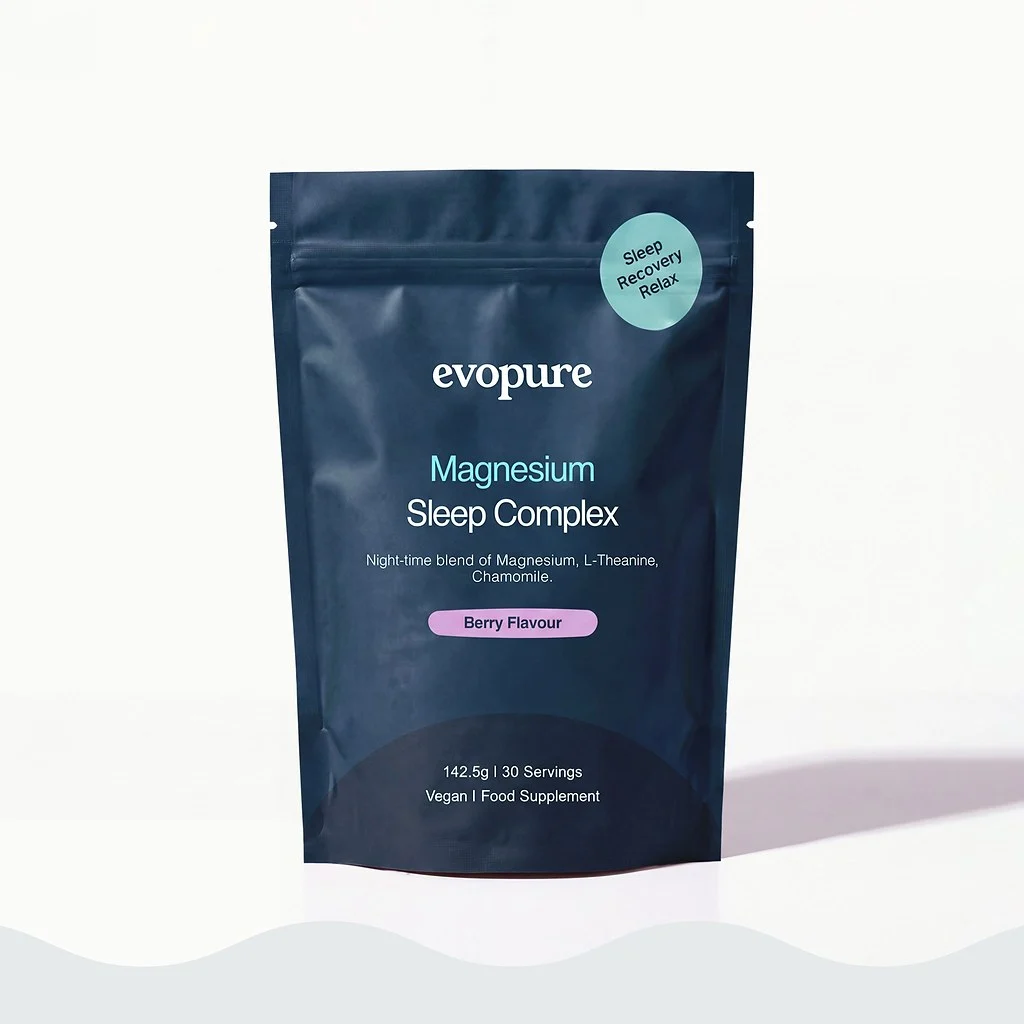
Magnesium Glycinate Sleep Complex
Magnesium Glycinate Sleep Complex is a berry drink powder you stir into a small drink about 30 minutes before bed, with 290mg of magnesium a scoop from bisglycinate and citrate, plus glycine and L-theanine. Its ingredients also include chamomile extract. Magnesium contributes to a reduction of tiredness and fatigue.
Add Magnesium Glycinate Sleep Complex to bag See ingredients and reviews
Vegan and made in the UK. For adults only. Free UK delivery over £45, 14-day returns on unopened items.
Subscribe £22.49One-off £29.99
View productDoes chamomile tea make you sleepy?
Not in the way a sleeping tablet does. The trials don’t show chamomile knocking people out. Drowsiness does crop up as a side effect, but it is uncommon and mild. Most people find it calming rather than sedating, and much of that may be the ritual: a warm mug, a pause and no caffeine.
Why might chamomile make you sleepy? Researchers point to apigenin, a compound in chamomile flowers. In a 1995 laboratory and mouse study, apigenin bound to the brain receptors that benzodiazepine medicines act on, and only a much higher dose had a mild sedative effect in mice. That doesn’t tell us what a cup of tea does in people.
Compare does magnesium make you sleepy? and melatonin in the UK.
Does chamomile tea help you sleep? What the trials say
Possibly a little, for sleep quality. The evidence is small and mixed:
| Study | Who and what | What it found |
|---|---|---|
| Hieu, 2019 (review of 12 trials) | Chamomile in various forms | Better sleep quality overall; the one insomnia trial found no change |
| Kazemi, 2024 (review of 10 studies, 772 people) | Chamomile in various forms | Better sleep quality scores; fewer night wakings in 2 of 3 studies; no longer sleep |
| Chang and Chen, 2016 | 80 new mothers with poor sleep; chamomile tea for 2 weeks | Fewer sleep problems at 2 weeks; no difference 4 weeks after stopping |
| Zick, 2011 | 34 adults with long-term insomnia; 270mg extract twice a day | No significant difference from placebo in sleep diaries |
Results varied a lot, and only one study checked the strength of the chamomile used. So a cup may be a pleasant part of winding down, but it isn’t a treatment for insomnia. See sleep hygiene, how to fall asleep fast, our 60-minute bedtime routine, how to stay asleep and, if poor sleep lasts for weeks, insomnia.
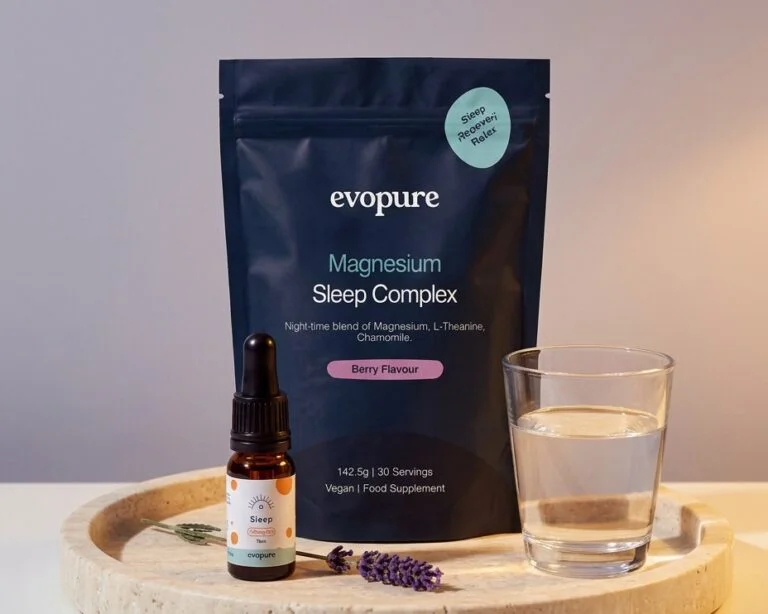
If chamomile is part of your wind-down, these Evopure products fit the same routine. Our Magnesium Glycinate Sleep Complex is a berry-flavoured drink powder with magnesium bisglycinate and citrate, glycine and L-theanine; its ingredients also include chamomile extract, passionflower, hops and oat straw. Magnesium contributes to normal psychological function and to a reduction of tiredness and fatigue. For forms and timing, see magnesium for sleep.
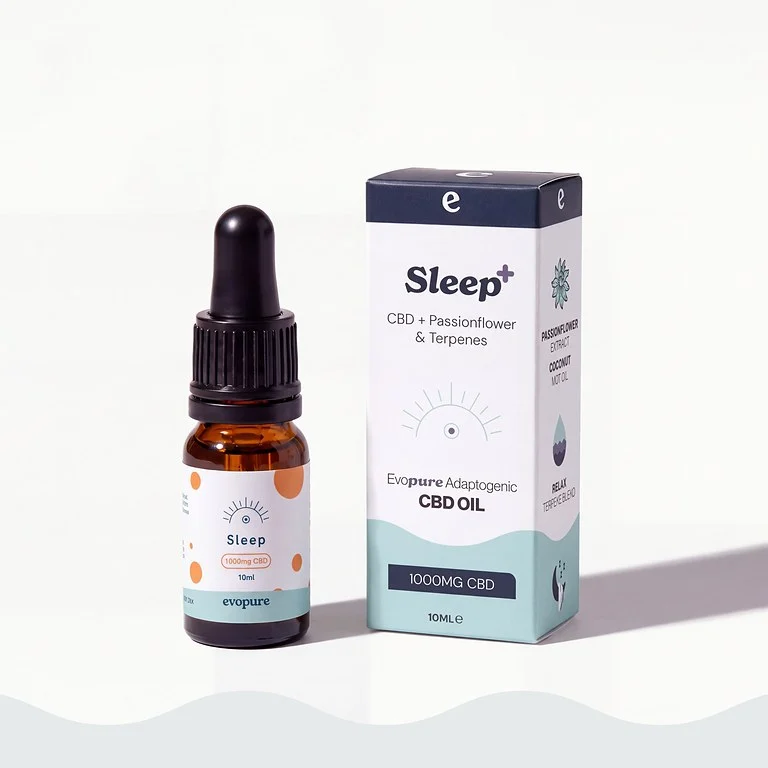
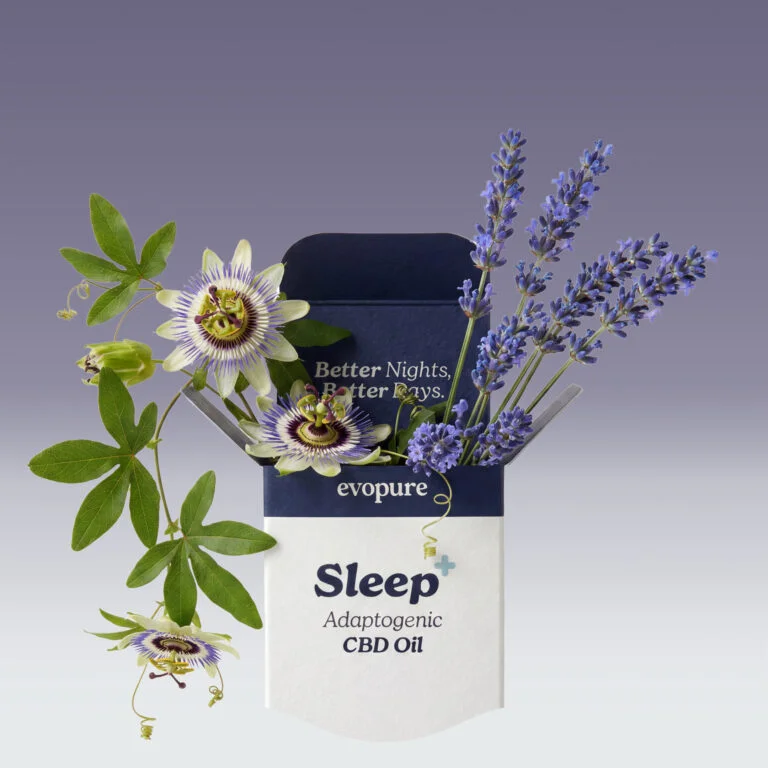
Our Sleep CBD Oil combines broad spectrum CBD with passion flower and a terpene blend. CBD isn’t a treatment for sleep problems; to compare oils, see the best CBD oil for sleep in the UK. Our Reishi Mushroom Adaptogenic Complex is a reishi hot chocolate that contains a little natural caffeine from cacao, so have it earlier in the evening.
The FSA’s 10mg a day figure is precautionary advice rather than a legal limit, set while longer-term safety research continues. At Evopure we think it is a very cautious figure, and many adults use more. If you go above it, increase slowly, and check with your GP or pharmacist first if you take any medication.
Does chamomile tea relax you? Chamomile and anxiety
The best-known studies tested chamomile extract capsules, not tea. In a 2009 US trial of 57 adults with generalised anxiety disorder, anxiety scores fell slightly more with extract than placebo over 8 weeks. A larger 2016 trial found no significant difference in relapse rates. For everyday nerves, a 2019 review of 3 trials found no clear difference from placebo.
iExtract doses are far stronger than a tea bag, so they don’t tell us what a mug does. If worry keeps you up, see anxiety at night and the best natural supplements for anxiety, and speak to your GP if anxiety affects daily life.
How much chamomile tea, when, and how to make it
Most tea bags use German chamomile (Matricaria recutita), the type in almost all the research. It’s made from flowers, not the tea plant, so it has no caffeine; a mug of black or green tea has about 75mg, says the NHS.
- How much: 1 to 3 cups is plenty for most people. The European Medicines Agency’s traditional-use guide allows a cup 3 to 4 times a day.
- When for sleep: about 30 to 60 minutes before bed. If you often wake to wee, move it to 2 to 3 hours before bed.
- During the day: fine. See how long caffeine lasts and green tea, which does contain caffeine.
- How to make it: 1 tea bag, or 1 to 2 heaped teaspoons of dried flowers, per mug of freshly boiled water. Cover and steep for 5 to 10 minutes.
The European Medicines Agency also recognises chamomile tea as a traditional remedy for minor stomach complaints, based on long use rather than trials (see supplements for digestion). For variety, try lemon balm, a mushroom tea or CBD tea.
Chamomile vs other bedtime drinks
| Drink | Caffeine | What the research says |
|---|---|---|
| Chamomile tea | None | The most studied sleepy tea; small, mixed studies |
| Passionflower tea | None | One small trial on self-rated sleep quality |
| Valerian | None | Mixed studies, mostly extracts; can leave some groggy |
| Lavender | None | Mostly studied as oil capsules and aromatherapy, not tea |
| Hot chocolate | A little, from cacao | A cosy ritual; choose a lower-sugar one |
| A magnesium drink | None | Magnesium contributes to normal psychological function |
Chamomile also turns up in blends such as Pukka Night Time tea, passion flower teas and the Trip Mindful Blend drink. Prefer a scent? See This Works Deep Sleep pillow spray. More ideas: foods that help you sleep, glycine for sleep, L-theanine and natural sleep aids ranked by evidence.
Related guides
- Warm drinks for colds: cold or flu?, sore throat remedies, echinacea and fresh ginger tea.
- Seen the TikTok trend? Read lettuce water for sleep.
- Comparing bedtime drinks? See Horlicks vs Ovaltine, hot milk and chamomile.
- Prefer a capsule to a cup? See what to check in chamomile and other sleep capsules.
- Camomile also features in blends such as Twinings Sleep and Moment of Calm.
- Chamomile is often blended with other herbs, as in Yogi Bedtime tea (17% chamomile in the UK recipe).
- Chamomile is the main herb in Clipper Sleep Easy tea, at 25% of the blend.
- Herbal teas can reduce iron absorption too, so if you take iron, see when to take iron tablets.
Sources 18
- Hieu TH et al. Therapeutic efficacy and safety of chamomile for state anxiety, generalized anxiety disorder, insomnia, and sleep quality. Phytotherapy Research, 2019.
- Kazemi A et al. Effects of chamomile (Matricaria chamomilla L.) on sleep: a systematic review and meta-analysis of clinical trials. Complementary Therapies in Medicine, 2024.
- Chang SM, Chen CH. Effects of an intervention with drinking chamomile tea on sleep quality and depression in sleep disturbed postnatal women. Journal of Advanced Nursing, 2016.
- Zick SM et al. Preliminary examination of the efficacy and safety of a standardized chamomile extract for chronic primary insomnia. BMC Complementary and Alternative Medicine, 2011.
- Viola H et al. Apigenin, a component of Matricaria recutita flowers, is a central benzodiazepine receptors-ligand with anxiolytic effects. Planta Medica, 1995.
- Amsterdam JD et al. A randomized, double-blind, placebo-controlled trial of oral Matricaria recutita (chamomile) extract therapy for generalized anxiety disorder. Journal of Clinical Psychopharmacology, 2009.
- Mao JJ et al. Long-term chamomile (Matricaria chamomilla L.) treatment for generalized anxiety disorder: a randomized clinical trial. Phytomedicine, 2016.
- Segal R, Pilote L. Warfarin interaction with Matricaria chamomilla. CMAJ, 2006.
- Subiza J et al. Anaphylactic reaction after the ingestion of chamomile tea. Journal of Allergy and Clinical Immunology, 1989.
- NHS. Foods to avoid in pregnancy (herbal teas and caffeine).
- Ostovar M et al. Chamomile: a systematic review of adverse events. Complementary Therapies in Medicine, 2025.
- National Institutes of Health. Chamomile, LiverTox.
- NHS. Heartburn and acid reflux.
- NHS. Constipation.
- Oxford Health NHS Foundation Trust. Understanding nocturia.
- European Medicines Agency. Matricariae flos (chamomile flower).
- National Center for Complementary and Integrative Health. Chamomile.
- Memorial Sloan Kettering Cancer Center. Chamomile (German).
General information, not medical advice. Evopure makes the products featured above.