Last updated: October 2026
Sleep trackers work well for some things and poorly for others. In lab studies, most rings, watches and bedside devices spot sleep accurately and give a fair estimate of total sleep time. They are much weaker at noticing when you lie awake and at splitting sleep into light, deep and REM stages. Use them for trends, not verdicts.
Below: how trackers measure sleep, what the studies found, rings vs watches vs apps, what your sleep score means, orthosomnia and whether you need one at all.
The short version: a tracker is good at showing roughly how long you slept and how regular your bedtimes are. It can’t tell you exactly how much deep or REM sleep you had, and it can’t diagnose a sleep disorder. If the score is making you anxious at bedtime, it’s doing more harm than good.
How do sleep trackers work?
No consumer tracker measures sleep directly. Sleep is defined by brain activity, which a hospital sleep study (polysomnography, or PSG) records with electrodes on your head. A ring, watch or bedside device measures things that change when you fall asleep, then uses an algorithm to make an educated guess.
| Signal | How it’s measured | What it’s used for |
|---|---|---|
| Movement | Accelerometer in a ring, watch or phone, or pressure sensors in a mattress pad | The oldest method: lying still is read as sleep, moving as wake |
| Heart rate | Light shining into the skin (optical sensor) picks up each pulse | Heart rate usually drops as you fall asleep and shifts between stages |
| Heart rate variability (HRV) | Tiny differences in time between heartbeats, from the same sensor | Helps estimate stages and feeds “recovery” or “readiness” scores |
| Skin temperature | A sensor touching the skin, mostly in rings | Overnight trends compared with your own normal |
| Blood oxygen (SpO2) | Red and infrared light through the skin | Oxygen trends; some devices use it to flag breathing disturbances |
| Breathing and sound | Radar in some bedside devices, or a phone microphone | Breathing rate, snoring and movement without wearing anything |
Most devices combine several signals. Sleep researchers point out that the algorithms are proprietary and can change with a software update, so the same device may score the same night differently a year later.
How accurate are sleep trackers?
In short: accurate at spotting sleep, much less accurate at spotting wake. Here is what lab studies found when devices were worn alongside a full sleep study.
- Seven devices, 34 healthy young adults, three nights in a sleep lab (2021). Every device correctly labelled at least 93% of the time people were asleep. But when people were awake, the devices recognised it only 18% to 54% of the time. Most did as well as or better than the research-grade wrist monitors scientists use, stage results were mixed, and devices tended to do worse on nights of disrupted sleep.
- Six wrist devices, 62 adults, a Belgian sleep lab (2025). All six detected more than 90% of sleep but only 29% to 52% of wake. Agreement across all stages was fair to moderate.
- A 2024 systematic review of three popular wrist devices found only eight qualifying studies and called the research “considerably limited”, while new models keep coming out.
Why the gap? If you lie still trying to drop off, or wake at 3am and don’t move, you look asleep to a sensor. So trackers tend to overestimate how much you slept and underestimate time awake, especially on bad nights. That’s exactly when people with insomnia are most likely to check their data.
| Measure | How well trackers do |
|---|---|
| Bedtime and wake time | Good |
| Asleep vs awake | Good at detecting sleep, poor to fair at detecting wake |
| Total sleep time | Fair: close on a normal night, often too high on a broken one |
| Time to fall asleep | Weak: lying still is easily mistaken for sleep |
| Light, deep and REM sleep | Fair at best, varies a lot between devices |
| Sleep apnoea or other disorders | Not a diagnosis (see below) |
Can a tracker measure deep and REM sleep?
Only roughly. Sleep stages are defined by brain waves, which a ring or watch can’t see, so devices estimate them from heart signals, movement and time of night.
- A 2023 study of 11 consumer trackers (watches, a ring, bedside devices and apps) in 75 people found “substantial performance variation” in staging: the best scored more than twice as well as the worst. It was run by a company that makes a sleep app.
- Researchers working for a ring maker reported 96% accuracy for sleep vs wake and 79% for four stages across 440 nights when heart signals were added to movement. Movement alone managed 57% for stages.
- The 2025 Belgian study judged the best wrist devices good enough to track “prolonged and significant changes” in sleep, not night-to-night detail.
So if your deep sleep drops from 70 to 55 minutes one night, that’s within the margin of error. A trend that holds for weeks, say after cutting evening alcohol, means more. Our sleep calculator and guide to sleep cycles explains the stages.
Rings vs watches vs mattress pads vs phone apps
This compares formats, not brands. Models change quickly and the research rarely keeps up.
| Type | Examples | Main sensors | Good for | Drawbacks |
|---|---|---|---|---|
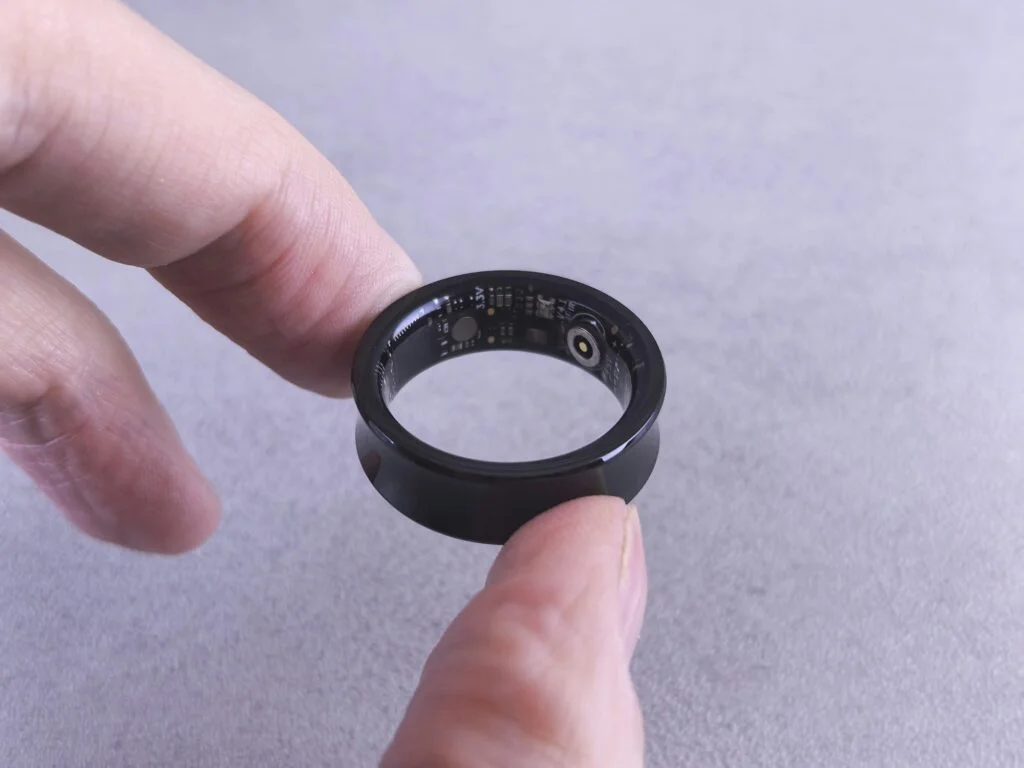
| Smart ring | Oura, Samsung Galaxy Ring, Ultrahuman | Movement, heart rate, HRV, skin temperature, SpO2 | Comfortable in bed, long battery life, temperature trends | Fit matters; some brands charge a subscription |
| Smartwatch | Apple Watch, Samsung Galaxy Watch, Google Pixel Watch, Garmin | Movement, heart rate, HRV, SpO2, sometimes temperature | You may already own one; daytime activity too | Bulky in bed for some; charging overnight means no data |
| Fitness band | Fitbit, Whoop | Movement, heart rate, HRV | Light to wear; recovery and training focus | Small screen or none; some need a subscription |
| Mattress pad or bedside device | Under-mattress pads, bedside radar | Pressure or radar for movement, breathing and heart rate | Nothing to wear | Can pick up a partner or pet; only works in that bed |
| Phone app | Microphone or movement-based apps | Sound, phone movement | Free or cheap; snoring recordings | Least reliable for stages; phone in the bedroom |
A 2023 review of 26 studies found contactless devices as good as research wrist monitors at telling sleep from wake, with mattress-based sensors doing best in healthy people.
On “Oura vs Whoop” or “Apple Watch vs Garmin”, no brand wins every study. Results depend on the model, software version and who was tested. Comfort, battery life and whether you’ll wear it every night matter more than small lab differences.
What does your sleep score mean?
A sleep score is a number, usually out of 100, that each company builds from its own recipe. Most combine:
- total sleep against a target (often 7 to 9 hours, the NHS figure for adults)
- time awake in the night and time to fall asleep
- estimated deep and REM sleep
- restlessness, overnight heart rate and HRV
- how regular your bedtime is
Three things to know:
- Scores aren’t comparable between brands. An 85 on one device isn’t an 85 on another.
- The weakest measures feed the score. Stages and time to fall asleep are the least accurate data, yet often weigh heavily.
- How you feel counts. If you wake refreshed, a “fair” score doesn’t mean something is wrong. If you score well but wake exhausted, trust the tiredness: see why you might wake up tired.
Is 80 or 87 a good sleep score? Each app sets its own bands. One major watch brand labels 90 to 100 excellent, 80 to 89 good, 60 to 79 fair and below 60 poor. In its 2025 user data, only 7% averaged excellent, 31% good, 43% fair and 19% poor. So “fair” is normal. The useful comparison is with your own average over a few weeks.
Orthosomnia: when tracking makes sleep worse
Orthosomnia is the name Chicago sleep researchers gave in 2017 to people chasing perfect sleep data until the chase itself kept them awake. It was modelled on orthorexia, an unhealthy preoccupation with healthy eating. It isn’t a formal diagnosis.
The paper described three patients with sleep problems they had diagnosed from their tracker. One still believed her tracker showed poor sleep after a lab study found more deep sleep than average. All three spent too long in bed trying to push up their tracked sleep, a classic way to make insomnia worse. The authors suggested building trackers into CBT for insomnia rather than banning them.
How common is it? A 2024 survey of 523 adults found 35.8% regularly used a sleep tracker, and estimated that 3% to 14% of the whole sample met the researchers’ criteria for orthosomnia, depending on the cut-off. It’s one small study, so treat that as a rough guide. And not everyone is affected: in a small Swedish study of 26 people with insomnia, four weeks of wearing a tracker didn’t increase sleep worries compared with a paper diary.
Signs a tracker may be working against you:
- you check your score before noticing how you feel
- a low number changes your mood or plans
- you go to bed earlier and earlier to “bank” sleep, then lie awake
- you worry at bedtime about what tonight’s data will say
This overlaps with the worry loop behind anxiety at night and health anxiety. Online, the sleepmaxxing trend pushes people to optimise every night, and orthosomnia is the backlash. Our sleepmaxxing guide rates the popular tips by evidence.
When a sleep tracker is useful
- Spotting short sleep. The NHS says adults need 7 to 9 hours on average. If your tracker regularly shows under 6 on weeknights, take it seriously: trackers tend to overestimate sleep, not underestimate it. See sleep deprivation.
- Consistency. Bedtime and wake time are measured well, and a regular schedule is one of the most reliable sleep hygiene habits. If you’re a night owl shifting earlier, a tracker shows whether it’s sticking.
- Testing habits over weeks. Late caffeine, alcohol, evening exercise or a late meal: compare a few weeks with and without, not one night.
- Training and recovery. Many runners watch overnight heart rate and HRV trends. See HRV, sleep and recovery for runners.
- A rough record for your GP, presented as a guide rather than a diagnosis.
What a tracker can’t tell you
Consumer trackers are wellness gadgets, not medical tests, and they tend to be least accurate for people with broken sleep or a sleep disorder.
- Sleep apnoea. Some watches and rings now flag possible breathing disturbances. Treat that as a prompt to see your GP, not a diagnosis either way. The NHS diagnoses sleep apnoea through a sleep clinic, where you wear devices that monitor your breathing and heartbeat overnight, usually at home. A normal tracker score doesn’t rule it out. If you snore loudly, gasp or choke in your sleep, or are very tired in the day, read our sleep apnoea guide and see a GP.
- Insomnia. It’s diagnosed from your symptoms and how they affect your days, not from a score. The NHS says to see a GP if changing your sleep habits hasn’t helped or you’ve had trouble sleeping for months. A GP may offer CBT for insomnia, face to face or online.
How to use a sleep tracker without stressing
- Check weekly, not every morning. Turn off daily score notifications if you can and look at the 7-day or 30-day average.
- Rate your night first. Before opening the app, score how rested you feel out of 10. Notice which one matches your energy better.
- Focus on the reliable numbers: bedtime, wake time and total sleep. Treat stage data as background.
- Change one thing at a time and give it two to four weeks.
- Don’t chase sleep. Going to bed much earlier to lift a score often means more time lying awake. A fixed wake-up time works better: see how to wake up early.
- Keep bedtime screen-light. Dim the lights and try something calming like yoga nidra. If you can’t drop off, try our techniques to fall asleep fast.
- Take a break. If the data makes you anxious, take the tracker off for two weeks. Your sleep carries on without it.
A calm, consistent wind-down matters more than any gadget, and some people like a warm, caffeine-free drink as part of it. Our Magnesium Glycinate Sleep Complex is a berry-flavoured evening drink with magnesium bisglycinate and citrate, glycine, L-theanine and botanicals. Magnesium contributes to the reduction of tiredness and fatigue and to normal psychological function. More in magnesium for sleep.
Your sleep data and privacy
A tracker collects a lot: when you’re in bed, your heart rate, breathing, temperature and sometimes sound from your bedroom. Under UK data protection law, information about your health is “special category data”, which needs extra protection. Before you set one up:
- read whether your data is shared with third parties or used for advertising
- check you can download or delete it
- turn off features you don’t use, such as microphone recording or location
- think twice before linking it to other apps or employer wellness schemes
- use a strong password and two-step sign-in
Do you need a sleep tracker?
Most people don’t. A regular wake time, morning daylight, no late caffeine, less evening alcohol and a cool, dark bedroom work without a device.
A tracker may suit you if you like data, will look at trends rather than single nights, and want to see whether a new routine is sticking. It’s probably not for you if you already worry about sleep or hope it will diagnose a problem. Then a paper sleep diary and a chat with your GP are a better start.
FAQs
Do sleep trackers actually work?
Partly. They detect sleep well and give a fair estimate of total sleep time, but often miss time lying awake and are only roughly accurate for deep and REM sleep. They’re best for trends over weeks.
Which type of sleep tracker is most accurate?
No brand or format wins every study. Rings, watches and mattress devices that combine movement with heart rate tend to beat phone apps, but results depend on the model and software version.
How do sleep trackers know when you’re asleep?
They don’t measure brain activity. They estimate sleep from movement, heart rate, HRV and sometimes breathing or temperature. Lying very still while awake can be mistaken for sleep.
What is a good sleep score?
Each brand sets its own bands; on one major watch brand’s scale, 80 to 89 is good. Compare your score with your own average over a few weeks, and with how rested you feel.
What is orthosomnia?
Becoming so preoccupied with perfect sleep data that the worry disrupts sleep. Sleep researchers named it in 2017; it isn’t a formal diagnosis. Checking less often or taking a break from the tracker usually helps.
Can a sleep tracker detect sleep apnoea?
Some devices flag possible breathing problems, but none can diagnose or rule out sleep apnoea. If you snore loudly, gasp in your sleep or are very tired in the day, see a GP, who can refer you for a sleep study.
Sources
- Chinoy ED et al. (2021). Performance of seven consumer sleep-tracking devices compared with polysomnography. Sleep.
- Schyvens AM et al. (2025). A performance validation of six commercial wrist-worn wearable sleep-tracking devices for sleep stage scoring compared to polysomnography. Sleep Advances.
- Schyvens AM et al. (2024). Accuracy of Fitbit Charge 4, Garmin Vivosmart 4, and WHOOP versus polysomnography: systematic review. JMIR mHealth and uHealth.
- de Zambotti M et al. (2019). Wearable sleep technology in clinical and research settings. Medicine and Science in Sports and Exercise.
- Altini M, Kinnunen H (2021). The promise of sleep: a multi-sensor approach for accurate sleep stage detection using the Oura ring. Sensors. (Authors employed by or advising Oura.)
- Lee T et al. (2023). Accuracy of 11 wearable, nearable, and airable consumer sleep trackers. JMIR mHealth and uHealth. (Authors include staff of a sleep app company.)
- Zhai H et al. (2023). Evaluation of the accuracy of contactless consumer sleep-tracking devices: a systematic review and meta-analysis. Sensors.
- Baron KG et al. (2017). Orthosomnia: are some patients taking the quantified self too far? Journal of Clinical Sleep Medicine.
- Jahrami H et al. (2024). Prevalence of orthosomnia in a general population sample. Brain Sciences.
- Ojalvo D et al. (2023). A useful tool or a new challenge? Hand-wrist-worn sleep trackers in patients with insomnia. Journal of Sleep Research.
- Garmin (2025). How well do you sleep? New data examines Garmin users’ sleep. (Brand data, quoted only to show how score bands work.)
- NHS. Sleep apnoea.
- NHS. Insomnia.
- Information Commissioner’s Office. What is special category data?
This guide is general information, not medical advice. Evopure doesn’t make or sell sleep trackers and has no commercial link with any brand named here. Evopure makes the Magnesium Glycinate Sleep Complex.