Last updated: October 2026
Yes, a sleep mask can help if light reaches your bed. Light at night delays melatonin and can make sleep lighter, and studies, mostly in hospital patients, link eye masks to better sleep. A Cardiff University study found better memory and alertness after a week of wearing one, even though people didn’t feel they slept better.
In short: a mask is cheap, low-risk and worth trying if streetlights, early dawns, a partner’s lamp or daytime sleep wake you. It won’t fix snoring, sleep apnoea or long-term insomnia: see a GP about those.
Do sleep masks work? What the research shows
The evidence is real but modest. Most trials were in intensive care units (ICUs) and hospital wards, far brighter and noisier than a bedroom, and many tested masks with earplugs.
| Study | Who | What it found |
|---|---|---|
| Cardiff University, published in Sleep (2022 online, 2023 in print) | 129 healthy 18 to 35 year olds sleeping at home | After a week with a mask, people learned word pairs better and reacted slightly faster than after a week with no mask, or a mask with holes over the eyes. Sleep diaries showed no difference. |
| Simulated ICU study (2010) | 14 healthy adults in a sleep lab with recorded ICU noise and light | Earplugs plus an eye mask gave more REM sleep, fewer arousals and higher melatonin than noise and light alone. |
| Cochrane review (2015) | 30 trials, 1,569 adults in intensive care | Earplugs, eye masks or both may help sleep and lower delirium risk, but evidence quality was low and most studies with objective sleep measures found no benefit. |
| Network meta-analysis (2023) | 24 trials, 1,507 critically ill adults | Masks alone, masks plus earplugs, and both plus music improved sleep quality. The eye mask had the largest single effect. |
| Hospital ward review (2023) | Patients on regular wards | Large pooled effects for eye masks and earplugs, with evidence certainty ranging from moderate to very low. |
The Cardiff study matters most for everyday life because it was done at home in healthy adults. The memory gain was small (about 65 versus 64 on the word test) and the mask didn’t change sleep stages overall. But people who got more deep (slow-wave) sleep while wearing it learned better, which fits the idea that darkness protects the sleep that matters for memory.
Honest summary: a mask won’t transform good sleep, but if light gets in, blocking it is one of the easiest wins in sleep hygiene.

Our pick
Magnesium Glycinate Sleep Complex
Magnesium Glycinate Sleep Complex is a berry drink powder with 290mg of magnesium a scoop from bisglycinate and citrate, plus glycine and L-theanine. Magnesium contributes to a reduction of tiredness and fatigue.
Add Magnesium Glycinate Sleep Complex to bag See ingredients and reviews
Vegan and made in the UK. Free UK delivery over £45, 14-day returns on unopened items.
Subscribe £22.49One-off £29.99
View productWhy light in the bedroom matters
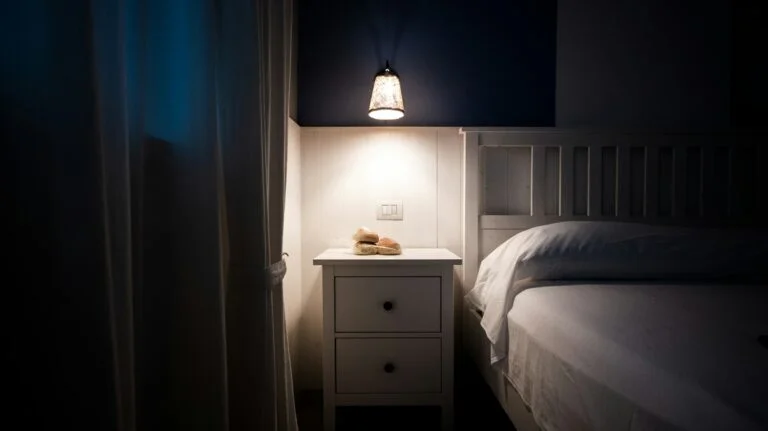
Your circadian rhythm uses light as its main signal for day and night. Darkness lets your body release melatonin, the hormone that signals night (in the UK, melatonin is prescription-only, so darkness is the free version).
- Room light before bed: in a study of 116 young adults, ordinary room light in the evening delayed the start of melatonin release in 99% of people and shortened it by about 90 minutes compared with dim light.
- Light while you sleep: the same study found room light during sleep hours cut melatonin by more than half in most trials.
- Moderate light all night: a 2022 lab study found that one night of sleep in moderate light (100 lux) raised night-time heart rate and increased insulin resistance the next morning in healthy adults, compared with sleeping in near darkness (under 3 lux).
You don’t need a pitch-black cave, but streetlights, a bright clock or a phone lighting up all add light. For screens, see blue light glasses.
Who benefits most from a sleep mask?
- Light bedrooms. Thin curtains, gaps round the blind, a streetlight or a skylight.
- Early summer mornings. Around the longest day, the sun rises at about 4.40am in London and before 4.30am in Edinburgh, with light well before that. If you wake at dawn every June, a mask is a quick fix.
- The clocks going back. The clocks go back on Sunday 25 October 2026, so for a few weeks it gets light an hour earlier by the clock. A mask can help early wakers while the body clock adjusts. See how to sleep when the clocks go back.
- Shift workers. The Health and Safety Executive suggests heavy curtains, blackout blinds or eye shades for daytime sleep. See our shift work and sleep guide.
- Partners on different schedules. If one of you reads late or rises at 5am, a mask protects the other’s sleep and may save you a sleep divorce.
- Daytime naps. A mask makes a 20-minute power nap much easier in a bright room.
- Travel. Planes and hotel rooms rarely get properly dark, so a mask earns its place in a travel bag.
How to choose a sleep mask
Fit matters more than features: the best mask blocks light at the nose and cheeks and is one you forget you’re wearing.
| Type | Good for | Watch out for |
|---|---|---|
| Contoured (eye cups) | Blocking light without pressing on the eyes; lash extensions | Can be bulkier for side sleepers |
| Flat | Light weight, packs small for travel | Presses on eyelids; light can leak at the nose |
| Silk | Smooth and soft, feels cool, gentle on skin and hair | Thinner silk may let some light through; often hand wash only |
| Cotton | Breathable, easy to machine wash, good for hot sleepers | Can feel rougher; may need a darker or thicker fabric |
| Memory foam | Moulds to your face, very good light block | Warmer; harder to wash |
| Weighted | People who like gentle pressure, as with a weighted blanket | We found no good trials on weighted eye masks; avoid if pressure on the eyes is uncomfortable |
| Heated or self-warming | A cosy wind-down before sleep | Evidence is thin: one small lab study of 18 people, funded by a maker of warming masks, found faster sleep onset |
| With built-in headphones | Background noise or a sleep meditation | Check comfort on your side; keep the volume low |
The strap. Choose a wide, adjustable strap that sits above the ears. Hook-and-loop fastenings can snag hair. Snug enough not to slip, loose enough to leave no marks.
Test it in the dark. Put it on, open your eyes and look towards a lamp. If light shows at the nose, try a contoured shape.
Judge it by how you feel after a week, not a tracker score (see do sleep trackers work?).
Eye mask plus earplugs: the hospital combination
Most hospital research tested masks and earplugs together, because light and noise come as a pair. If traffic, neighbours or a snoring partner wake you too, use both; the NHS insomnia advice suggests curtains, blinds, an eye mask or earplugs to keep the bedroom dark and quiet. If earplugs feel odd, try steady background sound (see brown noise vs white noise).
Make the mask part of a wind-down
A mask works best at the end of a calm, dim evening. Lower the lights for the last hour, put screens away and keep the bedroom cool (see the best temperature for sleep). Our 60-minute bedtime routine sets it out step by step.
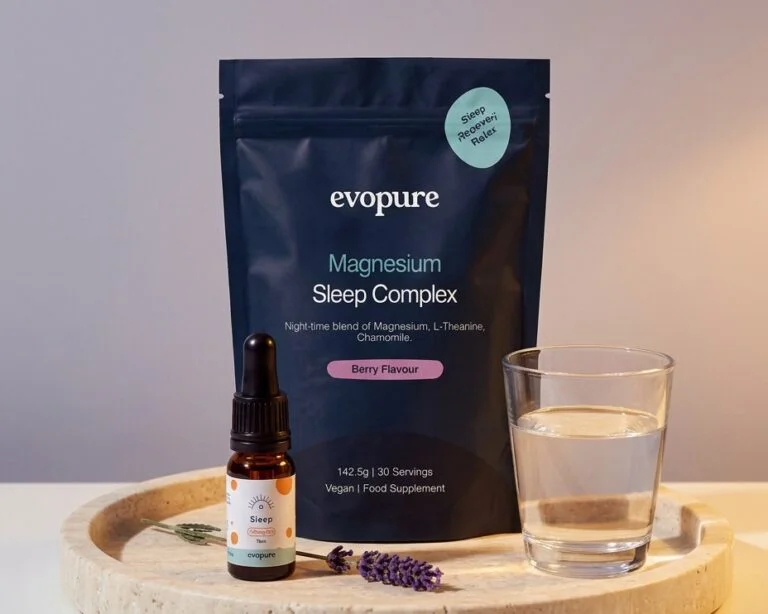
If you like a warm drink in that routine, our Magnesium Glycinate Sleep Complex is a berry-flavoured evening drink with magnesium bisglycinate and citrate, glycine, L-theanine and botanicals including chamomile and passionflower. Magnesium contributes to normal psychological function and to a reduction of tiredness and fatigue.
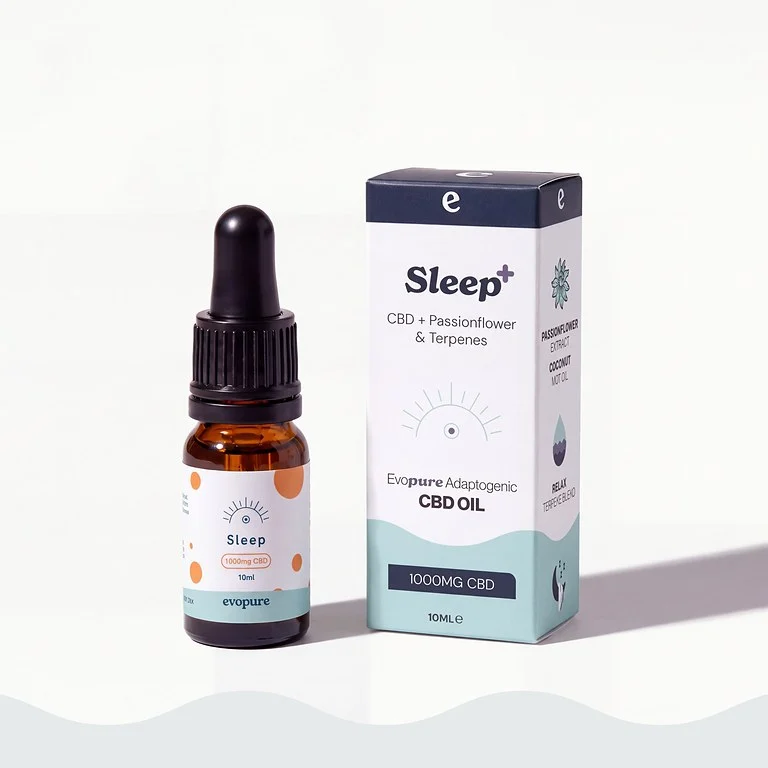
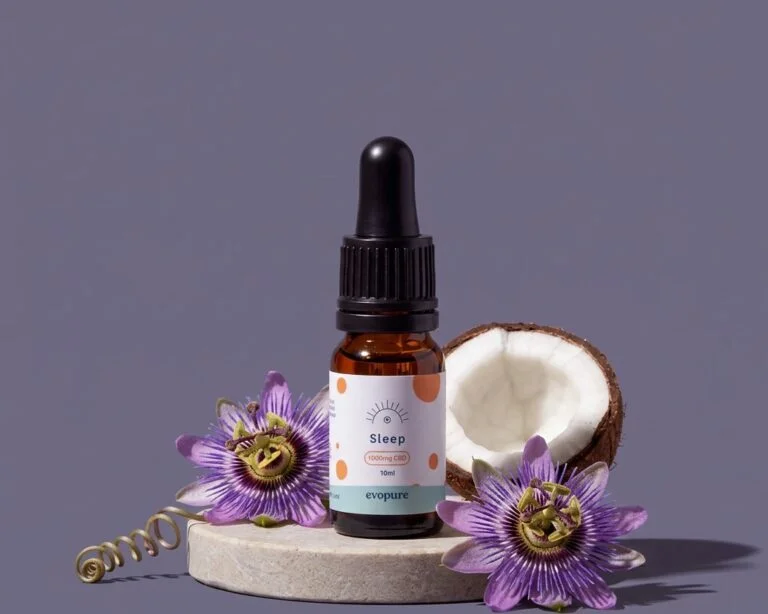
Some people also include our Sleep CBD Oil: broad spectrum CBD (0% THC) with passion flower and a terpene blend. CBD isn’t a treatment for sleep problems, and we don’t claim it will help you sleep.
The FSA’s 10mg a day figure is precautionary advice rather than a legal limit, set while longer-term safety research continues. At Evopure we think it is a very cautious figure, and many adults use more. If you go above it, increase slowly, and check with your GP or pharmacist first if you take any medication.
Our products are for adults (18+) only. We don’t recommend our products during pregnancy or breastfeeding.
Sleep mask hygiene and skin
- Wash it regularly following the care label: it picks up oil, sweat and skincare every night. Having two helps.
- Remove eye make-up first, and let night creams sink in before you put the mask on.
- Don’t share masks, and don’t wear one during an eye infection such as conjunctivitis; wash it before using it again.
- Replace it when the padding flattens or the strap loosens.
Claims that silk masks prevent wrinkles or dark circles aren’t backed by good trials that we could find. Silk is simply comfortable, which is reason enough if it keeps the mask on.
Safety: when a sleep mask isn’t enough
Masks are low-risk for most adults, but they only fix light. Don’t rely on one if you have signs of something else.
- Sleep apnoea signs. The NHS lists breathing that stops and starts, gasping, snorting or choking noises, waking a lot and loud snoring, with daytime tiredness, poor concentration and morning headaches. See a GP. Read more in our sleep apnoea guide.
- Ongoing insomnia. The NHS says to see a GP if changing your sleep habits hasn’t helped, you’ve had trouble sleeping for months, or it’s making daily life hard to cope with.
- Eye conditions. If you’ve recently had eye surgery, have an eye condition, or use eye drops or ointment at night, ask your optometrist or eye clinic before wearing anything over your eyes.
- Discomfort. If a mask leaves marks, gives you headaches or presses on your eyes, loosen it or switch to a contoured style.
Alternatives to a sleep mask
- Blackout blinds or curtains, or a temporary blackout blind. Close gaps at the sides.
- Cover standby lights on chargers, TVs and clocks, and turn your phone face down.
- Dim the lights in the hour before bed, using lamps rather than bright overhead lights.
- Get daylight in the morning to anchor your body clock.
Our sleepmaxxing guide rates other bedroom trends by evidence, and REM sleep explains the stage that changed most in the simulated ICU study.
Related guides
- If noise wakes you as well as light, our guide to earplugs for sleeping covers which types are comfortable and safe every night.
- Light is only one trigger. See how to stop being a light sleeper for a two-week plan.
- If your eyes feel dry or sore on waking, see dry eyes at night and in the morning.
- Buying one as a present? See our guide to sleep gifts for someone who can’t sleep.
- Darkness helps your own melatonin rise; for melatonin tablets, see melatonin UK rules, risks and options.
- A good sleep mask also makes a lovely present: it features in our wellness gifts for her, alongside other sleep, calm and self-care ideas.
- A good silk eye mask also makes one of the most useful stocking fillers for women.
- A contoured eye mask is one of the easiest additions to a sleep hamper for someone who can’t sleep.
- A cotton eye mask with foam earplugs makes a thoughtful Secret Santa gift under £10.
- A bright full moon through thin curtains is one reason people reach for a mask: see does the full moon affect sleep?
- Some sleep brands sell masks alongside patches; see our Kloris guide.
Sources 12
- Greco V, et al. Wearing an eye mask during overnight sleep improves episodic learning and alertness. Sleep, 2023 (PMID 36521010).
- Hu RF, et al. Effects of earplugs and eye masks on nocturnal sleep, melatonin and cortisol in a simulated intensive care unit environment. Critical Care, 2010 (PMID 20398302).
- Hu RF, et al. Non-pharmacological interventions for sleep promotion in the intensive care unit. Cochrane Database of Systematic Reviews, 2015 (PMID 26439374).
- Fang CS, et al. Effectiveness of sound and darkness interventions for critically ill patients’ sleep quality. Nursing in Critical Care, 2024 (PMID 37017370).
- How to improve inpatient sleep in regular care wards: a systematic review and meta-analysis. Acute Medicine, 2023 (PMID 38284637).
- Gooley JJ, et al. Exposure to room light before bedtime suppresses melatonin onset and shortens melatonin duration in humans. Journal of Clinical Endocrinology and Metabolism, 2011 (PMID 21193540).
- Mason IC, et al. Light exposure during sleep impairs cardiometabolic function. PNAS, 2022 (PMID 35286195).
- Ichiba T, et al. Periocular skin warming promotes body heat loss and sleep onset. Scientific Reports, 2020 (PMID 33230185).
- NHS. Insomnia and Sleep apnoea.
- NHS Every Mind Matters. How to fall asleep faster and sleep better.
- Health and Safety Executive. Information for shift workers.
- GOV.UK. When do the clocks change?
This guide is general information, not medical advice. Evopure makes the Magnesium Glycinate Sleep Complex and Sleep CBD Oil. We don’t make or sell sleep masks.