






Last updated: October 2026
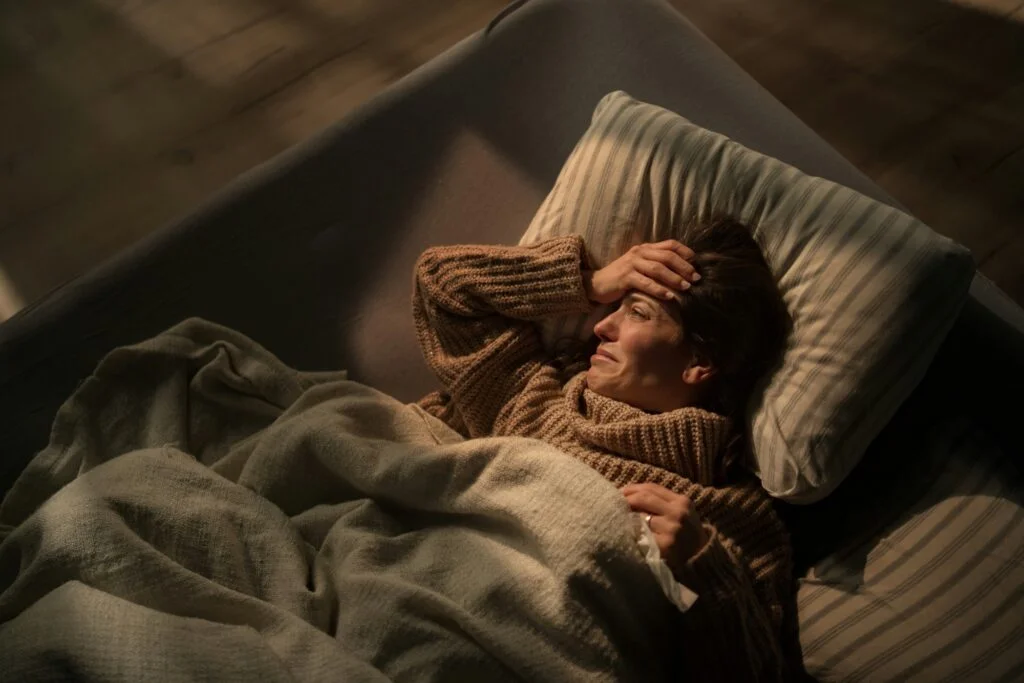
Anxiety often feels worse at night because there are fewer distractions, you’re tired, and lying still in the dark gives worries room to grow. Sleep anxiety, a fear of not sleeping, adds a second layer. To calm both, deal with worries earlier, use slow breathing, stop trying to force sleep, and see your GP if it happens most nights.
Below: why anxiety gets worse at night, sleep anxiety and how to break the worry-about-sleep cycle, how to stop a night-time anxiety spiral, what to do about panic attacks at night, a calming evening routine, and when to see a GP.
Why is anxiety worse at night?
- No distractions. During the day, work, people and noise keep worries in the background. In a dark, quiet bedroom they move to the front.
- Tiredness. A tired brain is less able to keep problems in proportion, so small worries feel bigger.
- Worrying about sleep itself. “If I don’t sleep now I’ll be useless tomorrow” adds a second layer of anxiety. See sleep anxiety below.
- Body sensations you notice in stillness, such as your heartbeat or breathing, can feel alarming.
- Caffeine and alcohol earlier in the day can leave you wired or wake you in the early hours.
- Unfinished business: emails, money, family worries that haven’t had any thinking time during the day.
Night-time anxiety symptoms
| In your mind | In your body |
|---|---|
| Racing or looping thoughts | Fast or pounding heartbeat |
| Replaying the day or rehearsing tomorrow | Tight chest or shallow breathing |
| A sense of dread | Restlessness, tense muscles, clenched jaw |
| Worrying about not sleeping | Feeling hot, sweaty or sick |
| Waking at 3am and being unable to switch off | Needing the toilet more |
If chest pain, breathlessness or palpitations are new, severe or happen with exercise, get medical advice, as they aren’t always anxiety.
Sleep anxiety: when you’re anxious about sleep itself
For some people the main worry at night isn’t work or money. It’s sleep. You start dreading bedtime, you lie there calculating how many hours are left, and the harder you try to drop off, the more awake you feel. This is what people usually mean by sleep anxiety: a fear of not sleeping that becomes a problem in its own right. (You may also see it called somniphobia, though that term is used for a fear of sleep itself.)
The worry-about-sleep cycle
Sleep anxiety tends to run in a loop:
- You have a few bad nights, perhaps because of stress, illness or a new baby.
- You start to worry about the next night and how you’ll cope tomorrow.
- That worry makes you more alert in bed: a busier mind, a faster heartbeat, tense muscles.
- So it takes longer to fall asleep, which seems to prove the worry right.
- Your bed starts to feel like a place of struggle rather than rest, and the cycle repeats.
This is one of the ways short-term sleep problems turn into long-term insomnia. The NHS calls insomnia that lasts 3 months or longer long-term insomnia. The good news is that the loop can be broken, and breaking it is a big part of the main treatment for insomnia, covered below.
Why trying too hard to sleep backfires
Sleep is one of the few things that gets harder the more effort you put in. You can’t make yourself fall asleep the way you can make yourself finish a task, and trying to (lying rigidly still, checking whether you’re drowsy yet, going to bed early to “bank” more hours) keeps your brain on alert. NHS advice is to try not to force it: when you’re comfortable and resting, sleep often comes on its own.
Some habits that feel sensible make sleep anxiety worse:
- Going to bed earlier to catch up. More time awake in bed gives the worry more room. The NHS advice is to only go to bed when you’re sleepy.
- Lying in after a bad night. The NHS says not to sleep in after a bad night’s sleep, and to stick to your regular hours instead. For what a few short nights really do, see sleep debt and how to recover.
- Napping in the day, which takes the edge off your sleep drive at night. The NHS advises not to nap during the day if you have insomnia.
- Obsessing over sleep data. Some people find a nightly sleep score makes the worry worse. See sleep trackers and orthosomnia.
Clock-watching
Checking the time at 2am almost always turns into maths (“if I fall asleep now I’ll get four hours”), and that maths wakes you up. NICE guidance for GPs says checking or watching the clock through the night should be avoided, and the NHS suggests keeping clocks out of view and putting your phone face down. Turn the clock to the wall, or put your phone across the room, and use an alarm so you don’t need to check.
Sleep anxiety symptoms
- Dreading bedtime, or feeling more tense as the evening goes on
- Putting off going to bed because you expect to lie awake
- Feeling sleepy on the sofa, then wide awake as soon as you get into bed
- Checking the clock and counting the hours left
- Racing thoughts about how you’ll cope tomorrow if you don’t sleep
- A racing heart, tense muscles, feeling hot or restless when you try to sleep
- Worrying about your sleep during the day, or planning your day around it
What to do in the moment
- Change the goal from sleep to rest. Tell yourself that resting quietly in the dark is fine for now. Taking away the pressure is often what lets sleep arrive.
- Turn the clock away and leave your phone alone.
- Slow your breathing, making the out-breath longer than the in-breath, or try 4-7-8 breathing.
- Answer the scary thought. “I’ll be useless tomorrow” can become “I’ve got through tired days before, and I will again.”
- Get up if you’re still awake after around 20 minutes. This is NHS advice: sit somewhere comfortable, do something relaxing such as reading or listening to quiet music, and go back to bed when you feel sleepy.
- Get up at your usual time the next morning, however the night went. A fixed wake time is what resets things.
What treats it: CBT for insomnia (CBT-I)
NICE guidance for GPs says to offer cognitive behavioural therapy for insomnia (CBT-I) as the first-line treatment for long-term insomnia in adults. It can be done face to face or digitally, and usually combines:
- Stimulus control: only using the bed for sleep (and sex), and getting up when you can’t sleep, so your brain relearns that bed means sleep.
- Sleep restriction: temporarily limiting time in bed to roughly the time you actually sleep, then slowly extending it. It feels counterintuitive, so it is best done with support.
- Cognitive therapy: working on the worried thoughts about sleep that keep the cycle going.
- Relaxation training.
The evidence is solid. A 2015 review of 20 trials found that after CBT-I, people with long-term insomnia fell asleep about 19 minutes faster on average and spent about 26 fewer minutes awake in the night, and the changes seemed to last. Another 2015 review of 37 trials looked at people whose insomnia came alongside another health condition, including mental health conditions: 36% were in remission from insomnia after CBT-I, compared with 17% in the comparison groups.
Paradoxical intention: trying to stay awake
Paradoxical intention is one of the stranger-sounding techniques used for sleep anxiety. Instead of trying to fall asleep, you lie in bed in the dark with your eyes open and gently try to stay awake, without screens, reading or getting up. The idea is to remove the effort and fear that keep you awake. A 2022 review of 10 trials found it led to large improvements in insomnia symptoms compared with no treatment, and reduced sleep-related performance anxiety, though the authors said stronger studies are still needed. It is usually tried as part of CBT-I rather than on its own.
Sleep anxiety, insomnia and depression
Sleep and mood work in both directions. Anxiety and low mood make it harder to sleep, and short sleep makes anxiety worse: a 2024 review of 154 experiments found that when people’s sleep was cut short or broken up, their anxiety symptoms went up. CBT for insomnia is also linked with improvements in anxiety and depression symptoms, as well as in sleep itself. If you’ve had low mood, lost interest in things, or felt hopeless for more than a couple of weeks, see your GP (and our guide to low mood vs depression).
How to calm anxiety at night, right now
- Slow your breathing. Breathe in through your nose, then out slowly through your mouth, making the out-breath longer. Keep going for 2 to 5 minutes. See nervous system regulation for the physiological sigh.
- Relax your body bit by bit: tense and release your feet, legs, stomach, hands, shoulders and face.
- Ground yourself with 5-4-3-2-1: notice 5 things you can see or feel, 4 you can hear, 3 you can touch, 2 you can smell and 1 you can taste.
- Write it down. Keep a notebook by the bed and get the worry out of your head and onto paper.
- Get up if you can’t settle after about 20 minutes. Sit somewhere dim, read something light, and go back when sleepy.
- Don’t check the time or your phone; both feed the spiral.
How to stop anxiety at night: the evening plan
| When | What to do |
|---|---|
| Early evening | “Worry time”: 15 minutes writing down worries and one possible next step for each. A small study found this reduced pre-sleep worry in people with insomnia. |
| After dinner | A walk, or some gentle movement, to burn off stress |
| 1 hour before bed | Screens down, dim lights, a warm (not hot) shower, a warm drink |
| Bedtime | A to-do list for tomorrow, then a breathing or relaxation exercise |
| Every day | The same wake time, daylight in the morning, caffeine finished by midday |
For a full hour-by-hour wind-down, see our bedtime routine for adults. For more techniques, see how to fall asleep fast and why you wake at 3am.
Panic attacks at night
Some people wake suddenly with a racing heart, breathlessness, sweating and a sense of terror. This is a night-time (nocturnal) panic attack. It is frightening but not dangerous, and most panic attacks last between 5 and 20 minutes.
- Remind yourself it’s a panic attack and it will pass.
- Breathe slowly, focusing on the out-breath.
- Sit up, put the light on low and plant your feet on the floor.
- Once it passes, do something calm before trying to sleep again.
If panic attacks keep happening, see your GP. Panic disorder responds well to CBT. If it’s your first episode, or you have chest pain, seek medical advice to rule out other causes.
Things that make night anxiety worse
- Caffeine after midday, including energy drinks and strong tea. See does caffeine cause anxiety? and how long caffeine stays in your system.
- Alcohol, which can trigger early-morning waking and “hangxiety”. See alcohol and sleep and Dry January.
- Doom-scrolling news or social media in bed (see dopamine detox). See revenge bedtime procrastination.
- Working or answering emails late.
- Irregular sleep, including long lie-ins at the weekend.
- Trying too hard to sleep: early nights to catch up, clock-watching and daytime naps (see sleep anxiety).
Do supplements help?
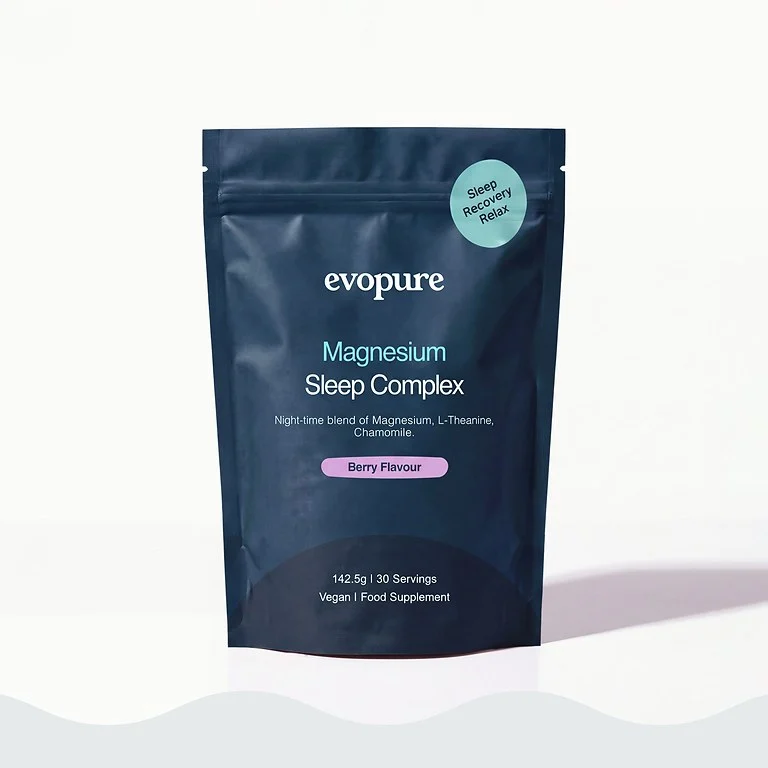
Habits and talking therapies have the best evidence, and no supplement replaces CBT for insomnia. Some people also like a calming evening drink as part of their routine. Magnesium contributes to normal psychological function and the normal functioning of the nervous system. See magnesium for anxiety and natural supplements for anxiety, ranked.
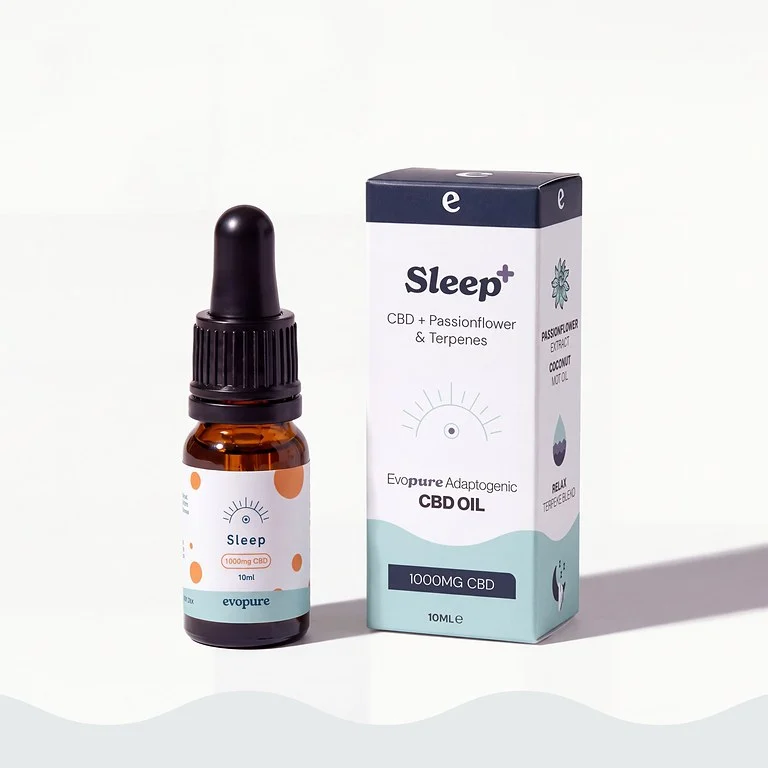
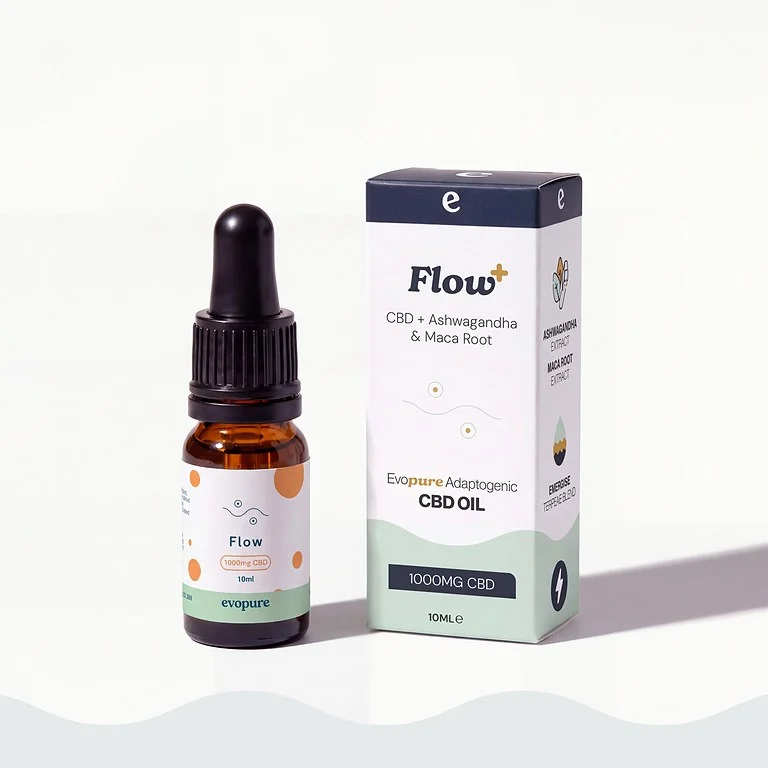
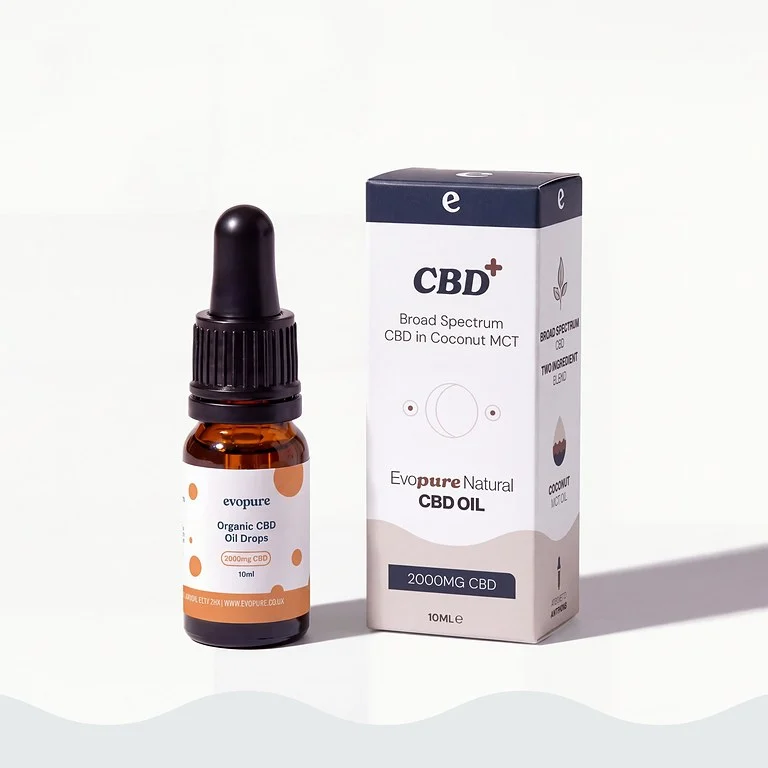
If you’re reading up on other options, our guides to GABA supplements, ashwagandha and lavender explain what the research does and doesn’t show. CBD isn’t a treatment for anxiety, sleep anxiety or insomnia, and we don’t sell it as one. Some people simply choose a CBD oil as part of their evening routine.
The FSA’s 10mg a day figure is precautionary advice rather than a legal limit, set while longer-term safety research continues. At Evopure we think it is a very cautious figure, and many adults use more. If you go above it, increase slowly, and check with your GP or pharmacist first if you take any medication.
If you take medication for anxiety, sleep or mood, check with your pharmacist before adding any supplement. Our products are for adults only, and we don’t recommend them during pregnancy or breastfeeding.
When to see a GP and where to get help
See your GP if anxiety is keeping you awake most nights, lasts more than a few weeks, or affects your days. The NHS also says to see a GP about insomnia if:
- changing your sleeping habits hasn’t helped
- you’ve had trouble sleeping for months
- it’s affecting your daily life in a way that makes it hard to cope
Talking therapies. Treatments such as CBT work well for anxiety and for insomnia, and CBT for insomnia (CBT-I) is the first-line treatment for long-term insomnia. If you live in England and are 18 or over, you can refer yourself to NHS Talking Therapies for anxiety and depression without seeing your GP first.
Sleeping pills. If you’re wondering about medication for sleep anxiety, the NHS says GPs now rarely prescribe sleeping pills for insomnia, and when they do it is only for a few days, or weeks at most, if insomnia is very bad and other treatments haven’t worked. Your GP can talk through treatment options for anxiety itself. Don’t stop or change any prescribed medicine without speaking to them.
Children. This guide is for adults. If a child is anxious about going to sleep, talk to your GP or health visitor.
If you need help now. If you feel unable to cope, call NHS 111 and choose the mental health option, or Samaritans on 116 123. Call 999 or go to A&E if you feel you can’t keep yourself safe or someone’s life is at risk.
Related guides
- Reading up on CBD and anxiety? See how to choose the best CBD oil for anxiety in the UK, which covers what the research does and doesn’t show.
- Worse first thing? See morning anxiety.
- Some people find a weighted blanket comforting.
- If health worries keep you awake, see health anxiety.
- If grief is keeping you awake, see grief: how to cope.
- If upsetting thoughts are worse at night, see intrusive thoughts.
- Teeth grinding.
- Doomscrolling at night.
- Writing a gratitude journal before bed.
- Stress is one of the triggers for sleepwalking too.
- Is sleep talking normal?
- A pounding heart in bed is common with night-time anxiety. See palpitations at night: causes and when to worry.
- Brown noise for switching off at night.
- Stress and worry are common triggers for adult night terrors too.
- If a ringing or buzzing sound adds to the worry, see our guide to tinnitus at night.
- Sleep meditation for anxiety and overthinking.
- A gentle body scan can give a racing mind something slow to follow at night.
- Tired but wired: when you’re exhausted but your mind won’t settle.
- Some people use soft sounds to settle a busy mind: see ASMR for sleep and anxiety.
- For other reasons you can’t sleep, from caffeine to sleep apnoea, see why can’t I sleep?
- If worry wakes you in the early hours, see what to do when you can’t stay asleep.
- If a sudden bang in your head jolts you awake and leaves you frightened, read about exploding head syndrome.
- Waking with a racing mind in the small hours? Read about middle insomnia and what helps.
- Anxiety and panic disorder are linked with sleep paralysis, which is frightening but harmless.
- If you wake from a bad dream with your heart pounding, our guide to nightmares and how to stop them explains what helps.
- Many people add magnesium to their evening wind-down; our guide to which magnesium is best for sleep and anxiety sets out what the research does and doesn’t show.
- For what the research says on CBD, including the placebo effect, see does CBD help with anxiety?
- The best music for anxiety.
- If your mind races in bed, try one of these 5 breathing exercises for anxiety.
- If you are thinking about CBD as part of a wind-down, read what to look for in a CBD oil for sleep first.
- Buying for someone who lies awake worrying? See our gifts for people who can’t sleep.
FAQs
Why is my anxiety worse at night?
There are fewer distractions, you’re tired, and lying still in the dark gives worries room to grow. Worrying about sleep adds to it.
How do I stop anxiety at night?
Give worries time earlier in the evening, wind down for an hour, and use slow breathing or muscle relaxation in bed. Get up if you can’t settle after 20 minutes.
Can anxiety wake you up at night?
Yes. Anxiety can cause early waking, and some people have night-time panic attacks, waking with a racing heart and breathlessness.
Are panic attacks at night dangerous?
They’re frightening but not dangerous, and most last between 5 and 20 minutes. See your GP if they keep happening, or get advice if you have chest pain.
What is the 5-4-3-2-1 technique?
A grounding exercise: notice 5 things you can see or feel, 4 you can hear, 3 you can touch, 2 you can smell and 1 you can taste. It brings your attention back to the present.
What is sleep anxiety?
Sleep anxiety is the term people use for worry or fear about sleep itself: dreading bedtime, fearing you won’t sleep and watching the clock. It often goes hand in hand with insomnia, because the worry makes you more alert in bed.
How do I overcome sleep anxiety?
Stop trying to force sleep. Keep the same wake time every day, only go to bed when sleepy, keep clocks out of view, and get up if you’re still awake after around 20 minutes. If it lasts, CBT for insomnia (CBT-I) is the first-line treatment.
Can sleep anxiety cause insomnia?
It can start or keep insomnia going. Worrying about sleep makes you more alert, which makes it harder to drop off, which adds to the worry. Breaking that cycle is a core part of CBT for insomnia.
Is there medication for sleep anxiety?
The NHS says GPs now rarely prescribe sleeping pills for insomnia, and only for a few days or weeks at most. Talking therapies such as CBT are the main treatment. Speak to your GP, and don’t stop any prescribed medicine without advice.
Sources
- NHS. Generalised anxiety disorder (GAD).
- NHS. Panic disorder.
- NHS. Breathing exercises for stress.
- NHS. Insomnia.
- NHS Every Mind Matters. How to fall asleep faster and sleep better.
- NICE Clinical Knowledge Summaries. Insomnia: managing insomnia.
- NHS. Find NHS talking therapies for anxiety and depression.
- NHS. Where to get urgent help for mental health.
- Trauer JM et al (2015). Cognitive behavioral therapy for chronic insomnia: a systematic review and meta-analysis. Annals of Internal Medicine.
- Wu JQ et al (2015). Cognitive behavioral therapy for insomnia comorbid with psychiatric and medical conditions: a meta-analysis. JAMA Internal Medicine.
- Jansson-Fröjmark M et al (2022). Paradoxical intention for insomnia: a systematic review and meta-analysis. Journal of Sleep Research.
- Palmer CA et al (2024). Sleep loss and emotion: a systematic review and meta-analysis of over 50 years of experimental research. Psychological Bulletin.
- Ye YY et al (2015). Internet-based cognitive behavioral therapy for insomnia (ICBT-i) improves comorbid anxiety and depression: a meta-analysis of randomized controlled trials. PLoS One.
- Carney CE, Waters WF (2006). Effects of a structured problem-solving procedure on pre-sleep cognitive arousal in college students with insomnia. Behavioral Sleep Medicine.
- Scullin MK et al (2018). The effects of bedtime writing on difficulty falling asleep. Journal of Experimental Psychology: General.
This guide is general information, not medical advice. Evopure makes the Magnesium Glycinate Sleep Complex and Sleep CBD Oil. If you are struggling, please speak to your GP.