

Last updated: October 2026
You can’t boost a healthy immune system beyond normal, and no pill or food does it. What you can do is support its normal function: sleep at least 7 hours, stay active, eat a varied diet, drink less, don’t smoke, manage stress, take NHS-advised vitamin D from October to March and get any vaccines you’re offered.
Below: the habits with the best evidence, NHS vaccines this winter, the vitamins with authorised immune claims, what the research says about popular remedies, and when to see a GP.
The short version: most of what keeps your immune system working well is unglamorous. Sleep, movement, a varied diet, less alcohol, no smoking, calmer days, vitamin D in winter and your vaccines. Supplements help most when they fill a real gap, not as a “boost”.
Can you actually boost your immune system?
Not in the way adverts suggest. Your immune system is a network of cells, proteins and organs that has to stay balanced, not a muscle you can pump up. A healthy one is already working at the right level.
Catching colds is also normal. A Cochrane review notes that adults have two to four colds a year on average, and children six to eight. Getting a few colds every winter doesn’t mean your immunity is weak.
What you can do is remove the things that drag it down (short sleep, smoking, heavy drinking, long-term stress, nutrient gaps) and protect yourself with vaccines and good hygiene.
8 habits that support your immune system
1. Sleep at least 7 hours
In a 2015 study, 164 healthy adults wore sleep trackers for a week and were then given cold virus nose drops in quarantine. Those who had slept under 5 hours a night were about 4.5 times as likely to develop a cold as those sleeping more than 7 hours, and those sleeping 5 to 6 hours about 4.2 times as likely. People sleeping 6 to 7 hours had no clearly higher risk.
If you struggle to get enough, see our guides to sleep hygiene and the effects of sleep deprivation.
2. Don’t smoke
Smoking damages the lining of the airways and dampens the immune response. A review in Archives of Internal Medicine found smokers have a 2 to 4 times higher risk of invasive pneumococcal disease, and that flu is several times more common and much more severe in smokers.
3. Keep alcohol within the guidelines
A meta-analysis found pneumonia risk climbed with every level of drinking. Compared with non-drinkers, 24g of alcohol a day (3 UK units, as one unit is 8g) was linked to a 12% higher risk, 60g a day to a 33% higher risk, and alcohol use disorder to about 8 times the risk. The NHS advises no more than 14 units a week on a regular basis.
4. Manage long-term stress
In a classic study in the New England Journal of Medicine, 394 healthy adults were given cold viruses. The share who developed a cold rose from about 27% to 47% as their stress scores went up, even after allowing for smoking, alcohol, exercise, diet and sleep. See stress symptoms and how to relieve stress.
5. Move most days
In a study of 1,002 adults followed through autumn and winter, those doing aerobic exercise 5 or more days a week had 43% fewer days with colds and similar infections than people who were mostly inactive, and milder symptoms. It was observational, so active people may differ in other ways. The NHS recommends at least 150 minutes of moderate activity a week, such as brisk walking, plus strengthening exercises on 2 or more days.
6. Eat a varied, mostly plant-rich diet
Your immune system needs a steady supply of nutrients (see the table below), and a varied diet with vegetables, fruit, pulses, wholegrains, nuts and enough protein covers most of them. See gut health and food and mood.
7. Keep up good hygiene
The NHS advises washing your hands often with warm water and soap, catching coughs and sneezes in tissues, not sharing towels or cups, and not touching your eyes and nose.
8. Get your vaccines
Vaccines are the one proven way to prime your immune system against a specific infection. See who’s eligible below, and for a whole-season plan see our winter wellness guide.
NHS flu and COVID vaccines this winter
In England, the NHS offers a free flu vaccine for 2026 to 2027 if you:
- are aged 65 or over (including those who will be 65 by 31 March 2027)
- are aged 18 to 64 and have certain long-term health conditions
- are pregnant (at any stage of pregnancy)
- live in a care home
- are the main carer for an older or disabled person, or receive Carer’s Allowance
- live with someone who has a weakened immune system
- are aged 16 or over and sleeping rough or staying in a hostel or night shelter
The NHS advises getting it as soon as you can; the last date is 31 March 2027. You can book online, in the NHS App, at a pharmacy or through your GP surgery.
The winter COVID-19 vaccine is offered to people aged 75 or over (including those who turn 75 by 31 January 2027), people aged 6 months to 74 years with a weakened immune system because of a health condition or treatment, and people living in care homes for older adults. The last date is 31 January 2027.
Scotland, Wales and Northern Ireland run their own programmes, so check NHS inform, NHS 111 Wales or nidirect.
Vitamins and minerals for the immune system
In Great Britain, only health claims on the official GB nutrition and health claims register can be used. Ten vitamins and minerals carry the authorised claim that they “contribute to the normal function of the immune system”: vitamin A, vitamin B6, vitamin B12, folate, vitamin C, vitamin D, iron, zinc, selenium and copper. The claim can only be used for a food or supplement that provides a meaningful amount of the nutrient.
“Normal function” is the key phrase: topping up beyond what you need doesn’t make it work better. Most people get enough from a varied diet, with vitamin D in winter as the big exception.
| Nutrient | Good food sources | Adults need a day (NHS) | Watch out for |
|---|---|---|---|
| Vitamin A | Cheese, eggs, oily fish, milk, yoghurt; beta-carotene in carrots and mango | 700 micrograms (men), 600 micrograms (women) | Avoid liver in pregnancy; over 1.5mg a day for years may affect bones |
| Vitamin B6 | Pork, poultry, some fish, peanuts, oats, bananas, milk | 1.4mg (men), 1.2mg (women) | Most people get enough from food |
| Vitamin B12 | Meat, fish, milk, cheese, eggs, some fortified cereals | About 1.5 micrograms | Vegans may not get enough without fortified foods or a supplement |
| Folate | Broccoli, Brussels sprouts, leafy greens, peas, chickpeas | 200 micrograms | Avoid liver as a source if pregnant |
| Vitamin C | Oranges, peppers, strawberries, blackcurrants, broccoli, potatoes | 40mg | Over 1,000mg a day can cause stomach pain and diarrhoea |
| Vitamin D | Sunlight on skin from late March to September; oily fish, red meat, egg yolks, fortified foods | 10 micrograms supplement in autumn and winter | No more than 100 micrograms a day |
| Iron | Red meat, beans, nuts, dried fruit, fortified cereals | 8.7mg (men), 14.8mg (women 19 to 49) | 17mg or less a day from supplements is unlikely to harm |
| Zinc | Meat, shellfish, cheese, bread, wheatgerm | 9.5mg (men), 7mg (women) | No more than 25mg a day from supplements; high doses reduce copper absorption |
| Selenium | Brazil nuts, fish, meat, eggs | 75 micrograms (men), 60 micrograms (women) | 350 micrograms or less a day from supplements |
| Copper | Nuts, shellfish, offal | 1.2mg | 10mg or less a day in total |
Tired as well as catching everything going? Ask your GP about a blood test. See iron deficiency symptoms, vitamin B12 deficiency symptoms and why you feel so tired in winter. For how zinc compares with magnesium, see magnesium vs zinc.
Vitamin D: the one the NHS says to take
Between October and early March, the sun in the UK isn’t strong enough for your body to make the vitamin D it needs. That’s why the NHS says everyone, including pregnant and breastfeeding women, should consider a daily supplement of 10 micrograms of vitamin D in autumn and winter. Adults who rarely go outdoors, live in a care home or usually cover most of their skin outdoors are advised to take it all year, and people with dark skin may need it all year too. Adults shouldn’t take more than 100 micrograms (4,000 IU) a day.
Does it prevent infections? A 2021 meta-analysis of 46 trials and more than 75,000 people found vitamin D supplements slightly reduced the chance of an acute respiratory infection overall (61.3% vs 62.3% had at least one), with a clearer effect when taken daily at 400 to 1,000 IU (10 to 25 micrograms). But the UK CORONAVIT trial of 6,200 adults found that testing people and giving vitamin D to those with lower levels didn’t reduce respiratory infections or COVID-19. So take it because the NHS advises it, not as a shield against colds.
For more, see how much vitamin D to take in winter, vitamin D deficiency symptoms and taking magnesium and vitamin D together.
Our vitamin D option
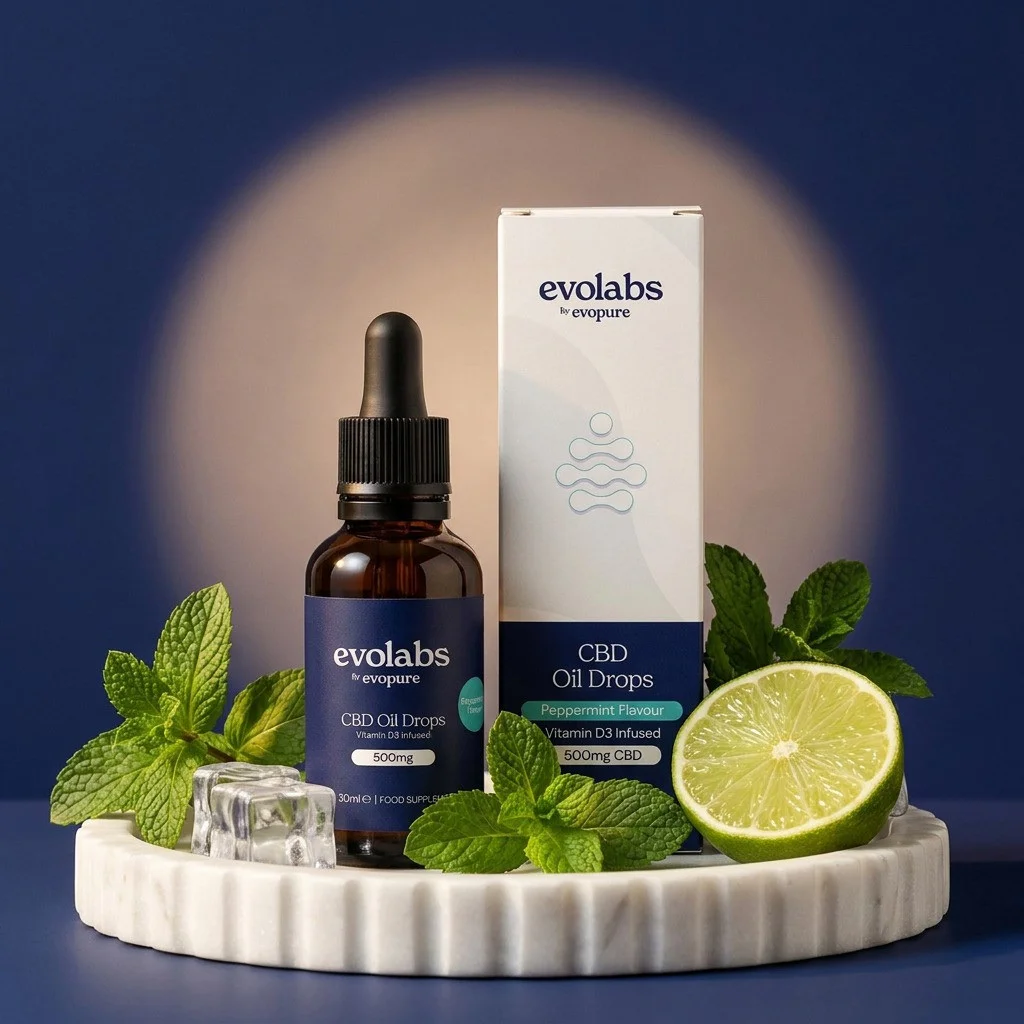
If you already use CBD oil, our Evolabs Mint CBD Oil with vitamin D3 adds 5 micrograms of vegan, algae-based vitamin D3 per half pipette (100% of the nutrient reference value) to broad spectrum CBD. Vitamin D contributes to the normal function of the immune system. The CBD itself has no authorised health claims, and we don’t claim it supports your immunity. Read why we added algae-based D3 to our mint oil.
It’s for adults (18+) only. We don’t recommend our products during pregnancy or breastfeeding; take a plain vitamin D supplement instead, as the NHS advises. If you’re in a group the NHS says should take vitamin D all year, or your GP is treating a deficiency, follow that advice: our oil is a daily top-up, not a substitute.
The FSA’s 10mg a day figure is precautionary advice rather than a legal limit, set while longer-term safety research continues. At Evopure we think it is a very cautious figure, and many adults use more. If you go above it, increase slowly, and check with your GP or pharmacist first if you take any medication.
Vitamin C, zinc, echinacea and elderberry: the evidence
Here’s what the best reviews found for the most popular “immune support supplements”. In GB, no immune claims are authorised for echinacea, elderberry, garlic or probiotics.
| Remedy | Stops you catching colds? | Shortens colds? | Strength of evidence |
|---|---|---|---|
| Vitamin C, taken daily | No, for most people | Slightly: about 8% shorter in adults | Good (29 comparisons, 11,306 people) |
| Vitamin C, started when ill | Not applicable | No consistent effect | Moderate (7 comparisons) |
| Zinc lozenges or syrups | Probably little or no effect | Possibly, by about 2 days, but results vary widely | Low |
| Echinacea | Possibly a small effect, of doubtful importance | Only 1 of 7 trials found a benefit | Low |
| Elderberry | May not | Possibly, but uncertain | Very limited (5 small trials) |
| Garlic | One trial suggested fewer colds | No clear difference | Very limited (1 trial) |
| Probiotics | May reduce chest and throat infections | Possibly by about 1 day | Low |
Vitamin C and colds
The Cochrane review of vitamin C (2013) found that taking at least 200mg a day didn’t reduce how often people in the general population caught colds. It did slightly shorten them: by 8% in adults and 14% in children. The exception was people under intense physical stress, such as marathon runners, whose risk roughly halved. Starting vitamin C once a cold had begun showed no consistent benefit. The NHS says you can get all the vitamin C you need from your diet.
Zinc lozenges
The 2024 Cochrane review of zinc (34 trials, 8,526 people) found taking zinc regularly may make little or no difference to your chance of catching a cold. Taken as a treatment once symptoms start, it may shorten a cold by around 2 days, but the trials varied hugely and the evidence is low certainty. If you try them, keep to the dose on the pack, and the NHS says not to take more than 25mg of zinc a day from supplements unless a doctor advises it.
Echinacea, elderberry and garlic
The Cochrane review of echinacea (24 trials) found it hasn’t been shown to help treat colds, with at most a weak, questionable effect on prevention. Elderberry has only 5 small trials, with uncertain results, and garlic just one. If you take regular medicines, check with a pharmacist before trying any herbal remedy.
Immune-boosting foods and other myths
- “This food boosts your immune system.” No single food does. Citrus, garlic and ginger are fine in a healthy diet, but the overall pattern matters, not a superfood or a daily ginger shot.
- “More vitamin C is better.” Above 1,000mg a day you’re more likely to get stomach pain and diarrhoea than extra protection, according to the NHS.
- “Immune booster supplements work.” A supplement can only fill a gap. If you’re not short of a nutrient, extra won’t make your immune system work harder, and high doses of some (zinc, vitamin A, selenium) can cause harm.
- “Cold showers and saunas strengthen immunity.” The evidence on infections is limited. See our honest guides to cold showers and sauna benefits.
- “Mushrooms boost immunity.” Turkey tail, shiitake and reishi are widely marketed for immunity, but no immune health claims are authorised for them in GB and most research is in the lab or in people with specific illnesses. See turkey tail and our functional mushrooms guide.
- “CBD boosts the immune system.” CBD has no authorised health claims, and we don’t make immune claims for it. The vitamin D3 in our mint oil is the ingredient with an authorised immune claim.
What to do when you feel a cold coming on
There’s no way to “boost” your immune system fast once a cold starts, but you can help yourself feel better while it runs its course. The NHS says most people feel better in about 1 to 2 weeks. It advises:
- getting plenty of rest
- drinking lots of fluids, such as water, to avoid dehydration
- gargling salt water for a sore throat (adults only), or breathing in steam from a hot shower for a blocked nose
- asking a pharmacist about paracetamol or ibuprofen
- not smoking, as it can make symptoms worse
Wash your hands often and use tissues so you don’t pass it on. Sleep is harder with a blocked nose, so see our tips on how to sleep with a cold. For building better long-term routines, see how to build healthy habits.
Signs of a weak immune system and when to see a GP
A few colds a year is normal. Immunodeficiency UK, the patient charity, suggests thinking about an immune problem when infections are severe, persistent, unusual or recurrent, or when immunodeficiency runs in the family. That might look like:
- frequent infections that keep coming back
- infections that are severe or last much longer than they should
- unusual infections that most people don’t get
See a GP if any of these sound familiar. A GP can ask about your infection history and arrange blood tests if needed, and may refer you to an immunologist. Also see a GP with a cold if your high temperature lasts more than 3 days, your symptoms don’t improve after 10 days, your cough lasts more than 3 weeks, you’re short of breath or have chest pain, or you have a long-term condition or weakened immune system.
Call 999 or go to A&E if someone is breathing very fast; is confused, has slurred speech or isn’t making sense; has blue, pale or blotchy skin; has a rash that doesn’t fade when you press it; or you’re worried they might have sepsis.
FAQs
How can I boost my immune system fast?
There’s no quick fix. The fastest useful changes are getting at least 7 hours of sleep, cutting back on alcohol, stopping smoking, eating regular varied meals and taking any vaccine you’re offered. If you already have a cold, rest, fluids and time are what help.
What is the best vitamin for the immune system?
In GB, vitamins A, B6, B12, C, D and folate, plus iron, zinc, selenium and copper, contribute to the normal function of the immune system. Most people get enough from food. Vitamin D is the one the NHS advises everyone to consider taking, at 10 micrograms a day from October to March.
Do immune support supplements work?
Only if they fill a real gap. They won’t push a healthy immune system above normal. The evidence for vitamin C, zinc, echinacea and elderberry preventing colds is weak, though regular vitamin C may shorten colds slightly.
Does vitamin C stop you getting a cold?
Not for most people. A Cochrane review found daily vitamin C didn’t reduce how often people caught colds, but shortened them by about 8% in adults. People under intense physical stress, such as marathon runners, were the exception.
How can I boost my child’s immune system?
The same basics apply: enough sleep, active play, a varied diet and their routine vaccines. The NHS recommends vitamin drops containing vitamins A, C and D for children aged 6 months to 5 years. Ask a GP or health visitor about anything more. Evopure products are for adults only.
Does CBD boost the immune system?
CBD has no authorised health claims, and we don’t claim it supports immunity. In our Evolabs Mint CBD Oil, it’s the added vitamin D3 that contributes to the normal function of the immune system.
Sources
- NHS. Vitamin D; Vitamin C; Others (zinc, selenium, copper).
- NHS. Flu vaccine and COVID-19 vaccine.
- NHS. Common cold and Sepsis.
- Department of Health and Social Care. Great Britain nutrition and health claims (NHC) register.
- Prather AA et al. Behaviorally assessed sleep and susceptibility to the common cold. Sleep, 2015. PMID 26118561.
- Cohen S et al. Psychological stress and susceptibility to the common cold. N Engl J Med, 1991. PMID 1713648.
- Nieman DC et al. Upper respiratory tract infection is reduced in physically fit and active adults. Br J Sports Med, 2011. PMID 21041243.
- Samokhvalov AV et al. Alcohol consumption as a risk factor for pneumonia. Epidemiol Infect, 2010. PMID 20380771.
- Arcavi L, Benowitz NL. Cigarette smoking and infection. Arch Intern Med, 2004. PMID 15534156.
- Jolliffe DA et al. Vitamin D supplementation to prevent acute respiratory infections. Lancet Diabetes Endocrinol, 2021. PMID 33798465; and CORONAVIT trial, BMJ, 2022. PMID 36215226.
- Hemilä H, Chalker E. Vitamin C for preventing and treating the common cold. Cochrane, 2013. PMID 23440782.
- Nault D et al. Zinc for prevention and treatment of the common cold. Cochrane, 2024. PMID 38719213.
- Karsch-Völk M et al. Echinacea for preventing and treating the common cold. Cochrane, 2014. PMID 24554461.
- Wieland LS et al. Elderberry for prevention and treatment of viral respiratory illnesses. BMC Complement Med Ther, 2021. PMID 33827515.
- Lissiman E et al. Garlic for the common cold. Cochrane, 2014. PMID 25386977.
- Zhao Y et al. Probiotics for preventing acute upper respiratory tract infections. Cochrane, 2022. PMID 36001877.
- Immunodeficiency UK. Symptoms of PIDs.
- Food Standards Agency (gov.uk). Cannabidiol (CBD) guidance.
This guide is general information, not medical advice. Evopure makes the Evolabs Mint CBD Oil with vitamin D3.