Last updated: October 2026
Cordyceps is a fungus used in traditional Chinese medicine and now taken mainly for energy and exercise. Human evidence is small and mixed: one trial in older adults and one using a mushroom blend found modest improvements in exercise capacity, while a trial in trained cyclists found none. It’s generally well tolerated; typical doses are 1 to 3g a day.
This guide covers the two main types (sinensis and militaris), what the research shows, side effects and who should avoid it, dosage, timing, and how it compares with lion’s mane and reishi.
What is cordyceps?
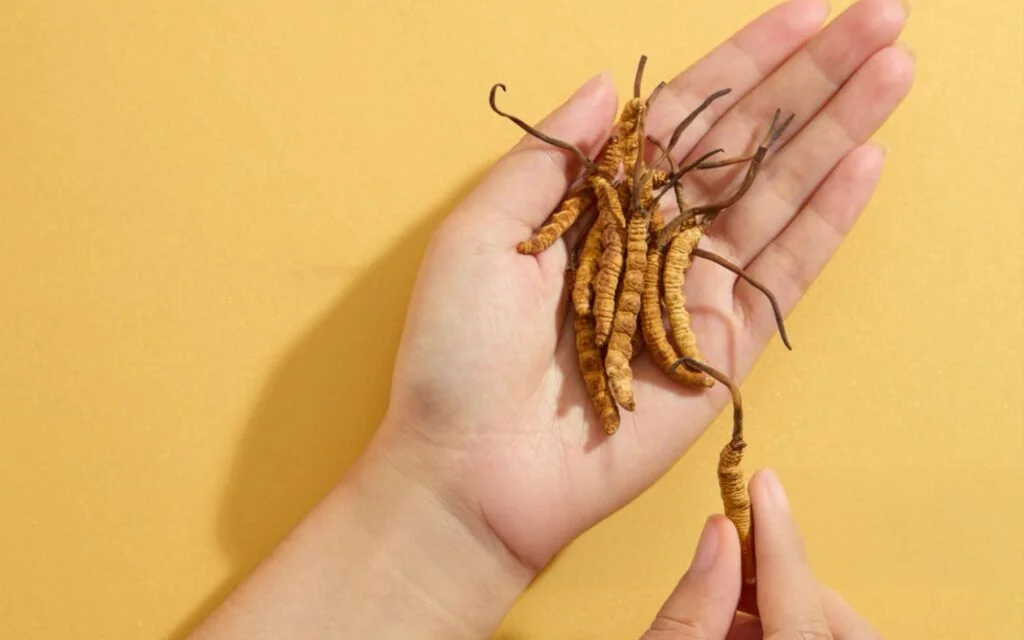
Cordyceps is a group of fungi. The famous wild form grows on caterpillar larvae high on the Tibetan plateau and is extremely expensive. Almost all supplements are grown in labs instead, either as a fermented mycelium (often sold as “CS-4”) or as cultivated fruiting bodies of Cordyceps militaris. It isn’t psychoactive and has none of the effects of “magic” mushrooms.
Cordyceps sinensis vs militaris
| Cordyceps sinensis (CS-4) | Cordyceps militaris | |
|---|---|---|
| How it’s made | Fermented mycelium, as wild sinensis is rare | Fruiting bodies grown on substrate |
| Key compounds | Adenosine, polysaccharides | Higher in cordycepin |
| Human research | Older exercise trials, mixed | A small trial using a blend |
| Cost | Moderate | Usually the most affordable |
Neither has been shown to be better in head-to-head trials. Choose a product that states which species and which part it uses.
Benefits: what the research shows
| Study | Who and what | Result |
|---|---|---|
| Older adults, 2010 | 20 healthy adults aged 50 to 75; CS-4 1g a day for 12 weeks | Improved measures of exercise capacity vs placebo |
| Mushroom blend, 2017 | 28 active adults; 4g a day of a blend containing militaris | No change after 1 week; better VO2 max in the 10 who continued to 3 weeks |
| Trained cyclists, 2004 | 22 male endurance cyclists; CS-4 for 5 weeks | No improvement in endurance or performance |
| Kidney disease (Cochrane), 2014 | 22 Chinese trials of cordyceps alongside usual treatment | Some positive results, but low-quality studies; no firm conclusions |
Our take: cordyceps may give a small lift to exercise capacity in less-trained people, but don’t expect a performance boost if you’re already fit. There’s little human research on energy levels, libido, anxiety or ageing, despite popular claims. For mood and stress, see best mushrooms for anxiety.
Side effects and who should avoid it
- Common: mild stomach upset, dry mouth, nausea.
- Diabetes: may lower blood sugar; check with your GP if you take diabetes medicines.
- Bleeding: may affect blood clotting; avoid with blood thinners unless your doctor agrees, and stop two weeks before surgery.
- Autoimmune conditions and immunosuppressants: may stimulate the immune system; ask your specialist first.
- Pregnancy and breastfeeding: avoid, as safety isn’t known.
- Quality: mushrooms can absorb heavy metals from where they grow, so choose a cultivated product tested for contaminants.
Dosage and how to take it
- Amount: trials used 1 to 4g a day; 1 to 3g is typical. Follow the label, as extract strengths vary.
- Timing: morning or 30 to 60 minutes before exercise. Many people avoid it late in the day.
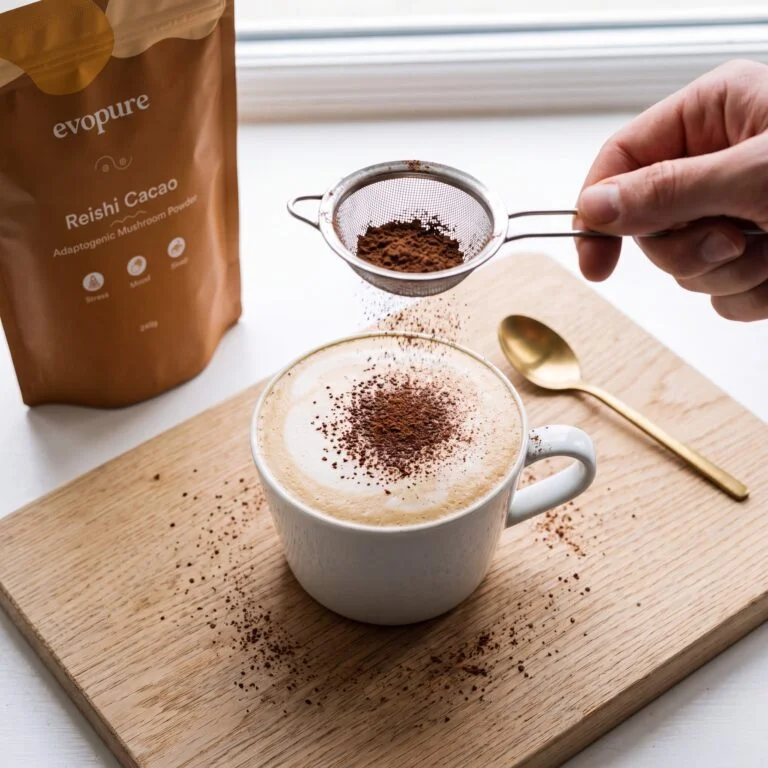
- Formats: capsules, powders stirred into coffee or smoothies, or tea. See mushroom coffee and mushroom tea.
- Look for: the species, fruiting body or mycelium, and the extract or beta-glucan content on the label.
How long does it take to work?
In trials, changes appeared after 3 to 12 weeks, not after a single dose. Take it daily for at least four weeks before deciding if it helps you.
Cordyceps vs lion’s mane vs reishi
| Cordyceps | Lion’s mane | Reishi | |
|---|---|---|---|
| Used for | Energy, exercise | Focus, memory | Evening calm |
| Best time | Morning, pre-workout | Morning | Evening |
Full comparison: lion’s mane vs reishi vs cordyceps. For all seven popular mushrooms, see our adaptogenic mushrooms guide.
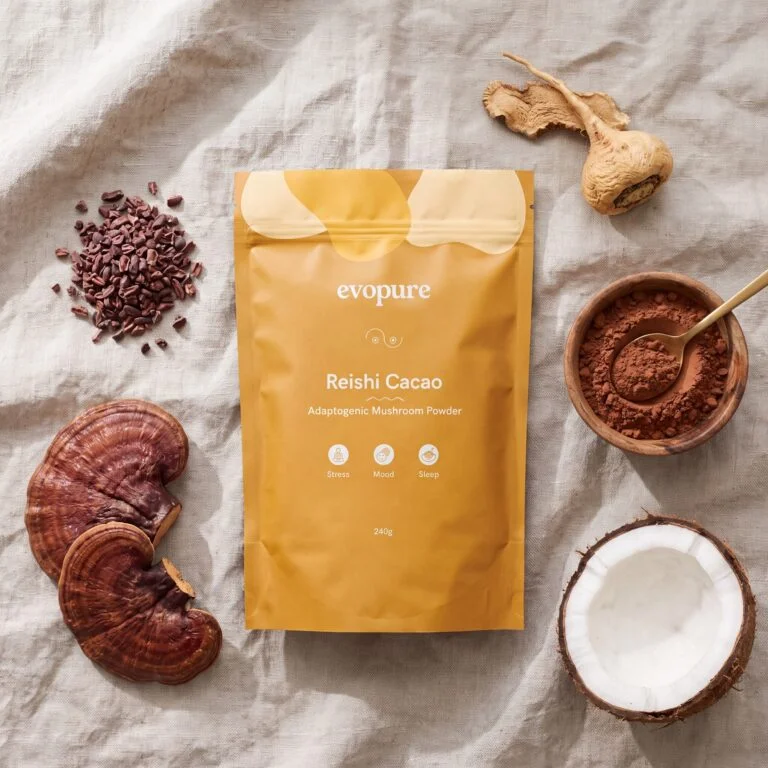
We don’t currently sell a cordyceps product. For the evening side of a mushroom routine, our Reishi Mushroom Adaptogenic Complex is a reishi hot chocolate with cacao, maca and coconut milk.
FAQs
What does cordyceps do?
It’s mainly taken for energy and exercise. Small trials found modest improvements in exercise capacity in older or less-trained adults, but not in trained athletes.
Is cordyceps safe to take every day?
For most healthy adults, yes, at 1 to 3g a day. Avoid it in pregnancy, and check with your GP if you take blood thinners, diabetes medicines or immunosuppressants.
When should I take cordyceps?
In the morning or 30 to 60 minutes before exercise. Many people avoid taking it in the evening.
Which is better, cordyceps sinensis or militaris?
There are no head-to-head trials. Militaris is usually more affordable and higher in cordycepin; CS-4 has more of the older research.
Does cordyceps help anxiety?
There’s little human evidence. Reishi is the mushroom more often used for evening calm.
Is cordyceps psychedelic?
No. Cordyceps contains no psilocybin and has no psychoactive effects.
Sources
- Chen S et al. Effect of Cs-4 (Cordyceps sinensis) on exercise performance in healthy older subjects. J Altern Complement Med, 2010.
- Hirsch KR et al. Cordyceps militaris improves tolerance to high-intensity exercise after acute and chronic supplementation. J Diet Suppl, 2017.
- Parcell AC et al. Cordyceps sinensis (CordyMax Cs-4) supplementation does not improve endurance exercise performance. Int J Sport Nutr Exerc Metab, 2004.
- Zhang HW et al. Cordyceps sinensis for treating chronic kidney disease. Cochrane Database Syst Rev, 2014.
- National Cancer Institute. Medicinal mushrooms (PDQ).