

Last updated: October 2026
For most common antibiotics, including amoxicillin, penicillin, doxycycline and nitrofurantoin, there’s no known interaction with CBD. The main exception is rifampicin, which lowered CBD levels by about 30% in a medicines study. Clarithromycin and erythromycin could in theory raise CBD levels. If unsure, ask your pharmacist or pause CBD until the course ends, and never stop the antibiotic.
Below: each common antibiotic, how CBD interacts with medicines, what the FSA advises, practical steps and when to get help. This is general information, not medical advice.
Antibiotics and CBD: interaction risk
“No known interaction” means no CBD interaction is listed in the sources below, not that the combination has been fully tested.
| Antibiotic | What’s known about CBD | What to do |
|---|---|---|
| Rifampicin (for TB and some serious infections) | Interaction: speeds up CBD breakdown, lowering CBD levels by about 30% in a study of prescription CBD | Tell your doctor you use CBD. It is unlikely to be harmful, but CBD may do less |
| Clarithromycin, erythromycin | Possible: clarithromycin strongly blocks CYP3A4, one of CBD’s two main enzymes. In a trial, a strong CYP3A4 blocker did not change CBD levels | Ask your pharmacist, especially if you take other medicines. Pausing CBD is the simple option |
| Fluconazole (antifungal, sometimes given alongside antibiotics for thrush) | Possible: blocks CYP2C19 and caused a small rise in CBD levels in a trial | Ask your pharmacist, or pause CBD for the course |
| Metronidazole | No known interaction with CBD itself | No alcohol during the course and for 2 days after, including alcohol-based tinctures |
| Amoxicillin, co-amoxiclav, penicillin, flucloxacillin, cefalexin | No known interaction | Check with a pharmacist if you take other medicines too, especially warfarin |
| Doxycycline, nitrofurantoin, trimethoprim, azithromycin | No known interaction | Check any other medicines and mineral supplements with your pharmacist |
This is a general guide, not a full list. For CBD and other kinds of medicine, see can CBD interact with medication?
How CBD interacts with medicines
CBD is broken down mainly in the liver. The official product information for Epidyolex, the licensed prescription CBD medicine, names its two main enzymes: CYP3A4 and CYP2C19. So an antibiotic could change your CBD levels in two ways:
- Medicines that speed these enzymes up (inducers, such as rifampicin) clear CBD faster, so levels fall.
- Medicines that slow them down (inhibitors, such as clarithromycin for CYP3A4 or fluconazole for CYP2C19) could, in theory, make levels rise.
The interaction can also run the other way. The Epidyolex product information says CBD can slow several other enzymes, including CYP2C19, CYP2C9 and CYP1A2, which can raise levels of some medicines, such as warfarin and clobazam. It can also raise levels of some medicines carried by a gut transporter called P-gp, such as digoxin and tacrolimus. CBD even raised caffeine levels in one study (see CBD and coffee). But it did not slow down or speed up CYP3A4 in a study in people.
To keep this in proportion: most interaction data comes from prescription CBD, given in far larger amounts than food supplements contain, and a 2023 review in the German medical journal Deutsches Ärzteblatt concluded that CBD interactions are probably of little importance at low or moderate doses.
Clarithromycin and erythromycin
These macrolide antibiotics are used for infections such as chest infections. Clarithromycin is a strong blocker of CYP3A4, and the NHS lists many medicines that don’t mix well with it, including statins, warfarin and digoxin. Erythromycin carries similar NHS cautions. Because CYP3A4 is one of CBD’s main enzymes, clarithromycin could in theory raise CBD levels. The evidence is more reassuring:
- In trials in healthy volunteers, blocking CYP3A4 with a strong inhibitor (the antifungal itraconazole) did not affect CBD levels, and only slightly raised levels of CBD’s breakdown products.
- The 2023 Deutsches Ärzteblatt review notes that strong CYP3A4 blockers such as clarithromycin can raise levels of THC, but that CBD depends less on these enzymes than THC does.
- We found no published case reports of problems from taking CBD with clarithromycin or erythromycin.
So the risk looks small, but it hasn’t been tested directly. If you’re prescribed either one, ask your pharmacist or pause CBD for the course. This matters more with products that contain THC: ours are broad spectrum with 0% THC (see CBD vs THC).
Rifampicin and other “speeders”
Rifampicin is the antibiotic with the clearest evidence. It strongly speeds up CYP3A4 and CYP2C19. In a study reported in the Epidyolex product information, it lowered blood levels of CBD by about 30% and of its main active breakdown product by about 60%. The same document says other strong enzyme speeders, such as carbamazepine and St John’s wort, may do the same.
Lower CBD levels are unlikely to be harmful in themselves: the likely effect is that CBD does less. Rifampicin is mainly used for tuberculosis (TB) and some serious infections, so tell the team looking after you about any CBD or supplements you take.
Amoxicillin, doxycycline and other common antibiotics
Most antibiotics prescribed by GPs for everyday infections have no known interaction with CBD. That includes amoxicillin, co-amoxiclav, penicillin (phenoxymethylpenicillin), flucloxacillin, cefalexin, doxycycline, nitrofurantoin, trimethoprim and azithromycin. None of their NHS interaction lists mentions CBD, and none appears in the interaction section of the Epidyolex product information.
“No known interaction” is not the same as “proven safe together”. The NHS amoxicillin pages say there isn’t enough information to call supplements safe with it, as they aren’t tested like medicines. That is the honest position for CBD too. Useful points from the NHS pages:
- Doxycycline: it’s best not to drink alcohol, as it can stop the medicine working properly. Indigestion remedies and supplements containing iron or zinc don’t mix well with it either. See the NHS doxycycline page.
- Cefalexin: leave at least 3 hours between it and any zinc supplement.
- Nitrofurantoin: indigestion remedies such as antacids can affect it.
- Penicillin and erythromycin: the NHS suggests limiting alcohol.
Metronidazole and alcohol
There’s no known interaction between metronidazole and CBD itself. The important rule with metronidazole is alcohol. The NHS says not to drink alcohol while taking metronidazole tablets, liquid or suppositories, and for 2 days after finishing, because the combination can cause sickness, stomach pain, hot flushes, a pounding heartbeat and headaches.
The NHS also warns that some liquid remedies and supplements contain alcohol, so check the ingredients. Some CBD tinctures are made with alcohol. Our CBD oils are alcohol-free, made with an MCT oil carrier, but always check the label of whatever you use. For CBD and drinking in general, see CBD and alcohol.
Taking other medicines as well
The bigger question is often CBD plus an antibiotic plus a regular medicine. Several medicines appear both on the NHS “check first” lists for antibiotics and in the Epidyolex information as medicines CBD can affect:
- Warfarin: listed for amoxicillin, clarithromycin, erythromycin, doxycycline, metronidazole, trimethoprim and others, and CBD can also affect it.
- Digoxin: listed for clarithromycin, azithromycin and trimethoprim, and CBD may raise its levels.
- Epilepsy medicines such as phenytoin: listed for clarithromycin, metronidazole and trimethoprim, and CBD interacts with several epilepsy medicines, including phenytoin.
- Ciclosporin and tacrolimus (medicines that calm the immune system): listed for metronidazole and azithromycin, and CBD may raise tacrolimus levels.
If you take any of these, speak to your pharmacist or the clinic that manages the medicine before combining CBD with an antibiotic. A 2021 review in the Journal of General Internal Medicine lists many more medicines with possible CBD interactions, from antidepressants to painkillers.
What the FSA advises
The Food Standards Agency (FSA) says that as a precaution it does not recommend CBD for people taking any medication unless under medical direction. The same advice covers under-18s, people who are pregnant or breastfeeding and people trying to conceive. Its suggested label wording asks anyone taking medication, or who is immunosuppressed, to consult a healthcare professional before using CBD.
An antibiotic counts as medication, so check with your GP, prescriber or pharmacist before carrying on with CBD during a course. All our products are for adults (18+) only, and we don’t recommend our products during pregnancy or breastfeeding. For more on the FSA’s figures, see the CBD daily limit in the UK.
Should you pause CBD? Practical steps
For a short course of a common antibiotic, many people simply pause CBD for a week or so and restart afterwards. CBD doesn’t cause withdrawal, so stopping is easy (see is CBD addictive?). Here’s a simple plan:
- Tell the prescriber or pharmacist you use CBD, along with any other supplements. A pharmacist can check your exact combination for you.
- Never stop or skip your antibiotic to make room for CBD. The NHS advises taking the whole course, even if you feel better.
- If you’re unsure, pause CBD until the course has finished. A gap of a few days afterwards is a sensible extra margin with rifampicin, clarithromycin, erythromycin or fluconazole. To see how long CBD stays around, read how long CBD stays in your system.
- If your pharmacist says it’s fine to carry on, keep your usual amount rather than increasing it, and stick to one CBD product so you know exactly what you’re taking.
- Avoid alcohol-based tinctures with metronidazole, and check labels on any liquid supplements.
Always pause CBD, or check first, if you:
- are taking rifampicin, clarithromycin, erythromycin or an antifungal
- take other regular medicines as well, especially those listed above
- have liver problems
- feel very unwell or are in hospital (see also CBD before surgery)
The same answer applies to CBD gummies, capsules and drinks: the form doesn’t change how CBD is broken down, though some gummies and drinks contain extra ingredients worth checking. See CBD oil vs gummies.
If you carry on with CBD
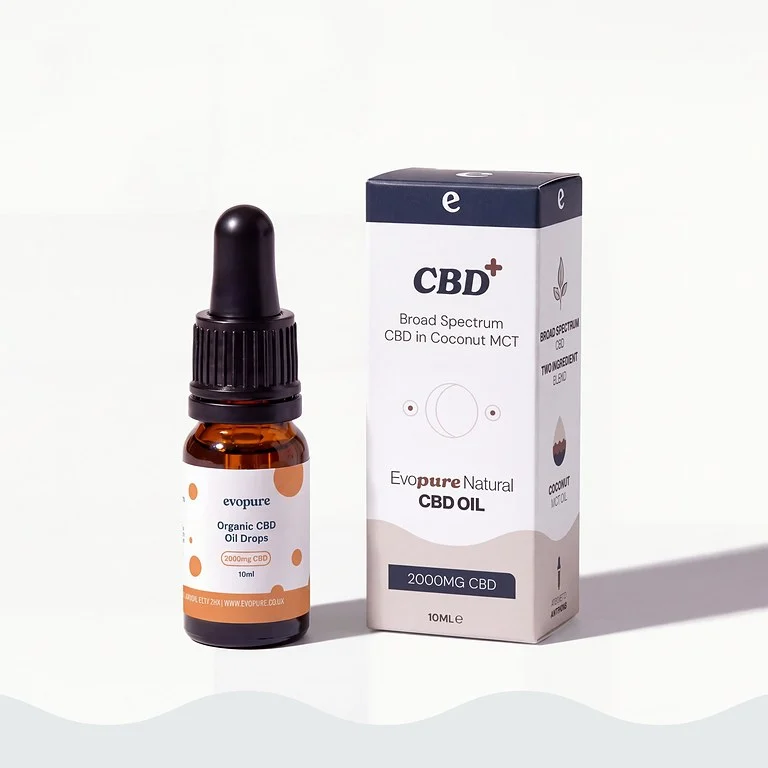
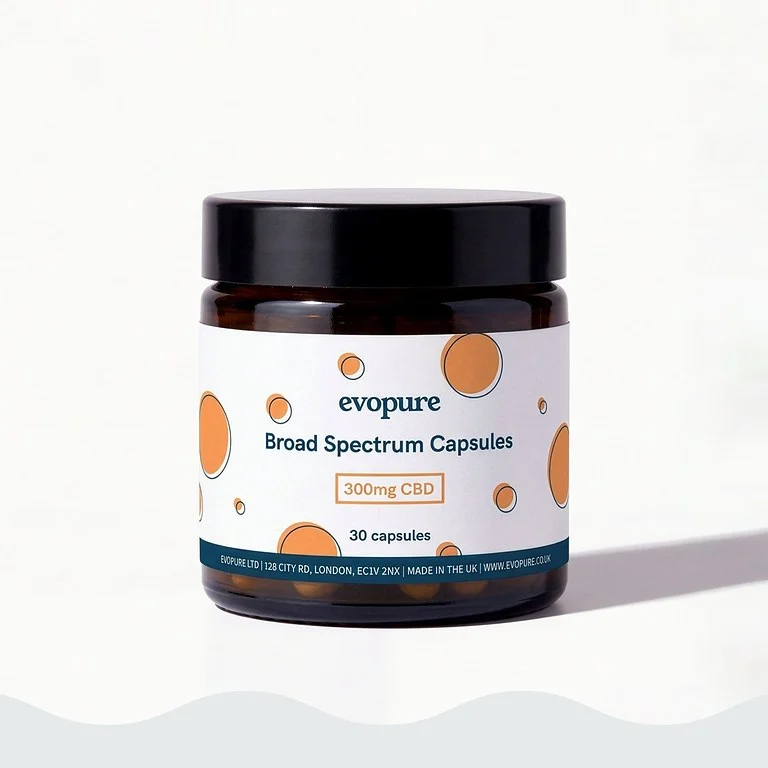
If your pharmacist is happy for you to continue, choose an alcohol-free product with a clear amount of CBD per drop or capsule. Our oils and capsules are broad spectrum with 0% THC, alcohol-free and third-party lab tested.
The FSA’s 10mg a day figure is precautionary advice rather than a legal limit, set while longer-term safety research continues. At Evopure we think it is a very cautious figure, and many adults use more. If you go above it, increase slowly, and check with your GP or pharmacist first if you take any medication.
Side effects and when to get help
Some side effects overlap, which makes it hard to tell what’s causing what: another reason a pause can make sense.
- Upset stomach and diarrhoea: common with antibiotics, and also reported with higher amounts of CBD. See CBD side effects.
- Tiredness and drowsiness: listed for prescription CBD, especially early on. Take care driving until you know how you feel.
- Liver strain: some antibiotics can affect the liver, and prescription CBD can raise liver enzymes in a dose-related way, usually in the first 2 months. See is CBD bad for your liver?
Stop CBD and call your GP or 111 if you get severe diarrhoea or diarrhoea with blood or mucus, yellow skin or whites of the eyes with pale poo and dark pee, a rash with a high temperature, or you feel much worse. Call 999 if your lips, mouth, throat or tongue swell suddenly, or you’re struggling to breathe or swallow. These are the NHS warning signs for antibiotics such as amoxicillin, and some can appear weeks after a course ends.
If your infection isn’t improving after a few days of antibiotics, or you feel worse, contact your GP or 111 rather than adding more supplements.
Does CBD fight infections?
In a 2021 laboratory study, CBD killed some types of bacteria in a dish, including some drug-resistant strains. That is early lab research. It doesn’t mean CBD supplements treat infections in people, and CBD isn’t a treatment for any infection. Never use CBD instead of antibiotics, and always finish your course as prescribed.
For more on what CBD research does and doesn’t show, see what the research on CBD shows, or start with our beginner’s guide to CBD.
Looking after your gut around a course of antibiotics? See should you take probiotics with antibiotics and our gut health guide.
Zinc supplements can also reduce the absorption of some antibiotics; see zinc supplements and interactions.
Antibiotics don’t work on viruses, so they won’t help most colds or flu; see cold or flu: how to tell the difference.
FAQs
Can I take CBD with antibiotics?
With most common antibiotics, such as amoxicillin, there’s no known interaction. Rifampicin lowers CBD levels, and clarithromycin and erythromycin could in theory raise them, so ask a pharmacist. The FSA advises people on any medication not to take CBD unless a doctor agrees.
Can I take CBD with amoxicillin?
There’s no known interaction between CBD and amoxicillin, and the NHS amoxicillin pages don’t list CBD. The NHS says there isn’t enough information to call supplements safe with it, so check with a pharmacist, especially if you take warfarin or other medicines.
Can I take CBD with doxycycline?
There’s no known interaction with CBD. The NHS advises avoiding alcohol with doxycycline, and says indigestion remedies and iron or zinc supplements don’t mix well with it, so check any other supplements with your pharmacist.
Can I take CBD with clarithromycin?
Clarithromycin strongly blocks CYP3A4, one of the enzymes that break down CBD, so it could raise CBD levels, although a trial with a similar blocker found no change. It also interacts with many medicines. Ask your pharmacist, or pause CBD for the course.
Can I take CBD with metronidazole?
There’s no known significant interaction with CBD itself, but avoid alcohol, including alcohol-based tinctures, during the course and for 2 days after, as the NHS advises.
Does CBD stop antibiotics working?
We found no evidence that it does. The known concern runs the other way: some antibiotics, such as rifampicin, change CBD levels.
Can I take CBD gummies with antibiotics?
The same advice applies as for CBD oil. The form doesn’t change how CBD is broken down, but check the other ingredients, and avoid products containing alcohol if you take metronidazole.
Should I stop CBD while on antibiotics?
Pausing for a short course is a simple, safe option, and CBD doesn’t cause withdrawal. Never stop the antibiotic itself. If you’d like to carry on with CBD, check with your pharmacist first.
Sources
- Electronic Medicines Compendium. Epidyolex 100 mg/ml oral solution: summary of product characteristics (sections 4.4, 4.5 and 5.2). Revised June 2026.
- Patsalos PN et al. Clinical implications of trials investigating drug-drug interactions between cannabidiol and enzyme inducers or inhibitors or common antiseizure drugs. Epilepsia, 2020.
- Herdegen T, Cascorbi I. Drug interactions of tetrahydrocannabinol and cannabidiol in cannabinoid drugs. Dtsch Arztebl Int, 2023.
- Balachandran P et al. Cannabidiol interactions with medications, illicit substances, and alcohol: a comprehensive review. J Gen Intern Med, 2021.
- Food Standards Agency. Cannabidiol (CBD) guidance. GOV.UK, updated August 2026.
- NHS. Taking clarithromycin with other medicines and herbal supplements.
- NHS. Common questions about metronidazole.
- Blaskovich MAT et al. The antimicrobial potential of cannabidiol. Commun Biol, 2021.