Last updated: October 2026
Food can affect your mood. Large studies link diets rich in vegetables, fruit, wholegrains, beans, nuts and oily fish with a lower risk of depression, and trials show improving diet can reduce low mood symptoms. Regular meals, enough water and fewer ultra-processed foods also help keep energy and mood steadier through the day.
This guide covers what the research says, how food affects the brain, the best foods for mood, foods that can drag it down, key nutrients, a simple day of mood-friendly eating, and when low mood needs more than diet.
In short: there is no single “happy food”. What helps is the overall pattern: regular meals, plenty of plants and fibre, oily fish or another omega-3 source, enough water, and less sugar, alcohol and ultra-processed food. Diet works alongside sleep, movement and talking to people, not instead of them.
Does food really affect mood?
Yes, and the evidence has grown a lot in the last ten years. A field called nutritional psychiatry now studies how what we eat relates to mental health. Three findings stand out.
- Observational studies. A 2019 review of 41 studies found people who followed a healthy diet, especially a traditional Mediterranean-style diet, had a lower risk of depression than those eating a more inflammatory, processed diet.
- The SMILES trial. In this 2017 Australian trial, adults with moderate to severe depression either got support to improve their diet or social support. After 12 weeks, 32% of the diet group met the criteria for remission compared with 8% of the social support group.
- A 2019 meta-analysis of 16 randomised trials with over 45,000 people found that improving diet reduced symptoms of depression, with a small but real effect.
The honest summary: food is one piece of the puzzle. It won’t fix depression on its own, but a better diet is a low-risk change that appears to help, and it supports the energy you need for everything else. The British Dietetic Association gives similar practical advice.
How food affects your brain
Researchers think several things are at work at once.
Blood sugar
Long gaps without food, or meals high in sugar and refined carbs, can cause quick rises and dips in blood sugar. The dips can leave you tired, irritable and struggling to focus. This is why skipping breakfast or living on biscuits often goes with feeling snappy. See why am I so irritable? and the afternoon slump.
The gut-brain connection
Your gut and brain talk to each other constantly through nerves, hormones and the immune system. The trillions of microbes in your gut feed on fibre and produce compounds that seem to influence this signalling. A diet with plenty of fibre and a wide range of plants supports a more varied gut microbiome. Read more in our gut health guide.
Serotonin and other brain chemicals
Your brain makes serotonin from tryptophan, an amino acid found in protein foods such as eggs, dairy, turkey, beans and seeds. Carbohydrates help tryptophan reach the brain. Eating balanced meals with both is more useful than any single “serotonin food”. See how to boost serotonin naturally.
Inflammation
Diets high in ultra-processed foods, sugar and certain fats are linked with higher levels of inflammation in the body, and inflammation is linked with low mood. Diets rich in vegetables, fruit, oily fish, olive oil and nuts are linked with lower inflammation.
Best foods for mood
These are the foods most consistently linked with better mental wellbeing. Aim to build meals around them rather than chasing one “superfood”.
| Food | Why it helps | Easy ways to eat more |
|---|---|---|
| Oily fish (salmon, mackerel, sardines) | Omega-3 fats DHA and EPA | Two portions a week, one oily, as the NHS advises |
| Leafy greens (spinach, kale) | Folate and magnesium | Stir a handful into soups, pasta or eggs |
| Beans, lentils and chickpeas | Fibre, protein, folate and slow-release carbs | Add to stews, curries and salads |
| Wholegrains (oats, brown rice, wholemeal bread) | Fibre and steady energy | Porridge for breakfast, swap white for wholegrain |
| Nuts and seeds | Healthy fats, magnesium, zinc | A small handful as a snack, seeds on porridge |
| Berries and colourful fruit and veg | Fibre and plant compounds (polyphenols) | Aim for at least 5 a day |
| Yoghurt, kefir and fermented foods | Live cultures for the gut | Natural yoghurt with fruit, kimchi or sauerkraut on the side |
| Eggs | Protein, B12, choline | A quick breakfast or lunch |
| Olive oil | A staple of the Mediterranean diet | Use for cooking and dressings |
| Dark chocolate and cacao | Magnesium and polyphenols, plus pleasure | A couple of squares, or a cacao drink |
For more ideas, see foods high in magnesium and the NHS guide to what counts as 5 a day.
Foods that can lower your mood
No food needs to be banned, but some can work against you when they make up a big part of your diet.
- Ultra-processed foods. Ready meals, processed meat, packaged snacks and sugary cereals tend to be low in fibre and high in sugar, salt and refined fats. High intakes are linked with a higher risk of depression in observational studies.
- Sugary foods and drinks. A quick lift, then a dip. They can also feed cravings. See how to stop sugar cravings.
- Alcohol. It is a depressant. It may feel relaxing at first, but it disrupts sleep and often leaves you more anxious and low the next day. See hangxiety and hangovers.
- Too much caffeine. Fine in moderation for most people, but large amounts can make you jittery and anxious and disturb sleep. See does caffeine cause anxiety?
- Energy drinks. Often high in both sugar and caffeine. See are energy drinks bad for you?
Key nutrients for mood and energy
Being low in certain nutrients can leave you tired and low. These are the ones most worth knowing about, with the authorised health claims for each.
| Nutrient | What it does (authorised claim) | Good food sources |
|---|---|---|
| Magnesium | Contributes to normal psychological function and the reduction of tiredness and fatigue | Leafy greens, nuts, seeds, wholegrains, beans |
| Vitamin B12 | Contributes to normal psychological function and the reduction of tiredness and fatigue | Meat, fish, eggs, dairy, fortified foods |
| Folate | Contributes to normal psychological function and the reduction of tiredness and fatigue | Leafy greens, beans, chickpeas |
| Vitamin B6 | Contributes to normal psychological function and the reduction of tiredness and fatigue | Poultry, fish, potatoes, bananas |
| Iron | Contributes to normal cognitive function and the reduction of tiredness and fatigue | Red meat, beans, lentils, fortified cereals |
| DHA (omega-3) | Contributes to the maintenance of normal brain function (from 250mg a day) | Oily fish, algae oil |
| Vitamin D | Contributes to normal function of the immune system and normal muscle function | Sunlight in summer, oily fish, eggs, a supplement in winter |
Low iron and low B12 are common causes of tiredness and low energy. If you feel exhausted most of the time, ask your GP about a blood test. See iron deficiency symptoms, vitamin B12 deficiency symptoms and vitamin D in winter. The NHS advises everyone in the UK to consider a 10 microgram vitamin D supplement from October to March.
If you want an easy way to top up magnesium in the evening, our Magnesium Glycinate Sleep Complex is a berry drink made with magnesium bisglycinate and citrate plus L-theanine. Magnesium contributes to normal psychological function and to the reduction of tiredness and fatigue. Our Reishi Mushroom Adaptogenic Complex is a cacao drink with reishi, a warming swap for a sugary hot chocolate.
A day of mood-friendly eating
This isn’t a strict plan, just an example of how the ideas above fit into an ordinary UK day.
| Meal | Example | Why |
|---|---|---|
| Breakfast | Porridge with berries, seeds and natural yoghurt | Fibre, slow-release energy, protein |
| Mid-morning | An apple and a small handful of nuts | Keeps energy steady |
| Lunch | Wholegrain wrap with chickpeas or chicken, salad and hummus | Protein, fibre and plants |
| Afternoon | Yoghurt or a couple of squares of dark chocolate | Avoids the 4pm biscuit raid |
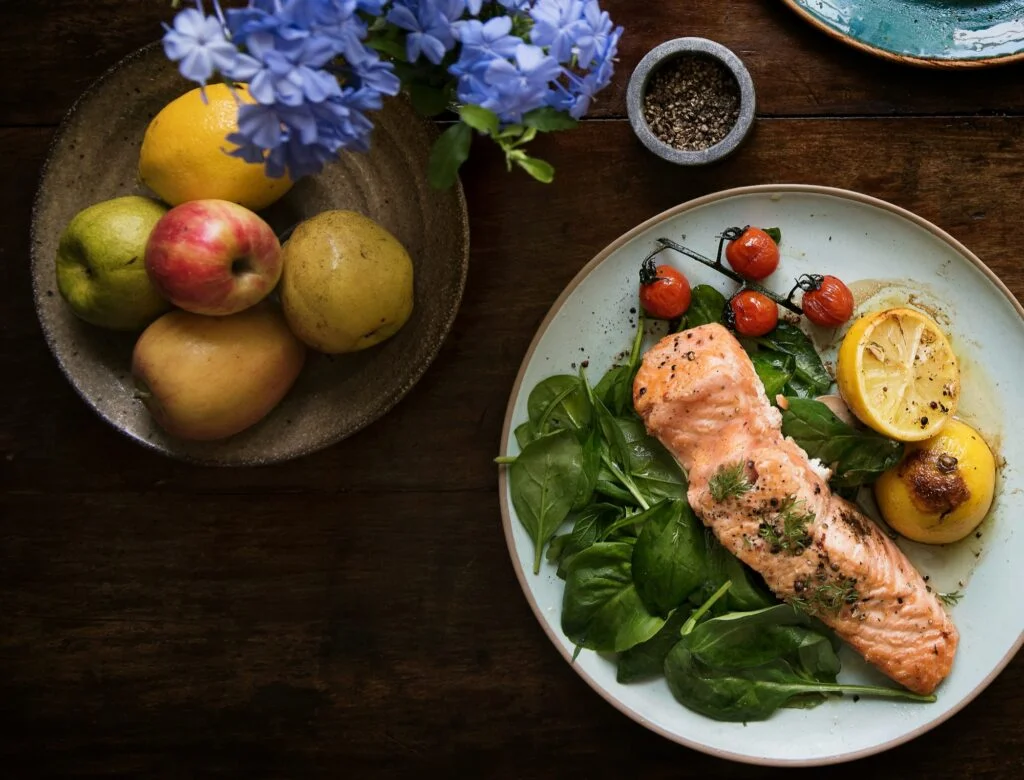
| Dinner | Salmon, spinach, roasted vegetables and new potatoes | Omega-3, folate, magnesium |
| Evening | A warm, caffeine-free drink | A calming cue to wind down |
Vegetarian or vegan? Swap fish for beans, lentils, tofu, walnuts, chia and flax seeds, and consider an algae-based omega-3. Vegans need a reliable source of B12, from fortified foods or a supplement.
Eating habits that help
- Don’t skip meals. Eat roughly every 3 to 5 hours to avoid energy dips.
- Include protein at each meal to keep you fuller and steadier.
- Drink enough water. Even mild dehydration can affect concentration and mood. The NHS suggests 6 to 8 glasses of fluid a day.
- Aim for 30 different plants a week. Fruit, veg, wholegrains, beans, nuts, seeds, herbs and spices all count, and variety is good for gut bacteria.
- Plan ahead. When you’re low, cooking feels hard. Batch-cook soups and stews, keep tins of beans and fish and bags of frozen veg in.
- Eat with others when you can. Shared meals help connection, which matters for mood too. See loneliness.
- Mind late meals. A big meal close to bed can disturb sleep, and poor sleep affects mood. See is eating before bed bad?
Food works best combined with other habits. See healthy habits to start, how to deal with anxiety and beating the winter blues.
Stress eating and comfort food
Reaching for crisps or chocolate when you’re stressed is normal. Stress hormones can increase appetite, especially for sugary and fatty foods. The aim isn’t to never have comfort food, but to notice the pattern.
- Pause and ask: am I hungry, or tired, bored or stressed?
- Try a 10-minute delay with a walk, a glass of water or a few minutes of box breathing.
- Keep a better option to hand, such as fruit, nuts or yoghurt.
- Eat it mindfully if you do have the treat. Sit down, enjoy it and move on without guilt. See mindfulness for beginners.
If stress is behind it, see how to relieve stress and stress symptoms.
When to get help
Diet is a support, not a treatment for depression. See a GP if you’ve felt low, hopeless or lost interest in things for more than two weeks, or if low mood is affecting your daily life. Adults in England can refer themselves to NHS Talking Therapies. If you have an eating disorder, or your relationship with food feels out of control, speak to your GP or contact Beat, the UK eating disorder charity.
If you are in crisis or think you might act on thoughts of harming yourself, call 999 or go to A&E. You can call NHS 111 (option 2 for mental health in many areas) or text SHOUT to 85258 any time. NHS Every Mind Matters also has free tools.
For more ways to lift your mood, see low mood vs depression.
FAQs
Can food really affect your mood?
Yes. Diets rich in vegetables, fruit, wholegrains, beans, nuts and oily fish are linked with a lower risk of depression, and trials show improving diet can reduce low mood symptoms.
What foods are good for mood?
Oily fish, leafy greens, beans and lentils, wholegrains, nuts and seeds, berries, yoghurt and fermented foods, eggs and olive oil.
What foods make depression and anxiety worse?
Large amounts of ultra-processed food, sugar, alcohol and caffeine are linked with worse mood, poorer sleep or more anxiety.
What is the gut-brain connection?
The gut and brain communicate through nerves, hormones and the immune system. Gut bacteria feed on fibre, and a varied, high-fibre diet supports a healthier gut microbiome.
Which vitamins help with low mood?
Magnesium, vitamins B6 and B12 and folate contribute to normal psychological function. Low iron, B12 or vitamin D are common, so ask your GP about a blood test if you feel tired and low.
Can a diet cure depression?
No. Diet can help alongside other treatment, but depression needs proper support. See a GP if low mood lasts more than two weeks.
Sources
- Jacka FN et al (2017). A randomised controlled trial of dietary improvement for adults with major depression (the SMILES trial). BMC Medicine.
- Firth J et al (2019). The effects of dietary improvement on symptoms of depression and anxiety: a meta-analysis of randomized controlled trials. Psychosomatic Medicine.
- Lassale C et al (2019). Healthy dietary indices and risk of depressive outcomes: a systematic review and meta-analysis of observational studies. Molecular Psychiatry.
- British Dietetic Association. Food Facts: Food and mood.
- NHS. The Eatwell Guide.
- NHS. Every Mind Matters.
This guide is general information, not medical advice. Evopure makes the Magnesium Glycinate Sleep Complex and Reishi Mushroom Adaptogenic Complex.