Last updated: October 2026
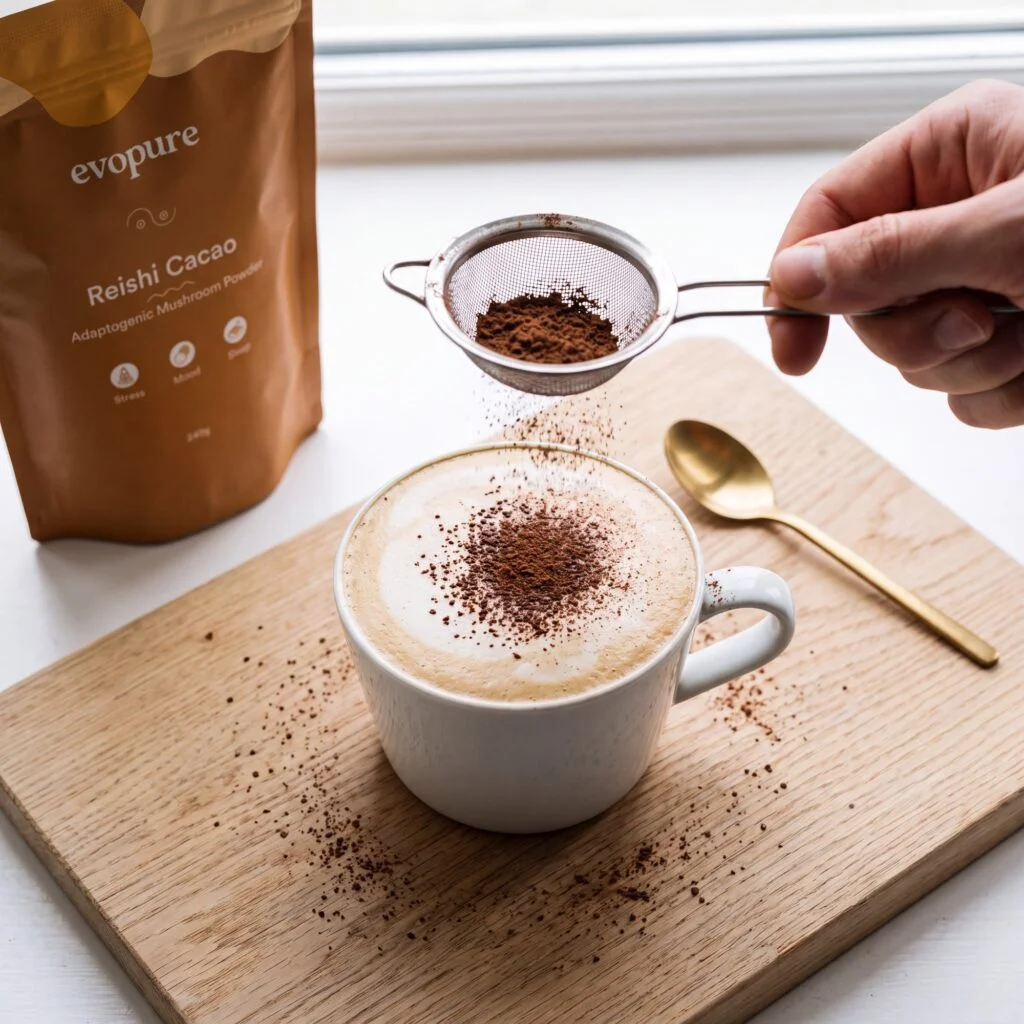
Reishi cacao is a hot chocolate made from cacao powder blended with reishi mushroom, usually stirred into warm milk or water. Its real benefit is a warm, low-caffeine evening ritual that can replace coffee or a nightcap. It isn’t caffeine-free, and good human evidence that reishi improves sleep or stress is still lacking.
Below: what’s in a cup, how much caffeine it has, how it compares with ordinary hot chocolate and mushroom coffee, what the research shows, an easy recipe, when to drink it and who should avoid it.
Try ours
Reishi Mushroom Adaptogenic Complex
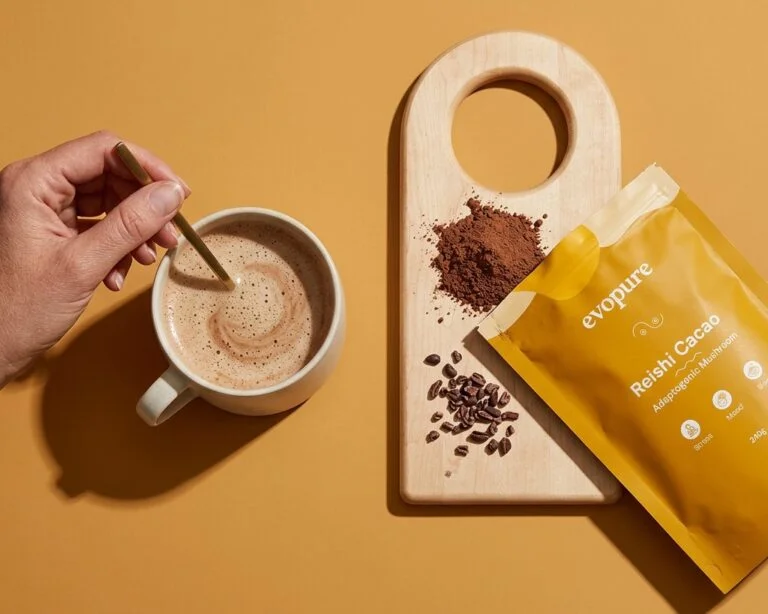
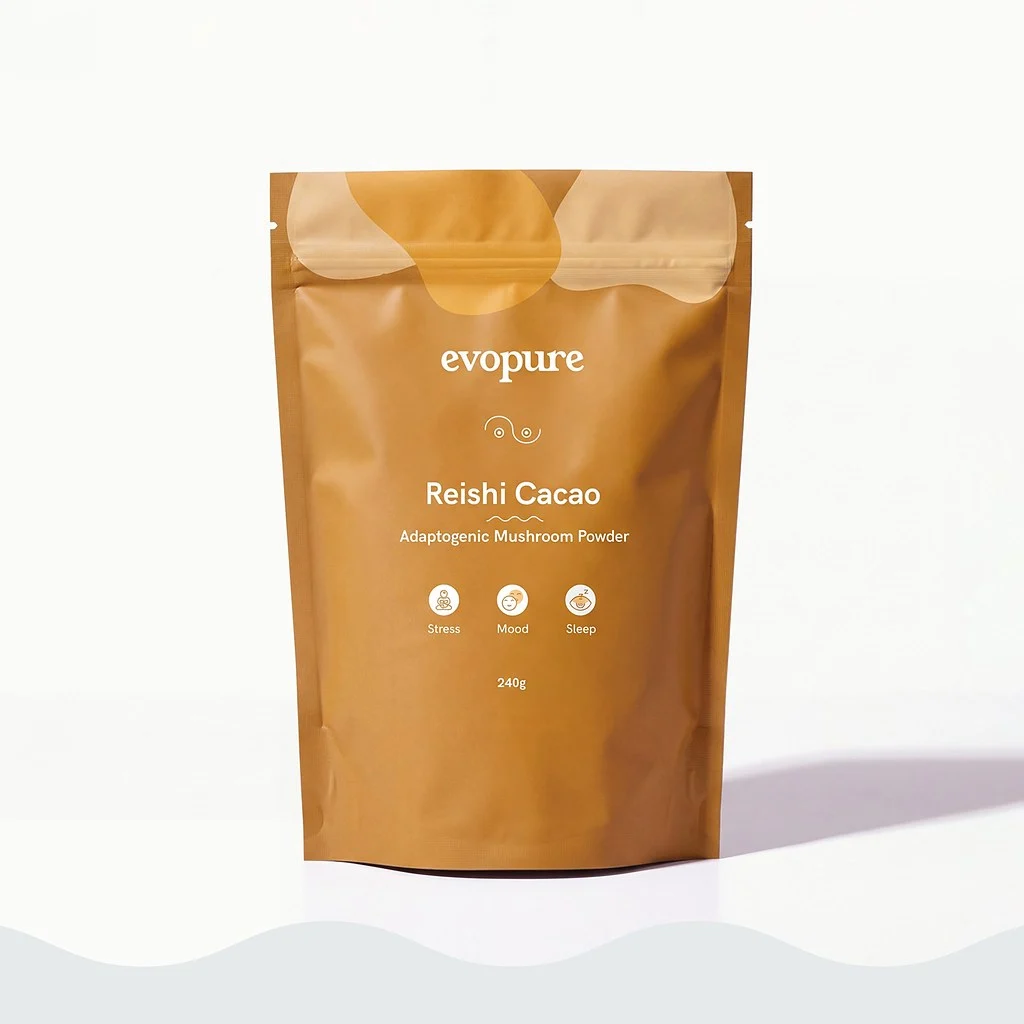
Reishi Mushroom Adaptogenic Complex is reishi mushroom with cocoa, maca, coconut sugar. Stir a scoop into hot water or warm milk. It contains a little natural caffeine from the cacao. Vegan and made in the UK.
Add Reishi Cacao to bag See ingredients and reviews
Vegan and made in the UK. Free UK delivery over £45, 14-day returns on unopened items.
Subscribe £22.49One-off £29.99
View productWhat is reishi cacao?
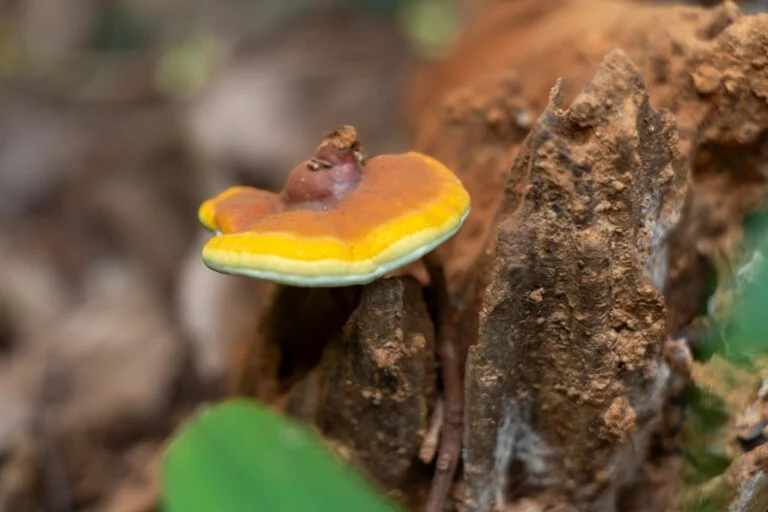
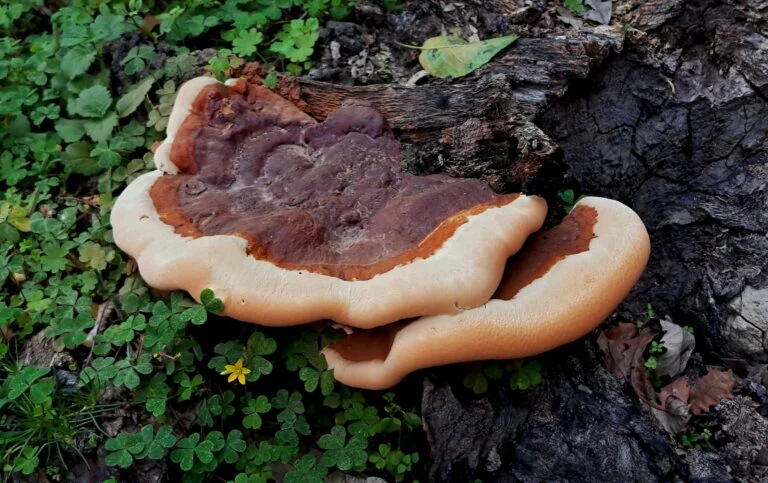
It’s a blend of cacao powder with reishi mushroom (Ganoderma lucidum), usually as an extract, mixed into warm milk or water like hot chocolate. “Reishi cacao”, “reishi hot chocolate” and “mushroom hot chocolate with reishi” all describe the same kind of drink. Cacao is minimally processed cocoa; reishi is a woody, bitter mushroom, so the cacao makes it pleasant to drink.
Reishi has a long history of use in China and Japan, where it is known as lingzhi. You can’t eat it like a cooking mushroom because it is tough and bitter, which is why it is usually dried and extracted. For the mushroom itself, see our guides to reishi mushroom and functional mushrooms in the UK.
Does it taste of mushroom? A good blend shouldn’t. Most people describe it as a rich, slightly earthy, less sweet hot chocolate. If you find it bitter, a pinch of sea salt or cinnamon rounds it out.
The FSA’s 10mg a day figure for CBD is precautionary advice rather than a legal limit, set while longer-term safety research continues. At Evopure we think it is a very cautious figure, and many adults use more. If you go above it, increase slowly, and check with your GP or pharmacist first if you take any medication.
What’s in a cup of reishi cacao?
Recipes vary by brand, so always read the label. This is what each common ingredient is, using our own blend as the example.
| Ingredient | What it is | Worth knowing |
|---|---|---|
| Cacao | Cocoa beans, minimally processed and ground into powder | Naturally contains caffeine and theobromine. Plain unsweetened cocoa powder has about 230mg caffeine and 2,057mg theobromine per 100g |
| Reishi extract | A concentrate made from the dried reishi mushroom | No authorised health claims; check how much reishi a serving contains |
| Maca | A root from the Peruvian Andes, dried and powdered | Adds a malty, caramel note. See maca root |
| Coconut milk powder | Dried coconut milk | Gives a creamier cup, even made with water |
| Coconut sugar | Sugar from the sap of coconut palms | Still a sugar, so it counts towards your daily sugar |
| Serving | 1 to 2 teaspoons (4 to 8g) | About 30 servings a pouch |
How much caffeine is in a cup? Not much. Plain cocoa powder has about 2.3mg of caffeine per gram, so even if a 4 to 8g serving were pure cocoa it would hold roughly 9 to 18mg. A blend like ours is only partly cacao, so it has less than that. For comparison, the NHS puts a cup of tea at about 75mg and a cup of instant coffee at about 100mg.
Cacao also brings theobromine, a related natural compound found in cocoa. A cup has far more theobromine than caffeine, which is one reason some caffeine-sensitive people still prefer to drink it earlier in the evening.
Reishi cacao vs hot chocolate vs mushroom coffee vs plain cacao
People searching for reishi cacao are often choosing between these four drinks. Here is how they differ.
| Reishi cacao | Ordinary hot chocolate | Mushroom coffee | Plain cacao | |
|---|---|---|---|---|
| What it is | Cacao blended with reishi extract, often with maca and a sweetener | Cocoa with sugar, often milk powder and flavourings | Coffee blended with mushroom extracts such as lion’s mane, chaga or reishi | Unsweetened cacao or cocoa powder on its own |
| Caffeine | A little, from the cacao | A little, from the cocoa | Usually much more, because it contains coffee | About 2.3mg per gram of powder |
| Sugar | Depends on the brand; ours uses coconut sugar | Often high: check the label | Usually none unless added | None |
| Taste | Rich, earthy, less sweet | Sweet and milky | Like a slightly milder coffee | Bitter and intense |
| Best time | Evening wind-down | Any time, as a treat | Morning | Any time, in recipes or drinks |
For the full picture on each, see is hot chocolate good before bed?, our mushroom coffee guide and ceremonial cacao, which is a stronger, whole-bean cacao drink.
Reishi cacao benefits: what the research shows
No published trial has tested reishi hot chocolate itself. What exists is research on reishi and on cocoa separately, and most of it doesn’t translate neatly to a teaspoon in a mug.
| Ingredient | Popular claim | What the evidence shows |
|---|---|---|
| Reishi | Better sleep | Animal studies only; no good human sleep trials. See reishi for sleep |
| Reishi | Less tiredness | One Chinese trial in 132 people with neurasthenia (a fatigue diagnosis) found more improvement than placebo over 8 weeks. It used 5.4g a day of a concentrated polysaccharide extract, far more than a drink provides, and it hasn’t been repeated in larger trials |
| Reishi | Heart health and blood sugar | A Cochrane review of 5 trials found no meaningful effect on blood sugar, cholesterol or blood pressure in people with type 2 diabetes |
| Reishi | Immune support | Lab and small human studies; no authorised health claims |
| Cacao | Heart health | The only authorised cocoa flavanol claim needs 200mg of cocoa flavanols a day from a cocoa drink or dark chocolate that actually provides that amount. Ordinary cacao drinks, including ours, aren’t tested or sold on that basis |
| Cacao | Mood | Cacao contains small amounts of caffeine and theobromine; there is no authorised claim for mood |
The honest benefit is the ritual: a warm, comforting drink that replaces coffee or alcohol in the evening. Both of those affect sleep. See Sober October drinks and alcohol-free nightcaps and does caffeine cause anxiety? For flavanols, caffeine and heavy metals in bars, read dark chocolate benefits, and for how reishi compares with other mushrooms, see the best mushrooms for anxiety, ranked by evidence.
Does reishi hot chocolate help you sleep?
There are no good human trials showing that reishi improves sleep, so we won’t claim it does. What a warm, low-caffeine drink can do is give your evening a clear “winding down” signal, in place of a late coffee or a glass of wine.
- Swapping out caffeine: caffeine can stay in your system for hours. Our guide to how long caffeine lasts explains when to stop.
- Swapping out alcohol: a nightcap may make you drowsy but tends to disturb the second half of the night. See alcohol and sleep.
- Building a routine: the same drink at the same time each night is an easy anchor. See our bedtime routine for adults.
Some “sleepy” mushroom hot chocolates sold abroad add melatonin. In the UK melatonin is a prescription-only medicine, so it shouldn’t be in a food product here. Read more in melatonin in the UK.
How to make reishi hot chocolate
Basic recipe (1 mug, about 2 minutes)
- Warm a mug of oat, almond or dairy milk, or water. Don’t boil it.
- Add 1 to 2 teaspoons of reishi cacao powder.
- Whisk or froth well so it doesn’t clump. A splash of the warm milk first, mixed into a paste, makes it smoother.
- Optional: a pinch of cinnamon or sea salt, or a little honey or maple syrup.
Easy variations
- Reishi cacao latte: use oat milk and a milk frother for a cafe-style foam.
- Spiced: add cinnamon, a pinch of cardamom or nutmeg. Our guide to Ceylon vs cassia cinnamon explains which to choose if you use it every day.
- Iced: whisk the powder into a little warm water, then pour over cold milk and ice.
- Mocha: add a shot of coffee for a morning cup, but remember this adds a full dose of caffeine.
If you also use CBD oil, see CBD tea and lattes for how to add it to a warm drink.
When to drink it, and how much
Most people enjoy it 30 to 60 minutes before bed as part of a wind-down routine. Cacao contains a little caffeine, far less than coffee, so if you’re very sensitive to caffeine, have it earlier in the evening.
Stick to the serving on the label: for ours that is 1 to 2 teaspoons, once a day. Count it alongside your other caffeine. The FSA’s guidance is that up to 400mg of caffeine a day is unlikely to cause problems for most healthy adults, with no more than 200mg in a single serving. A cup of reishi cacao is a small part of that, but tea, coffee, cola and energy drinks add up quickly. If you’re trying to cut down, our guide to caffeine withdrawal explains how to do it gently.
Who should avoid reishi cacao
- Children and teenagers. Our products are for adults (18+) only.
- Pregnant or breastfeeding women. We don’t recommend our products during pregnancy or breastfeeding. Reishi’s safety at these times hasn’t been established, and NHS advice is to keep caffeine to under 200mg a day in pregnancy.
- People on blood thinners (such as warfarin, apixaban or aspirin), with bleeding disorders, or before surgery: reishi can increase the risk of bleeding.
- People on immunosuppressant medicines, for example after a transplant: reishi may affect the immune system, so it may not be safe alongside them.
- People on diabetes or blood pressure medicines: check with a pharmacist first.
- People with liver problems: rare cases of liver injury have been reported with reishi powder, including a fatal case of hepatitis in Thailand and a 2023 case of acute liver injury after reishi powder taken with alcohol. Stop and see your GP if you feel unwell or notice yellowing of your skin or eyes.
- People who are sensitive to caffeine or have a heart condition: the amount is small, but have it earlier in the day or check with your GP.
- Mushroom allergy.
iIf you take any regular medication, ask your GP or pharmacist before adding a reishi product.
How to choose a reishi hot chocolate
Most mushroom hot chocolates look alike on the shelf. These are the things worth checking on the label before you buy.
- The full ingredient list. Look for reishi extract and real cacao near the top, not just flavourings.
- How much reishi a serving contains, and whether it’s made from the mushroom itself or from mycelium (the root-like part) grown on grain.
- Sugar. Check the sweetener and how much is in a serving.
- Hidden extras. Avoid products with added melatonin, which is prescription-only in the UK.
- Testing. Look for independent lab testing and a UK address you can contact.
- Honest wording. Be wary of drinks that promise to cure stress, insomnia or boost immunity. No reishi product can legally make those claims in the UK.
Comparing drinks with capsules? See our guide to the best mushroom supplements in the UK.
Our Reishi Mushroom Adaptogenic Complex
Our Reishi Mushroom Adaptogenic Complex is a hot chocolate blend of reishi mushroom with cocoa, maca and, sweetened with coconut sugar. It’s vegan and made in the UK, and it’s made to be stirred into warm water or plant milk, 1 to 2 teaspoons a serving, as part of your evening wind-down. A pouch makes about 30 servings.
It contains a little natural caffeine and theobromine from the cacao, so it isn’t caffeine-free, but it has far less caffeine than a cup of tea or coffee. It’s for adults only.
Wondering whether a cacao drink will keep you up? See is hot chocolate good before bed? for caffeine compared with tea and coffee, and a healthy recipe.
Related guides
- Ceremonial cacao: what it is, its caffeine and how to make it.
- Reishi mushroom: side effects, dosage and best time to take it.
- Weighing up a morning cup instead? Our guide to mushroom coffee compares caffeine, evidence and side effects.
- 8 adaptogenic mushrooms, with the evidence and safety for each.
- Want the classic version too? Our homemade hot chocolate recipe has exact UK measures and 11 twists.
- Our reishi cacao is a drink, not skincare; for reishi in serums and creams, read reishi for skin: what the research shows.
- Chaga is a different mushroom with different safety notes; our chaga side effects guide explains why.
- Buying reishi cacao in the November sales? See how much to stock up and how long it keeps.
- Reishi hot chocolate also makes a good present; see our wellness gifts under £50.
- Reishi hot chocolate also features in our Christmas stocking filler ideas.
- The Spacegoods hot chocolate and Sleep+, compared ingredient by ingredient.
- DIRTEA Cacao: ingredients and caffeine in a mushroom cacao blend.
- Wondering how reishi stacks up against ashwagandha? See reishi vs ashwagandha: differences and safety.
- Rheal Coco Dream, a cacao drink with 500mg of reishi extract per serving.
- Want reishi on its own instead? See reishi powder, extract or tincture: which to choose.
- If you’d rather try it without the cacao, our guide to reishi mushroom tea covers the traditional simmered method.
- Other brands pair cacao with different mushrooms, such as the chaga in Ancient + Brave Cacao + Chaga.
- Reishi Cacao works in baking too: see Charlotte’s vegan pumpkin chocolate protein cake.
- Comparing brands? Our mushroom hot chocolate UK buying guide sets out what each label states per serving, from mushroom type to sugar and caffeine.
- A tin of reishi hot chocolate and a good mug is one of our favourite Christmas wellness gifts for someone who loves a cosy evening drink.
- If you take magnesium in the evening as well, see how long before bed to take magnesium.
- For more on vegan mugs, read our guide to dairy-free hot chocolate powder and the best plant milks to use.
- Giving it as a present? Our hot chocolate gift guide shows how to build a hamper around a reishi hot chocolate.
- Reishi cacao, a mug and a soft throw make the start of a cosy self-care hamper.
- Doing a £20 to £30 Secret Santa with friends or family? Our Secret Santa gifts guide shows where a reishi hot chocolate fits, and what to give a colleague instead.
- Some people swap a third coffee for a cacao drink; see our afternoon slump guide for the habits that matter more.
- For reishi as a simmered drink rather than a cacao, see our mushroom tea guide.
- Reishi Cacao is a hot chocolate powder, not plain cocoa: see cocoa powder vs hot chocolate powder for what that means in recipes.
- Hosting this Christmas? Add a jar to your hot chocolate station as the grown-up option.
- For how a mug of reishi cacao compares with ordinary hot chocolate, tea and coffee, see caffeine in hot chocolate.
- Our Reishi Mushroom Adaptogenic Complex is part of our Black Friday supplement deals, from Friday 27 November to Cyber Monday.
Sources 10
- Tang W et al. A randomized, double-blind and placebo-controlled study of a Ganoderma lucidum polysaccharide extract in neurasthenia. J Med Food, 2005.
- Klupp NL et al. Ganoderma lucidum mushroom for the treatment of cardiovascular risk factors. Cochrane Database Syst Rev, 2015.
- Wanmuang H et al. Fatal fulminant hepatitis associated with Ganoderma lucidum (Lingzhi) mushroom powder. J Med Assoc Thai, 2007.
- Guedikian R et al. Ganoderma lingzhi (Reishi Mushroom)-Induced Acute Liver Injury in the Setting of Alcohol Use: A Case Report and Review of the Literature. Cureus, 2023.
- Memorial Sloan Kettering Cancer Center. Reishi mushroom: side effects and herb-drug interactions.
- USDA FoodData Central: Cocoa, dry powder, unsweetened (FDC ID 169593), caffeine and theobromine per 100g.
- NHS. Foods to avoid in pregnancy: caffeine.
- Food Standards Agency. Guidance on food supplements containing caffeine.
- NHS. About melatonin.
- Commission Regulation (EU) 2015/539, as retained in GB law. Cocoa flavanols health claim and conditions of use.