Last updated: 9 November 2026
Reishi powder is the whole dried mushroom, ground; reishi extract is reishi simmered in hot water, alcohol or both, then dried, so it is more concentrated and less bitter. One gram of each isn’t comparable. No form is proven better in people, so choose by what the label states: the part used, the extract ratio and a beta-glucan percentage.
Below: powder vs extract in a table, then tinctures, capsules and tea, how to read a reishi label, the evidence and who should check first.
Reishi powder vs reishi extract: what’s the difference?
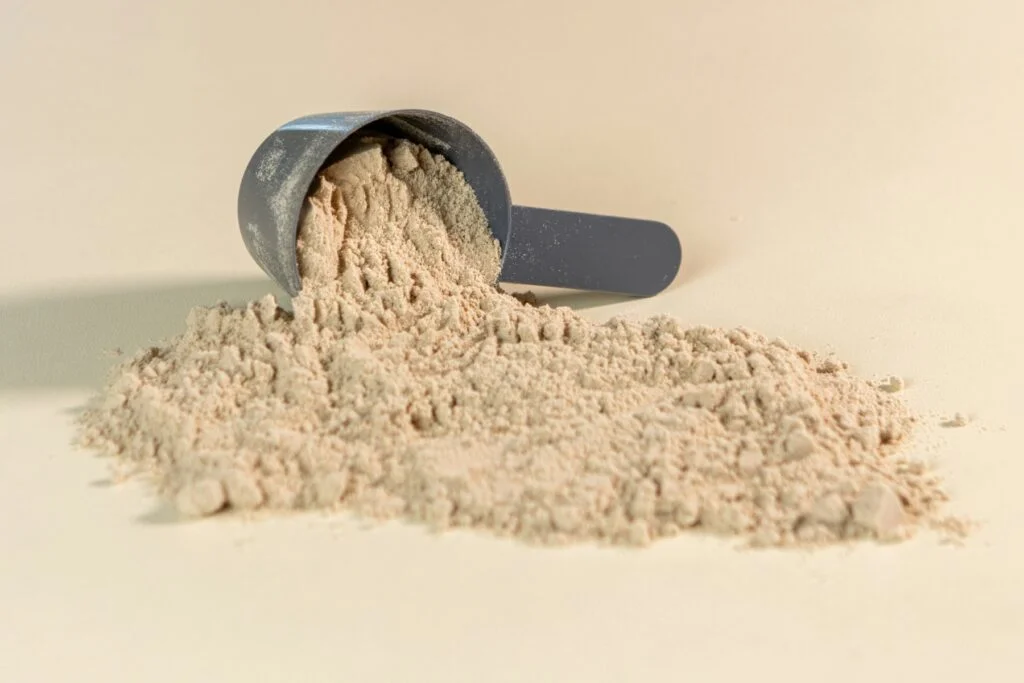
Reishi powder is dried reishi mushroom milled to a powder, with nothing taken out. Reishi extract is reishi that has been simmered in hot water, soaked in alcohol, or both (a dual extract), then dried. Extracts are more concentrated, so servings are smaller and less bitter. If a label doesn’t say “extract”, assume it is ground whole mushroom.
| Type | What it is | What to check on the label | Notes |
|---|---|---|---|
| Fruiting body powder | The dried mushroom, ground | Grams per serving; “fruiting body” | Very bitter; tough cell walls |
| Hot-water extract | Simmered in water, then dried | Ratio (e.g. 10:1); beta-glucan % | Carries mainly polysaccharides |
| Dual extract | Water plus alcohol extracts, combined | Beta-glucan % and triterpene % | Also carries triterpenes |
| Mycelium on grain | The root-like part, grown on oats or rice | “Mycelium” named; beta-glucan, not just “polysaccharides” | Can be high in grain starch |
Two label traps: a ratio such as 10:1 shows how concentrated the process was, not the beta-glucan content, and “polysaccharides” can include starch from grain. Lab methods can measure beta-glucan separately from starch, so a stated beta-glucan percentage tells you more. Mushroom cell walls are tough, so less of what’s inside may be released from plain powder than from an extract, although no trial has compared the two in people.
How to use reishi powder: stir it into a hot drink, smoothie or porridge. Chocolate, coffee and spices hide the bitterness best, which is why reishi so often turns up in reishi cacao and mushroom coffee. For a lower-sugar cup, see healthy hot chocolate.
Reishi powder vs extract vs tincture vs capsules
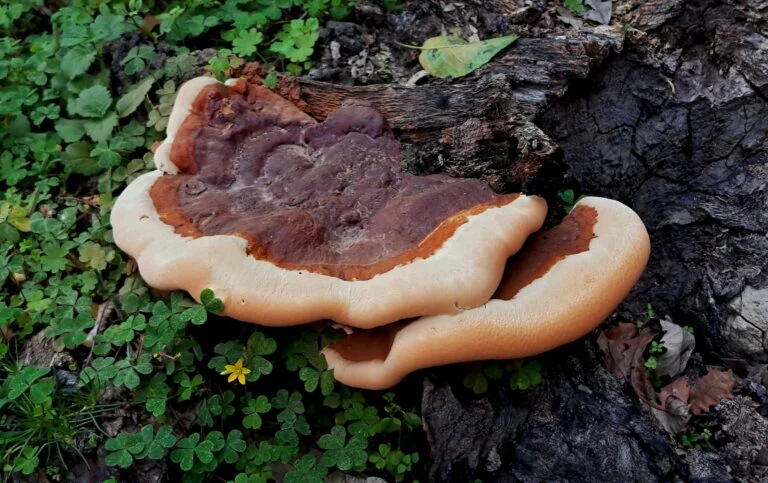
Reishi (Ganoderma) is too woody and bitter to eat, so the form you choose changes what you get, how it tastes and how easy it is to know the amount.
| Form | What it is | How you take it | Watch for |
|---|---|---|---|
| Whole mushroom powder | Dried reishi, ground | Stirred into drinks or food | Very bitter; tough cell walls |
| Extract powder | Reishi concentrated with water, alcohol or both | Small scoop in a drink | Ratio alone isn’t a strength |
| Tincture | Liquid extract in drops | Under the tongue or in water | Usually contains alcohol |
| Capsules | Powder or extract in a shell | Swallowed with water | Check which powder is inside |
| Tea or drink blend | Slices, teabags or a cacao or coffee mix | A warm daily drink | Reishi amount often not stated |
Quick picks:
- You want a measured amount and no taste: extract capsules.
- You want flexibility: an extract powder you can stir into a drink.
- You avoid alcohol: skip most tinctures, or choose one labelled alcohol-free.
- You want a ritual you’ll keep up: a tea or a reishi hot chocolate.
Our pick
Reishi Mushroom Adaptogenic Complex
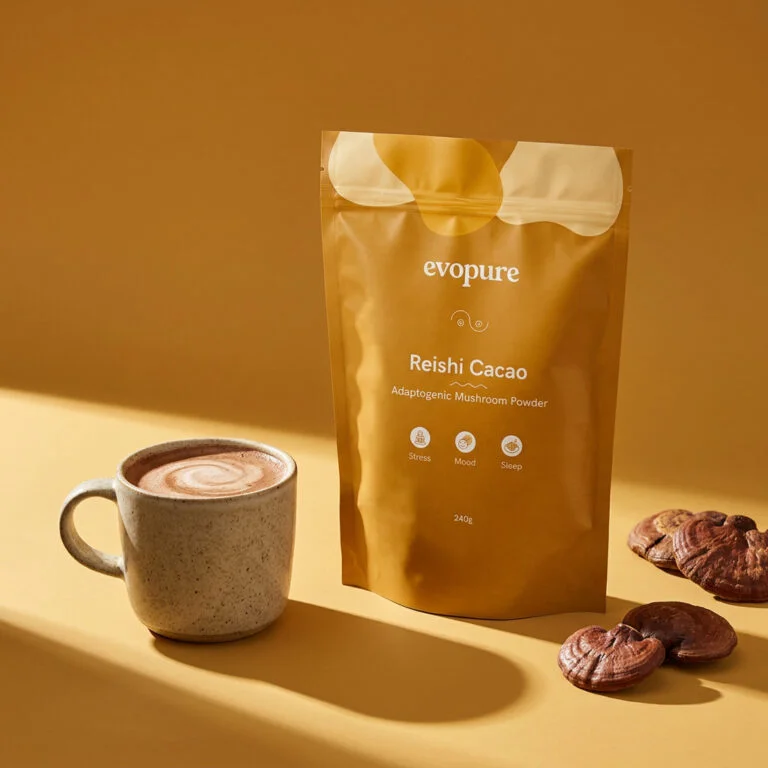
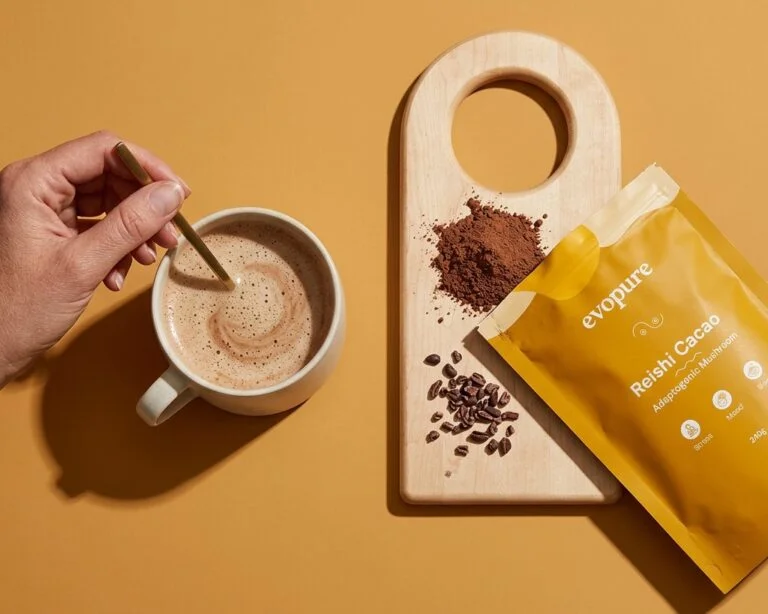
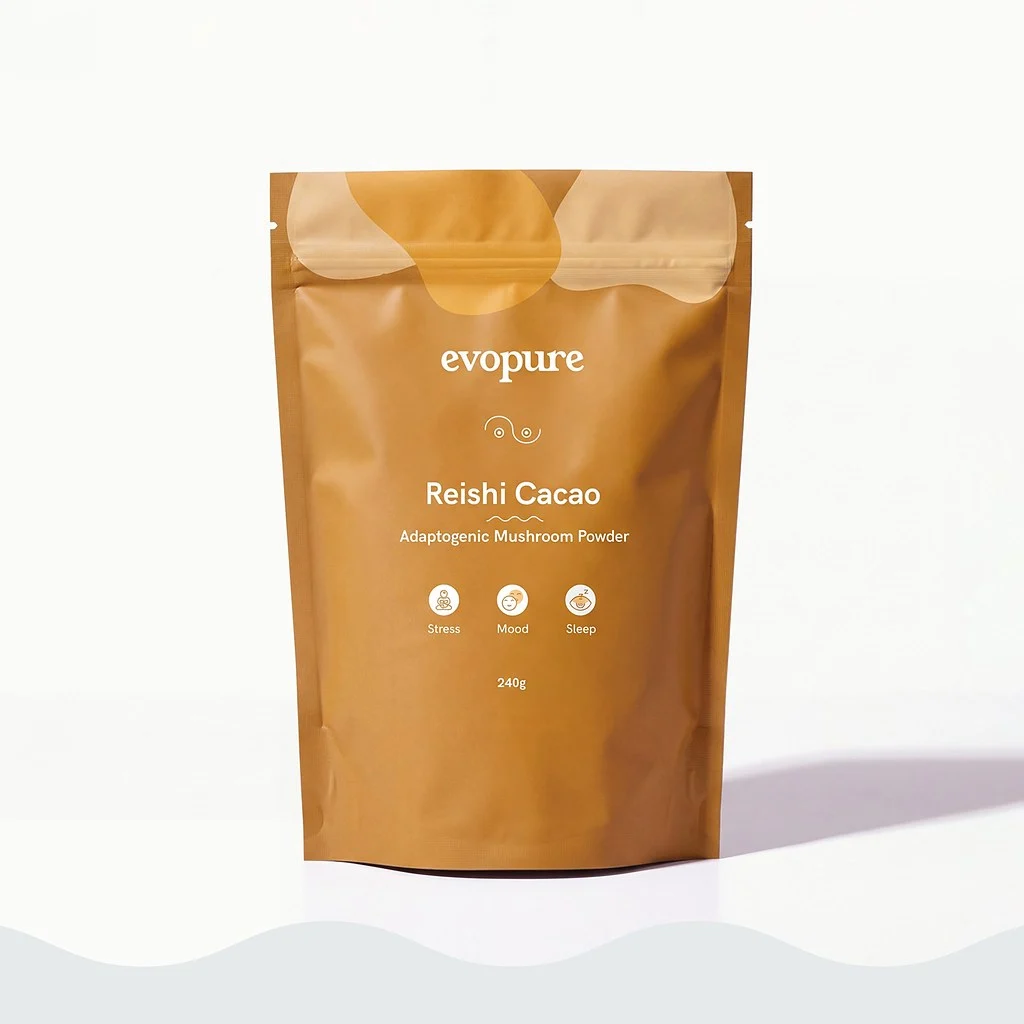
Reishi Cacao is a hot chocolate made with reishi mushroom, cacao and maca: 0.5g reishi per 8g serving. It contains a little natural caffeine from the cacao, so it suits earlier in the evening.
Add Reishi Cacao to bag See ingredients and reviews
Vegan and made in the UK. Subscribe and save 25% on your first order, then 20%. New to Evopure? Join our emails for 20% off a one-off first order. Free UK delivery over £40, 14-day returns on unopened items.
Subscribe £22.49One-off £29.99
View productOur reishi hot chocolate powder, the Reishi Mushroom Adaptogenic Complex, is a drink blend rather than a straight reishi powder. The pack lists cocoa powder, coconut sugar, reishi mushroom, maca root, cinnamon and stevia, with 0.5g reishi, 0.5g maca and 0.3g cinnamon per 8g serving (30 servings a pouch). It’s vegan, made in the UK and tastes of chocolate, not mushroom. Stir 1 to 2 teaspoons (4 to 8g) into warm, not boiling, water or plant milk. It contains a little natural caffeine from the cacao. The pack doesn’t state fruiting body or mycelium, an extract ratio or a beta-glucan percentage, so if you want those figures, a single-ingredient extract with a full label will suit you better. Ours is made to be an evening drink you look forward to.
Some people pair it with our Magnesium Glycinate Sleep Complex, a berry drink powder with magnesium bisglycinate and citrate, glycine, L-theanine and botanicals. Magnesium contributes to a reduction of tiredness and fatigue. Others prefer Flow CBD Oil, a broad spectrum CBD oil with ashwagandha and maca, earlier in the day: about 0.2ml of the 500mg gives 10mg CBD. Ashwagandha isn’t suitable for everyone, including in pregnancy or with a thyroid or liver condition. The FSA’s 10mg a day figure is precautionary advice rather than a legal limit, set while longer-term safety research continues. At Evopure we think it is a very cautious figure, and many adults use more. If you go above it, increase slowly, and check with your GP or pharmacist first if you take any medication.
Reishi extract: hot water, alcohol or dual extract
Reishi’s two main groups of compounds behave differently:
- Polysaccharides, including beta-glucans, come out well in hot water. The US National Cancer Institute describes reishi polysaccharides being isolated from a boiling water extract.
- Triterpenes are often extracted with ethanol (alcohol), according to a 2025 review of reishi chemistry. The same review notes triterpenes are concentrated in the fruiting body and spores.
A dual extract uses both: an alcohol soak and a hot-water simmer, combined. That’s why tinctures use alcohol: water alone leaves many triterpenes behind. Whether that matters for how you feel hasn’t been tested in people.
What 10:1 means: roughly 10kg of dried mushroom went into 1kg of extract. It shows how concentrated the process was, not the beta-glucan content. A tested beta-glucan percentage tells you more.
For one brand that lists its extract and beta-glucan figures, see our Hifas da Terra guide.
Reishi tincture: what’s in the bottle
A reishi tincture is a liquid extract, usually a dual extract in water and alcohol, taken by the dropper under the tongue or in water.
- Alcohol: most contain some. Check the label if you avoid alcohol for health, religious or recovery reasons. One of the published reishi liver case reports involved reishi powder taken alongside alcohol.
- Strength: tinctures are often labelled by a ratio of mushroom to liquid, which is hard to compare with powders. Look for a stated amount of reishi per dose.
Homemade tinctures give no way to know the strength per dose, so we wouldn’t recommend them. All Evopure products are alcohol-free.
Reishi capsules
Capsules are the easiest way to take a fixed amount with no taste. The catch is that “500mg reishi” per capsule could be whole mushroom powder or a concentrated extract, so check the label says which, and look for the part used and a beta-glucan figure.
Gummies usually hold less mushroom; see mushroom gummies and how to choose a mushroom supplement.
Reishi tea and drinks
Reishi tea is the traditional form: dried slices simmered in water for an hour or more. It’s a hot-water extract, so it mainly carries the water-soluble compounds, and it is very bitter. See our mushroom tea guide to brew it.
Drink blends (cacao, coffee or chai) are the easiest to enjoy, though they rarely state the reishi per serving. For evening timing, see reishi for sleep and reishi cacao as an alcohol-free nightcap.
How to read a reishi label
Quality varies. When researchers tested 19 reishi supplements bought in the US, the measured triterpenes and polysaccharides matched the label in only 5 (26%). A separate DNA study of 20 reishi products found 93% were Ganoderma lingzhi, and none contained true European Ganoderma lucidum, even though they were sold under that name.
Look for:
- Species: Ganoderma lucidum or Ganoderma lingzhi (the labels often use the first name for the second).
- Part used: fruiting body, mycelium or spores. Mycelium grown on grain contains alpha-glucans (starch) from the grain, while fruiting body extracts are mainly beta-glucan, the National Cancer Institute notes.
- Extract type: hot water, alcohol or dual extract, or whole powder.
- Beta-glucan percentage: more useful than “polysaccharides”, which can include starch.
- Amount per serving: mg of reishi.
- Testing: for heavy metals and contaminants.
The same checks apply to other functional mushrooms, such as turkey tail.
Does one form work better?
Nobody knows, because no trials have compared forms head to head. The human research on reishi is small. A Cochrane review of reishi for heart and blood sugar risk factors found five trials with 398 people. The trials it could analyse used 1.4g to 3g a day against placebo for 12 to 16 weeks in people with type 2 diabetes, and found no meaningful change in long-term blood sugar (HbA1c) or cholesterol. Much of the rest of the research is in the lab or in animals.
So there’s no basis for claims that one form “absorbs better”. Pick the form you’ll take consistently, from a clear label. To compare reishi with other options, see reishi vs ashwagandha and lion’s mane vs reishi vs cordyceps.
Safety: who should check first
- Liver: Memorial Sloan Kettering reports liver injury with powdered reishi, including one death. In two published cases, people developed problems one to two months after switching from boiled reishi to a powder, while also taking other medicines. Such cases are rare. Stop and see a GP urgently, or call NHS 111, if your skin or the whites of your eyes turn yellow.
- Blood thinners and bleeding disorders: reishi may increase bleeding risk. Speak to your GP or pharmacist first if you take warfarin, clopidogrel or similar.
- Surgery: tell your surgeon you take reishi and ask when to stop beforehand.
- Immune-suppressing medicines or cancer treatment: ask your medical team first.
- Pregnancy and breastfeeding: safety hasn’t been studied. We don’t recommend our products during pregnancy or breastfeeding.
iOur products are for adults (18+) only. If you take regular medication, check with your GP or pharmacist first. More detail is in our reishi mushroom guide.
Related guides
- For brewing dried slices at home, see our reishi tea recipe and side effects guide.
- If you’d rather drink your reishi than take a capsule, our reishi hot chocolate UK guide shows what to look for in a cacao blend.
- If you’re choosing reishi for a calmer evening, our guide to the best mushrooms for anxiety compares the evidence for reishi and lion’s mane.
- For one shop’s range of powders and extracts, see reishi at Holland and Barrett.
- For named UK products side by side, see the best reishi supplement UK comparison.
Next step
Reishi Mushroom Adaptogenic Complex
If you’d rather drink your reishi than take a capsule or tincture, Reishi Cacao gives 0.5g reishi, 0.5g maca and 0.3g cinnamon per 8g serving (2 teaspoons), with cocoa, coconut sugar and stevia, and 30 servings a pouch. It contains a little natural caffeine from the cocoa.
Add Reishi Cacao to bag See ingredients and reviews
Subscribe and save 25% on your first order, then 20%. New to Evopure? Join our emails for 20% off a one-off first order. Free UK delivery over £40. If you take any regular medicines, check with your GP or pharmacist first. We don’t recommend our products during pregnancy or breastfeeding.
Subscribe £22.49One-off £29.99
View productSources 8
- Memorial Sloan Kettering Cancer Center. Reishi mushroom.
- National Cancer Institute. Medicinal mushrooms (PDQ), health professional version.
- Plosca MP et al. Ganoderma lucidum: chemistry, benefits and safety (review). Antioxidants, 2025. PMID 40427395.
- Wu DT et al. Quality consistency of Ganoderma lucidum supplements in the US. Sci Rep, 2017. PMID 28798349.
- Loyd AL et al. Ganoderma species in commercial reishi products. Front Microbiol, 2018. PMID 30061872.
- McCleary BV, Draga A. Measurement of beta-glucan in mushrooms and mycelial products. J AOAC Int, 2016. PMID 26957216.
- Klupp NL et al. Ganoderma lucidum for cardiovascular risk factors. Cochrane review, 2015. PMID 25686270.
- Wanmuang H et al. Fatal hepatitis associated with lingzhi mushroom powder. J Med Assoc Thai, 2007. PMID 17621752.
This guide is general information, not medical advice. Product details checked November 2026. Evopure makes the Reishi Mushroom Adaptogenic Complex, Magnesium Glycinate Sleep Complex and Flow CBD Oil.