
Last updated: October 2026
Cinnamon’s best-researched benefit is a modest drop in fasting blood sugar in people with type 2 diabetes, mostly from supplement trials, with smaller hints for cholesterol and blood pressure. It isn’t a treatment for anything. If you use a lot, choose Ceylon cinnamon: common cassia is high in coumarin, which can harm the liver.
Below: Ceylon vs cassia, how much is safe in teaspoons, what the research honestly shows for each claim, cinnamon water, tea and honey, the cinnamon challenge, and who should be careful.
Cinnamon in 30 seconds: a pinch in food is safe for most people. Supplement trials show small drops in blood sugar, cholesterol and blood pressure, but trials are short and mixed. Typical supermarket cinnamon is cassia: for a 60 to 70kg adult, the coumarin safety limit is reached at a little under a level teaspoon a day. Ceylon has only traces. Never try the cinnamon challenge.
Ceylon vs cassia cinnamon: what’s the difference?
“Cinnamon” covers the dried inner bark of several trees. The two you’ll meet in the UK are Ceylon, sometimes called true cinnamon, which grows mainly in Sri Lanka, and cassia, the cheaper, more common type. In European food testing, most ground cinnamon samples turned out to be cassia, and packs often don’t say which type they contain.
| Ceylon cinnamon | Cassia cinnamon | |
|---|---|---|
| Also called | True cinnamon, Cinnamomum verum | Chinese, Saigon or Indonesian cinnamon |
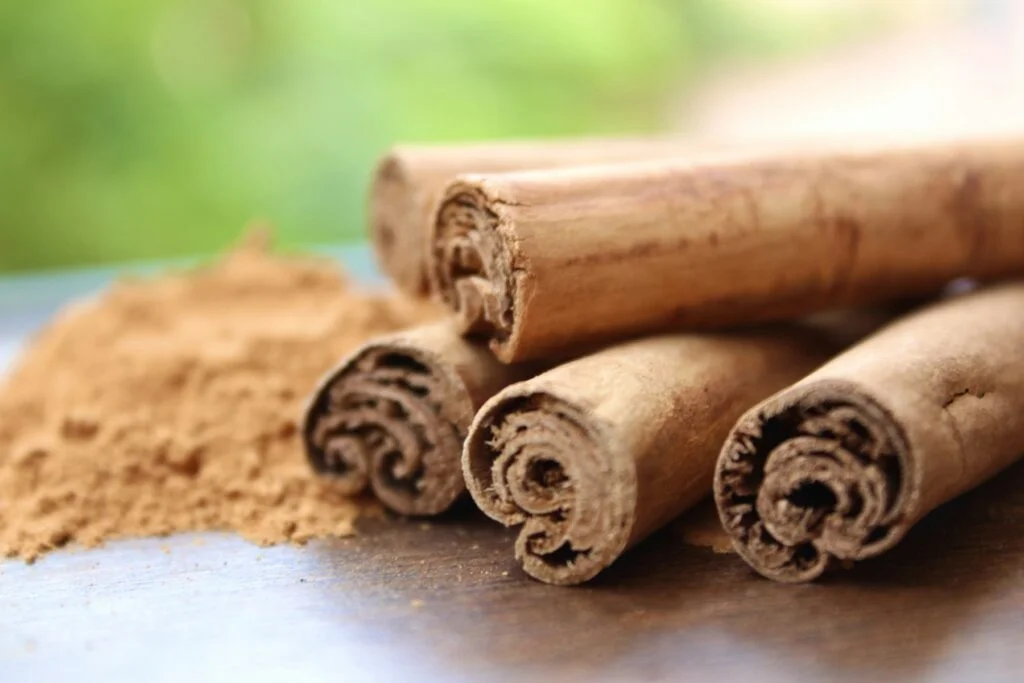
| Sticks | Thin, papery layers rolled together, like a cigar in cross-section | One thick layer of bark, curled into a hollow roll |
| Flavour | Milder and more floral | Stronger, spicier and tarter |
| Coumarin | Only traces (under 15mg per kg in one tested sample) | About 3,000mg per kg on average, up to 10,000mg per kg |
| Price | Higher | Lower; what most shop-bought ground cinnamon is |
| Used in diabetes trials | Some | Most |
Ground, the two look almost the same, so check the label says “Ceylon”. Even then, labels aren’t always right: an EU study of 104 cinnamon samples bought from shops found two thirds had a quality, safety or fraud problem, including some with enough coumarin to be a concern for children.
Coumarin: how much cinnamon is safe?
Coumarin is a natural flavouring that, in large amounts, can damage the liver in a small group of sensitive people. The damage is usually reversible. The European Food Safety Authority (EFSA) and Germany’s Federal Institute for Risk Assessment (BfR) both set a tolerable daily intake of 0.1mg of coumarin per kg of body weight: the amount you could have every day for life without appreciable risk.
Here’s what that means in practice, using the BfR’s average and highest coumarin figures for cassia and a level teaspoon of ground cinnamon weighing about 2.6g:
| Type of cinnamon | 60kg adult (6mg limit) | 70kg adult (7mg limit) |
|---|---|---|
| Typical cassia (about 3,000mg coumarin per kg) | About 2g: three quarters of a teaspoon | About 2.3g: just under a teaspoon |
| Strong cassia (about 7,000mg per kg) | About 0.9g: a third of a teaspoon | About 1g: under half a teaspoon |
| Highest measured cassia (10,000mg per kg) | About 0.6g: a quarter of a teaspoon | About 0.7g: a quarter of a teaspoon |
| Ceylon | Only traces, so not a practical concern in food amounts | |
So a level teaspoon of typical cassia (around 8mg of coumarin) already puts a 60 to 70kg adult over the limit. Testing of 60 ground cinnamon samples from 12 brands in the Czech Republic found average coumarin levels of 2,650 to 7,017mg per kg, which works out at roughly 7 to 18mg per teaspoon.
Don’t panic about a cinnamon bun or a festive week. The BfR says going slightly over the limit for one to two weeks is safe; the risk comes from eating large amounts of cassia every day for a long time. For a small child of 15kg, the limit is about 0.5g of cassia a day, roughly a fifth of a teaspoon.
Cinnamon benefits: evidence by claim
Most cinnamon trials are small and short, and most used capsules or extracts, often of cassia and at doses up to 6g a day, rather than cinnamon sprinkled on food. In the UK, cinnamon has no authorised health claims on the Great Britain nutrition and health claims register, so everything below describes research, not a promise.
| Claim | What the research shows | Our verdict |
|---|---|---|
| Blood sugar in type 2 diabetes | Recent pooled trials show small falls in fasting blood sugar and HbA1c. An earlier Cochrane review found the evidence insufficient | Promising, but uncertain |
| Cholesterol | 13 trials: total cholesterol down about 0.36mmol/L and triglycerides down about 0.27mmol/L. No clear change in LDL (“bad”) cholesterol | Small effect |
| Blood pressure | 9 trials, 641 people: about 6mmHg lower systolic and 4mmHg lower diastolic blood pressure | Early |
| PCOS (now being renamed PMOS) | 5 small trials: lower scores for insulin resistance | Early |
| Weight loss | 12 trials, 786 people: about 1kg more weight lost on average | Very small |
| Inflammation | 6 trials, 285 people: a small fall in CRP, a blood marker of inflammation | Early |
| Brain and memory | Lab and animal studies only. We found no good human trials | Unproven |
The US National Center for Complementary and Integrative Health sums it up plainly: research doesn’t clearly support using cinnamon for any health condition. For PCOS and blood sugar, read our guides to PCOS’s new name, PMOS and berberine, which has their own research and their own cautions. If inflammation is your interest, compare the evidence for turmeric and ginger.
Does cinnamon lower blood sugar?
A little, in some trials, in people who already have type 2 diabetes. The evidence has shifted over time:
- 2012 Cochrane review: 10 trials and 577 people, mostly taking about 2g of cassia a day. No clear effect on HbA1c (long-term blood sugar), so the reviewers found the evidence insufficient.
- 2013 meta-analysis: 10 trials. Fasting blood sugar fell by about 1.4mmol/L, but HbA1c didn’t change significantly, and results varied widely between trials.
- 2025 meta-analysis: 28 trials and 3,054 people. Fasting blood sugar fell by about 0.85mmol/L and HbA1c by about half a percentage point, with the clearest results from capsules of 2g a day or less.
Two big caveats. The trials lasted weeks to four months, and many were small, with very different results from one to the next. And Diabetes UK doesn’t recommend herbal remedies or supplements for diabetes, because there isn’t enough evidence they are safe and effective. Cinnamon doesn’t cure type 2 diabetes and shouldn’t replace prescribed medicine.
For steadier energy through the day, your meals as a whole matter far more than a spice. See our guides to sugar cravings, feeling tired after eating, high fibre foods and breakfast for energy. A sprinkle on porridge is a good way to add flavour without sugar.
How much cinnamon a day?
There’s no official UK recommended amount. A practical guide for adults:
- Everyday cassia from the supermarket: if you have it daily, keep it to about half a teaspoon, which stays within the limit for typical cassia. If you want more, or use it every day for months, switch to Ceylon.
- Ceylon: fine for regular, generous use in cooking, because it has only traces of coumarin.
- Supplements: trials used 1 to 6g a day. Capsules made with cassia powder can take you to or over the coumarin limit at their recommended dose, and the BfR found one product labelled “Ceylon” that tested as cassia. Speak to a pharmacist before taking them.
Children are lighter, so their limit is lower; go easy with cassia on their porridge and rice pudding.
Cinnamon water, cinnamon tea and cinnamon with honey: do they work?
Cinnamon water and cinnamon tea
Soaking or simmering a cinnamon stick in water is a pleasant, sugar-free drink, and we couldn’t find any trial of cinnamon water itself, for weight loss, periods or anything else. One useful detail: coumarin dissolves poorly in water, and the BfR found water-based cinnamon extracts contained far less of it than cinnamon powder. A stick-steeped tea is likely to give you less coumarin than eating the same cinnamon ground, but nobody has measured the benefits either. Enjoy it as a warm drink, not a treatment. For other evening options, see our best tea for sleep guide.
Cinnamon and honey
Viral posts claim cinnamon and honey cure everything from colds to arthritis. There are no trials of the mix. The NHS says hot lemon and honey can work like a cough syrup, though evidence is limited; see sore throat remedies. Honey counts as free sugar, and the NHS says adults should have no more than 30g of free sugars a day. Never give honey to babies under 1. Our manuka honey guide covers what honey can and can’t do.
Cinnamon with apple cider vinegar, and on your skin
Cinnamon is often stirred into apple cider vinegar drinks, but the combination hasn’t been tested in trials. Don’t rub cinnamon powder or oil on your face or scalp for acne or hair growth: the NCCIH notes topical cinnamon can cause skin irritation and contact dermatitis.
Why the cinnamon challenge is dangerous
The “cinnamon challenge” dares people to swallow a tablespoon of ground cinnamon in 60 seconds without water. It’s far riskier than it looks. Dry cinnamon is a fine powder of cellulose fibres that don’t break down in the lungs. Breathing it in can irritate and inflame the airways, trigger an asthma attack and, in severe cases, cause aspiration pneumonia. Some teenagers have needed hospital care, including ventilator support for collapsed lungs.
In the first six months of 2012, US poison centres received 178 calls about it, with about 30 people needing medical care. People with asthma, cystic fibrosis or other lung conditions, or a cinnamon allergy, are most at risk. If someone has breathing problems after trying it, call 999.
Side effects and who should be careful
Cinnamon is likely safe in the amounts used in food. With larger amounts or long-term use, the most common side effects are stomach problems, such as heartburn, nausea or diarrhoea, and allergic reactions. Cinnamon flavouring in chewing gum, sweets and toothpaste can also cause sore red or white patches inside the cheeks or on the tongue (contact stomatitis); in a study of 74 cases, they cleared within a week of stopping the product.
Speak to a GP or pharmacist before taking cinnamon supplements, or eating large amounts of cassia, if you:
- Have liver disease, as coumarin is processed by the liver. Also check if you take a statin or other medicines that affect the liver: there’s a case report of hepatitis in a patient who added a cinnamon supplement to a statin.
- Take diabetes medicines, especially insulin, gliclazide or glimepiride. Adding cinnamon to medicines that lower blood sugar could, in theory, add to the effect and cause a hypo. Signs include sweating, shaking, feeling hungry, dizzy or confused.
- Take blood thinners such as warfarin. Memorial Sloan Kettering notes cinnamon could in theory affect clotting tests, so ask your anticoagulant clinic before taking supplements.
- Are pregnant or breastfeeding. Cinnamon in food is fine, but the NCCIH says larger amounts of Ceylon cinnamon are considered unsafe in pregnancy, and the BfR has raised concerns about high-dose cinnamon capsules in pregnancy based on animal studies. Little is known about large amounts while breastfeeding.
- Have a cinnamon allergy or asthma, or get mouth soreness after cinnamon gum or sweets.
If you take several supplements, ask a pharmacist to check them together.
Where cinnamon fits
Enjoy cinnamon for its flavour: in porridge, on fruit, in a curry or in a warm drink, with Ceylon if you use it often. It’s a useful way to add sweetness without sugar, which suits a fibre-rich diet.
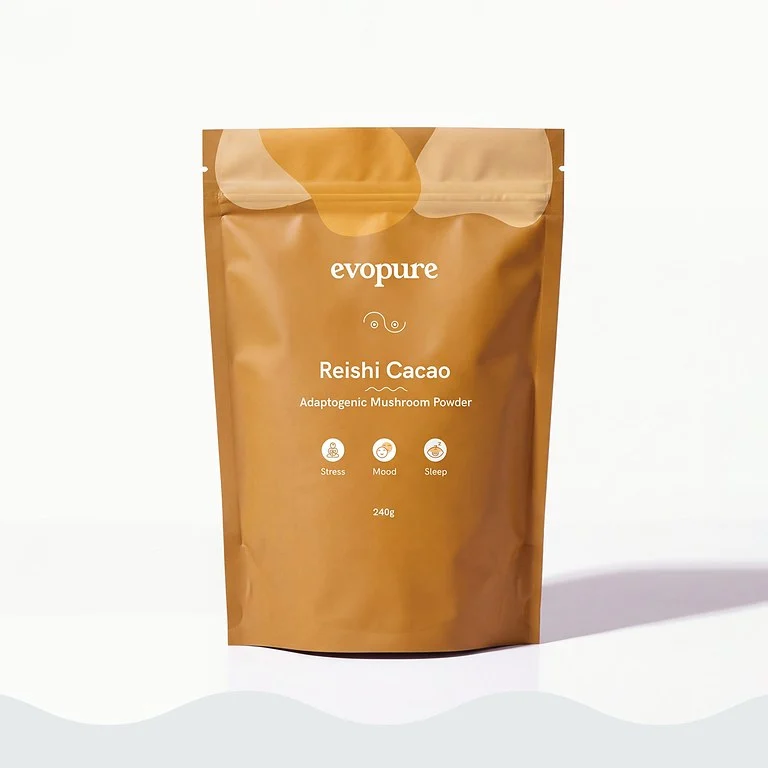
Evopure doesn’t sell cinnamon. If you like a cosy cinnamon drink in the evening, a pinch of Ceylon cinnamon works well stirred into our Reishi Mushroom Adaptogenic Complex, a reishi hot chocolate powder made with reishi mushroom extract, cacao, maca, coconut milk powder and coconut sugar. Cacao naturally contains a little caffeine. It isn’t a blood sugar product, and reishi has no authorised health claims. For more cacao ideas, see healthy hot chocolate, ceremonial cacao and dark chocolate benefits. We don’t recommend our products during pregnancy or breastfeeding, and they’re for adults only.
FAQs
What are the main health benefits of cinnamon?
The best evidence is for a modest drop in fasting blood sugar in people with type 2 diabetes, plus small falls in total cholesterol and blood pressure, mostly from short supplement trials. Evidence for weight loss, inflammation and memory is weak or early.
How much cinnamon is safe per day?
For a 60 to 70kg adult, the coumarin limit is reached with roughly 2g of typical cassia, a little under a level teaspoon. Half a teaspoon a day is a sensible ceiling for daily cassia. Ceylon cinnamon has only traces of coumarin.
Is Ceylon cinnamon better than regular cinnamon?
It’s safer for regular, generous use, because it has only traces of coumarin. Regular supermarket cinnamon is usually cassia, which is high in coumarin. Most blood sugar trials used cassia, so there’s less research on Ceylon.
Does cinnamon lower blood sugar?
Recent meta-analyses found small falls in fasting blood sugar and HbA1c in people with type 2 diabetes, but an earlier Cochrane review found the evidence insufficient. It isn’t a treatment, and Diabetes UK doesn’t recommend herbal supplements for diabetes.
Is cinnamon water good for you?
It’s a pleasant, sugar-free drink, but there are no trials of cinnamon water for weight loss or anything else. Coumarin dissolves poorly in water, so stick-steeped water is likely lower in coumarin than eating ground cassia.
Can cinnamon help you lose weight?
Only slightly, if at all. Across 12 trials, people taking cinnamon supplements lost about 1kg more than those who didn’t. Diet, activity and sleep matter far more.
Who should not take cinnamon supplements?
Check with a GP or pharmacist first if you have liver disease, take diabetes medicines, statins or blood thinners, or are pregnant or breastfeeding. Cinnamon in normal food amounts is fine for most people.
Sources
- NCCIH. Cinnamon.
- Memorial Sloan Kettering Cancer Center. Cinnamon.
- German Federal Institute for Risk Assessment (BfR). FAQ on coumarin in cinnamon and other foods.
- BfR (2006). High daily intakes of cinnamon: health risk cannot be ruled out.
- Diabetes UK. Herbal and food supplements.
- NHS. Low blood sugar (hypoglycaemia).
- NHS. Sugar: the facts.
- NHS. Cough.
- Department of Health and Social Care. Great Britain nutrition and health claims (NHC) register.
- USDA FoodData Central. Spices, cinnamon, ground (FDC ID 171320): 1 teaspoon = 2.6g.
- Leach MJ, Kumar S (2012). Cinnamon for diabetes mellitus. Cochrane Database Syst Rev.
- Allen RW et al. (2013). Cinnamon use in type 2 diabetes: an updated systematic review and meta-analysis. Ann Fam Med.
- de Moura SL et al. (2025). Effects of cinnamon supplementation on metabolic biomarkers in individuals with type 2 diabetes: a systematic review and meta-analysis. Nutr Rev.
- Moridpour AH et al. (2024). The effect of cinnamon supplementation on glycemic control in patients with type 2 diabetes mellitus: an updated systematic review and dose-response meta-analysis of randomized controlled trials. Phytother Res.
- Maierean SM et al. (2017). The effects of cinnamon supplementation on blood lipid concentrations: a systematic review and meta-analysis. J Clin Lipidol.
- Mousavi SM et al. (2020). Anti-hypertensive effects of cinnamon supplementation in adults: a systematic review and dose-response meta-analysis of randomized controlled trials. Crit Rev Food Sci Nutr.
- Heshmati J et al. (2021). The effect of cinnamon supplementation on glycemic control in women with polycystic ovary syndrome: a systematic review and meta-analysis. J Food Biochem.
- Mousavi SM et al. (2020). Cinnamon supplementation positively affects obesity: a systematic review and dose-response meta-analysis of randomized controlled trials. Clin Nutr.
- Vallianou N et al. (2019). Effect of cinnamon (Cinnamomum zeylanicum) supplementation on serum C-reactive protein concentrations: a meta-analysis and systematic review. Complement Ther Med.
- Blahová J, Svobodová Z (2012). Assessment of coumarin levels in ground cinnamon available in the Czech retail market. ScientificWorldJournal.
- Ghidotti M et al. (2025). High rate of safety and fraud issues in commercially available cinnamon. NPJ Sci Food.
- Grant-Alfieri A et al. (2013). Ingesting and aspirating dry cinnamon by children and adolescents: the “cinnamon challenge”. Pediatrics.
- Kalogirou EM et al. (2026). Cinnamon-induced contact stomatitis: a retrospective study of 74 cases and literature review. Oral Dis.
- Necyk C, Zubach-Cassano L (2017). Natural health products and diabetes: a practical review. Can J Diabetes.
- Brancheau D et al. (2015). Do cinnamon supplements cause acute hepatitis? Am J Case Rep.
This guide is general information, not medical advice. Evopure makes the Reishi Mushroom Adaptogenic Complex.