Last updated: October 2026
Chaga is a dark, woody fungus that grows on birch trees, traditionally brewed as a tea. It’s rich in antioxidants, but there are almost no human trials, so its benefits are unproven. The main safety concern is that chaga is very high in oxalates, and long-term use of large amounts has been linked to serious kidney damage. Keep it occasional.
This guide covers what chaga is, what the research shows, side effects, who should avoid it, and how to use it more safely.
What is chaga?
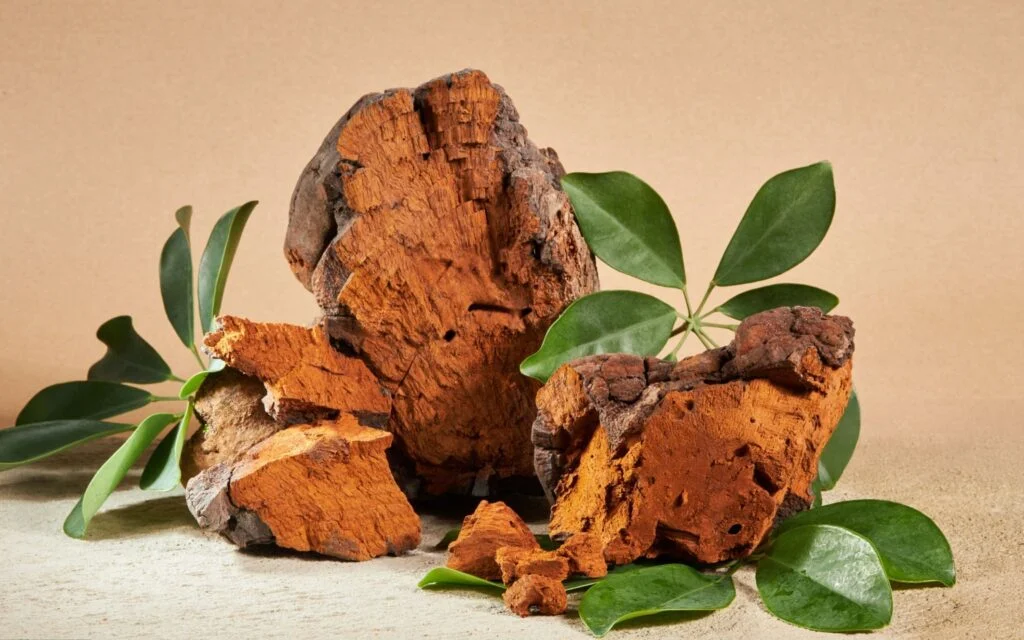
Chaga (Inonotus obliquus) grows mainly on birch trees in cold northern regions, including Russia, Scandinavia, Canada and Scotland. It looks like a lump of burnt charcoal on the outside, with an orange-brown core. It has been used in Russian and Siberian folk medicine for centuries, usually simmered into a tea with a mild, earthy, slightly vanilla taste. Today it’s sold as chunks, powders, extracts and in mushroom coffee.
Chaga benefits: what the research shows
| Claimed benefit | Evidence |
|---|---|
| Antioxidant | Chaga is rich in polyphenols and melanin-like pigments with strong antioxidant activity in lab tests |
| Immune support | Polysaccharides (beta-glucans) affect immune cells in lab and animal studies |
| Blood sugar | Lowered blood sugar in animal studies; not tested properly in people |
| Cancer | Lab studies only; chaga is not a cancer treatment |
A 2025 review of chaga’s natural compounds concluded that it shows promise in the lab, but well-designed human trials are lacking. In short, chaga’s benefits for people haven’t been demonstrated.
Chaga side effects
- Kidney damage: chaga contains very high levels of oxalate. Medical case reports describe people who took several teaspoons of chaga powder daily for months developing oxalate kidney damage, including one who needed dialysis and one who developed end-stage kidney disease.
- Bleeding risk: chaga may slow blood clotting, which matters if you take blood thinners or are having surgery.
- Low blood sugar: it may add to the effect of diabetes medicines.
- Digestive upset and, rarely, allergic reactions.
Who should avoid chaga?
- Anyone with kidney disease or a history of kidney stones
- People taking blood thinners such as warfarin, or with bleeding disorders
- People taking diabetes medicines
- People with autoimmune conditions or taking immunosuppressants
- Anyone due to have surgery (stop at least two weeks before)
- Pregnant or breastfeeding women, as there’s no safety data
How to use chaga more safely
- Keep it occasional, rather than several cups or spoonfuls every day.
- Drink plenty of water and eat calcium-containing foods, which can reduce oxalate absorption.
- Buy from a reputable supplier with testing for heavy metals and contaminants.
- Never forage it yourself unless you’re an expert.
- Tell your GP or pharmacist if you take any regular medicine.
To brew it, simmer a few chunks for an hour; see how to make mushroom tea. If you’re looking for a calming evening drink with fewer concerns, reishi is more widely used; see reishi for sleep.
Is chaga sustainable?
Chaga grows slowly and is mostly harvested from the wild, and rising demand has led to concerns about over-harvesting. Some products are made from chaga mycelium grown in labs, which is more sustainable, though it contains different compounds from wild chaga. If you buy chaga, look for responsibly sourced products.
FAQs
What are the side effects of chaga?
The most serious is kidney damage from its very high oxalate content when taken in large amounts long term. It may also increase bleeding risk and lower blood sugar.
Is chaga safe to drink every day?
It’s best kept occasional. Daily use of large amounts has been linked to kidney damage in case reports.
What is chaga good for?
It’s rich in antioxidants and studied in the lab for immune and blood sugar effects, but there are almost no human trials, so benefits are unproven.
Who should not take chaga?
People with kidney disease or kidney stones, those on blood thinners or diabetes medicines, people with autoimmune conditions, before surgery, and during pregnancy or breastfeeding.
What does chaga taste like?
Mild, earthy and slightly vanilla-like, often compared to weak coffee.
Does chaga contain caffeine?
No. Chaga tea is caffeine-free unless it’s blended with coffee.
Sources
- Kikuchi Y et al (2014). Chaga mushroom-induced oxalate nephropathy. Clinical Nephrology.
- Lee S et al (2020). Development of end stage renal disease after long-term ingestion of chaga mushroom. Journal of Korean Medical Science.
- Kwon O et al (2022). Chaga mushroom-induced oxalate nephropathy that clinically manifested as nephrotic syndrome. Medicine.
- Wang Y et al (2025). Natural products and health care functions of Inonotus obliquus. Current Issues in Molecular Biology.
This guide is general information, not medical advice.