Last updated: October 2026
Maca root benefits are mostly studied for libido, mood, energy and menopause symptoms. Most trials gave about 1.5 to 3.5g of maca powder a day for 6 to 12 weeks and found modest improvements, but reviews say the evidence is too limited for firm conclusions. Maca is a nutritious food with no authorised health claims.
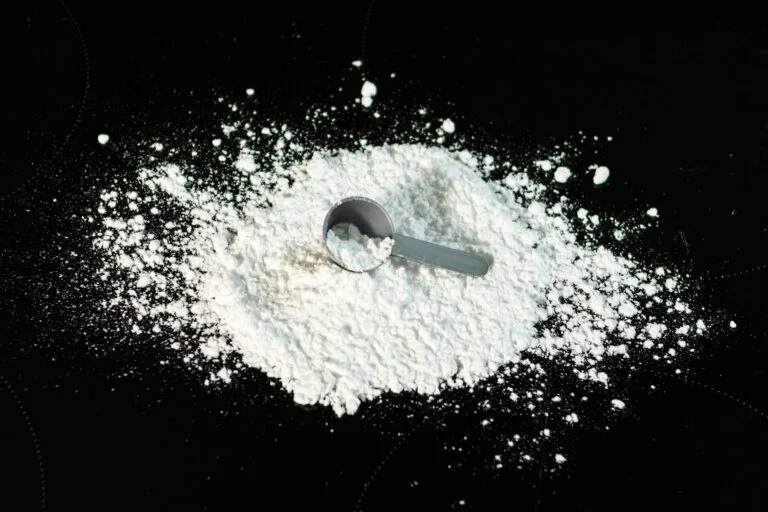
Maca is a root vegetable from the Peruvian Andes, eaten for centuries and now sold as a powder or extract. It’s mostly used for energy, mood and libido. Evidence is limited: a 2010 review found some small trials suggesting improved sexual function but called the evidence too weak for firm conclusions, and a small 2008 trial found fewer menopause symptoms.
Below: what maca is, its nutrition, what the research shows for women and for men, red, black and yellow maca, how much to take, safety, and how we use it.
Maca in our range
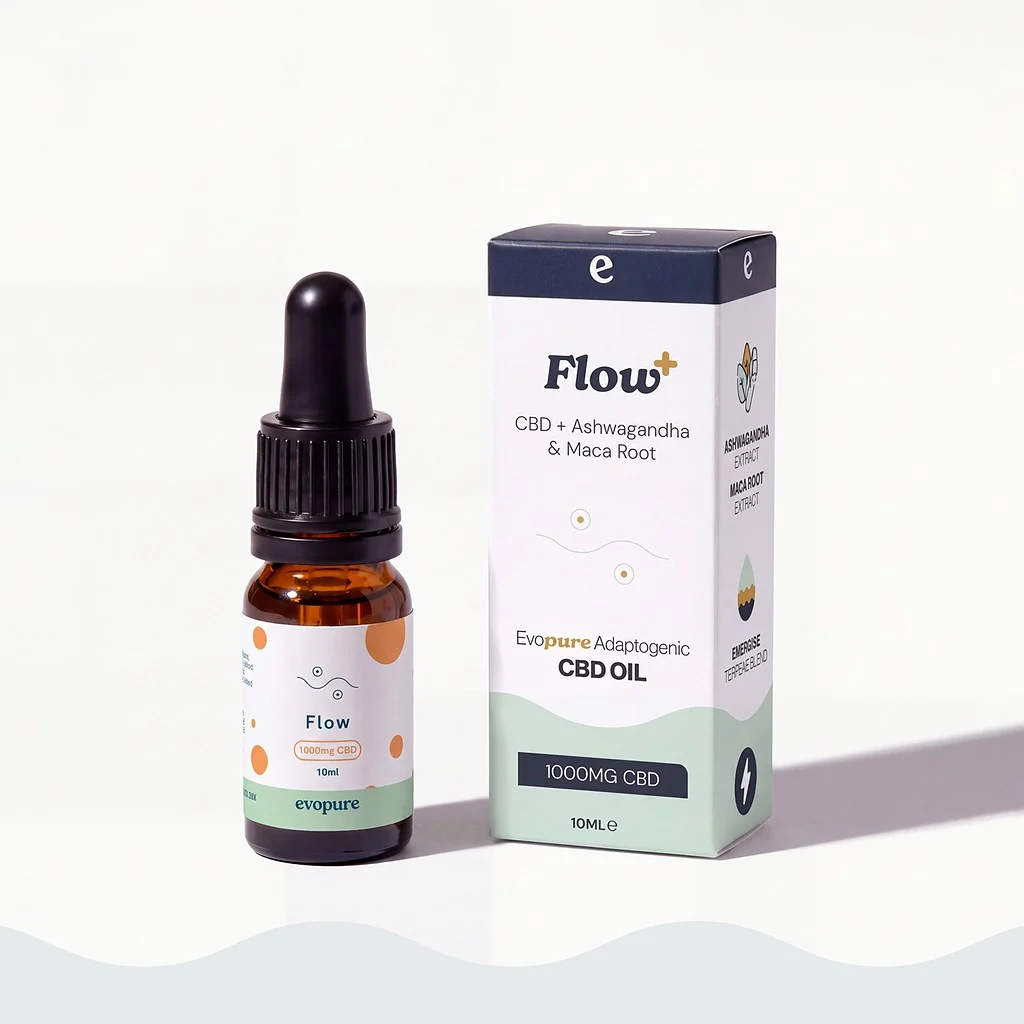
few UK CBD oils include botanicals. Our Flow CBD Oil pairs broad spectrum CBD with ashwagandha and maca root in MCT oil, for daytime. Our Reishi Mushroom Adaptogenic Complex is a reishi hot chocolate made with maca. Both are for adults only.
Add Flow CBD Oil 500mg to bag or choose another strength
Broad spectrum with 0% THC, every batch third-party lab tested, made in the UK. Free UK delivery over £45, 14-day returns on unopened items.
What is maca?
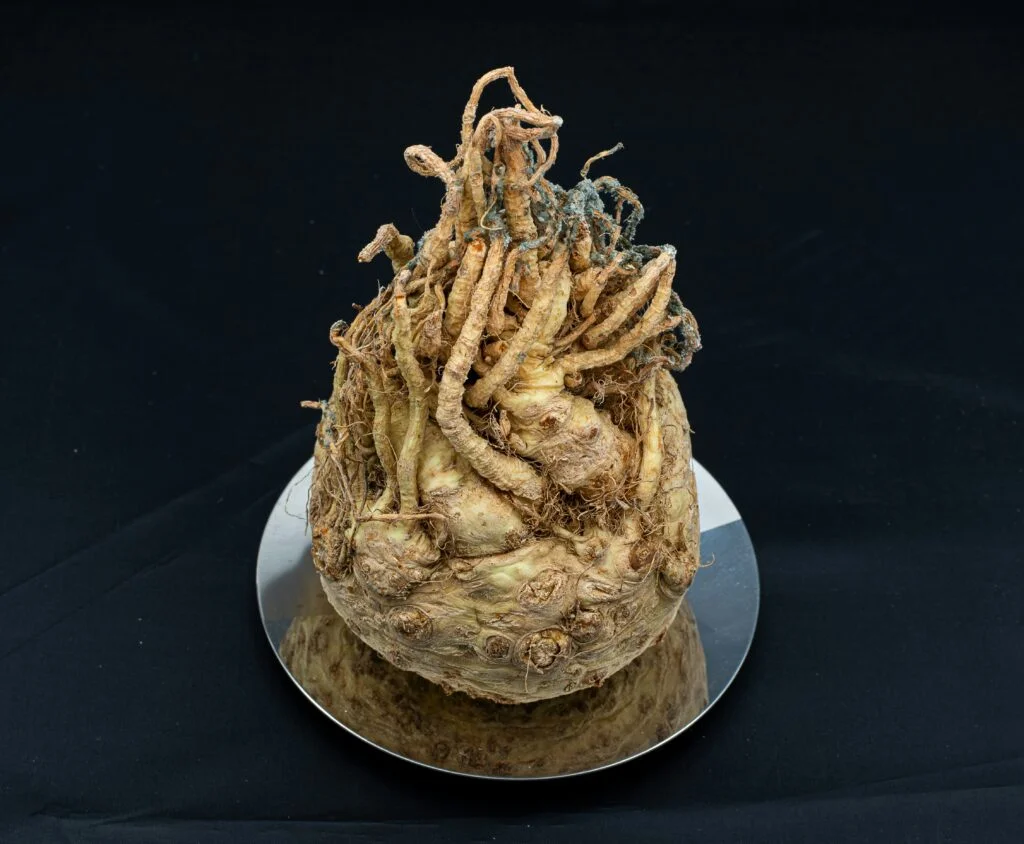
Maca (Lepidium meyenii) is a turnip-like root in the cabbage family, grown at high altitude in Peru. It’s traditionally eaten cooked and is rich in carbohydrates, fibre and some minerals. It doesn’t contain hormones, despite claims about “hormone balance”. It has a malty, nutty taste.
It has been grown for more than 2,000 years between about 4,000 and 4,500 metres in the central Andes. In Peru the roots are dried, then boiled before eating, often as a drink, and highland communities eat more than 20g a day as food.
Maca root nutrition
Dried maca is mostly starch, with some protein and fibre and very little fat. Lab analyses vary with colour, growing site and processing, so treat these figures as typical ranges rather than exact values.
| Nutrient | Per 10g of powder | Notes |
|---|---|---|
| Energy | About 32 to 40kcal | Branded powders list 320 to 400kcal per 100g |
| Carbohydrate | About 5.5 to 7.5g | Mostly starch |
| Protein | About 1 to 2g | Includes a range of amino acids |
| Fibre | About 1 to 2.5g | Varies widely between samples |
| Fat | Under 0.25g | Very low |
| Potassium | About 100 to 200mg | From branded powder labels |
Maca also contains vitamins, minerals and plant compounds such as glucosinolates and macamides, but amounts differ a lot between products. Supplement doses are usually around 3g, so maca adds little to your overall nutrient intake. A varied diet matters far more.
What the research shows
| Use | Study | What it found |
|---|---|---|
| Sexual function | Systematic review, 2010 (4 small trials) | Limited evidence of benefit; too few, small and low-quality trials for firm conclusions |
| Menopause symptoms | Trial, 2008 (14 women, 3.5g a day) | Fewer psychological symptoms and less sexual dysfunction than placebo, with no change in hormone levels |
| Energy and mood | Review of mental energy trials, 2024 | Limited, mixed evidence. See best supplements for energy |
| Fertility | Small trials | Some changes in semen measures; no proof of better fertility |
Maca has no authorised health claims. For other options, see CBD for menopause, magnesium for menopause and adaptogenic mushrooms.
A 2026 review of the sexual health research found fairly consistent results in studies of men, but mixed results in studies of women only. Most maca trials are small and short, and several were run by researchers with links to maca businesses, so read the results below with that in mind.
Maca root benefits for women
Most of the research in women is about menopause, plus one trial on libido and one mixed trial on mood and energy. Here is what each found, and how small the studies were.
Menopause symptoms
- 2008, 14 postmenopausal women: 3.5g of maca powder a day for 6 weeks, then placebo for 6 weeks (or the other way round). Scores for psychological symptoms, including anxiety and depression subscales, and for sexual dysfunction were lower on maca. Hormone levels didn’t change.
- 2015, 29 postmenopausal women in Hong Kong: 3.3g a day for 6 weeks. Depression scores and diastolic blood pressure were lower than on placebo, with no change in oestradiol, FSH or TSH (a thyroid marker).
- 2006, 20 perimenopausal women aged 41 to 50: 2g a day of a gelatinised maca product for 2 months. Menopause symptom scores fell, but there was a strong placebo effect early on, and the lead author was affiliated with a commercial research company. Unlike the other two trials, it reported changes in some hormone levels.
A 2011 systematic review found four small randomised trials of maca for menopause symptoms. All reported favourable effects, but the reviewers said there were too few trials, too few women and too many quality problems for firm conclusions, and that safety had not been proven. Maca isn’t a replacement for HRT. If symptoms are affecting your life, talk to your GP, and see our guide to perimenopause symptoms.
Libido
The largest trial in women included 45 women whose depression had eased on SSRI or SNRI antidepressants but who still had sexual side effects. They took 3g of maca or a placebo a day for 12 weeks. More women on maca reached the study’s “remission” scores, but the numbers were small: 9.5% on maca versus 4.8% on placebo on one scale, and 30% versus 20% on another. The difference was mainly in postmenopausal women. If you take antidepressants, speak to your GP before adding any supplement. For the CBD side of this question, see CBD and libido.
Mood and energy
In a 2016 trial in Peru, 175 adults (men and women) took 3g a day of red maca extract, black maca extract or a placebo for 12 weeks. Both maca groups reported better mood, energy and quality of life scores than placebo. The research group has studied maca for years, and one author managed a company making nutraceuticals. In short: promising, but small, short and self-reported. For other plants studied for tiredness, see adaptogens for energy.
Maca for men
In men, trials have looked at libido, symptoms of ageing and sperm.
- Libido: in a 12-week trial in men aged 21 to 56, those taking 1.5g or 3g a day of gelatinised maca reported more sexual desire from week 8 than those on placebo. Testosterone and oestradiol levels didn’t change.
- Ageing symptoms: a 2023 Korean trial in 80 men with normal testosterone but symptoms of late-onset hypogonadism found better symptom and erectile function scores after 12 weeks on 6g a day of gelatinised maca than on placebo.
- Fertility: a 2022 meta-analysis of five trials found unclear effects on semen quality and no clear rise in sperm concentration.
iSo far, maca doesn’t appear to raise testosterone. For the testosterone and fertility research on another popular root, see ashwagandha for men. If you have erection or fertility worries, speak to your GP.
Red, black and yellow maca: what’s the difference?
Maca roots come in many colours (one review counts up to 17), but most products are sold as yellow, red or black. Colour is only part of the story: growing site, root size and processing also change what’s in the powder, and many trials don’t say which colour they used.
| Colour | Studied for | Human evidence |
|---|---|---|
| Yellow | General use | Few colour-specific trials |
| Red | Prostate size (rats), mood | One trial: slightly better on some energy and mood measures than black |
| Black | Sperm production (rats), memory (mice) | Same trial: lowered blood glucose; similar mood results |
Red maca is often marketed to women. The evidence for that is thin: colour comparisons come mainly from animal studies, plus the one 12-week trial above. Products sold as a “black maca complex” may combine maca with other ingredients, so check the label for what is actually in it and how much.
Types of maca and dose
| Type | Notes |
|---|---|
| Yellow, red and black maca | Colour varieties; small studies suggest slight differences, not well proven |
| Raw powder | Can upset some stomachs |
| Gelatinised maca | Cooked to remove starch; often easier to digest |
| Extract | Concentrated; smaller amounts used |
Trials typically used 1.5 to 3.5g of maca powder a day for 6 to 12 weeks.
How much maca root per day?
There is no official UK dose for maca. Most human trials used about 3g a day of maca powder or an equivalent preparation, with a range of 1.5 to 3.5g, and one used 6g. Where effects were seen, they usually showed up after 6 to 12 weeks.
| Study | Daily dose | Form | Length |
|---|---|---|---|
| Men, libido (2002) | 1.5g or 3g | Gelatinised | 12 weeks |
| Perimenopause (2006) | 2g | Gelatinised | 2 months |
| Postmenopause (2015) | 3.3g | Powder | 6 weeks |
| Postmenopause (2008) | 3.5g | Powder | 6 weeks |
| Women on antidepressants (2015) | 3g | Powder | 12 weeks |
| Adults, mood (2016) | 3g | Red or black extract | 12 weeks |
| Men, ageing symptoms (2023) | 6g | Gelatinised | 12 weeks |
Raw, gelatinised or extract?
- Raw powder is dried, milled maca. It keeps all its starch, which some people find hard on the stomach.
- Gelatinised maca is briefly heated under pressure with moisture after milling. This makes it easier to digest, and heat and moisture may also reduce goitrogens (see safety). It is closer to the traditional Peruvian way of boiling maca before eating it.
- Extracts are concentrated. Labels often give a ratio such as 4:1 or 10:1, meaning that many grams of dried root went into each gram of extract. That “equivalent” is a label calculation, not a tested dose; the 2016 trial used 3g of extract itself.
A sensible approach is to follow the product label, start at the lower end, and give it a few weeks. Many people take maca in the morning with food, but we couldn’t find a trial that compared times of day.
Safety and who should avoid it
- Generally well tolerated as a food; stomach upset is the most common complaint.
- Thyroid conditions: maca is a brassica, like cabbage, so check with your GP if you have thyroid problems.
- Hormone-sensitive conditions: ask your doctor first, as research is limited.
- Pregnancy and breastfeeding: not enough safety data. We don’t recommend our products during pregnancy or breastfeeding.
- Raw maca and goitrogens: like other brassicas, maca contains goitrogens, compounds that can interfere with thyroid hormone. Heat and moisture, as in boiling or gelatinising, may reduce them. In the 6-week Hong Kong trial, TSH didn’t change, but that was short and small. If you have a thyroid condition or take thyroid medicine, speak to your GP before taking maca. See underactive thyroid symptoms.
- History of hormone-sensitive cancer: a 2024 review says maca products could be unsuitable for people with a personal or family history of hormone-sensitive cancers. Ask your specialist first.
- Hormone blood tests: one case report described a woman taking maca extract whose testosterone came back very high on one lab test, but close to normal on a more specific test. Tell your doctor about any supplements before hormone tests.
- Medicines: there is little research on maca alongside medicines. Check with your GP or pharmacist first if you take any, especially HRT, hormonal contraception, thyroid medicine or antidepressants.
- Under 18s: maca supplements aren’t intended for children or teenagers, and all our products are for adults only.
How we use maca
Our Flow CBD Oil combines broad spectrum CBD with ashwagandha root and maca for daytime use, and our Reishi Mushroom Adaptogenic Complex is a cacao drink with reishi and maca for the evening. The FSA’s 10mg a day figure for CBD is precautionary advice rather than a legal limit, set while longer-term safety research continues. At Evopure we think it is a very cautious figure, and many adults use more. If you go above it, increase slowly, and check with your GP or pharmacist first if you take any medication.
Flow is one of the few UK CBD oils made with botanicals: broad spectrum CBD (0% THC), ashwagandha extract and maca root extract in coconut MCT oil, with our Energise terpene blend and no caffeine. The reishi drink is made from cacao, reishi mushroom extract, maca root extract, coconut milk powder and coconut sugar; the cacao contains a little natural caffeine. Our Magnesium Glycinate Sleep Complex doesn’t contain maca, but if tiredness is why you’re looking at maca, magnesium contributes to a reduction of tiredness and fatigue. All our products are for adults only. We don’t recommend our products during pregnancy or breastfeeding.
Related guides
- Rhodiola vs maca and other adaptogens.
- Shilajit vs maca and ashwagandha.
- Ashwagandha for women, including the libido and menopause research.
- Why Denmark banned ashwagandha and where the UK stands.
- Ginseng benefits and side effects, another root often compared with maca.
- Maca also appears with ashwagandha in some CBD oils: see CBD and ashwagandha.
- Reishi cacao, a hot chocolate made with reishi and maca.
- Mushrooms for menopause, another popular plant-based option with little human evidence so far.
- For the male hormone and fertility research on ashwagandha, see ashwagandha for men.
- Flow’s other root is ashwagandha: see how much ashwagandha per day for trial doses and timing.
- Reishi mushroom benefits and side effects.
- For a wider look at what has and has not been tested, see our guide to supplements for menopause.
- If you take maca with ashwagandha, our guide to the best time to take ashwagandha covers taking the two together.
- Maca is often paired with ashwagandha; see ashwagandha benefits and side effects for how that herb compares.
- Flow pairs maca with ashwagandha; if you also take magnesium, see ashwagandha and magnesium together.
- If you take maca in a blend with ashwagandha, check the side effects of ashwagandha and who should avoid it.
- Maca is often paired with ashwagandha: see ashwagandha for anxiety for its evidence and who should avoid it.
Sources 17
- Shin BC et al. Maca (L. meyenii) for improving sexual function: a systematic review. BMC Complement Altern Med, 2010.
- Brooks NA et al. Beneficial effects of maca on psychological symptoms and sexual dysfunction in postmenopausal women are not related to estrogen or androgen content. Menopause, 2008.
- Gonzales GF. Lepidium meyenii (maca): a plant from the highlands of Peru, from tradition to science. Forsch Komplementmed, 2009.
- Nieman KM et al. The role of dietary ingredients in mental energy: a scoping review of randomized controlled trials. J Am Nutr Assoc, 2024.
- Lee MS et al. Maca (Lepidium meyenii) for treatment of menopausal symptoms: a systematic review. Maturitas, 2011.
- Stojanovska L et al. Maca reduces blood pressure and depression, in a pilot study in postmenopausal women. Climacteric, 2015.
- Meissner HO et al. Therapeutic effects of pre-gelatinized maca used as a non-hormonal alternative to HRT in perimenopausal women: clinical pilot study. Int J Biomed Sci, 2006.
- Dording CM et al. A double-blind placebo-controlled trial of maca root as treatment for antidepressant-induced sexual dysfunction in women. Evid Based Complement Alternat Med, 2015.
- Gonzales-Arimborgo C et al. Acceptability, safety, and efficacy of oral administration of extracts of black or red maca in adult human subjects: a randomized, double-blind, placebo-controlled study. Pharmaceuticals, 2016.
- Gonzales GF et al. Effect of Lepidium meyenii (maca) on sexual desire and its absent relationship with serum testosterone levels in adult healthy men. Andrologia, 2002.
- Shin D et al. Efficacy and safety of maca in patients with symptoms of late-onset hypogonadism: a randomized, double-blind, placebo-controlled clinical trial. World J Mens Health, 2023.
- Lee HW et al. Maca on semen quality parameters: a systematic review and meta-analysis. Front Pharmacol, 2022.
- Bloomer RJ. Effects of maca (Lepidium meyenii) on sexual health and libido: a review. J Diet Suppl, 2026.
- Minich DM et al. Not all maca is created equal: a review of colors, nutrition, phytochemicals, and clinical uses. Nutrients, 2024 (authors linked to a maca supplement company).
- Gonzales GF. Ethnobiology and ethnopharmacology of Lepidium meyenii (maca), a plant from the Peruvian highlands. Evid Based Complement Alternat Med, 2012.
- Srikugan L et al. First case report of testosterone assay interference in a female taking maca. BMJ Case Rep, 2011.
- USDA. FoodData Central, branded maca powder entries (energy and potassium per 100g), accessed October 2026.