Last updated: October 2026
There is almost no human evidence that mushrooms such as reishi, lion’s mane or cordyceps help menopause symptoms. Most findings come from cells and animals, and the few small human trials weren’t designed for menopause. No mushroom has an authorised health claim in the UK. For hot flushes, HRT, CBT and some non-hormonal medicines have real evidence.
This guide sets out what each mushroom (reishi, lion’s mane, cordyceps, chaga, turkey tail, shiitake and more) has actually been tested for and in whom, answers the big question of whether mushrooms raise oestrogen, goes symptom by symptom, and explains what we know about taking mushrooms with HRT. Not sure which stage you’re in? Our guide to perimenopause symptoms explains the difference between perimenopause and menopause.
Quick answer: mushrooms and menopause
| Question | Short answer |
|---|---|
| Do functional mushrooms help menopause? | Not proven. There are no good trials in menopausal women |
| Hot flushes? | No evidence for any mushroom. HRT, CBT and some prescribed medicines work |
| Do mushrooms increase oestrogen? | No human evidence that they do. Lab results point both ways |
| Best mushroom for menopause? | None stands out. Ordinary mushrooms are a nutritious food |
| Safe with HRT? | Interactions haven’t been studied. Ask your pharmacist first, and never stop HRT to try a mushroom |
| Mushroom gummies, powder or capsules? | The format matters less than the label: extract strength, dose and a measured beta-glucan figure |
Like a warm drink in the evening?
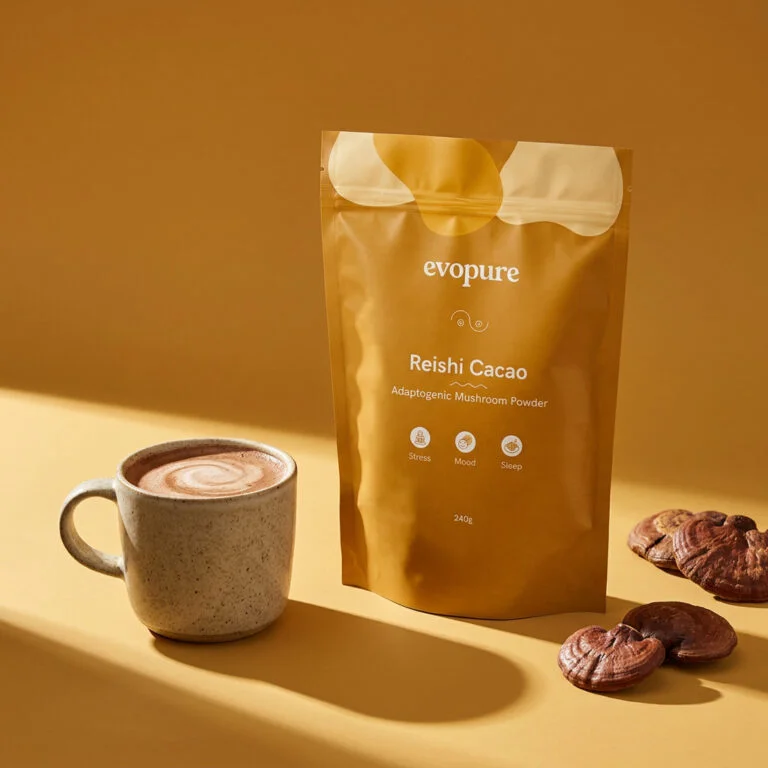
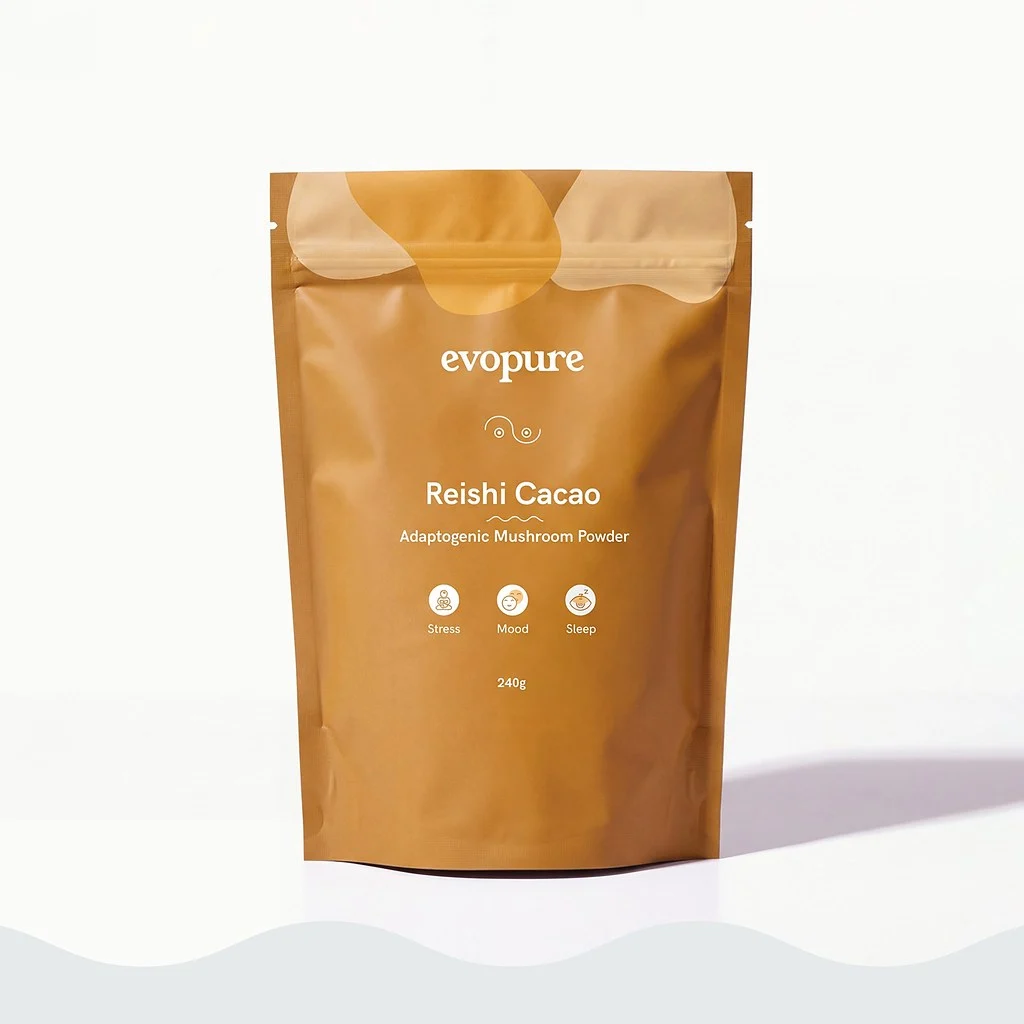
Reishi Mushroom Adaptogenic Complex
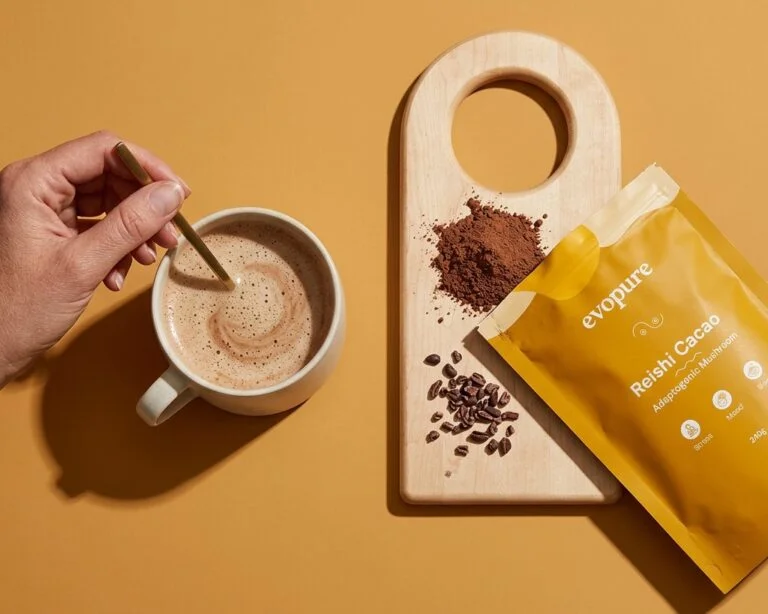
Our Reishi Mushroom Adaptogenic Complex is a hot chocolate style powder made with cacao, reishi mushroom, maca, cinnamon and coconut sugar. It isn’t a menopause treatment, and the cacao contains a little natural caffeine.
Add Reishi Cacao to bag See ingredients and reviews
Vegan and made in the UK. Free UK delivery over £45, 14-day returns on unopened items. Subscribe and save 25% on your first order, then 20%. New to Evopure? Join our emails for 20% off a one-off first order.
Subscribe £22.49One-off £29.99
View productDo mushrooms help with menopause?
Searches for “mushrooms for menopause” have soared this autumn, but the science hasn’t caught up with the marketing.
When we searched the medical research database PubMed in October 2026, we found no placebo-controlled trial of reishi, lion’s mane or cordyceps that recruited menopausal women and measured menopause symptoms. What does exist falls into three groups:
- Lab and animal only: reishi, cordyceps and button mushroom extracts have been tested in cells, and in mice and rats whose ovaries were removed to mimic menopause.
- Small human studies, not in menopause: lion’s mane has a handful of small trials in younger adults, older adults with memory problems, and one group of 30 women.
- Untested: hot flushes, night sweats, menopause weight gain and hormone levels in women have not been properly studied for any mushroom.
Curiously, the only placebo-controlled trial we found of a mushroom extract for “menopausal symptoms” was in men: a 12-week Japanese study of enoki extract for the so-called male menopause.
If you want to try something with evidence behind it, our guide to the best supplements for menopause ranks the options by evidence.
The FSA’s 10mg a day figure for CBD is precautionary advice rather than a legal limit, set while longer-term safety research continues. At Evopure we think it is a very cautious figure, and many adults use more. If you go above it, increase slowly, and check with your GP or pharmacist first if you take any medication.
Mushrooms and menopause: the evidence by mushroom
This is an honest summary of what each mushroom has been tested for, in whom, and how much weight the results can bear. “Lab and animal only” means nothing has been shown in people yet.
| Mushroom | What’s been studied | In whom | Result | Evidence strength | Safety notes |
|---|---|---|---|---|---|
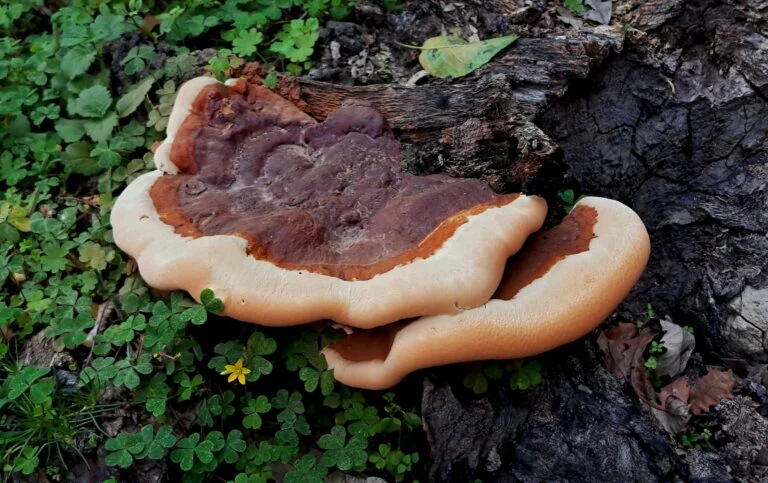
| Reishi (Ganoderma lucidum) | Cholesterol and liver fat; oestrogen receptors; blood sugar, blood pressure and cholesterol in people | Mice; breast cancer cells; 5 trials (398 people) in a Cochrane review, mostly with type 2 diabetes | Lower cholesterol and liver fat in mice. Mixed oestrogen effects in cells. No real change in blood sugar, blood pressure or cholesterol in people | Lab and animal for menopause; human trials elsewhere were negative | Rare liver injury; bleeding risk; immunosuppressants |
| Lion’s mane (Hericium erinaceus) | Mood after ovary removal; mood, sleep and wellbeing; memory | Rats; 30 women; 30 older adults with memory problems; 41 young adults | Less depressive-like behaviour in rats; lower depression scores in women; better memory scores in older adults | Small human trials, none in menopause | Generally well tolerated in studies; stomach upset and allergy possible |
| Cordyceps (Cordyceps militaris) | Weight and belly fat after ovary removal | Mice and rats | Less weight gain and belly fat activity | Animal only | Little safety data; may affect bleeding and blood sugar; ask a pharmacist if on medicines |
| Chaga (Inonotus obliquus) | Nothing menopause related | No clinical studies of safety or effectiveness | Not tested in people | None in people | Very high in oxalate; case reports of serious kidney damage; may increase bleeding risk |
| Turkey tail (Trametes versicolor) | Safety and immune markers after breast cancer treatment | 9 women who had just finished radiotherapy, 6 weeks, no placebo group | Doses up to 9g a day were tolerated; some immune cell counts rose | One small safety trial; nothing on menopause symptoms | Rarely dark stools or darker nails; not studied in pregnancy |
| Shiitake (Lentinula edodes) | Immune markers from eating the mushroom | 52 healthy adults aged 21 to 41, 5g or 10g dried shiitake a day for 4 weeks | Changes in immune cell activity and a lower inflammation marker (CRP) | One small diet study, no placebo, not in menopause | Shiitake dermatitis: an itchy, whip-like rash, usually after raw or undercooked shiitake |
| White button mushroom (Agaricus bisporus) | Aromatase, the enzyme that makes oestrogen | Breast cancer cells; mice | Extracts blocked aromatase | Lab and animal only | An everyday food |
| Grifola gargal (a maitake relative) | Bone turnover | Postmenopausal women, 2 weeks, no placebo group | A bone breakdown marker fell | Very weak | Eaten as a food in Japan |
| UV-exposed edible mushrooms | Vitamin D levels | Adults in general, not menopause | Raised vitamin D when levels started low | Several randomised trials | An everyday food |
For a wider look at each species, see our functional mushrooms guide.
Do mushrooms increase oestrogen?
No study in people has shown that eating mushrooms or taking a mushroom supplement raises oestrogen levels. Anything you read about mushrooms “balancing hormones” comes from lab work, and that work points in different directions:
- Reishi: a single compound isolated from reishi, called GL-1, behaved like a weak oestrogen in breast cancer cells and in computer modelling. Yet a whole reishi extract did the opposite in another cell study, turning down oestrogen receptor alpha.
- Button mushrooms: extracts blocked aromatase, the enzyme the body uses to make oestrogen after menopause, in cells and in mice.
- Lion’s mane: it contains small amounts of plant oestrogens, but it did not act like oestrogen on the womb or body weight of rats with their ovaries removed.
- Cordyceps: in rats already given oestrogen, a cordyceps extract made the womb heavier, which hints at some interaction in animals. It hasn’t been looked at in women.
Cells and rodents are a long way from a woman drinking a mushroom latte. If falling oestrogen is behind your symptoms, HRT is the regulated, tested way to replace it, and your GP can talk you through the options.
Mushrooms for hot flushes
There is no good evidence that any mushroom reduces hot flushes or night sweats; we found no human trial that measured them. The NHS describes options that do have evidence:
- HRT: oestrogen is the main type of HRT and helps manage symptoms.
- CBT: you may be offered cognitive behavioural therapy for hot flushes and night sweats.
- Non-hormonal medicines: a GP may suggest clonidine or an antidepressant if CBT doesn’t help.
- Everyday changes: light clothing, a cool bedroom, a fan, and cutting down on triggers.
If you like mushroom coffee or reishi hot chocolate, note that the NHS lists caffeine and hot drinks among possible hot flush triggers. If they set yours off, let your drink cool or have it earlier in the day.
Our full guide to hot flushes covers causes, triggers and every treatment option, and how long menopause lasts explains how symptoms tend to change over time.
Mushrooms for menopause weight gain and belly fat
“Mushrooms for menopause belly” is one of the most searched versions of this question, and it rests entirely on animal studies. In mice whose ovaries were removed, a cordyceps extract reduced weight gain without changing how much they ate, and reishi polysaccharides lowered cholesterol and liver fat. Nobody has tested either in menopausal women.
What does make a difference is less exciting but proven: strength training to protect muscle, enough protein and fibre, better sleep, and less alcohol. Our guide to menopause weight gain has a sample day of eating and a beginner’s exercise week.
Lion’s mane for menopause brain fog
Lion’s mane is the mushroom most often sold for menopause brain fog, but none of its human trials were in menopausal women. The main ones:
- Older adults with mild memory problems: 30 Japanese men and women aged 50 to 80 took lion’s mane tablets for 16 weeks. Their cognitive scores rose compared with placebo, then fell again within 4 weeks of stopping.
- Healthy young adults: in a UK pilot trial of 41 people aged 18 to 45, a single dose made people quicker on one attention test, with mixed results otherwise.
iThat’s a long way from proof for menopause brain fog. Our lion’s mane guide covers dose and side effects, and menopause brain fog explains why it happens and what helps, including when to see a GP.
Sleep, mood and anxiety
The closest thing to a menopause trial for any mushroom is a small Japanese study from 2010. Thirty women ate cookies with or without lion’s mane for 4 weeks, and the researchers measured menopause symptoms, depression and sleep. Depression scores fell in the lion’s mane group compared with their starting point, and a couple of items, such as palpitations, were lower than with placebo. The published summary doesn’t report any difference in the overall menopause symptom score. In rats with their ovaries removed, lion’s mane also reduced depressive-like behaviour.
For reishi and sleep, there are animal studies but no good human sleep trials, as we explain in reishi for sleep.
For poor sleep in perimenopause, start with the practical steps in perimenopause and sleep. If you’re feeling anxious or low, the NHS says CBT can help with low mood and feelings of anxiety; see can menopause cause anxiety?
Eating mushrooms in menopause
Everyday mushrooms are a useful food in midlife, even if they aren’t a menopause remedy.
- B vitamins: the NHS lists mushrooms as a good source of riboflavin (vitamin B2) and pantothenic acid (vitamin B5).
- Vitamin D: the British Dietetic Association includes some mushrooms among the few food sources of vitamin D. Mushrooms exposed to UV light make much more of it: in a German winter trial, UV-treated mushroom soup raised vitamin D levels about as well as a vitamin D2 supplement, and a review of 6 trials found the rise was clearest when levels started low.
- Easy to cook: they add bulk and savoury flavour to meals for very few calories.
Even so, the NHS advises everyone in the UK to consider a 10 microgram vitamin D supplement in autumn and winter, and mushrooms alone are unlikely to replace that. See vitamin D deficiency symptoms. For bones, the NHS also recommends calcium-rich foods and weight-bearing exercise.
Best mushroom supplements and gummies for menopause (UK): what to check
Mushroom capsules and gummies labelled for menopause are now common in the UK, but no mushroom supplement has been shown to ease menopause symptoms, so there is no evidence-based “best” one. If you still want to try one, these checks separate a well-made product from an expensive sweet. Before you buy:
- No mushroom has an authorised health claim. The Advertising Standards Authority points out that there are no authorised claims for mushrooms themselves on the Great Britain nutrition and health claims register. A label promising to fix hot flushes or “balance hormones” is a red flag, not a selling point.
- Find out where any claim comes from. If a label makes a health claim, it usually belongs to an added vitamin or mineral. For example, vitamin B6 contributes to the regulation of hormonal activity. See our vitamin B6 guide.
- Check the other herbs. Some menopause blends add plants such as red clover, sage or black cohosh, each with its own evidence and safety questions, and some of them matter more for HRT users than the mushrooms do (see mushrooms and HRT below).
- Fruiting body or mycelium? The fruiting body is the mushroom itself. Mycelium is the root-like network, often grown on grain, and the finished powder can contain a lot of that grain. A 2025 analysis of chaga supplements found the products made from mycelium on fermented grain were rich in starch, unlike genuine chaga.
- Extract strength and dose: look for an extract ratio (such as 10:1) or the milligrams of extract per daily serving, not just “proprietary blend”.
- A measured beta-glucan figure: beta-glucans are the fibres most mushroom research focuses on. A “polysaccharides” percentage can include starch, so a beta-glucan figure measured with a method that removes starch is more meaningful.
- Independent lab testing: a reputable brand will show you a recent certificate of analysis on request.
Our guide to the best mushroom supplements in the UK explains how to read a label in more detail, and lion’s mane vs reishi vs cordyceps compares the three most popular species. If you’re comparing plant supplements more widely, we’ve looked at the evidence for maca and for magnesium in menopause.
Mushroom gummies vs powder vs capsules for menopause
No format has been tested against another for menopause, so choose the one you will actually use, then judge it on the label rather than the packaging.
| Gummies | Powder (drinks) | Capsules | |
|---|---|---|---|
| How much mushroom | Limited: a gummy only weighs a few grams, much of it sugar and gelling agent | Usually the most room for mushroom per serving | Limited by capsule size, so often 2 or more a day |
| What to check | mg of extract per gummy and how many gummies the dose needs | mg of extract per serving, not per tub | mg of extract per capsule, extract ratio |
| Sugar | Usually contains sugar or sweeteners | Depends on the blend: cacao and coffee blends often add sugar | Usually none |
| Caffeine | Usually none | Mushroom coffee and cacao contain caffeine | Usually none |
| Suits | People who won’t swallow capsules | People who like a daily warm drink | People who want a fixed, measured dose |
For more on each format, see do mushroom gummies work? and mushroom coffee.
Can you take mushrooms with HRT?
Nobody knows for sure, because no study has tested reishi, lion’s mane, cordyceps, chaga, turkey tail or shiitake supplements alongside HRT. That means there is no evidence of harm, but also no evidence that they are safe together. Eating ordinary mushrooms as food is not a concern.
The NHS says it’s not possible to say that herbal remedies and supplements are safe to take with oestrogen, because they’re generally not tested for their effect on other medicines. It names several products that might affect other medicines, including red clover, black cohosh, soya, ginseng, evening primrose oil and St John’s wort. Several of these turn up in menopause mushroom blends.
- Mushroom gummies with HRT: read the full ingredient list, not just the mushrooms. The added herbs are often a bigger question than the mushroom itself. Show the label to your pharmacist before you start.
- Lion’s mane with HRT: there is no interaction data at all. In rats with their ovaries removed it didn’t act like oestrogen, but that tells us nothing certain about women on HRT. Ask your pharmacist first.
- Reishi or cordyceps with HRT: again unstudied. Both may increase bleeding risk, so this matters more if you also take a blood thinner (see safety below).
- CBD with HRT: the FSA’s guidance is that anyone taking medication should check with a healthcare professional before using CBD, and HRT counts. Our guide to CBD for menopause covers the research.
- Breast cancer medicines: if you take letrozole, the NHS says not to take any herbal remedies or supplements for menopause symptoms. If you’ve had breast cancer or take tamoxifen or another hormone treatment, ask your specialist team before taking any mushroom or herbal supplement.
Never stop or cut down HRT to try a mushroom supplement. The NHS says your menopause symptoms might come back if you stop HRT, and advises talking to your doctor if you’re thinking of stopping; they may suggest reducing the dose gradually. Tell your GP or pharmacist about every supplement you take, including gummies and mushroom drinks, and start one new thing at a time so you can tell what’s doing what.
Safety: medicines, your liver and allergies
The NHS points out that herbal and complementary products sold for menopause are not regulated or tested in the same way as medicines, and that some can cause serious side effects alongside other medicines. Mushroom supplements fall into the same category.
| Mushroom | Main safety points | Check with your GP or pharmacist first if you |
|---|---|---|
| Reishi | Rare liver injury, including one death; may increase bleeding risk; can boost immune activity; nausea and poor sleep reported | Take a blood thinner, an immunosuppressant, cancer treatment or blood pressure medicine |
| Lion’s mane | Usually well tolerated in trials; stomach upset; a rare serious allergic-type lung reaction has been reported | Have had a reaction to mushrooms or have asthma |
| Cordyceps | May increase bleeding risk; may lower blood sugar; stimulates immune cells in lab studies | Take a blood thinner, insulin or diabetes medicine, an immunosuppressant, or have an autoimmune condition |
| Chaga | Very high in oxalate; case reports of serious kidney damage, some permanent; may increase bleeding risk | Have kidney problems or kidney stones, or take a blood thinner or diabetes medicine |
| Turkey tail | Rarely dark stools or darker nails; safety in pregnancy unknown | Are having cancer treatment (ask your oncology team) |
| Shiitake | Shiitake dermatitis, an itchy whip-mark rash, mainly after raw or undercooked shiitake; it has also been reported after mushroom coffee | Have had this rash before (avoid shiitake) |
- Liver: liver injury from reishi is rare but has been reported. In Thailand, a fatal case of liver failure followed a switch from boiled reishi to reishi powder. A 2023 case report described a 47-year-old man who developed hepatitis after taking reishi powder with alcohol, and recovered.
- Blood thinners: Memorial Sloan Kettering Cancer Center warns that reishi, cordyceps and chaga may each increase the risk of bleeding. Speak to your GP or pharmacist first if you take warfarin or another blood thinner.
- Blood pressure medicines: reishi is often marketed for blood pressure, but a Cochrane review found no significant effect on blood pressure in its trials. Because the evidence is so thin, check with your pharmacist anyway if you take blood pressure tablets.
- Immunosuppressants and autoimmune conditions: reishi can enhance the immune response, so it may not be safe if you take medicines that dampen the immune system. Cordyceps stimulates immune cells in lab studies, and there is no safety data for people with autoimmune conditions, so ask your specialist first.
- Kidneys: chaga contains very high levels of oxalate. In one case report, a 72-year-old woman who took 4 to 5 teaspoons of chaga powder a day for 6 months needed dialysis.
- Allergy: in a 2003 Japanese case, a 63-year-old man developed a severe lung reaction linked to a lion’s mane extract and needed intensive care. It is very rare, but stop any mushroom product and get medical help if you become breathless or develop a rash.
- Hormone-sensitive conditions: if you’ve had breast cancer or another hormone-sensitive condition, talk to your specialist team before taking any mushroom or herbal supplement.
- Pregnancy and breastfeeding: mushroom supplements haven’t been properly studied. We don’t recommend our products during pregnancy or breastfeeding.
Our reishi guide covers side effects and medicines in more detail.
Where our reishi drink fits
We make the Reishi Mushroom Adaptogenic Complex, a hot chocolate style powder with cacao, reishi mushroom, maca, cinnamon and coconut sugar. Stir 1 to 2 teaspoons into warm milk or a plant milk.
It isn’t a menopause product and won’t treat any symptom. Some women simply enjoy a warm, chocolatey drink as part of winding down in the evening. It is vegan and made in the UK.
iThe cacao contains a little natural caffeine, so it isn’t caffeine-free: if caffeine keeps you awake or hot drinks bring on flushes, have it earlier or let it cool. It’s for adults only, and if you take HRT or any other medicine, check with your GP or pharmacist first.
The product box above also shows two other Evopure products some women in midlife use. Our Magnesium Glycinate Sleep Complex provides magnesium, which contributes to a reduction of tiredness and fatigue. Our Flow CBD Oil combines broad spectrum CBD with ashwagandha and maca; CBD isn’t a treatment for menopause symptoms, and if you take HRT or any other medicine, speak to your GP or pharmacist before using it.
Related guides
- Our guide to reishi cacao explains how to make it and how much caffeine to expect.
- Rheal Superfoods, including what’s in Balance Tonic Menopause.
- If anxiety or low mood is the main symptom, our guide to the best mushroom for anxiety and depression looks at the trials in more detail.
- For the men’s side of the story, see can men have menopause?

Next step
Magnesium Glycinate Sleep Complex
If tiredness is one of the changes you’ve noticed, Magnesium Glycinate Sleep Complex is a caffeine-free berry drink with 290mg magnesium (77% NRV) per 4.75g serving, from bisglycinate and citrate. Magnesium contributes to a reduction of tiredness and fatigue. It isn’t a menopause treatment, and if you take HRT, ask your GP or pharmacist first.
Add Magnesium Glycinate Sleep Complex to bag See ingredients and reviews
Subscribe and save 25% on your first order, then 20%. New to Evopure? Join our emails for 20% off a one-off first order. Free UK delivery over £45. If you take any regular medicines, check with your GP or pharmacist first. We don’t recommend our products during pregnancy or breastfeeding.
Subscribe £22.49One-off £29.99
View productSources 39
- NHS. Treatment for menopause and perimenopause.
- NHS. Things you can do to help menopause and perimenopause symptoms.
- NHS. Herbal remedies and complementary medicines for menopause symptoms.
- NHS. Other medicines for menopause symptoms.
- NHS. B vitamins and folic acid and Vitamin D.
- NHS. What are menopause and perimenopause?
- NHS. Taking or using oestrogen tablets, patches, gel and spray with other medicines and herbal supplements.
- NHS. Common questions about continuous combined HRT.
- NHS. Taking letrozole with other medicines and herbal supplements.
- Food Standards Agency (gov.uk). Cannabidiol (CBD) guidance.
- British Dietetic Association. Vitamin D: food fact sheet.
- Advertising Standards Authority. Shroom for improvement? Navigating the advertising rules for functional mushrooms.
- Memorial Sloan Kettering Cancer Center. Reishi mushroom.
- Memorial Sloan Kettering Cancer Center. Cordyceps, Chaga mushroom and Coriolus versicolor (turkey tail).
- Klupp NL et al. Ganoderma lucidum mushroom for the treatment of cardiovascular risk factors. Cochrane Database Syst Rev, 2015. PMID 25686270.
- Torkelson CJ et al. Phase 1 clinical trial of Trametes versicolor in women with breast cancer. ISRN Oncol, 2012. PMID 22701186.
- Dai X et al. Consuming Lentinula edodes (shiitake) mushrooms daily improves human immunity: a randomized dietary intervention in healthy young adults. J Am Coll Nutr, 2015. PMID 25866155.
- Kikuchi Y et al. Chaga mushroom-induced oxalate nephropathy. Clin Nephrol, 2014. PMID 23149251.
- Nakatsugawa M et al. Hericium erinaceum (yamabushitake) extract-induced acute respiratory distress syndrome monitored by serum surfactant proteins. Intern Med, 2003. PMID 14714963.
- Nette D et al. Flagellate dermatitis induced by shiitake mushrooms: clinical features of a rare but characteristic entity. Diagnostics (Basel), 2026. PMID 41827968.
- Mijares J, Ramachandran V. Flagellate erythema from mushroom coffee: a novel exposure route for shiitake dermatitis. Int J Dermatol, 2026. PMID 42231050.
- McCleary BV, Draga A. Measurement of beta-glucan in mushrooms and mycelial products. J AOAC Int, 2016. PMID 26957216.
- Windsor C et al. Comparative study of chaga (Inonotus obliquus) dietary supplements using complementary analytical techniques. Int J Mol Sci, 2025. PMID 40243601.
- Nagano M et al. Reduction of depression and anxiety by 4 weeks Hericium erinaceus intake. Biomed Res, 2010. PMID 20834180.
- Anuar AM et al. Ameliorating effect of the edible mushroom Hericium erinaceus on depressive-like behavior in ovariectomized rats. Biol Pharm Bull, 2022. PMID 36184501.
- Mori K et al. Improving effects of the mushroom Yamabushitake (Hericium erinaceus) on mild cognitive impairment. Phytother Res, 2009. PMID 18844328.
- Docherty S et al. The acute and chronic effects of lion’s mane mushroom supplementation on cognitive function, stress and mood in young adults. Nutrients, 2023. PMID 38004235.
- Kusama K et al. Effect of Cordyceps militaris extract on visceral adipose tissue changes after ovariectomy in rodents. Int J Endocrinol, 2026. PMID 41626053.
- Jin X et al. Ganoderma lucidum polysaccharides improve liver metabolic disorders by modulating gut microbiota of ovariectomized mice. Int J Mol Med, 2026. PMID 42169656.
- Ye WY et al. Estrogenic activities of compound GL-1, isolated from Ganoderma lucidum. Nat Prod Res, 2021. PMID 32901516.
- Jiang J et al. Ganoderma lucidum inhibits proliferation of human breast cancer cells by down-regulation of estrogen receptor and NF-kappaB signaling. Int J Oncol, 2006. PMID 16865287.
- Grube BJ et al. White button mushroom phytochemicals inhibit aromatase activity and breast cancer cell proliferation. J Nutr, 2001. PMID 11739882.
- Chen S et al. Anti-aromatase activity of phytochemicals in white button mushrooms (Agaricus bisporus). Cancer Res, 2006. PMID 17178902.
- Harada E et al. Effect of the medicinal mushroom Grifola gargal on bone turnover markers and serum lipids in middle-aged and elderly Japanese women. Int J Med Mushrooms, 2016. PMID 27279439.
- Yamada S et al. Beneficial effects of enoki mushroom extract on male menopausal symptoms in Japanese subjects. Nutrients, 2025. PMID 40218966.
- Urbain P et al. Bioavailability of vitamin D2 from UV-B-irradiated button mushrooms in healthy adults deficient in serum 25-hydroxyvitamin D. Eur J Clin Nutr, 2011. PMID 21540874.
- Cashman KD et al. Effect of ultraviolet light-exposed mushrooms on vitamin D status: reanalysis of a randomized controlled trial and a systematic review plus meta-analysis. J Nutr, 2016. PMID 26865648.
- Wanmuang H et al. Fatal fulminant hepatitis associated with Ganoderma lucidum (Lingzhi) mushroom powder. J Med Assoc Thai, 2007. PMID 17621752.
- Guedikian R et al. Ganoderma lingzhi (reishi mushroom)-induced acute liver injury in the setting of alcohol use. Cureus, 2023. PMID 37885515.
This guide is general information, not medical advice. Always speak to a GP or pharmacist about menopause symptoms and before starting, stopping or changing any medicine or supplement. Evopure makes the Reishi Mushroom Adaptogenic Complex, which is not a treatment for menopause symptoms.