Last updated: 10 November 2026
Menopause itself is a single point: the day you reach 12 months without a period. The change around it lasts much longer. Perimenopause usually runs for several years, and the NHS says symptoms typically last 7 to 9 years, sometimes longer. In a major US study, hot flushes lasted a median of 7.4 years.
The timeline in brief: perimenopause often starts in your 40s and lasts several years. Menopause is reached at around 51 on average in the UK. Most symptoms ease over the following years, but hot flushes can carry on for a decade or more in some women, and vaginal dryness can continue unless it’s treated.
What is menopause?
Menopause is when your periods stop for good because of lower hormone levels. You have reached it once you haven’t had a period for 12 months. The NHS says it usually happens between 45 and 55, and the average age in the UK is 51. It can happen earlier, naturally or after surgery or some medical treatments.
What age does menopause start?
Menopause usually starts between 45 and 55, the NHS says, and the average age of menopause in the UK is 51 (NHS inform). Perimenopause symptoms often begin a few years earlier, in your 40s. Menopause before 45 is called early menopause, and before 40 premature menopause, or premature ovarian insufficiency (POI). If it happens before 45, see a GP.
Women’s Health Concern notes research suggesting Black and Hispanic women may reach menopause about two years earlier than White or Asian women. Everyone is different, and Women’s Health Concern notes that some women have no symptoms at all. More on early and premature menopause below.
When does the menopause end?
The menopause ends, in medical terms, 12 months after your last period, usually between 45 and 55 (the UK average is 51). From then on you are postmenopausal. The symptoms take longer to end: the NHS says they usually last 7 to 9 years in all, sometimes longer, and for most women they ease after the final period.
For example, if your last period came at 51, you would know you had reached menopause a year later. See does menopause ever end?
The three stages of menopause
“The menopause” is often used to mean the whole change, which is why answers to “how long does it last?” vary so much. Doctors split it into three stages.
| Stage | What happens | Typical timing | Key signs |
|---|---|---|---|
| Perimenopause | Hormone levels rise and fall unpredictably as the ovaries wind down | Can start in your late 30s or early 40s and often lasts several years | Irregular periods, hot flushes, poor sleep, mood changes, brain fog |
| Menopause | Your periods have stopped for good | A single point: 12 months after your last period, usually between 45 and 55 | Only known looking back, once a full year has passed |
| Postmenopause | Oestrogen stays low for the rest of your life | From that point onwards | Most symptoms gradually ease; vaginal dryness and joint aches can continue |
Women’s Health Concern, the patient arm of the British Menopause Society, says perimenopause is often when symptoms are most noticeable, because hormone levels fluctuate. For the early signs, see perimenopause symptoms.
How long does perimenopause last?
Perimenopause lasts about 4 years on average, but it varies widely: a year or two for some women and much longer for others. It usually starts in your mid to late 40s and ends once you’ve gone 12 months without a period. Symptoms often carry on after that, so the whole change usually lasts longer than perimenopause itself.
The 4-year figure comes from the Massachusetts Women’s Health Study, which followed more than 2,500 women and found perimenopause started at a median age of 47.5 and lasted nearly 4 years. Smokers tended to start earlier and have a shorter perimenopause.
The NHS says menopause and perimenopause symptoms usually last 7 to 9 years, sometimes longer, and that they can change over that time, for example hot flushes giving way to low mood or joint aches. One of the first signs is usually a change to your periods, such as how often they come or how heavy they are.
You can’t tell in advance how long yours will last, and there’s no reliable test to time it. If you’re under 45 with symptoms, or your periods change suddenly, see a GP. For a checklist of early signs, see perimenopause symptoms, and for how the stages differ, perimenopause vs menopause.
Our pick
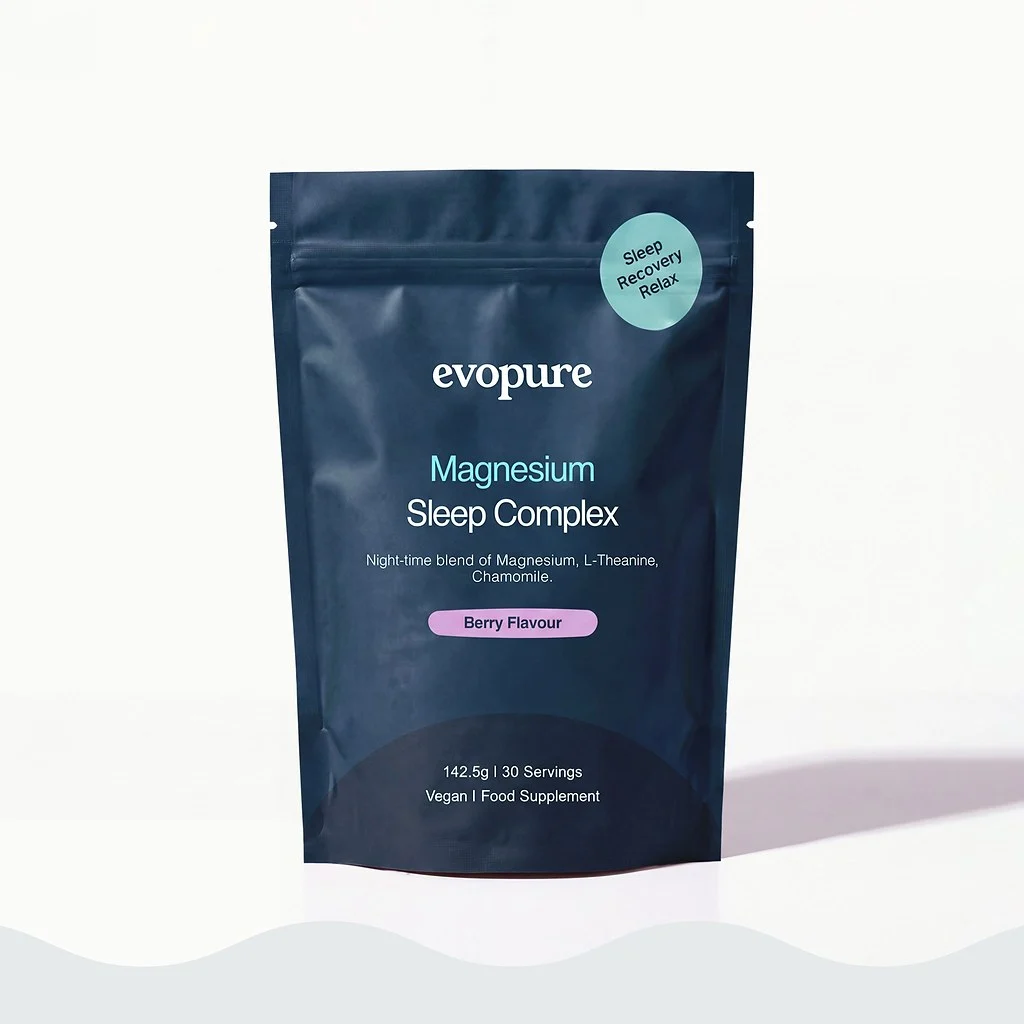
Magnesium Glycinate Sleep Complex
Magnesium Glycinate Sleep Complex is a berry drink powder with 290mg of magnesium (77% NRV) per 4.75g serving from bisglycinate and citrate, plus glycine and L-theanine. Magnesium contributes to a reduction of tiredness and fatigue.
Add Magnesium Glycinate Sleep Complex to bag See ingredients and reviews
Vegan and made in the UK. Subscribe and save 25% on your first order, then 20%. New to Evopure? Join our emails for 20% off a one-off first order. Free UK delivery over £45, 14-day returns on unopened items.
Subscribe £22.49One-off £29.99
View productHow long do menopause symptoms last?
The NHS says symptoms usually last 7 to 9 years, sometimes longer, and can change during that time. Here is what the research shows for the main ones.
| Symptom | How long it tends to last | Read more |
|---|---|---|
| Hot flushes and night sweats | Median 7.4 years; longer if they start early | Hot flushes |
| Sleep problems | Rise through perimenopause, often with night sweats | Perimenopause and sleep |
| Low mood | Risk is highest before the last period, then falls | Menopause and anxiety |
| Brain fog | Usually temporary; learning recovers after menopause | Menopause brain fog |
| Joint aches | Can continue after menopause | Joint pain |
| Vaginal dryness and bladder symptoms | Can continue; often return if treatment stops | Waking up to pee |
Hot flushes and night sweats
The best evidence comes from the US Study of Women’s Health Across the Nation (SWAN), which followed more than 3,000 women for up to 17 years. In women with frequent flushes or night sweats, they lasted a median of 7.4 years, including 4.5 years after the final period. Women whose flushes began before or early in perimenopause had the longest run, a median of more than 11.8 years. African American women reported the longest duration, a median of 10.1 years.
A Pennsylvania study found moderate or severe flushes peaked in the first two years after the last period, and about a third of women still had them 10 or more years after menopause. See also night sweats.
Sleep
SWAN also found that trouble falling asleep, staying asleep and waking early all became more common as women moved through the transition. Night sweats are a common reason for waking, and NICE recommends menopause-specific CBT for sleep problems linked to them. If you’re waking at 3am and can’t drop off again, see middle insomnia.
Mood and anxiety
A 14-year study found the risk of depressive symptoms was higher in the years before the final period and lower after it. Women with no history of depression had a low risk two or more years after menopause; a past history raised the risk both before and after, so tell your GP about it early.
Brain fog
In SWAN, women in perimenopause didn’t learn new material as well as before, but scores bounced back after menopause. The researchers concluded these difficulties may be time-limited.
Vaginal dryness, joints and other lasting changes
The NHS says joint pain and vaginal dryness can continue after menopause. Vaginal dryness, painful sex and bladder symptoms such as urgency and repeated UTIs are now called genitourinary syndrome of menopause. They can carry on after other symptoms settle, but they are treatable (see what helps). Weight changes are common too: see menopause weight gain.
Does menopause ever end?
Yes, in the way most people mean it. Once you have gone 12 months without a period you are postmenopausal, and for most women symptoms ease over the next few years. Two things don’t end, though:
- You stay postmenopausal. Women’s Health Concern points out that lower oestrogen can lead to thinner bones and a higher risk of heart disease, so strength exercise, calcium and vitamin D matter more from here. See calcium supplements.
- Some symptoms can linger. Some women still get hot flushes 10 years or more after menopause, and vaginal symptoms can persist without treatment.
If you’re still struggling years later, you don’t have to put up with it. Talk to your GP.
How do you know when menopause is over?
You have reached menopause when you have gone 12 months in a row without a period and you’re not using hormonal contraception.
- Over 45: NICE guidance says GPs should identify menopause from your symptoms and periods, without blood tests.
- Aged 40 to 45: a GP may consider a follicle-stimulating hormone (FSH) blood test.
- Under 40: a GP will usually check FSH on two blood samples 4 to 6 weeks apart.
- On hormonal contraception or HRT: these can mask your natural periods, so the 12-month count doesn’t work. Ask your GP or nurse.
Don’t stop contraception too soon. Women’s Health Concern advises carrying on until you have had no periods for two years if you’re under 50, or for one year if you’re over 50.
How is menopause diagnosed?
If you’re 45 or over, a GP usually diagnoses perimenopause or menopause from your symptoms and your periods alone, with no blood test needed. NICE guidance says a follicle-stimulating hormone (FSH) blood test may be considered between 40 and 45, and is used under 40 when premature menopause is suspected.
NICE also says tests such as AMH, oestradiol and ovarian scans shouldn’t be used to identify menopause if you’re 45 or over. Before your appointment, jot down your symptoms and period dates for a few weeks; our perimenopause symptoms checklist helps. Home urine tests are no substitute (see how to test for perimenopause).
Can menopause symptoms come and go over years?
Yes. Women’s Health Concern explains that oestrogen falls over several years, not overnight, which is why symptoms can come and go. The NHS adds that hot flushes may improve and be replaced by other symptoms.
Periods can do the same. A gap of several months doesn’t mean you have reached menopause: the 12 months have to be consecutive, so if a period returns, the count starts again.
Symptoms may also return when you stop HRT, and NICE says you can restart it if needed. Tapering may limit this in the short term, but in the longer term it makes no difference whether you taper or stop at once.
Early and premature menopause
The NHS defines early menopause as periods stopping before the age of 45, and premature menopause as before 40. It can happen naturally, or after surgery to remove the ovaries, or after some cancer treatments.
An early menopause means more years with low oestrogen, which matters for your bones and heart. The NHS says it’s important to replace missing hormones if menopause starts before 45, so ask your GP about HRT and how long to take it. The Daisy Network supports women with premature ovarian insufficiency. For other causes of missed or changing periods, see hormonal imbalance symptoms.
How long does menopause last after a hysterectomy?
If your ovaries were removed
The NHS says that if a hysterectomy removes your ovaries, you go through menopause straight away, whatever your age. This is called a surgical menopause. NHS inform notes symptoms after surgery can be more sudden and, in some cases, more severe, because hormone levels drop overnight instead of over years.
HRT is usually used to manage symptoms after a hysterectomy. The NHS advises that if both ovaries have been removed and you can take HRT, you should continue until you reach the average age of natural menopause, which is 51. There is no reliable figure for how long untreated symptoms last after a surgical menopause, so ask your GP what to expect.
If your ovaries were kept
You won’t go into menopause straight away, but the NHS says you may reach it sooner than you would have otherwise. With no periods, you can’t use the 12-month rule. NICE says GPs should recognise menopause from your symptoms, such as hot flushes, and Women’s Health Concern says blood tests may sometimes help.
What helps while it lasts
You don’t have to wait for symptoms to fade. The main UK options:
- HRT. Women’s Health Concern calls HRT the most effective treatment for menopause symptoms and, for most, a low-risk option. How long you take it is reviewed regularly with your GP.
- CBT. NICE recommends menopause-specific CBT as an option for hot flushes, and for sleep problems and low mood linked to them, alongside HRT or instead of it.
- Non-hormonal medicines. If HRT isn’t suitable, NICE recommends fezolinetant for moderate to severe hot flushes. The NHS says a doctor may also suggest clonidine or an antidepressant.
- Vaginal oestrogen. NICE recommends it for vaginal and bladder symptoms, even alongside HRT. Non-hormonal moisturisers and lubricants are another option.
- Everyday habits. Women’s Health Concern suggests 150 minutes of exercise a week including strength work, stopping smoking (it triggers more frequent and severe hot flushes) and under 14 units of alcohol a week.
Medicines are a decision for you and your GP. The NHS says there is very little evidence on how well or how safely herbal remedies work, and some interact with medicines. Our guides to the best supplements for menopause and magnesium for menopause go through the evidence, and supplements for women over 40 covers the basics.
If you’d like a simple evening routine during these years, our Magnesium Glycinate Sleep Complex is a berry-flavoured drink with magnesium bisglycinate and citrate, glycine, L-theanine and botanicals such as chamomile. Magnesium contributes to a reduction of tiredness and fatigue and to normal psychological function. It isn’t a treatment for menopause or its symptoms. It’s for adults only, and we don’t recommend our products during pregnancy or breastfeeding. If you take HRT or any other medicine, check with your GP or pharmacist first.
Is there an HRT shortage in the UK?
Some HRT patches are still in short supply. In November 2026 the NHS Business Services Authority lists active Serious Shortage Protocols for all four strengths of Estradot patches (25, 50, 75 and 100 micrograms), extended to 8 January 2027. Under these, a pharmacist can supply the same strength of an alternative estradiol patch, such as Evorel or Estraderm MX, without a new prescription.
No other HRT product has an active Serious Shortage Protocol, but a Department of Health and Social Care supply notice of 12 October 2026 says FemSeven Conti combined patches are out of stock until late November 2026, with Evorel Conti and Estradot Conti patches available as alternatives. If your pharmacy can’t get your usual HRT, ask the pharmacist whether a protocol applies or another pharmacy has stock, and speak to your GP or prescriber before switching or stopping.
CBT for menopause: what it is and how to get it
CBT for menopause is a short talking therapy that helps you cope with hot flushes, night sweats, poor sleep and low mood; it doesn’t change your hormones. NICE guidance, updated in 2024, says it can be considered for these symptoms, with HRT or instead of it. In the UK MENOS 2 trial of 140 women, CBT made flushes less of a problem within 6 weeks.
Menopause-specific CBT looks at what sets off your symptoms and how you react to them, with practical ways to handle flushes, broken sleep and worry. NICE says it can be one to one or in a group, face to face or remote, or a guided self-help book. In MENOS 2, both group and self-help CBT cut the problem rating of hot flushes and night sweats by about 2 points on a 1 to 10 scale, the benefit was still there at 26 weeks, and night sweats became less frequent.
It suits women who can’t take HRT, would rather not, or want help alongside it. It can also help if worry about flushes at work, or lying awake at night, is a big part of the problem.
How do I get CBT for menopause?
- Your GP or practice nurse. Ask about menopause-specific CBT; NICE says it should be considered for hot flushes, night sweats, linked sleep problems and low mood.
- NHS Talking Therapies (England). You can refer yourself if you’re 18 or over and registered with a GP. It is mainly for low mood and anxiety, so ask whether menopause-specific CBT is offered locally.
- Self-help. Guided self-help worked as well as group sessions in MENOS 2. Women’s Health Concern, the patient arm of the British Menopause Society, has a free factsheet on CBT for menopausal symptoms.
- Scotland, Wales and Northern Ireland. Start with your GP, as referral routes differ.
For the full list of symptoms CBT can help you manage, see perimenopause symptoms, and for what changes between the stages, perimenopause vs menopause. CBT for sleep has its own guide: CBT for insomnia.
The FSA’s 10mg a day figure for CBD is precautionary advice rather than a legal limit, set while longer-term safety research continues. At Evopure we think it is a very cautious figure, and many adults use more. If you go above it, increase slowly, and check with your GP or pharmacist first if you take any medication.
When to see a GP
The NHS advises contacting your GP if:
- you think you have menopause or perimenopause symptoms and want to know your options
- you get palpitations (a fast or pounding heartbeat)
- you still have periods but are bleeding more, not less, than before
iIf you’re under 45 and have symptoms, see a GP too. The NHS says a GP may sometimes do blood tests at that age.
Bleeding after menopause: if you have not had a period for 12 months or more and you get any vaginal bleeding, see a GP. The NHS says postmenopausal bleeding is not usually serious but can be a sign of cancer, so get it checked even if it only happened once, or was only spotting or pink or brown discharge.
If your mood is very low or you have thoughts of harming yourself, call NHS 111, Samaritans on 116 123, or 999 in an emergency.
See also how to fix brain fog, step by step.
Related guides
- Living with someone going through it? See how partners can support perimenopause.
- If you’ve seen mushroom supplements sold for menopause, our guide to mushrooms for menopause sets out what has actually been tested.
- If you are weighing up supplements over the longer term, see what the evidence says about CBD and menopause.
Next step
Magnesium Glycinate Sleep Complex
For a simple evening routine, our Magnesium Glycinate Sleep Complex gives 290mg of magnesium (77% NRV) per 4.75g berry drink. Magnesium contributes to a reduction of tiredness and fatigue. It isn’t a treatment for menopause symptoms.
Add Magnesium Glycinate Sleep Complex to bag See ingredients
Subscribe and save 25% on your first order, then 20%. New to Evopure? Join our emails for 20% off a one-off first order. Free UK delivery over £45. If you take HRT or any regular medicines, check with your GP or pharmacist first. We don’t recommend our products during pregnancy or breastfeeding.
Subscribe £22.49One-off £29.99
View productSources 19
- NHS. Menopause and perimenopause and symptoms of menopause and perimenopause.
- NHS. Early menopause.
- NHS. Hysterectomy: considerations.
- NHS inform. Menopause.
- NICE (2024). Menopause: identification and management (NG23).
- Women’s Health Concern. Perimenopause and menopause: your questions answered.
- McKinlay SM et al (1992). The normal menopause transition. Maturitas.
- Avis NE et al (2015). Duration of menopausal vasomotor symptoms over the menopause transition. JAMA Internal Medicine.
- Freeman EW et al (2014). Risk of long-term hot flashes after natural menopause: evidence from the Penn Ovarian Aging Study cohort. Menopause.
- Freeman EW et al (2014). Longitudinal pattern of depressive symptoms around natural menopause. JAMA Psychiatry.
- Greendale GA et al (2009). Effects of the menopause transition and hormone use on cognitive performance in midlife women. Neurology.
- Kravitz HM et al (2008). Sleep disturbance during the menopausal transition in a multi-ethnic community sample of women. Sleep.
- Portman DJ, Gass ML (2014). Genitourinary syndrome of menopause: new terminology for vulvovaginal atrophy. Maturitas.
- Ayers B et al (2012). Effectiveness of group and self-help cognitive behavior therapy in reducing problematic menopausal hot flushes and night sweats (MENOS 2). Menopause.
- NHS. Talking therapies.
- Women’s Health Concern. Cognitive behaviour therapy (CBT) for menopausal symptoms (factsheet, February 2026).
- NHS Business Services Authority. Serious Shortage Protocols (SSPs) (checked 9 November 2026).
- Community Pharmacy England. Medicine Supply Notification: FemSeven Conti transdermal patches (MSN/2026/048, 12 October 2026).
- Community Pharmacy Scotland. Extension to Serious Shortage Protocols for Estradot patches.
This guide is general information, not medical advice. Evopure makes the Magnesium Glycinate Sleep Complex.