

Last updated: October 2026
Lemon balm (Melissa officinalis) is a lemon-scented herb in the mint family, traditionally drunk as a tea for calm, sleep and digestion. Small human trials suggest it may help with stress and sleep, and a lemon balm cream has been studied for cold sores, but the evidence is limited. It’s usually well tolerated, though it isn’t recommended in pregnancy.
Below: what the research really shows for anxiety, sleep and cold sores, how to make lemon balm tea, doses used in studies, side effects, who should avoid it and how to grow your own.
Quick facts: Lemon balm is a hardy perennial herb you can grow in a UK garden or pot. In Europe it is a traditional herbal medicine for mild stress, sleep and mild digestive complaints, based on long-standing use rather than proof from large trials. Herbs have no authorised health claims in the UK. Evopure doesn’t sell lemon balm; this is an independent guide.
What is lemon balm?
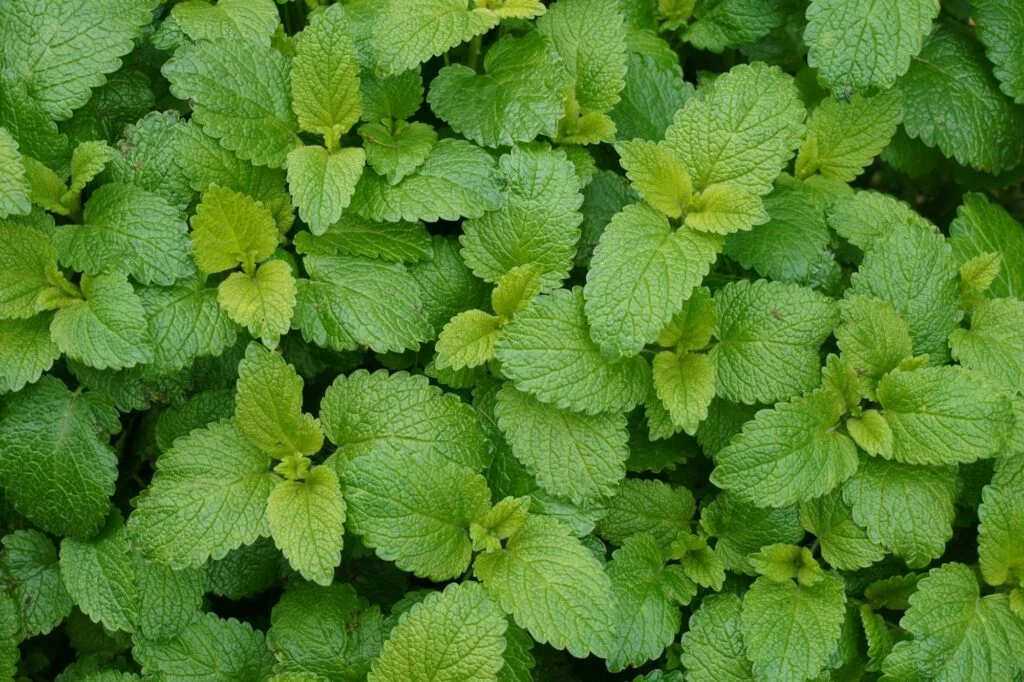
Lemon balm is a leafy herb from the Lamiaceae, or mint, family, with leaves that smell gently of lemon. You’ll find it as fresh leaves, dried tea, tinctures, capsules and creams, and in bedtime tea blends.
Researchers think compounds in the leaf, especially rosmarinic acid, may affect GABA, one of the brain’s calming chemical messengers, though this comes mostly from lab work.
Lemon balm benefits: the evidence at a glance
Most lemon balm research is small, short and uses different extracts, so results are hard to compare.
| Use | What the research shows | Strength of evidence |
|---|---|---|
| Stress and anxious mood | A 2021 meta-analysis of randomised trials found better anxiety scores than placebo, but the trials were few and very varied | Limited, mixed |
| Sleep | Small trials, often of lemon balm combined with valerian, report better sleep scores | Limited |
| Cold sores (as a cream) | Older placebo-controlled trials of a lemon balm extract cream found milder symptoms early on | Limited, dated |
| Digestion (bloating, wind) | A traditional use recognised in the European herbal monograph; few modern trials | Traditional use |
| Memory and focus | Single-dose studies in healthy young adults show mixed results | Very limited |
| Weight loss | No good human evidence | None |
Lemon balm isn’t a treatment for any condition. If stress, low mood or poor sleep is affecting your life, see your GP. Our guide on how to deal with anxiety covers what the NHS recommends.
Lemon balm for anxiety and stress
This is the most studied use. In a 2004 UK study at Northumbria University, 18 healthy volunteers took a single dose of lemon balm extract or a placebo before a stressful computer task. After 600mg of extract, they rated themselves calmer, though also less alert.
A 2021 systematic review and meta-analysis pooled randomised trials of lemon balm in people with symptoms of anxiety or depression. Lemon balm improved anxiety scores compared with placebo without serious side effects. However, the authors warned that there were only a small number of trials, their methods differed a lot, and better studies are needed.
A 2023 trial of 100 adults with moderate stress or poor sleep found that 400mg a day of a lemon balm extract for three weeks improved self-reported anxiety, stress and wellbeing scores compared with placebo.
The research is promising but early, and lemon balm isn’t a replacement for talking therapies or prescribed treatment. If you’re comparing options, see natural supplements for anxiety, L-theanine and magnesium for anxiety. If worry tends to peak in the evening, read anxiety at night.
Lemon balm for sleep
Lemon balm is often paired with valerian root in sleep products. In a 2013 trial, 100 women aged 50 to 60 with sleep problems took a valerian and lemon balm combination or a placebo, and the combination group reported better sleep quality scores. Because the herbs were taken together, it’s impossible to say how much came from lemon balm alone.
Lemon balm on its own has less evidence. A small 2024 crossover study of a specially formulated lemon balm extract reported lower insomnia scores than placebo, but some of the authors work for the extract’s supplier, so it needs independent repeating.
A cup of lemon balm tea can be a pleasant part of a wind-down routine, but good sleep habits matter more. See sleep hygiene, insomnia and our ranking of natural sleep aids.
How to make lemon balm tea
The European herbal monograph for lemon balm uses 1.5 to 4.5g of dried leaf (roughly 1 to 3 teaspoons) in 150ml of boiling water, up to three times a day, for adults and children over 12.
- Dried leaf: put 1 to 3 teaspoons in a teapot or infuser.
- Fresh leaf: use a small handful of leaves, torn or bruised to release the oils. Fresh leaves taste brighter than dried.
- Pour over a mug of just-boiled water and cover, so the aromatic oils stay in the cup.
- Steep for 5 to 10 minutes, then strain.
- Add honey or lemon if you like, or chill it for iced tea.
Lemon balm teabags are widely sold, on their own or in bedtime blends. For more ideas, see the best tea for sleep, mushroom tea and how to make CBD tea.
Lemon balm for cold sores
Lemon balm creams have been studied for cold sores caused by the herpes simplex virus. In a 1999 placebo-controlled trial, 66 people with frequent cold sores applied a cream containing 1% lemon balm extract four times a day for five days. Symptom scores on day 2, usually the worst day, were lower than with placebo. An earlier placebo-controlled study of 116 people reported similar findings.
These are older, small studies, and lemon balm creams aren’t standard NHS care. The NHS says cold sores usually start to heal within 10 days, and a pharmacist can recommend antiviral creams, which work best when used as soon as you feel tingling. See a GP if a cold sore hasn’t started to heal within 10 days, is very large or painful, or if you have a weakened immune system.
Lemon balm tinctures, capsules and dose
In the UK, some lemon balm capsules and blends are registered by the MHRA under the Traditional Herbal Registration (THR) scheme. Look for the THR number on the pack. Registration means the product meets quality and safety standards and has at least 30 years of traditional use, not proof from clinical trials. One registered capsule on the MHRA list contains 171mg of dry extract, equivalent to 684mg to 1,026mg of lemon balm leaf.
Doses in research vary because extracts differ:
- Single doses of 300mg and 600mg of extract (2004 stress study)
- Single doses of 600mg to 1,600mg of dried leaf (2003 mood and memory study)
- 400mg of extract a day for three weeks (2023 trial)
- Tincture (1:5): 2 to 6ml, up to three times a day (European monograph)
Always follow the label of the product you buy. Many tinctures contain alcohol. The monograph advises seeing a doctor if symptoms last longer than two weeks or get worse.
How long does lemon balm take to work? The single-dose studies measured effects from about one hour after taking it. The longer trials ran for two to three weeks.
Lemon balm side effects and who should avoid it
Lemon balm is generally well tolerated in trials, and the European monograph lists no known side effects. The cautions:
- Drowsiness. It may affect your ability to drive or use machines. Don’t drive if you feel sleepy.
- Pregnancy and breastfeeding. Safety hasn’t been established, so it isn’t recommended. Speak to your midwife, GP or pharmacist.
- Children under 12. Use isn’t recommended because of a lack of data.
- Thyroid conditions. Lab and animal studies suggest lemon balm extract may block the action of thyroid stimulating hormone (TSH). The clinical relevance is unknown, but if you have a thyroid condition or take thyroid medicine, check with your GP or pharmacist first.
- Sedatives and sleeping tablets. Because it may make you drowsy, ask a pharmacist before combining lemon balm with sedating medicines, other sleep herbs or alcohol.
- Before surgery. Tell your surgical team about any herbal remedies you take, including lemon balm.
- Allergy. Don’t use it if you’re allergic to lemon balm. Patch test creams first.
Other herbs have their own cautions too: see ashwagandha side effects.
Lemon balm for kids or dogs? We don’t recommend giving lemon balm to children or pets. Ask your GP or pharmacist about children, and your vet about animals.
Lemon balm and weight loss. Social media videos have compared lemon balm tea with Ozempic. There is no good human evidence that it causes weight loss, and it doesn’t work like GLP-1 weight-loss medicines.
Lemon balm vs other calming teas
| Herb | Taste | Best known for | Read more |
|---|---|---|---|
| Lemon balm | Fresh, lemony | Calm, sleep and digestion (traditional use) | This guide |
| Chamomile | Mild, apple-like | A bedtime tea | Best tea for sleep |
| Passionflower | Grassy, mild | Sleep and restlessness | Passionflower for sleep |
| Valerian | Earthy, strong smell | Sleep, often paired with lemon balm | Valerian root |
None of these herbs has an authorised health claim in the UK. If you want something with authorised claims for your evening, magnesium contributes to normal psychological function and to the reduction of tiredness and fatigue. Our Magnesium Glycinate Sleep Complex is a berry-flavoured evening drink with magnesium bisglycinate and citrate, glycine and L-theanine, plus chamomile, passionflower and hops. It doesn’t contain lemon balm. See magnesium for sleep and glycine for sleep.
How to grow lemon balm
Lemon balm is one of the easiest herbs to grow in the UK. The RHS rates it fully hardy, and it reaches around 0.5 to 1m tall.
- Where: sun or partial shade, in most soils, but not waterlogged ground, which can rot the roots in winter.
- Pots: it spreads vigorously and self-seeds, so a large pot (at least 25cm wide and deep) keeps it in check.
- Cutting back: cut it down after flowering, before seeds form, for a fresh flush of leaves.
- Harvesting: pick young leaves through spring and summer. It dies back in autumn and regrows in spring. Dry some leaves for winter tea, though dried leaves taste milder.
FAQs
What is lemon balm good for?
Lemon balm is traditionally used for mild stress, sleep and mild digestive complaints such as bloating. Small trials suggest it may help with stress and sleep, but the evidence is limited and it isn’t a treatment for any condition.
Can you drink lemon balm tea every day?
The European herbal monograph allows up to three cups a day for adults. See a doctor if your symptoms last more than two weeks, and avoid it in pregnancy and breastfeeding.
Does lemon balm make you sleepy?
It can. Some people feel calmer and less alert after taking it, so don’t drive or use machines if you feel drowsy.
Is lemon balm safe with thyroid medication?
Lab studies suggest lemon balm may block the action of thyroid stimulating hormone. The effect in people is unknown, so check with your GP or pharmacist first.
Is lemon balm the same as lemongrass or lemon verbena?
No. They are different plants that share a lemony scent. Lemon balm belongs to the mint family.
Does Evopure sell lemon balm?
No. Our Magnesium Glycinate Sleep Complex contains magnesium, glycine, L-theanine, chamomile, passionflower and hops, but not lemon balm.
Sources
- Ghazizadeh J et al (2021). The effects of lemon balm (Melissa officinalis L.) on depression and anxiety in clinical trials: a systematic review and meta-analysis. Phytotherapy Research.
- Kennedy DO, Little W, Scholey AB (2004). Attenuation of laboratory-induced stress in humans after acute administration of Melissa officinalis. Psychosomatic Medicine.
- Kennedy DO et al (2003). Modulation of mood and cognitive performance following acute administration of single doses of Melissa officinalis. Neuropsychopharmacology.
- Bano A et al (2023). Subchronic supplementation of a Melissa officinalis extract in healthy adults with emotional distress and poor sleep. Frontiers in Pharmacology.
- Taavoni S et al (2013). Valerian/lemon balm use for sleep disorders during menopause. Complementary Therapies in Clinical Practice.
- Di Pierro F et al (2024). Effects of Melissa officinalis phytosome on sleep quality. Nutrients.
- Koytchev R et al (1999). Balm mint extract (Lo-701) for topical treatment of recurring herpes labialis. Phytomedicine.
- Wölbling RH, Leonhardt K (1994). Local therapy of herpes simplex with dried extract from Melissa officinalis. Phytomedicine.
- Auf’mkolk M et al (1984). Inhibition by certain plant extracts of the binding and adenylate cyclase stimulatory effect of bovine thyrotropin in human thyroid membranes. Endocrinology.
- European Medicines Agency. Melissae folium (melissa leaf) herbal monograph.
- MHRA, GOV.UK. Herbal medicines granted a traditional herbal registration (THR) and Apply for a traditional herbal registration.
- NHS. Cold sores.
- RHS. How to grow lemon balm and Melissa officinalis plant profile.
This guide is general information, not medical advice. Evopure doesn’t sell lemon balm. Evopure makes the Magnesium Glycinate Sleep Complex.