




Last updated: October 2026
Passion flower (Passiflora incarnata) is a traditional calming herb. Small trials suggest it may ease short-term anxiety, such as nerves before surgery or dental work, and modestly improve sleep, with early hints for menopause symptoms. The studies are small and short, so the benefits are promising rather than proven, and it can cause drowsiness.
Below: what passion flower is (and how it differs from passion fruit), an honest table of the research, tea vs tincture vs capsules, how much people take, side effects, and who should avoid it.
Passion flower in 30 seconds: the best evidence is for nerves before a medical or dental procedure, from trials of 40 to 63 people. Sleep results are modest. UK passion flower medicines are licensed on traditional use, not trial proof. Don’t mix it with sleeping tablets, anxiety medicines or alcohol, and avoid it in pregnancy.
What is passion flower?
Passion flower usually means Passiflora incarnata, a climbing vine from the south-eastern United States and Central and South America, also known as maypop. It has been used as a traditional calming remedy for centuries.
Herbal products use the dried above-ground parts (leaves, stems and flowers), as a tea or as liquid and dry extracts. Lab research suggests the extract acts on the brain’s calming GABA system, though how that translates to people is unclear. More on that system in our guide to GABA supplements.
Is passion flower the same as passion fruit?
No, though they are cousins. Three Passiflora species are worth knowing:
- Passiflora incarnata: the medicinal herb in teas, tinctures, supplements and research.
- Passiflora edulis: the tropical plant that gives us passion fruit. In the UK it needs a greenhouse to fruit.
- Passiflora caerulea: the blue passion flower on fences across the UK, hardy in milder areas, with orange fruits in autumn.
Eating passion fruit won’t give you the effects studied in trials, and the blue garden plant isn’t the herb in supplements. Don’t make tea from a garden plant unless you’re certain what it is.
How passion flower is sold in the UK
You’ll find it as a herbal tea, a food supplement or a licensed herbal medicine. The medicines carry a THR (traditional herbal registration) mark from the MHRA, the UK medicines regulator. A THR covers minor conditions that don’t need a doctor, for herbs used traditionally for at least 30 years. It confirms quality, safety and traditional use, not trial proof that the product works. UK passion flower THR products are registered for symptoms of stress such as mild anxiety, or to aid sleep, based on traditional use only.
Passion flower benefits: what the research shows
Most trials are small, short (one day to four weeks) and use different products. European regulators judged them too small and flawed for firm conclusions, which is why passion flower is licensed on traditional use.
| Benefit | What the studies found | Our verdict |
|---|---|---|
| Anxiety before surgery or dental work | Less anxiety than placebo in trials of 60 to 63 people; similar to midazolam in a 40-person dental trial | The strongest area, still small trials |
| Generalised anxiety | One 36-person, 4-week trial found it similar to oxazepam; a Cochrane review called the evidence too thin | Uncertain |
| Sleep quality | Better self-rated sleep with a week of tea (41 adults); 23 minutes more sleep with an extract (110 adults with insomnia) | Modest and early |
| Menopause hot flushes | Listed among herbs that eased hot flushes in a 2016 review of Iranian trials | Weak |
| Anxiety and stress overall | A 2020 review of nine trials found most reported lower anxiety, less clear in mild symptoms | Promising, not proven |
| ADHD and other uses | Not enough evidence, according to the US NIH | Unproven |
There are no authorised health claims for passion flower in Great Britain, and it isn’t a treatment for any condition.
Passion flower for anxiety
Most passion flower research is on anxiety, and the clearest results are for nerves before a procedure.
- Before surgery: in a 2008 trial of 60 day-surgery patients, 500mg taken 90 minutes beforehand lowered anxiety scores versus placebo without extra sedation. A 2012 trial of 60 people before spinal anaesthesia found similar.
- At the dentist: a 63-person trial found passion flower drops lowered dental anxiety more than placebo, and in a 40-person trial 260mg worked similarly to the sedative midazolam before wisdom tooth removal. A 2025 trial of 30 people found no difference in anxiety scores.
- Generalised anxiety disorder (GAD): a 2001 pilot trial in 36 people found drops worked about as well as oxazepam over four weeks, but a 2007 Cochrane review said there were too few trials to draw conclusions.
Passion flower isn’t a treatment for an anxiety disorder. If you feel anxious most of the time and it affects daily life, see a GP; adults in England can also refer themselves to NHS Talking Therapies. Never swap prescribed medicine for a herb without talking to your doctor.
For how it compares with ashwagandha, L-theanine and magnesium, see our ranking of natural supplements for anxiety, and our practical guide on how to deal with anxiety.
Passion flower for sleep
In a 2011 trial, 41 young adults rated their sleep quality better after a week of nightly passion flower tea than placebo tea, though other diary measures didn’t change. In 2020, a two-week trial in 110 adults with insomnia found an extract added about 23 minutes of total sleep on overnight tests versus placebo.
Encouraging but modest. We cover sleep doses and timing in depth in passionflower for sleep. For context, see natural sleep aids ranked by evidence and the best tea for sleep. If poor sleep lasts months, see a GP, who may offer cognitive behavioural therapy (CBT) for insomnia.
Menopause, ADHD and other claims
Passion flower is promoted for hot flushes, ADHD, blood pressure, pain and more. The evidence is thin for all of them.
- Menopause: a 2016 review of Iranian herbal trials listed passion flower among herbs that reduced hot flushes, but the evidence is limited. The US National Center for Complementary and Integrative Health (NCCIH) rates the evidence for menopausal symptoms as insufficient. Our guides to hot flushes and the best supplements for menopause cover what has stronger support.
- ADHD: also rated insufficient by NCCIH. Passion flower isn’t for children, so speak to your GP.
- Heart, pain, blood pressure, hair: mainly lab or animal research.
Tea vs tincture vs capsules
Amounts below come from the European herbal monograph and UK products; always follow your product’s label.
| Form | Typical amount | Good for | Watch out |
|---|---|---|---|
| Tea (dried herb) | 1 to 2g in 150ml boiling water, 1 to 4 times a day | A gentle evening ritual | Strength varies by batch |
| Tincture (liquid extract) | 0.5 to 4ml, up to 3 to 4 times a day, by product | Flexible dosing | Many contain alcohol |
| Tablets and capsules | Often one 425mg extract tablet a day | Consistent dose | Check for a THR mark |
| Blends | Varies | Combining herbs | More ingredients to check |
Passion flower tea benefits
Tea is the gentlest way to try passion flower, it’s the form used in the 2011 sleep trial, and it fits naturally into a screen-free wind-down. To make it, steep 1 to 2g of dried passion flower in about 150ml of just-boiled water, following the pack’s directions, then strain. It’s often blended with chamomile or lemon balm.
How to take passion flower and how much
- Follow the label. Strengths vary. The single-herb UK THR tablets we found contain 425mg of dried extract, taken once a day.
- Trial doses: 500mg before surgery, 260mg before dental work, and 45 drops a day for four weeks for anxiety.
- Timing: about an hour before bed for sleep; trials gave it 30 to 90 minutes before a stressful procedure.
- How long: NCCIH says the tea may be safe for up to seven nights and extracts for up to eight weeks. If your symptoms last more than two weeks, or get worse, see a GP or pharmacist.
- Start low: try it first on an evening when you don’t need to drive.
Passion flower vs valerian
We found no head-to-head trials. Both are traditional calming herbs with UK THR products, often combined in herbal sleep tablets. UK leaflets list more side effects for valerian (stomach upset, dizziness, headache, vivid dreams). See our guide to valerian root, and stick to one product rather than stacking several.
Side effects and who should avoid it
Passion flower is generally well tolerated. European regulators list no known side effects; NCCIH lists drowsiness, dizziness and confusion. Rare reports include a fast heartbeat, an allergic reaction (vasculitis), and a 2000 case of severe nausea, vomiting and heart rhythm changes at normal doses.
- Driving: it may make you drowsy. If it does, don’t drive or use machinery.
- Alcohol, sleeping tablets and anxiety medicines: UK leaflets say not to combine passion flower products with medicines that make you sleep or treat stress or anxiety, and that alcohol may increase the effects. See alcohol and sleep.
- Other medicines: ask a pharmacist before taking it with any regular medicine.
- Pregnancy and breastfeeding: not recommended; NCCIH warns it may trigger womb contractions. We don’t recommend our products during pregnancy or breastfeeding.
- Children and teenagers: not under 12 (European guidance), and UK sleep tablet leaflets say not under 18. All Evopure products are for adults (18+) only.
- Surgery: it may add to the effects of anaesthesia. Tell your surgical team if you’ve taken it in the two weeks before a planned operation, and follow their advice. Taking CBD too? See CBD before surgery.
- Pets: don’t give passion flower products to dogs or cats; ask your vet.
Liver: LiverTox, the US liver injury database, says passion flower has not been linked to liver injury.
How we use passion flower
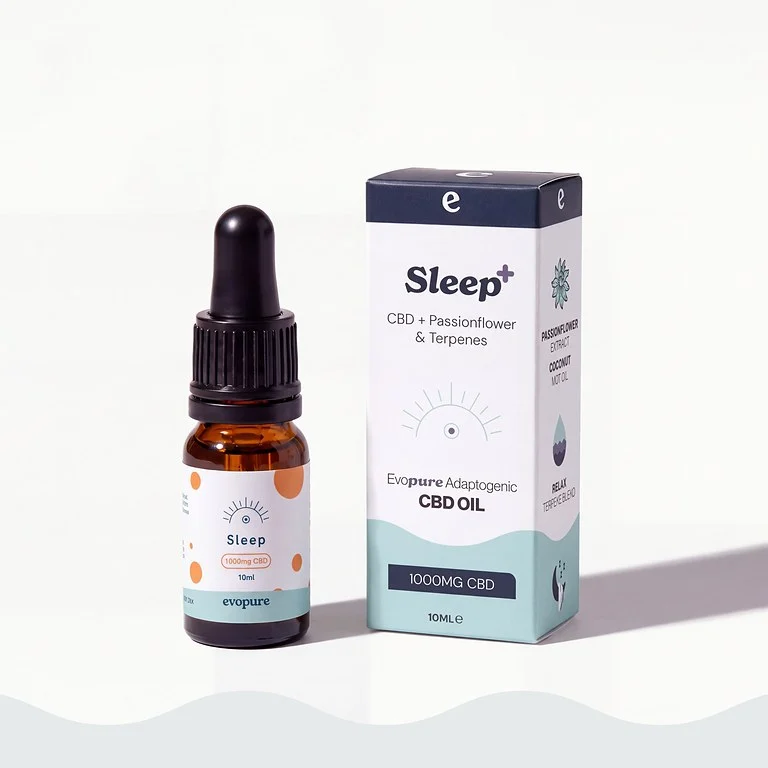
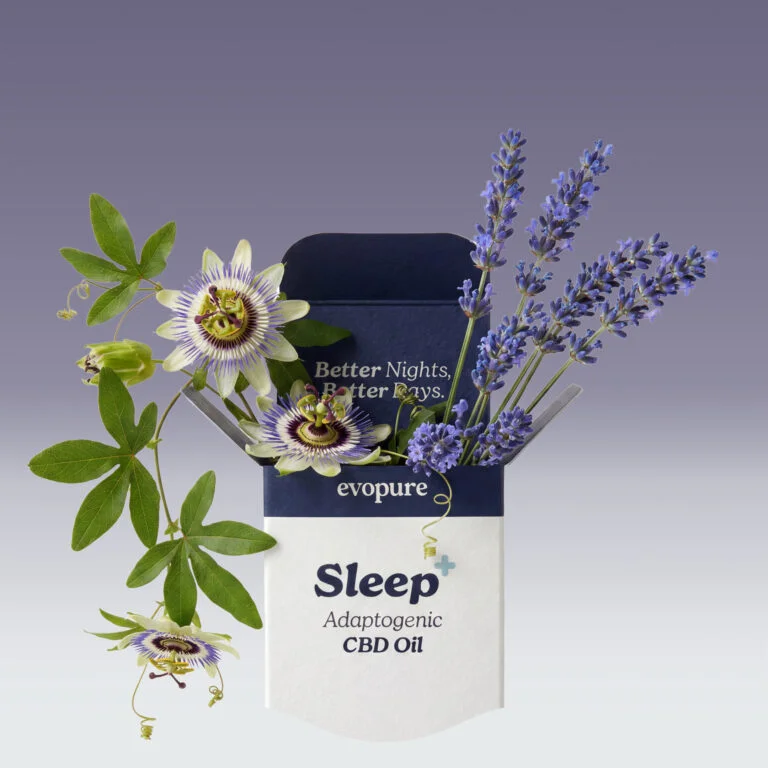
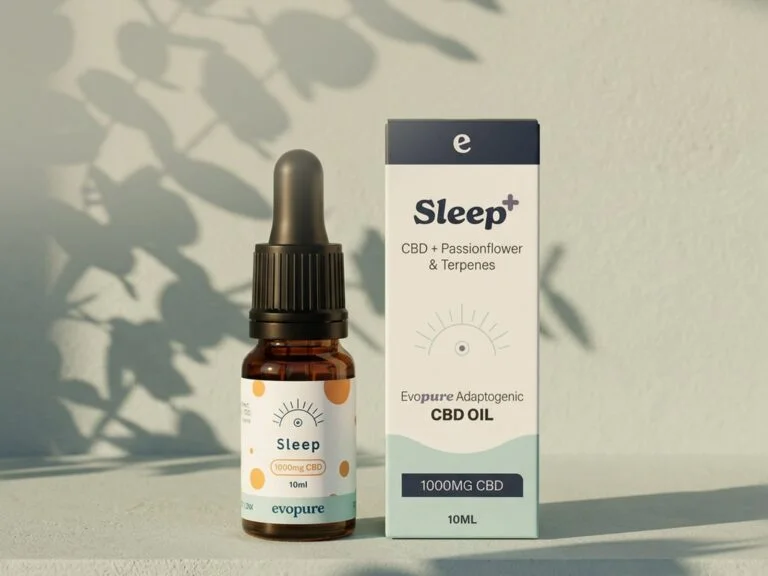
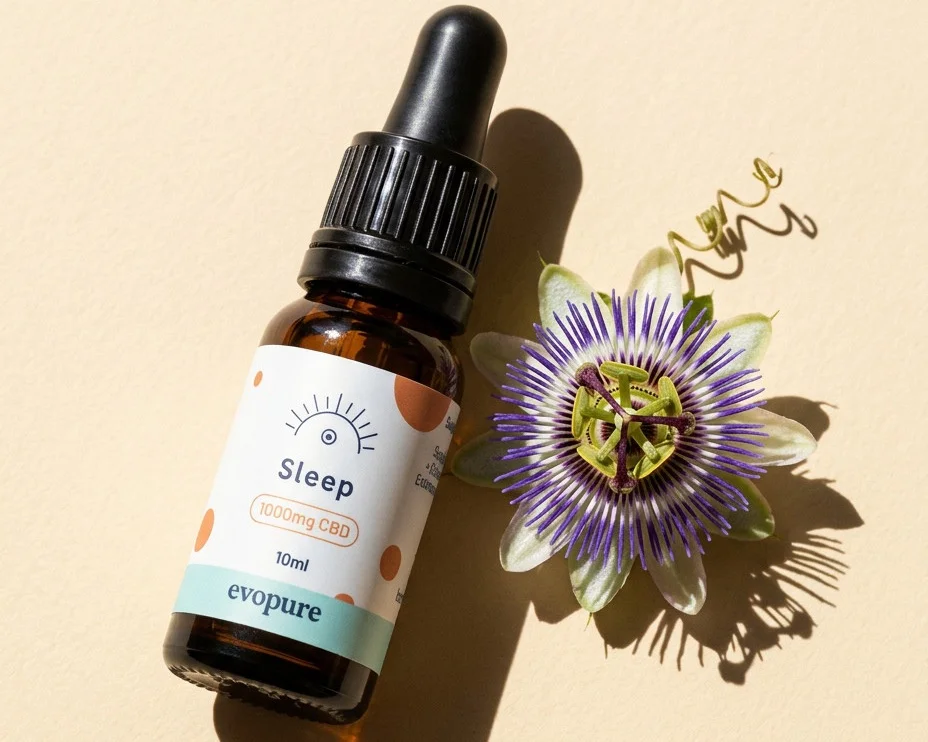
Botanicals are rare in UK CBD oils. Our Sleep CBD Oil is one of very few UK CBD oils made with passion flower. It has four ingredients: broad spectrum CBD, passion flower extracted in our own lab straight into coconut MCT oil, and our Relax terpene blend, led by myrcene. It is 0% THC, vegan and made in the UK, for your evening wind-down routine. More on terpenes and the best CBD oil for sleep.
The FSA’s 10mg a day figure is precautionary advice rather than a legal limit, set while longer-term safety research continues. At Evopure we think it is a very cautious figure, and many adults use more. If you go above it, increase slowly, and check with your GP or pharmacist first if you take any medication.
Our Magnesium Glycinate Sleep Complex also contains passion flower extract, alongside magnesium bisglycinate and citrate, glycine, L-theanine, chamomile, hops and oat straw in a berry drink. Magnesium contributes to a reduction of tiredness and fatigue and to normal psychological function. More in magnesium for sleep.
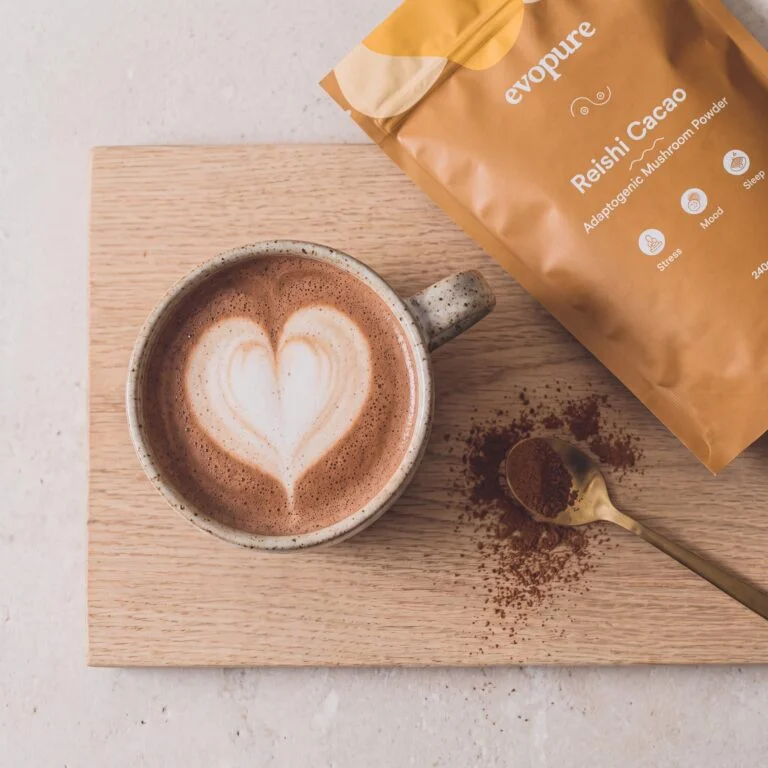
For a warm evening drink, our Reishi Mushroom Adaptogenic Complex is a reishi hot chocolate made with reishi mushroom extract, organic cacao, maca, coconut milk powder and coconut sugar. It doesn’t contain passion flower, and it contains a little natural caffeine from the cacao.
Passion flower and CBD can both cause drowsiness, so start low and ask a pharmacist before combining them with sleeping tablets or anxiety medicines.
FAQs
What are the benefits of passion flower?
Small trials suggest it may ease short-term anxiety, especially before surgery or dental work, and modestly improve sleep. Evidence for menopause, ADHD and other uses is weak, and there are no authorised health claims for it in Great Britain.
Is passion flower good for anxiety?
Trials of 40 to 63 people found less anxiety before medical and dental procedures, but a Cochrane review said there are too few trials to be sure. It isn’t a treatment for anxiety disorders, so see a GP if anxiety affects your daily life.
Is it safe to take passion flower every day?
Short-term use appears safe for most adults: NCCIH says up to seven nights for tea and eight weeks for extracts. If you still need it after two weeks, see a GP or pharmacist.
What should you not mix passion flower with?
Avoid alcohol, sleeping tablets, anxiety medicines and other sedating herbs. Ask a pharmacist about any regular medicine, and tell your surgical team before an operation.
How long does passion flower take to work?
Trials gave a single dose 30 to 90 minutes before a procedure. For sleep, people take it about an hour before bed, and the sleep trials lasted one to two weeks.
Is passion flower bad for your liver?
LiverTox, the US liver injury database, says passion flower has not been linked to liver injury. If you have liver disease, ask your doctor first.
Can children take passion flower?
No. European guidance says not under 12, and UK sleep tablet leaflets say not under 18. Speak to your GP about a child’s sleep, anxiety or ADHD.
Which is better, valerian or passion flower?
There are no head-to-head trials. Both are traditional calming herbs, but UK leaflets list more side effects for valerian, such as stomach upset and vivid dreams. Don’t take several sedating herbs together.
Sources
- European Medicines Agency. Passiflorae herba: herbal medicinal product (summary for the public and community herbal monograph, EMA/HMPC/669740/2013).
- MHRA. Apply for a traditional herbal registration (THR).
- NCCIH (US National Institutes of Health). Passionflower: usefulness and safety.
- Miyasaka LS et al (2007). Passiflora for anxiety disorder. Cochrane Database of Systematic Reviews.
- Janda K et al (2020). Passiflora incarnata in neuropsychiatric disorders: a systematic review. Nutrients.
- NHS. Generalised anxiety disorder (GAD) and Insomnia.
- emc. Patient leaflet for a UK traditional herbal sleep tablet containing passion flower, valerian and hops.
- RHS. How to grow passion flowers.
- LiverTox (NIDDK). Passionflower.
Other studies mentioned (PubMed IDs): Movafegh A et al, Anesthesia and Analgesia 2008 (18499602); Aslanargun P et al, Journal of Anesthesia 2012 (22048283); Kaviani N et al, Journal of Dentistry (Shiraz) 2013 (24724122); Dantas LP et al, Medicina Oral, Patologia Oral y Cirugia Bucal 2017 (27918731); Lima Neto TJ et al, Scientific Reports 2025 (41381570); Akhondzadeh S et al, Journal of Clinical Pharmacy and Therapeutics 2001 (11679026); Ngan A and Conduit R, Phytotherapy Research 2011 (21294203); Lee J et al, International Clinical Psychopharmacology 2020 (31714321); Ghazanfarpour M et al, International Journal of Reproductive BioMedicine 2016 (27294213); Appel K et al, Phytotherapy Research 2011 (21089181); Fisher AA et al, Journal of Toxicology: Clinical Toxicology 2000 (10696928).
This guide is general information, not medical advice. Evopure makes the Sleep CBD Oil, Magnesium Glycinate Sleep Complex and Reishi Mushroom Adaptogenic Complex.