

Last updated: October 2026
Valerian root is a traditional herbal remedy for sleep, but the research is mixed. Some reviews find people report sleeping a little better, while the most rigorous trials mostly show no clear difference from a placebo. It is usually well tolerated short term. Avoid it if you’re pregnant, breastfeeding, under 18, or taking alcohol or sedatives.
Below: what the studies actually found, valerian for anxiety, doses and timing, valerian tea, side effects, who should avoid it, and how it compares with melatonin, passionflower, ashwagandha and magnesium.
In short: valerian is not a sleeping pill. If it helps you, the effect is likely to be modest and may take two to four weeks of nightly use. In the UK, the safest way to buy it is as a registered herbal medicine with the THR mark on the pack. Evopure doesn’t sell valerian, so we have no reason to oversell it.
What is valerian root?
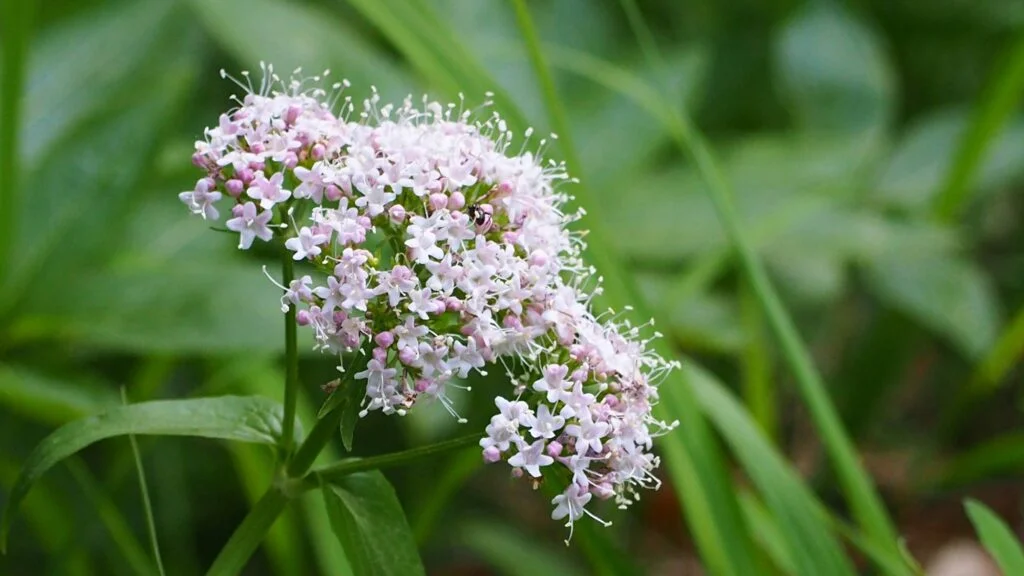
Valerian (Valeriana officinalis) is a tall flowering plant with pale pink or white flowers. The root and rhizome are dried and used in tablets, capsules, tinctures and teas. It has a strong, earthy smell, which is one reason many people prefer tablets to the tea.
Valerian is not Valium. Valium is a brand name for diazepam, a prescription benzodiazepine. Valerian is a plant extract with a much weaker, less certain effect.
Does valerian root help sleep?
Possibly a little, for some people. Valerian has been studied for decades, but the trials are mostly small, use different extracts and doses, and measure sleep in different ways. The reviews disagree.
| Review | What it looked at | What it found |
|---|---|---|
| Bent et al., 2006 | 16 placebo-controlled trials, 1,093 people | People taking valerian were more likely to report better sleep, but most studies had significant flaws and there were signs of publication bias |
| Taibi et al., 2007 | 37 studies | Most found no significant difference from placebo, and none of the most rigorous recent trials did. Valerian looked safe but not effective |
| Fernández-San-Martín et al., 2010 | 18 randomised trials | A small improvement in how people rated their sleep, but no difference in time to fall asleep (0.7 minutes) or in measured sleep quality |
| Shinjyo et al., 2020 | 60 studies, 6,894 people | Results were inconsistent, possibly because extract quality varies; whole root preparations looked more reliable. No serious side effects in people aged 7 to 80 |
The honest summary: valerian may make some people feel they slept better, but it doesn’t reliably help you fall asleep faster, and objective sleep measures rarely change. The American Academy of Sleep Medicine advises against valerian for chronic insomnia, according to the US National Center for Complementary and Integrative Health.
If poor sleep has lasted more than a few weeks, the NHS first-line approach for insomnia is better sleep habits and CBT for insomnia, not supplements. Our guide to sleep hygiene covers the basics, and how to fall asleep fast has techniques you can try tonight.
How long does valerian take to work?
Not usually on the first night. UK registered valerian tablets tell you to take them continuously for two to four weeks because the effect may not be immediate, and to see a doctor if things haven’t improved after four weeks. The European Medicines Agency’s assessment also notes the benefit was greater after two weeks of use.
Valerian root for anxiety
The evidence is thin. A Cochrane review looking for trials of valerian for anxiety disorders found just one eligible study: 36 people with generalised anxiety disorder over four weeks. It found no significant difference between valerian and placebo, and the reviewers concluded there was not enough evidence to judge whether valerian works or is safe for anxiety.
Some later trials and the 2020 review above suggest a possible calming effect, but they are small and mixed. In the UK and Europe, valerian products are registered for mild stress and sleep complaints based on traditional use, not proven effect.
If anxiety is affecting your daily life or keeping you awake, talk to your GP. Our guides to anxiety at night and natural supplements for anxiety look at what the research says on other options.
Valerian root dose, timing and the THR mark
There is no single proven dose. In studies, valerian has been used with apparent safety at 300 to 600mg a day for up to six weeks. Products vary a lot in strength, so follow the leaflet for the one you buy.
| What | Typical amount | Timing |
|---|---|---|
| Extracts in research | 300 to 600mg a day | Before bed; check the product leaflet |
| Example UK THR tablet | One 385mg extract tablet (made from about 1.5 to 1.9g of root) | 30 to 60 minutes before bed |
| Teas and tinctures | Varies widely | Follow the pack |
What is the THR mark?
In the UK, herbal medicines can carry a Traditional Herbal Registration (THR) from the MHRA, the medicines regulator. A THR is only granted for minor conditions that don’t need medical supervision, and the product must show at least 30 years of traditional use, along with evidence on quality and safety. Registered products carry a small THR certification mark on the pack and leaflet.
A THR does not mean the herb is proven to work in clinical trials. Leaflets say so plainly: one widely sold valerian tablet is registered “based on traditional use only”. What it does mean is a checked, consistent product with a proper leaflet listing doses, warnings and side effects. Valerian is also sold in teas and in supplements sold as food, which don’t carry the mark.
Our sleep capsules guide explains how to check the label of any sleep product.
Valerian root tea
Valerian tea is a gentle, caffeine-free option, but it is the least predictable form. The amount of root in a tea bag varies, and some of valerian’s active compounds are unstable, which the 2020 review flagged as a quality problem across valerian products. Most trials tested extracts, not tea.
Many people find the taste strong, so it is often blended with chamomile or mint. See our best tea for sleep ranking for how valerian compares with other herbal teas.
Valerian root side effects
Most people take valerian without problems in the short term. Side effects reported include:
- headache
- dizziness and drowsiness
- stomach upset: nausea, cramps or diarrhoea
- vivid dreams or nightmares
- feeling mentally dull, or in some people, restless or excitable
Liver: liver injury has been reported in very rare cases, most often when valerian was taken in combination with other herbs. Stop and see a GP if you notice yellow skin or eyes, dark urine or pain in the upper right of your tummy.
Long-term use: the safety of taking valerian for months is unknown. Stopping suddenly after long-term use may cause withdrawal symptoms such as anxiety, irritability and poor sleep, so cut down gradually.
Who should avoid valerian
- Pregnant or breastfeeding: UK valerian leaflets say not to use it, because there isn’t enough safety data.
- Under 18s: UK registered valerian tablets are not recommended for anyone under 18.
- People taking sleeping tablets, sedating medicines or medicines for stress or anxiety: the leaflet says not to combine them. Check with a pharmacist first if you take any regular medication.
- Alcohol: it may increase valerian’s sedative effect, so avoid drinking heavily while taking it.
- Driving and machinery: valerian may make you sleepy or dizzy. If it does, don’t drive or operate machinery.
- Before surgery: UK hospital pharmacists advise stopping all herbal medicines one to two weeks before planned surgery, and valerian can depress the nervous system. Tell your surgical team what you take.
- Liver problems: speak to your GP first.
Sedating herbs add up, so avoid stacking several. See ashwagandha side effects for the same caution.
Valerian vs melatonin and other sleep aids
| Option | UK status | What the evidence looks like |
|---|---|---|
| Valerian | THR herbal medicine, tea or food supplement | Mixed: possible small benefit in self-rated sleep, little change in objective measures |
| Melatonin | Prescription only | A licensed medicine, mainly for short-term sleep problems in adults aged 55 and over |
| Passionflower | Herbal medicine, tea or food supplement | A few small trials; often blended with valerian |
| Ashwagandha | Food supplement | Small trials on sleep and stress, mostly short term |
| Magnesium | Food supplement | An authorised health claim: magnesium contributes to the normal functioning of the nervous system |
Valerian vs melatonin
In the UK, melatonin is available on prescription only, mainly for short-term sleep problems in people aged 55 and over. You can’t legally buy it over the counter here, which is why many people turn to valerian instead. See melatonin in the UK and CBD oil vs melatonin for more.
Valerian vs passionflower, ashwagandha and magnesium
Passionflower is another traditional sleep herb with limited research, and many products combine the two. Ashwagandha is an adaptogen with its own safety cautions. Magnesium is a mineral, and the only one of these with authorised health claims. Compare them in passionflower for sleep, ashwagandha vs magnesium, magnesium for sleep and our ranking of natural sleep aids in the UK.
Valerian for dogs and cats
You’ll see valerian in some calming products for pets. We don’t advise giving valerian, or any human supplement, to an animal. Dosing and safety are different for pets, so ask your vet first. Evopure products are for adults only and are not for pets.
A valerian-free evening option
Evopure doesn’t make a valerian product. If you’d rather build an evening routine around a warm drink, our Magnesium Glycinate Sleep Complex is a berry-flavoured powder with magnesium bisglycinate and citrate (148mg of magnesium per serving), glycine and L-theanine, plus chamomile, passionflower, hops and oat straw. It contains no valerian.
Magnesium contributes to the normal functioning of the nervous system, normal psychological function and the reduction of tiredness and fatigue.
Because it contains passionflower and hops, don’t take it alongside valerian or sleep medicines without checking with a pharmacist. It is for adults only, and we don’t recommend our products during pregnancy or breastfeeding. Read more about one of its ingredients in our L-theanine guide.
FAQs
Does valerian root actually work for sleep?
The evidence is mixed. Some reviews find people rate their sleep a little better, but the most rigorous trials mostly show no clear difference from placebo, and it doesn’t reliably shorten the time it takes to fall asleep.
How much valerian root should I take for sleep?
Studies have used 300 to 600mg of extract a day for up to six weeks. Strengths vary between products, so follow the leaflet. UK registered tablets are usually taken 30 to 60 minutes before bed.
Is it safe to take valerian every night?
Short-term nightly use for a few weeks appears generally safe for healthy adults. Long-term safety is unknown, and stopping suddenly after long use may cause withdrawal symptoms, so cut down gradually and see a GP if sleep problems last more than four weeks.
Is valerian better than melatonin?
They are different. Melatonin is a prescription-only medicine in the UK, mainly for short-term sleep problems in adults aged 55 and over. Valerian is a traditional herbal remedy with mixed evidence. Ask your GP or pharmacist which suits you.
Is valerian root good for anxiety?
There isn’t enough evidence to say. A Cochrane review found only one small trial in generalised anxiety disorder, which showed no clear difference from placebo. Speak to your GP if anxiety is affecting your life.
Is valerian root legal in the UK?
Yes. It is sold as a registered traditional herbal medicine with the THR mark, and in teas and food supplements. Registered products come with a leaflet listing doses and warnings.
Can I drink alcohol with valerian?
It is best avoided. Alcohol may increase valerian’s sedative effect, and UK leaflets advise against drinking heavily while taking it.
Sources
- Bent S et al. Valerian for sleep: a systematic review and meta-analysis. Am J Med, 2006.
- Taibi DM et al. A systematic review of valerian as a sleep aid: safe but not effective. Sleep Med Rev, 2007.
- Fernández-San-Martín MI et al. Effectiveness of valerian on insomnia: a meta-analysis of randomized placebo-controlled trials. Sleep Med, 2010.
- Shinjyo N et al. Valerian root in treating sleep problems and associated disorders: a systematic review and meta-analysis. J Evid Based Integr Med, 2020.
- Miyasaka LS et al. Valerian for anxiety disorders. Cochrane Database Syst Rev, 2006.
- NCCIH. Valerian.
- European Medicines Agency. Valerian root (Valerianae radix).
- MHRA, gov.uk. Apply for a traditional herbal registration (THR).
- NHS. About melatonin.
- UK Clinical Pharmacy Association. Herbal remedies position statement (perioperative handbook).
This guide is general information, not medical advice. Dose and warning details for registered valerian tablets are taken from the patient leaflet of a UK THR valerian product (THR 01074/0002, revised July 2023). Evopure does not sell valerian. Evopure makes the Magnesium Glycinate Sleep Complex.