Last updated: 10 November 2026
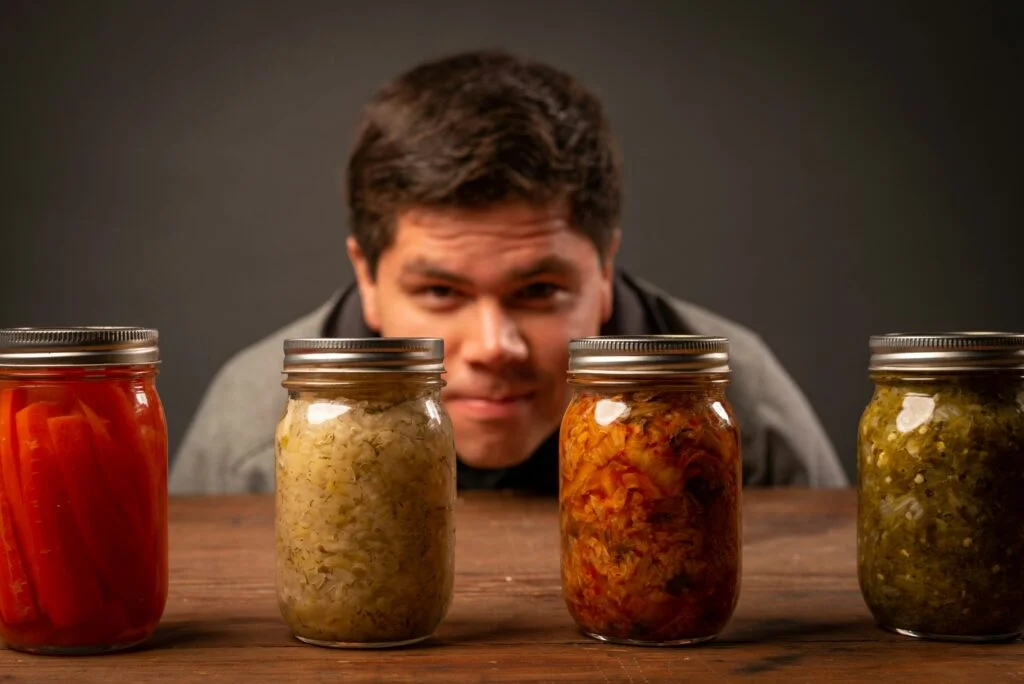
Fermented foods are foods made by letting bacteria or yeasts break down the sugars in milk, vegetables, soya or tea. Live yoghurt, kefir, sauerkraut, kimchi, miso, tempeh and kombucha are the best known. In a 2021 Stanford trial, eating about 6 servings a day for 10 weeks made the gut microbiota more diverse.
Below: which fermented foods still contain live cultures, what the gut microbiota is, what the research shows for gut health, how much to eat, and who should be careful, including in pregnancy and with histamine intolerance.
Our pick
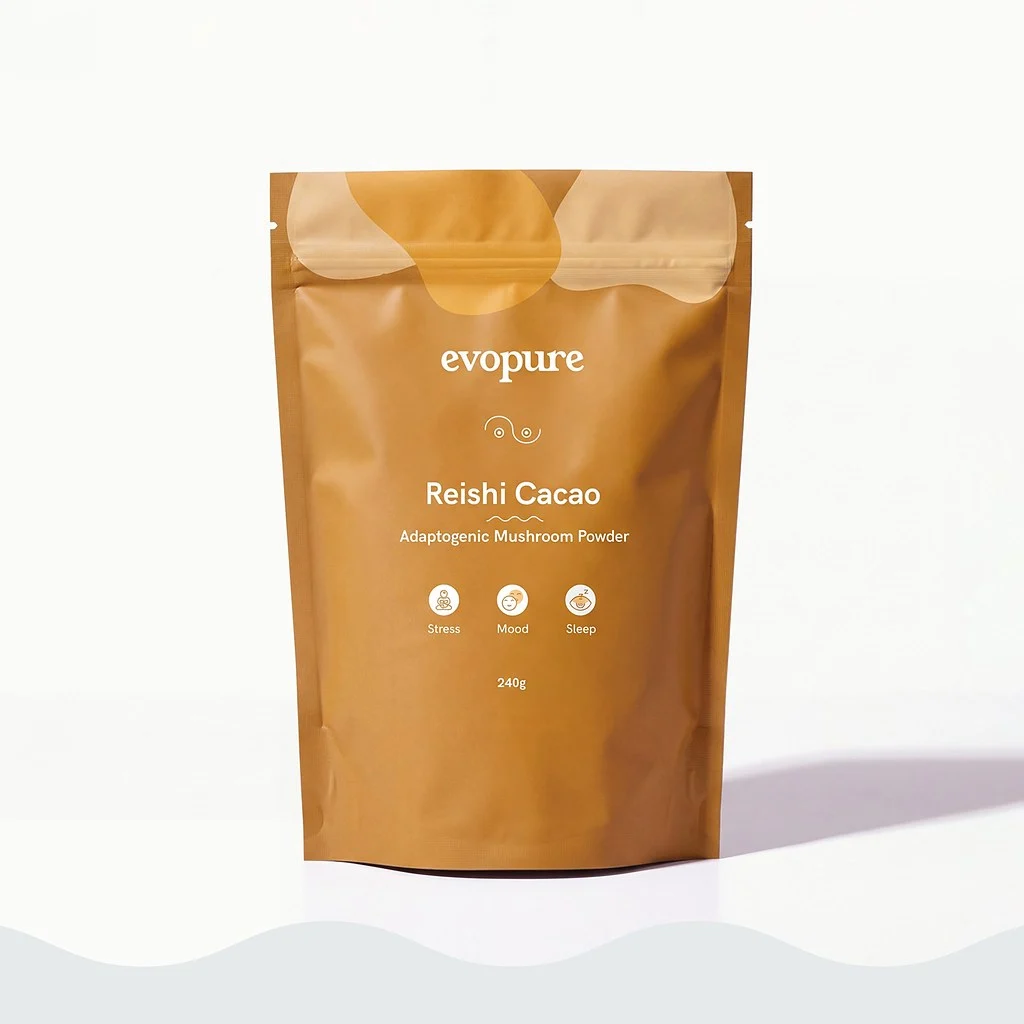
Reishi Mushroom Adaptogenic Complex
Evopure doesn’t sell fermented foods or probiotics. If your evenings need a warm, low-sugar drink to go with a gut-friendly diet, Evopure’s Reishi Mushroom Adaptogenic Complex is a cacao drink with 0.5g reishi, 0.5g maca and 0.3g cinnamon per 8g serving. It contains a little natural caffeine from the cocoa, so it suits the early evening best.
Add Reishi Cacao to bag See ingredients and reviews
Subscribe and save 25% on your first order, then 20%. New to Evopure? Join our emails for 20% off a one-off first order. Free UK delivery over £45.
Subscribe £22.49One-off £29.99
View productWhat are fermented foods?
Fermented foods are foods changed by microbes. Bacteria or yeasts feed on the sugars in the raw food and turn them into acids, gases or alcohol, which preserve it and change its taste and texture. Milk becomes yoghurt or kefir, cabbage becomes sauerkraut or kimchi, soya becomes miso or tempeh, and sweet tea becomes kombucha.
An international panel of scientists (ISAPP) defines fermented foods as “foods made through desired microbial growth and enzymatic conversions of food components”. That means a food can be fermented without containing live microbes when you eat it: bread, most beer and wine, tempeh and shelf-stable sauerkraut have been baked, filtered, cooked or pasteurised.
| Fermented food fact | The detail |
|---|---|
| What does the fermenting | Lactic acid bacteria (yoghurt, sauerkraut, kimchi), bacteria plus yeasts (kefir, kombucha), moulds (miso, tempeh) |
| Live or not | Only if not heated after fermenting: look for “live”, “bio” or the chiller cabinet |
| Amount used in the Stanford trial | Built up to about 6 servings a day over 4 weeks, then kept up for 6 weeks |
| UK advice on how much | None: there is no official UK recommendation for fermented foods |
| Authorised GB health claim | One only: live yoghurt cultures improve lactose digestion of the product in people who have difficulty digesting lactose |
| Salt | Sauerkraut, kimchi and miso can be high; adults should have no more than 6g a day (NHS) |
| Who should check first | Weakened immune system, pregnancy (unpasteurised products), histamine intolerance, MAOI antidepressants |
Fermented foods list: which have live cultures?
The fermented foods most likely to contain live cultures are live yoghurt, kefir, chilled unpasteurised sauerkraut and kimchi, unpasteurised miso and raw kombucha. Tempeh, sourdough bread and most jarred pickles don’t, because they are cooked, baked or pasteurised. Vinegar pickles such as gherkins are usually not fermented at all.
| Food | Made from | Live cultures? | Watch out for |
|---|---|---|---|
| Live yoghurt | Milk and bacteria | Yes, if labelled “live” or “bio” | Sugar in flavoured pots |
| Kefir | Milk and kefir grains (bacteria and yeasts) | Yes, usually more types than yoghurt | Sugar in flavoured kefir |
| Sauerkraut | Cabbage and salt | Only if chilled and unpasteurised | Salt |
| Kimchi | Cabbage, radish, chilli, garlic | Only if chilled and unpasteurised | Salt and chilli |
| Miso | Soya beans, salt and koji mould | Some, if unpasteurised; boiling kills them | High in salt |
| Tempeh | Soya beans and mould | No, it is cooked before eating | Nothing major: a good protein source |
| Kombucha | Sweet tea and a culture of bacteria and yeasts | Some, if unpasteurised | Sugar, caffeine, a little alcohol |
| Aged cheese | Milk, bacteria, sometimes moulds | Some, in many traditional cheeses | Salt and saturated fat |
Our best fermented foods for gut health section compares the evidence food by food, and our kombucha benefits guide covers its sugar and alcohol in detail.
What is the gut microbiota?
The gut microbiota is the community of bacteria, fungi and viruses that live in your digestive tract, mostly in the large intestine. A typical adult carries around 38 trillion bacteria, roughly as many as their own body cells. They break down fibre you can’t digest, make short-chain fatty acids and help train the immune system.
“Microbiome” is often used for the same thing, though strictly it means the microbes plus their genes. Everyone’s mix is different, and it changes with diet, age, medicines (especially antibiotics), illness and travel. A more diverse microbiota is generally linked to better health in studies, but nobody has yet defined a single “healthy” gut microbiota, and stool tests sold online can’t tell you what to eat.
What feeds the gut microbiota?
Fibre feeds it most directly. Gut bacteria ferment fibre in the large intestine, which is why the NHS advice of 30g of fibre a day matters as much as any fermented food. Most UK adults eat about 20g. Our high fibre foods list shows grams per portion, and psyllium husk is a fibre supplement if food alone falls short.
Are fermented foods good for gut health?
Fermented foods look good for gut health, but the evidence is still small. A 2021 Stanford trial found a high fermented food diet made the gut microbiota more diverse and lowered 19 inflammatory proteins in 36 healthy adults. A 2025 review of 19 trials linked fermented foods to more regular, softer stools, mostly on low-certainty evidence.
| What was studied | What studies found | How strong |
|---|---|---|
| Fermented food diet (Stanford, 2021) | 36 healthy adults: up to about 6 servings a day raised microbiota diversity and lowered 19 inflammatory proteins; a high-fibre diet didn’t raise diversity in the same time | One small randomised trial |
| Gut symptoms in healthy adults (2025) | 25 studies with 4,328 people (19 trials pooled): more frequent bowel movements, softer stools, fewer tummy symptoms, faster transit | Review, mostly low certainty |
| Kefir and gut bacteria (2026) | 8 human studies: modest changes, Bifidobacterium rose in 3 of 4 studies that measured it | Review, small studies |
| Live yoghurt and lactose | Live cultures help digest the lactose in the yoghurt itself | Authorised GB health claim |
| Kombucha | A 2019 review of 310 articles found only one study of kombucha in people | Very little human evidence |
Two cautions. The Stanford trial was small and short, and the authors said it still needs testing in people with health conditions, older adults and pregnant women. And many fermented food studies are run or funded by makers of dairy and probiotic products, so look for independent trials before believing a specific brand’s claims.
For a wider plan, see our gut health guide, which covers fibre, plant variety and sleep, and the anti-inflammatory diet, which uses yoghurt and kefir in its 7-day plan. The gut-brain link is covered in food and mood.
How much fermented food should you eat?
There is no official UK amount. A sensible start is one portion a day, such as a small pot of live yoghurt, a small glass of kefir or a tablespoon of sauerkraut or kimchi with a meal, built up over 2 to 4 weeks. The Stanford trial reached about 6 servings a day, which is more than most people need to start.
- Start small: a sudden increase can cause wind and bloating, which usually settles as your gut adjusts.
- Vary them: different foods carry different microbes. Rotate dairy and vegetable ferments.
- Keep them live: add miso, kimchi or sauerkraut at the end of cooking, off the heat.
- Read the label: pick plain yoghurt and kefir, and check salt on sauerkraut and kimchi (over 1.5g per 100g is high).
- Keep the fibre up: fermented foods work alongside fibre, not instead of it. See foods that help constipation.
Fermented foods vs probiotic supplements
Fermented foods contain a changing mix of microbes that are usually not named or counted. A probiotic supplement contains specific strains at a stated dose, and only some strains have trial evidence, each for a particular use. The NHS says there is some evidence probiotics may help some conditions, including IBS, and suggests trying one for at least 4 weeks.
In the UK, “probiotic” on a food label counts as a health claim, which is why many fermented foods say “live cultures” instead. Our probiotics guide explains which strains have evidence. If you are bloated after meals rather than looking for live cultures, digestive enzymes work in a different way, and supplements for digestion compares the options.
Who should be careful with fermented foods?
Most adults can eat fermented foods safely. People with a weakened immune system should check with their doctor before eating unpasteurised ferments or taking probiotics. In pregnancy, avoid unpasteurised milk products. People with histamine intolerance, those taking MAOI antidepressants and anyone watching their salt intake should also take care.
- Weakened immune system: the NHS advises speaking to a doctor before taking probiotics if you have a weakened immune system or a long-term condition. This includes chemotherapy, organ transplants and some autoimmune treatments.
- Pregnancy: the NHS lists unpasteurised milk, cream and yoghurt among foods to avoid in pregnancy because of listeria. Pasteurised live yoghurt is fine. Check homemade or unpasteurised kefir, and avoid unpasteurised kombucha, which can also contain a little alcohol.
- Histamine intolerance: fermented foods such as sauerkraut, aged cheese, miso and kombucha can be high in histamine. If you get flushing, headaches, a blocked nose or tummy upset after them, keep a food diary and talk to a GP or dietitian.
- MAOI antidepressants: if you take an MAOI such as phenelzine, your patient leaflet will list tyramine-rich foods to avoid, which include some aged and fermented foods such as aged cheese, miso and other fermented soya products.
- High blood pressure: miso, kimchi and sauerkraut can add a lot of salt. Use small amounts.
- Babies and young children: stick to pasteurised products, and never give homemade unpasteurised ferments to babies.
See a GP if gut symptoms last for weeks, or if you have blood in your poo, unexplained weight loss or a change in bowel habit that doesn’t settle. Our guide to the signs of poor gut health lists the red flags, and our IBS guide covers the NICE approach. For acid and heartburn, see acid reflux.

Next step
Start with one live fermented food a day and keep your fibre near 30g. If tiredness is part of the picture, Evopure’s Magnesium Glycinate Sleep Complex is a berry drink powder with 290mg of magnesium (77% NRV) per 4.75g serving, from magnesium bisglycinate and citrate. Magnesium contributes to a reduction of tiredness and fatigue and to normal energy-yielding metabolism. For a warm evening cacao drink, our Reishi Cacao has 0.5g reishi and 0.5g maca per 8g, with a little natural caffeine from the cocoa.
Add Magnesium Glycinate Sleep Complex to bag Add Reishi Cacao to bag
Both are vegan and made in the UK, for adults only. If you take any regular medicines, check with your GP or pharmacist first. We don’t recommend our products during pregnancy or breastfeeding. Subscribe and save 25% on your first order, then 20%. New to Evopure? Join our emails for 20% off a one-off first order. Free UK delivery over £45.
Prefer CBD? Our Broad Spectrum CBD Capsules are made with inulin, a plant fibre. The FSA advises healthy adults to take no more than 10mg of CBD a day: one 10mg capsule gives 10mg. Adults only.
The FSA’s 10mg a day figure is precautionary advice rather than a legal limit, set while longer-term safety research continues. At Evopure we think it is a very cautious figure, and many adults use more. If you go above it, increase slowly, and check with your GP or pharmacist first if you take any medication.
Sources 13
- Wastyk HC et al (2021). Gut-microbiota-targeted diets modulate human immune status. Cell.
- Mukherjee A et al (2025). Impact of fermented foods consumption on gastrointestinal wellbeing in healthy adults: a systematic review and meta-analysis. Frontiers in Nutrition.
- Marco ML et al (2021). The ISAPP consensus statement on fermented foods. Nature Reviews Gastroenterology and Hepatology.
- Dimidi E et al (2019). Fermented foods: definitions and characteristics, impact on the gut microbiota and effects on gastrointestinal health and disease. Nutrients.
- Hamsho M et al (2026). Kefir: a potential gut microbiota modulator. A systematic review of human interventional studies. MicrobiologyOpen.
- Kapp JM, Sumner W (2019). Kombucha: a systematic review of the empirical evidence of human health benefit. Annals of Epidemiology.
- Sender R et al (2016). Revised estimates for the number of human and bacteria cells in the body. PLoS Biology.
- Hrubisko M et al (2021). Histamine intolerance: the more we know the less we know. A review. Nutrients.
- NHS. Good foods to help your digestion.
- NHS. Foods to avoid in pregnancy.
- NHS. Salt in your diet.
- Department of Health and Social Care. Great Britain nutrition and health claims (NHC) register. GOV.UK.
- FSA. Cannabidiol (CBD) guidance.
This guide is general information, not medical advice. Evopure doesn’t sell fermented foods or probiotics.