

Last updated: October 2026
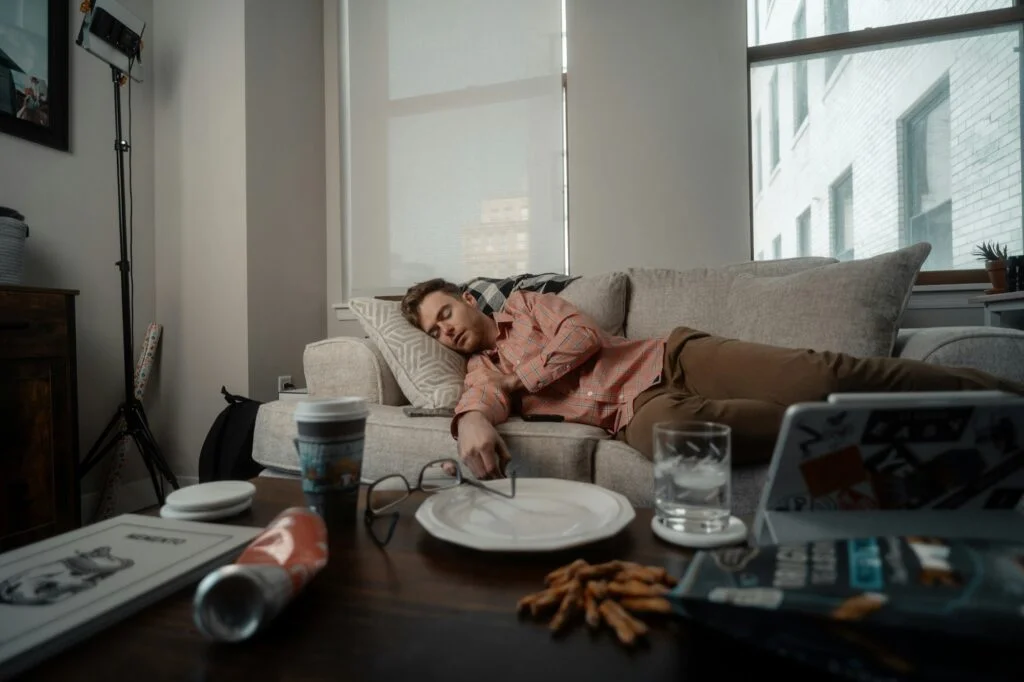
Feeling tired after eating is common and usually harmless. Your body clock dips in the early afternoon, and a large meal, a heavy or very starchy lunch, or a drink with it deepens that dip. Short sleep makes it worse. If it happens after most meals or comes with thirst, weight loss or tummy symptoms, see a GP.
Below: why it happens, whether carbs and sugar are to blame, the “food coma” myths, when tiredness after eating can point to diabetes, coeliac disease or anaemia, and practical ways to stay awake after lunch.
Quick answer: eat a smaller, balanced lunch with protein, vegetables and wholegrains, skip the lunchtime drink, take a short walk afterwards and protect your sleep. If you are tired after every meal, not just lunch, or have other symptoms, get checked.
Why do I feel tired after eating?
Sleepiness after a meal has a medical name, postprandial somnolence, and it usually comes from several things stacking up at once.
- Your body clock. Sleep researchers describe a natural rise in sleepiness in the early to mid afternoon, often called the post-lunch dip. It happens even when people skip lunch and don’t know what time it is, so lunch is not the whole story. It feels similar to the afternoon slump many people notice around 2 to 4pm.
- The meal itself. In a Sheffield study, volunteers were measurably sleepier about 90 minutes after eating than before, whatever the meal, and the effect was not explained by time of day alone.
- How much you eat. In a Loughborough driving simulator study, sleep-deprived drivers who ate a heavy lunch of about 920 calories drifted out of lane more often than after a light lunch of about 300 calories. The difference showed up after the first half hour of driving.
- Short sleep. The same researchers found the post-lunch dip is worse after a poor night. If you are running on too little sleep, a big meal can tip you over. See sleep deprivation.
- Alcohol at lunch. In another Loughborough study, a small amount of alcohol in the afternoon, about half the UK drink-drive limit, made sleepy drivers noticeably worse, and they didn’t realise it.
- Sitting still. A long stretch at a desk after eating gives you nothing to counter the dip. A short walk helps, as covered below.
If you feel tired most of the day, not only after meals, read why am I always tired? instead, as the causes there are broader.
Tired after eating carbs or sugar
Many people notice they feel especially sleepy after a big bowl of pasta, a sandwich and crisps, or something sweet. The research is more mixed than most articles suggest.
| What researchers looked at | What they found | What it means for you |
|---|---|---|
| High-carb lunches | A review of the post-lunch dip says it is made worse by a high-carbohydrate lunch | Go easy on large portions of white bread, pasta, rice and pastries at midday |
| High-fat vs high-carb breakfasts | Fatigue ratings were higher 3 hours after a high-fat, low-carb meal than after a low-fat, high-carb one | A greasy, heavy meal can leave you sluggish too |
| Fat vs carbs with equal calories | A second study found no difference in sleepiness between the two meals; both raised it | The size of the meal seems to matter more than any single nutrient |
| Heavy vs light lunch | A 920 calorie lunch worsened afternoon sleepiness compared with a 300 calorie one | Smaller lunches are the most reliable fix |
The practical takeaway: a balanced, moderate plate beats cutting out one food group. The NHS suggests choosing wholegrain and higher-fibre starchy foods where you can, because they are digested more slowly and can help you feel full for longer.
Sugary snacks and drinks often come with a dip in energy later, and they can set off a cycle of cravings. Our guide to sugar cravings covers how to break it, and food and mood looks at how regular, balanced meals affect how you feel through the day.
Food coma: myths and facts
“Food coma” is slang for feeling heavy and sleepy after a big meal, like Christmas dinner. It isn’t a real coma and is not dangerous for most people.
- Myth: blood rushes from your brain to your stomach. This is the most repeated explanation, but researchers point out that the body protects blood flow to the brain, and one paper found no measurable change in blood flow in the main neck artery after meals. Gut hormones and nerve signals that talk to the brain’s sleep centres are a more likely explanation.
- Myth: one food knocks you out. Turkey often gets the blame, but in studies the amount eaten mattered more than what was on the plate.
- How long does it last? In the Sheffield study, sleepiness was higher about 90 minutes after eating and still raised at about 3 hours 20 minutes. For most people, it eases within a couple of hours.
Is being tired after eating a sign of diabetes?
On its own, usually not. Most people who feel sleepy after lunch do not have diabetes. But the NHS lists feeling very tired among the main symptoms of type 2 diabetes, alongside:
- peeing more than usual
- feeling thirsty all the time
- losing weight without trying to
- blurred vision, cuts or wounds taking longer to heal, and itching around the genitals or repeated thrush
Many people with type 2 diabetes have no symptoms at all, so the NHS advises seeing a GP if you think you might have it or you are at higher risk. A simple blood test can check.
Low blood sugar after eating is sometimes blamed online, but the NHS says low blood sugar is rare in people without diabetes. If you get shaky, sweaty, very hungry, confused or have a racing heart a few hours after meals, see a GP rather than guessing.
Other medical causes to rule out
Tiredness after eating that is extreme, happens after most meals or comes with other symptoms is worth getting checked.
| Possible cause | Other clues | Read more |
|---|---|---|
| Coeliac disease | Diarrhoea, bloating, tummy pain, wind, extreme tiredness, weight loss | See a GP. Keep eating gluten until you are tested, as the NHS says cutting it out can give a false result |
| Food intolerance | Bloating, diarrhoea, tummy pain a few hours after a food; can also cause tiredness and headaches | Keep a food and symptoms diary; see gut health |
| Iron deficiency anaemia | Tiredness and lack of energy, paler skin, shortness of breath, heart palpitations | Iron deficiency symptoms |
| Vitamin B12 deficiency | Feeling weak or tired, pins and needles, a sore or red tongue | Ask your GP about a blood test |
| Underactive thyroid | Exhaustion, weight gain, feeling colder than usual, constipation | Underactive thyroid |
| Sleep apnoea | Loud snoring, gasping or choking at night, very tired during the day | Sleep apnoea |
| Low blood pressure after meals (older adults) | Dizziness, sleepiness or fainting after eating | See a GP; smaller, more frequent meals can help |
A medical review describes low blood pressure after meals, called postprandial hypotension, as common but often missed in older people, and notes it can show up as sleepiness. It is linked to larger and higher-carbohydrate meals. If an older relative gets dizzy or drowsy after eating, mention it to their GP.
Don’t cut out whole food groups on your own: the NHS advises talking to a GP or dietitian first, so you don’t miss out on important nutrients. If you have started a new medicine and notice more tiredness, check the leaflet or ask your pharmacist.
How to stop feeling tired after eating
- Eat a smaller lunch. This has the best evidence. Save your biggest meal for the evening if that suits you, but leave a few hours before bed. See eating before bed.
- Build a balanced plate. Protein (eggs, fish, chicken, beans, tofu), plenty of vegetables and a modest portion of wholegrain carbs.
- Walk after you eat. A review of 7 trials found that breaking up sitting with short, light walks lowered blood sugar and insulin after meals more than sitting or just standing. A short walk outside after lunch is an easy way to fit this in.
- Skip the lunchtime drink, especially if you are driving or working later.
- Time your caffeine. A coffee after lunch can help, but avoid caffeine in the hours before bed, as the NHS advises, so it doesn’t wreck the next night. Our guide to the coffee crash explains how to avoid the rebound.
- Sleep well. Keep regular sleep times. The post-lunch dip is sharper after a short night. If you wake up groggy, see why you wake up tired.
- Try a short nap if you can. A short power nap in the early afternoon works with your body clock rather than against it. Keep it brief so it doesn’t affect your sleep that night.
- Drink water and move regularly through the afternoon. More ideas in how to boost energy naturally.
Driving after lunch: if you feel sleepy at the wheel, stop somewhere safe. The UK driving studies found a heavy lunch and even small amounts of alcohol made sleepiness-related driving worse.
Supporting your energy through better sleep
No supplement stops a food coma, and you don’t need one to feel more awake after lunch. Where a supplement can fit is as part of your evening routine. Our Magnesium Glycinate Sleep Complex is a caffeine-free berry drink for the evening, made with magnesium bisglycinate and citrate, glycine, L-theanine and botanicals. Magnesium contributes to the reduction of tiredness and fatigue.
For more on what helps and what doesn’t, see best supplements for energy.
When to see a GP
See a GP if:
- you feel tired after most meals, or you have been tired for a few weeks and don’t know why
- you are also very thirsty, peeing more or losing weight without trying
- you have diarrhoea, bloating or tummy pain that keeps coming back
- you get shaky, sweaty or confused after eating, or dizzy or faint
- someone has told you that you snore loudly or stop breathing in your sleep
- tiredness is affecting your work, driving or daily life
FAQs
Is it normal to feel tired after eating?
Yes. Feeling a bit sleepy after a meal, especially lunch, is very common. Your body clock has a natural dip in the early afternoon, and a large meal or poor sleep makes it stronger.
Why do I get tired immediately after eating?
Most post-meal sleepiness builds over the first hour or two. If you feel suddenly exhausted straight after eating every time, or also feel dizzy, shaky or faint, see a GP to rule out blood sugar or blood pressure problems.
Can feeling tired after eating be a sign of diabetes?
It can be, but usually it isn’t. The NHS lists feeling very tired with peeing more, feeling thirsty all the time and losing weight without trying as main symptoms of type 2 diabetes. If you have these, see a GP for a blood test.
Why do carbs make me sleepy?
A large, high-carbohydrate lunch can deepen the natural post-lunch dip. Studies suggest the size of the meal matters more than carbs alone, as heavy, fatty meals can also leave you sluggish.
How long does a food coma last?
Usually up to a couple of hours. In one study, sleepiness was higher about 90 minutes after eating and still raised at around 3 hours.
How do I stop feeling sleepy after lunch?
Eat a smaller, balanced lunch, skip alcohol at lunchtime, take a short walk afterwards, keep caffeine to earlier in the day and get enough sleep at night.
Sources
- NHS. Type 2 diabetes symptoms.
- NHS. Coeliac disease symptoms and diagnosis.
- NHS. Food intolerance.
- NHS. Tiredness and fatigue and low blood sugar (hypoglycaemia).
- NHS. Starchy foods and carbohydrates.
- Monk TH. The post-lunch dip in performance. Clin Sports Med, 2005.
- Wells AS et al. Effects of meals on objective and subjective measures of daytime sleepiness. J Appl Physiol, 1998; and Influences of fat and carbohydrate on postprandial sleepiness, mood, and hormones. Physiol Behav, 1997.
- Reyner LA et al. ‘Post-lunch’ sleepiness during prolonged, monotonous driving: effects of meal size. Physiol Behav, 2012.
- Horne JA et al. Driving impairment due to sleepiness is exacerbated by low alcohol intake. Occup Environ Med, 2003.
- Buffey AJ et al. Interrupting prolonged sitting with standing and light-intensity walking. Sports Med, 2022.
- Bazar KA et al. Neurohormonal and vagal modulation of sleep centers, not redistribution of blood flow, may account for postprandial somnolence. Med Hypotheses, 2004.
- Ishikawa J et al. Postprandial hypotension: methods for the evaluation and management. Geriatr Gerontol Int, 2026.
This guide is general information, not medical advice. Evopure makes the Magnesium Glycinate Sleep Complex.