






Last updated: October 2026
An anti-inflammatory diet is a way of eating rather than a strict plan: mostly vegetables, fruit, beans, wholegrains, nuts, olive oil and oily fish, with less processed meat, sugary food and drink, refined carbs and alcohol. It closely matches the Mediterranean diet and the NHS Eatwell Guide, and trials link it with lower inflammation markers.
Below: what inflammation actually is, what the evidence shows, a UK foods list, a free 7-day plan, how long it takes, the diet for arthritis, and which supplements have any real evidence.
Quick start: three swaps this week. Add beans or lentils to one meal a day. Cook with olive or rapeseed oil instead of butter. Have one portion of oily fish, such as salmon, mackerel or sardines, and swap one sugary drink a day for water or tea.
What is an anti-inflammatory diet?
There is no single, official anti-inflammatory diet. The British Heart Foundation says so plainly, and points to the Mediterranean and DASH diets as the closest match. Both are built on the same foods: plenty of plants, wholegrains, healthy oils and fish, with fewer processed and sugary foods.
So an anti-inflammatory diet usually means a Mediterranean-style pattern of eating. No single “superfood” switches inflammation off: much of the research on foods such as blueberries, turmeric or green tea uses concentrated extracts in the lab.
In the UK, “anti-inflammatory” is not an authorised health claim for foods, so be wary of products sold on that promise.
Inflammation in plain words: acute vs chronic
Inflammation is your immune system’s response to injury or infection. There are two very different kinds:
- Acute inflammation is short term and protective: the redness and swelling around a cut or sprain, which settle as you heal.
- Chronic low-grade inflammation is a low-level, body-wide state that can rumble on for years. A 2019 review in Nature Medicine linked it with heart disease, type 2 diabetes and fatty liver disease, and named the main drivers: inactivity, a poor diet, ongoing infections, pollutants and long-term stress.
Doctors measure inflammation with a blood test for C-reactive protein (CRP), made by the liver, which rises within hours of injury, infection or inflammation. It shows inflammation is present, not what is causing it. Research often uses a more sensitive version, hs-CRP, to pick up low-grade inflammation.
Conditions such as rheumatoid arthritis, Crohn’s disease or psoriasis involve disease-driven inflammation: diet can sit alongside treatment, never replace it. Our guide to mushrooms and inflammation covers acute and chronic inflammation in more depth.
Does an anti-inflammatory diet work? What the evidence says
The honest answer: the evidence for the overall eating pattern is reasonably good, the evidence for any single food is weak, and a lot of the research shows links rather than proof of cause.
The Dietary Inflammatory Index: links, not proof
The Dietary Inflammatory Index (DII) scores diets by how their foods and nutrients have been linked with inflammation markers; higher means more pro-inflammatory. A 2026 umbrella review pulled together 90 systematic reviews and found that higher DII scores were linked with worse outcomes, including some cancers, heart disease, metabolic problems and mental health. But most reviews were rated low or critically low quality, and the data are mostly observational, so they can’t fully separate diet from other lifestyle differences.
The trials: Mediterranean diet and PREDIMED
Randomised trials are stronger evidence. A 2026 meta-analysis of 33 trials with 3,476 adults found a Mediterranean diet lowered hs-CRP and two other inflammation markers (IL-6 and IL-17) compared with control diets. It made no clear difference to standard CRP or TNF-alpha, so the picture isn’t perfect.
The best-known trial, PREDIMED, followed 7,447 Spanish adults aged 55 to 80 at high risk of heart disease. Over about 4.8 years, a major heart event (heart attack, stroke or death from heart disease) happened to 3.8% of people on a Mediterranean diet with extra virgin olive oil and 3.4% on a Mediterranean diet with nuts, compared with 4.4% on a low-fat control diet. The results were re-analysed in 2018 after randomisation problems were found, and held up.
In short: a sensible long-term pattern with modestly lower inflammation markers, not a cure for anything.
What does the NHS say about an anti-inflammatory diet?
The NHS doesn’t have an “anti-inflammatory diet” page: searching its website in October 2026 returns general healthy eating pages. Its Eatwell Guide overlaps almost completely with an anti-inflammatory pattern:
- Eat at least 5 portions of a variety of fruit and vegetables a day, about a third of what you eat. Fresh, frozen and tinned all count.
- Base meals on starchy foods, choosing higher-fibre or wholegrain versions such as wholewheat pasta, brown rice or potatoes with skins.
- Eat more beans and pulses, and at least 2 portions (about 140g each) of fish a week, 1 of them oily.
- Eat less red and processed meat such as bacon, ham and sausages.
- Choose unsaturated oils such as olive and rapeseed, in small amounts.
- Have foods high in fat, salt and sugar less often, and keep fruit juice and smoothies to 150ml a day in total.
Follow it with olive oil as your main fat and plenty of beans, nuts and fish, and you are already eating an anti-inflammatory diet.
Anti-inflammatory foods: a UK list of what to eat and what to limit
Everything here is in any UK supermarket. Frozen and tinned versions are just as good and often cheaper.
| Food group | Choose more often | Have less often |
|---|---|---|
| Veg and fruit | All colours: leafy greens, tomatoes, peppers, berries, apples | Juice and smoothies over 150ml a day |
| Starchy foods | Oats, wholegrain or seeded bread, brown rice, wholewheat pasta | White bread, sugary cereals, pastries |
| Protein | Beans, lentils, chickpeas, oily fish, eggs, chicken | Bacon, ham, sausages, lots of red meat |
| Fats | Olive and rapeseed oil, nuts, seeds | Butter, ghee, fried foods |
| Drinks | Water, tea, coffee | Sugary drinks, alcohol |
| Snacks | Nuts, fruit, plain yoghurt | Biscuits, cakes, sweets |
| Flavour | Herbs, garlic, ginger, turmeric | Lots of added salt |
A few foods people ask about:
- Oily fish (salmon, mackerel, sardines, pilchards) is the richest source of long-chain omega-3. Tinned tuna doesn’t count as oily. See our omega 3 guide for portions and plant sources.
- Spices such as turmeric and ginger are great in cooking, but most of the research has used high-dose extracts, not the amounts in a curry. See turmeric benefits and ginger benefits.
- Fibre and fermented foods such as oats, beans, yoghurt, kefir and sauerkraut are part of the pattern NRAS and the British Heart Foundation suggest. See high fibre foods and gut health.
- Dark chocolate fits a square at a time: see dark chocolate benefits.
- Nightshades (tomatoes, potatoes, peppers, aubergine) are often blamed for inflammation, but Arthritis Action says there is no evidence they make arthritis worse or that avoiding them helps.
A simple 7-day anti-inflammatory diet plan (UK, free)
A sample week to show the pattern, not a prescription. Swap meals around and use leftovers.
| Day | Breakfast | Lunch | Dinner |
|---|---|---|---|
| Mon | Porridge, berries, walnuts | Lentil soup, wholemeal roll | Baked salmon, new potatoes, broccoli |
| Tue | Eggs, tomatoes, wholegrain toast | Hummus and salad wrap | Chickpea and spinach curry, brown rice |
| Wed | Overnight oats, frozen berries | Leftover curry | Wholewheat pasta, tuna, tomato sauce |
| Thu | Plain yoghurt, apple, seeds | Mackerel, beetroot and bean salad | Chicken and veg stir-fry, brown rice |
| Fri | Porridge, banana, cinnamon | Minestrone with beans | White fish traybake, peppers, peas |
| Sat | Veg omelette, seeded toast | Jacket potato, beans, salad | Bean chilli, wholegrain rice |
| Sun | Shakshuka (eggs in tomato sauce) | Roast chicken, roast veg, greens | Leftover soup, seeded bread |
The week includes 2 portions of oily fish (Monday and Thursday), in line with NHS advice. If you haven’t been through the menopause, the NHS says to keep oily fish to 2 portions a week.
Snacks: a handful of unsalted nuts, fruit, carrot sticks with hummus, plain yoghurt, or oatcakes.
Shopping list basics: oats, frozen berries, bagged spinach, tinned tomatoes, tinned beans and chickpeas, red lentils, tinned mackerel or sardines, eggs, plain yoghurt, wholegrain bread, brown rice, wholewheat pasta, olive or rapeseed oil, walnuts, garlic, onions and frozen mixed veg. Supermarket own brands are fine.
How to start an anti-inflammatory diet: a beginner’s guide
Make one change a week and keep it before adding the next.
- Add before you take away. Add a portion of veg or beans to meals you already eat. NRAS suggests at least 4 portions of vegetables and 2 of fruit a day, about 80g each, with at least three colours on your plate.
- Swap to wholegrains: porridge oats, seeded bread, brown rice and wholewheat pasta.
- Change your main fat to olive or rapeseed oil, and snack on nuts and seeds.
- Eat oily fish once or twice a week. Tinned mackerel and sardines are cheap and quick.
- Cut back on ultra-processed snacks and sugary drinks. If cravings get in the way, see how to stop sugar cravings.
- Drink less alcohol. It also disturbs sleep: see alcohol and sleep.
- Look after the rest of the picture. Inactivity, smoking, poor sleep and long-term stress all drive chronic inflammation. Our guide on how to lower cortisol naturally covers sleep, movement and stress together.
Vegetarian or vegan? The same pattern works with beans, lentils, tofu, nuts and seeds.
How long does an anti-inflammatory diet take to work?
There is no fixed timescale. What the research gives us:
- In the Mediterranean diet meta-analysis, IL-6 fell in trials shorter than 12 weeks, so blood markers can shift within a few months.
- The Swedish ADIRA trial in rheumatoid arthritis tested each diet for 10 weeks.
- NRAS says omega-3 from fish oil can take up to 3 months to make a difference.
Give changes at least 2 to 3 months before you judge them, and think of this as how you eat from now on. The benefits seen in PREDIMED came over years, not weeks. If you have a diagnosed condition, never change or stop prescribed treatment because of a diet.
Anti-inflammatory diet for arthritis (UK)
UK arthritis charities are cautious but positive.
- NRAS (the National Rheumatoid Arthritis Society) recommends a Mediterranean-style pattern of eating as its main dietary approach, with colourful fruit and veg, wholegrains, lean protein and healthy fats, and less processed food, sugary drinks, refined grains and alcohol.
- Arthritis Action says no particular diet has been shown to help rheumatoid arthritis, though NICE’s guideline says the Mediterranean diet could be an option. Its main advice is a balanced diet and a healthy weight.
- Weight matters most for osteoarthritis. Arthritis Action says losing 10% of your body weight can significantly reduce pain, especially in the knees.
The trials are small. A 2021 meta-analysis of 7 trials with 326 people with rheumatoid arthritis found anti-inflammatory diets lowered pain by about 9mm on a 100mm scale, a modest change, with very low quality evidence. In the ADIRA trial of 50 people, the main analysis found no significant difference in disease activity versus a typical Swedish diet.
So: a Mediterranean-style diet is a sensible, safe base and Arthritis Action notes it can lower the risk of heart attacks and strokes, which can affect people with rheumatoid arthritis. Talk to your rheumatology team before cutting out food groups, and keep taking your medicines. Read more in our guides to arthritis and joint pain.
Anti-inflammatory supplements: what the evidence shows
Food comes first, and the British Heart Foundation says omega-3 rich foods are better than supplements. If you are still curious, here is an honest summary.
| Supplement | What studies show | Check first if you |
|---|---|---|
| Omega-3 fish oil | In RA trials, fewer tender joints; CRP not clearly lower | Take any regular medicine |
| Turmeric or curcumin | Lower CRP in small trials; rare liver injury | Have liver or gallbladder problems, or take blood thinners |
| Ginger | Lower CRP in 16 small trials | Take blood thinners |
| Vitamin D | Matters mainly if you are low | Take high doses |
Omega-3 fish oil
A 2024 meta-analysis of 18 trials with 1,018 people with rheumatoid arthritis found omega-3 supplements reduced tender joint counts, but CRP and overall disease activity scores didn’t change significantly. In the large US VITAL trial of 25,871 older adults, 1g a day of omega-3 for about 5 years didn’t significantly reduce new autoimmune disease. NRAS mentions doses of around 3g a day in rheumatoid arthritis, which is a high dose, so agree any dose with your rheumatology team.
Turmeric and curcumin (with black pepper)
A 2022 meta-analysis found curcumin lowered CRP compared with placebo in people with inflammatory conditions, though the trials were small. Black pepper is often added because, in a small 1998 study, its piperine raised blood curcumin levels many times over. Safety matters: a US series of 10 liver injury cases linked to turmeric supplements included 5 hospital admissions and 1 death, and 3 of the products also contained black pepper. The European Medicines Agency doesn’t recommend turmeric if you have liver disease, gallstones or other bile duct problems, and turmeric may raise bleeding risk with blood thinners. Cooking with turmeric is fine for almost everyone. See turmeric benefits and side effects.
Ginger
A 2020 meta-analysis of 16 trials with 1,010 people found ginger supplements lowered CRP, hs-CRP and TNF-alpha, but not IL-6, and the results varied a lot between trials. Evidence on bleeding risk with blood thinners is conflicting, so ask a pharmacist first.
Vitamin D
Vitamin D isn’t an anti-inflammatory supplement, but it is the one most UK adults should think about. The NHS says everyone should consider 10 micrograms a day between October and early March, and not to take more than 100 micrograms a day. See vitamin D in winter.
What about “anti-inflammatory pills”?
Tablets such as ibuprofen and naproxen are medicines (NSAIDs), not supplements, and the NHS lists indigestion and stomach ache among common side effects. Ask a pharmacist or GP which, if any, suits you.
Where Evopure fits (honestly)
None of our products is an anti-inflammatory, and we make no such claims. Your plate does the heavy lifting. If you’d like something alongside it:
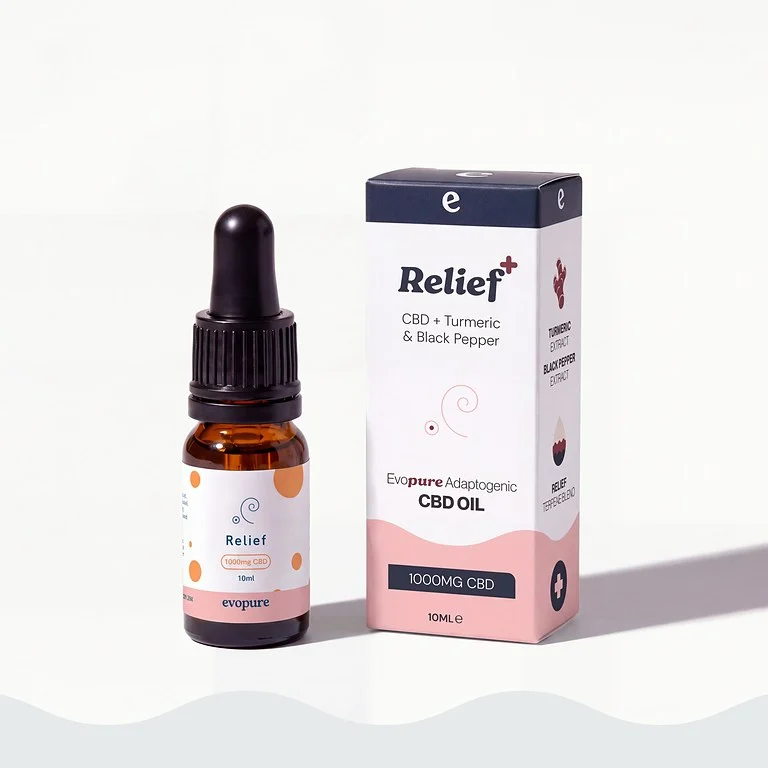
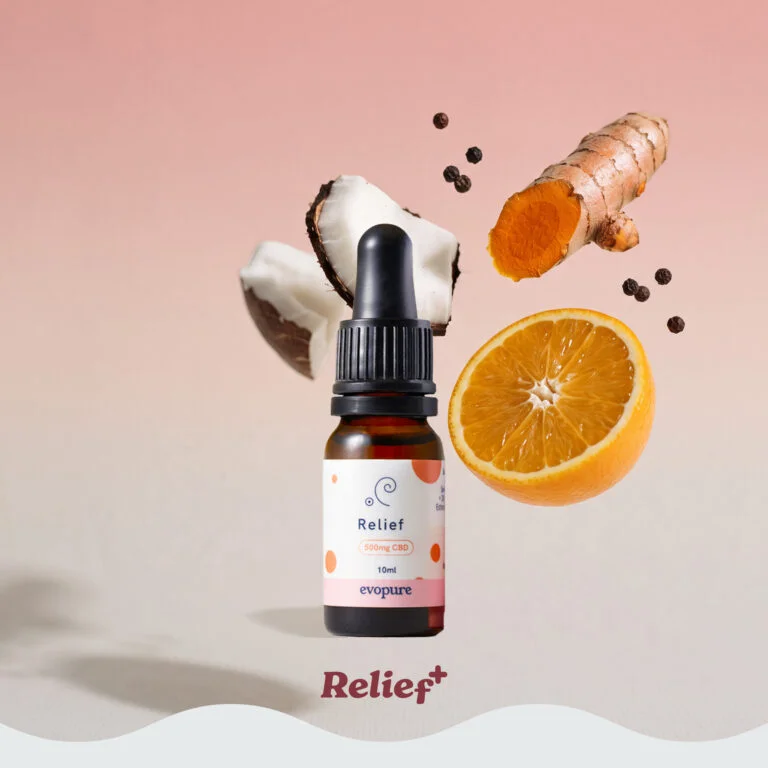
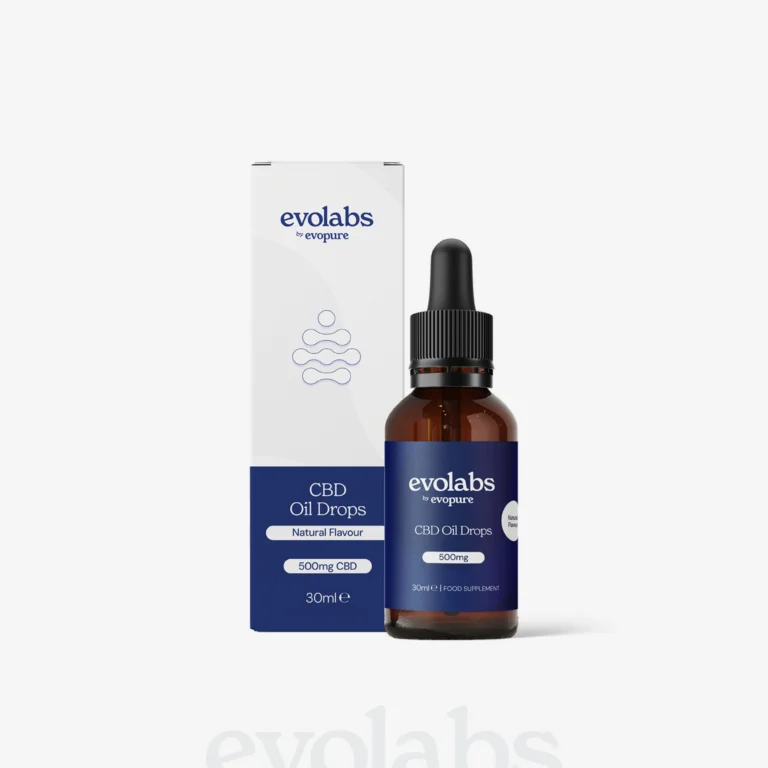
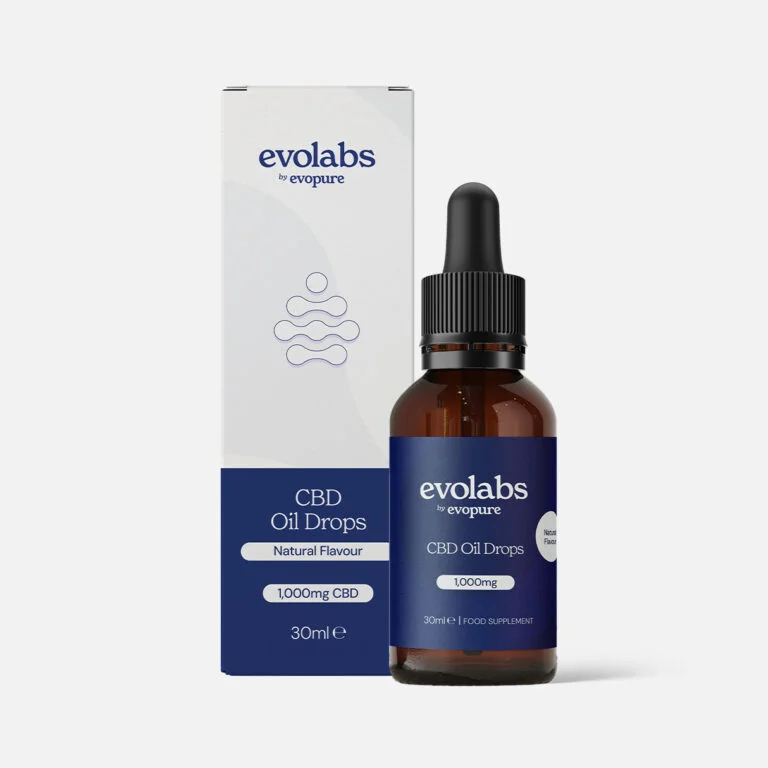
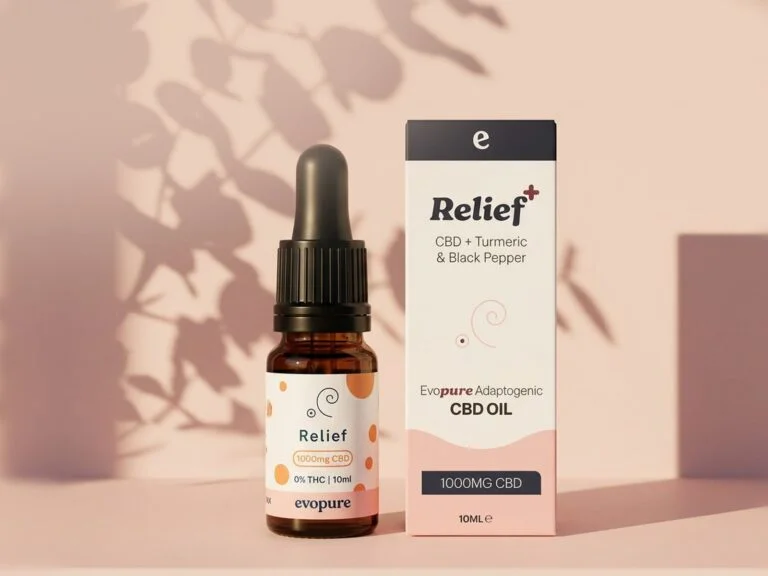
- Relief CBD Oil is a broad spectrum CBD oil with turmeric and black pepper extract in MCT oil, in 500mg and 1,000mg strengths, with 0% THC. It is a food supplement. CBD isn’t a treatment for inflammation, pain or arthritis. Because it contains turmeric and black pepper, the turmeric safety notes above apply: don’t use it if you have a liver, gallbladder or bile duct condition, and check with your GP or pharmacist first if you take blood thinners or any regular medication. See taking CBD and turmeric together.
- Reishi Mushroom Adaptogenic Complex is a warming hot chocolate made with reishi mushroom extract, organic cacao, maca, coconut milk powder and coconut sugar. A cosy swap for biscuits with your evening cuppa, it contains a little natural caffeine from the cacao.
- Magnesium Glycinate Sleep Complex is a berry-flavoured evening drink with magnesium bisglycinate and citrate (148mg of magnesium per serving), glycine, L-theanine, chamomile, passionflower, hops and oat straw. Magnesium contributes to a reduction of tiredness and fatigue and to normal muscle function. Food sources come first: see foods high in magnesium.
The FSA’s 10mg a day figure is precautionary advice rather than a legal limit, set while longer-term safety research continues. At Evopure we think it is a very cautious figure, and many adults use more. If you go above it, increase slowly, and check with your GP or pharmacist first if you take any medication.
All our products are for adults only, and we don’t recommend our products during pregnancy or breastfeeding.
When to see a GP
See a GP if you have joint pain, swelling or stiffness that doesn’t settle, ongoing gut symptoms, unexplained weight loss, or tiredness that doesn’t lift. These need a proper diagnosis rather than a diet change.
If you have a long-term condition or take regular medication, talk to your GP, specialist team or a registered dietitian before cutting out whole food groups or starting supplements. Never stop or swap a prescribed medicine for a diet or supplement.
FAQs
What is the best anti-inflammatory diet?
A Mediterranean-style diet has the best evidence: plenty of vegetables, fruit, beans, wholegrains, nuts and olive oil, with oily fish once or twice a week. It closely matches the NHS Eatwell Guide.
What foods should you avoid on an anti-inflammatory diet?
You don’t need to ban anything. Have less processed meat, sugary drinks, sweets, biscuits, refined white bread, butter, fried food and alcohol. There is no evidence that tomatoes, potatoes or other nightshades cause problems.
How long does it take for an anti-inflammatory diet to work?
There is no fixed timescale. Trials have measured changes in blood markers within about 10 to 12 weeks, so give changes at least 2 to 3 months, and treat it as a long-term way of eating.
Does the NHS recommend an anti-inflammatory diet?
The NHS doesn’t have a specific anti-inflammatory diet page. Its Eatwell Guide, with at least 5 a day, wholegrains, beans, oily fish and unsaturated oils, overlaps almost completely with one.
Is an anti-inflammatory diet good for weight loss?
It isn’t designed as a weight-loss diet, but swapping processed snacks and sugary drinks for vegetables, beans and wholegrains often helps. If you have knee osteoarthritis, losing 10% of your weight can significantly reduce pain.
Can an anti-inflammatory diet help arthritis?
UK charities such as NRAS recommend a Mediterranean-style diet alongside treatment. Small trials show modest effects on pain in rheumatoid arthritis. It doesn’t replace medicines, so talk to your rheumatology team first.
What is the best anti-inflammatory supplement?
None is proven to treat inflammation. Omega-3 fish oil, curcumin and ginger have the most studies, with modest results. Turmeric supplements carry a rare liver risk, so check with a pharmacist first, especially if you take medication.
Sources
- NHS. The Eatwell Guide.
- NHS. Fish and shellfish.
- NHS. Vitamin D.
- NHS. NSAIDs.
- British Heart Foundation (2024). Anti-inflammatory diet: what you need to know.
- National Rheumatoid Arthritis Society (NRAS). Diet.
- Arthritis Action. Diet and arthritis factsheet.
- Lab Tests Online UK. C-reactive protein (CRP).
- Furman D et al (2019). Chronic inflammation in the etiology of disease across the life span. Nature Medicine.
- Gkesou V et al (2026). The association of dietary inflammation index (DII) and health-related outcomes: an umbrella review of systematic reviews. Clinical Nutrition ESPEN.
- Keshani M et al (2026). Mediterranean diet reduces inflammation in adults: a systematic review and meta-analysis of randomized controlled trials. Nutrition Reviews.
- Estruch R et al (2018). Primary prevention of cardiovascular disease with a Mediterranean diet supplemented with extra-virgin olive oil or nuts (PREDIMED). New England Journal of Medicine.
- Schönenberger KA et al (2021). Effect of anti-inflammatory diets on pain in rheumatoid arthritis: a systematic review and meta-analysis. Nutrients.
- Vadell AKE et al (2020). Anti-inflammatory Diet In Rheumatoid Arthritis (ADIRA): a randomized, controlled crossover trial. American Journal of Clinical Nutrition.
- Wang W et al (2024). Effects of omega-3 supplementation on lipid metabolism, inflammation, and disease activity in rheumatoid arthritis: a meta-analysis. Clinical Rheumatology.
- Hahn J et al (2022). Vitamin D and marine omega 3 fatty acid supplementation and incident autoimmune disease: VITAL randomized controlled trial. BMJ.
- Gorabi AM et al (2022). Effect of curcumin on C-reactive protein as a biomarker of systemic inflammation: an updated meta-analysis. Phytotherapy Research.
- Morvaridzadeh M et al (2020). Effect of ginger (Zingiber officinale) on inflammatory markers: a systematic review and meta-analysis. Cytokine.
- Shoba G et al (1998). Influence of piperine on the pharmacokinetics of curcumin in animals and human volunteers. Planta Medica.
- Halegoua-DeMarzio D et al (2023). Liver injury associated with turmeric: a growing problem. Ten cases from the Drug-Induced Liver Injury Network. American Journal of Medicine.
- Hatfield J et al (2022). Dietary supplements and bleeding. Proceedings (Baylor University Medical Center).
- European Medicines Agency (2018). European Union herbal monograph on Curcuma longa L., rhizoma.
This guide is general information, not medical advice. Evopure makes the Relief CBD Oil, Reishi Mushroom Adaptogenic Complex and Magnesium Glycinate Sleep Complex.