


Last updated: October 2026
Vivid dreams are intense, lifelike dreams you remember clearly when you wake. They happen mostly in REM sleep and are usually harmless. Common causes are stress, a run of short nights, cutting back on alcohol or cannabis, pregnancy, fever and some medicines. Regular sleep, less evening alcohol and a calm wind-down usually help.
Below: what vivid dreams are, the common causes, why they can start suddenly, medicines and supplements that affect dreams, vivid dreams vs nightmares and night terrors, how to have calmer dreams and when to see a GP.
Is it something to worry about? Usually not. Most runs of vivid dreams have a clear trigger, like a stressful week, a few short nights or a change in what you drink or take, and they settle once that passes. See a GP if they’re distressing, last for weeks, or you act out your dreams in your sleep.
What are vivid dreams?
A vivid dream feels unusually real. The colours, sounds and emotions are strong, the story can be detailed or strange, and you often remember it clearly in the morning. Some people find them fun; others wake up tired or unsettled.
Most dreaming happens in REM (rapid eye movement) sleep. REM makes up about a quarter of adult sleep, and each REM period gets longer through the night, from around 10 minutes in the first cycle to up to an hour towards morning. That’s why the longest, most intense dreams tend to come in the early hours.
Whether you remember a dream depends a lot on when you wake. Waking during or just after REM, from an alarm, a partner or a need to pee, means the dream is still fresh. So “more vivid dreams” can partly mean “more waking up in the middle of them”.
What causes vivid dreams?
| Cause | Why it can make dreams vivid | What to try |
|---|---|---|
| Stress and anxiety | Daytime worries tend to carry into dreams | Write worries down before bed. See anxiety at night |
| Short or broken sleep | After a short night you get more REM the next night (REM rebound) | Keep regular sleep and wake times. See sleep debt |
| Alcohol | It delays and reduces REM, which can bounce back later in the night or after you stop | Stop drinking a few hours before bed |
| Stopping cannabis | Strange dreams are a recognised withdrawal symptom | They usually fade within a few weeks |
| Medicines | Some antidepressants, beta blockers, stop smoking medicines, nicotine patches and melatonin | Speak to your pharmacist or GP. Don’t stop a prescribed medicine on your own |
| Pregnancy | Hormone changes, broken sleep and worries about the birth | Tell your midwife if dreams are upsetting you |
| Fever or illness | Fever dreams tend to be stranger and more negative | They pass as you recover |
| Mental health conditions | Depression and PTSD can change dreaming, and PTSD can cause recurring nightmares | Speak to a GP or refer yourself to NHS Talking Therapies |
| Eating late | Weak evidence; a late meal may make you more likely to wake mid-dream | Eat your evening meal 2 to 3 hours before bed |
Why am I suddenly having vivid dreams?
When vivid dreams start out of the blue, the trigger is often something that has squeezed or blocked your REM sleep for a while. When it lifts, REM comes back strongly. Common examples:
- A run of short nights. After a short night, your body makes up for missed REM the next night: you enter it earlier and stay in it longer. This is called REM rebound.
- Cutting back on alcohol. Alcohol delays the first REM period at every dose, and moderate to high doses reduce REM across the night. Many people doing Dry January or Sober October notice unusually vivid dreams in the first week or two. See alcohol and sleep and Dry January.
- Stopping cannabis. Strange dreams are one of the most consistent symptoms of cannabis withdrawal, and they tend to start a little later than the other symptoms. The brain’s cannabinoid receptors return to normal within about 4 weeks of stopping, which fits with how long the dreams usually last.
- Coming off an antidepressant. The NHS lists strange dreams among antidepressant withdrawal symptoms. Never stop an antidepressant suddenly: your doctor can help you reduce it slowly.
- A stressful patch or a loss. Worry, big life changes and grief often show up in dreams.
Medicines and supplements that can cause vivid dreams
Important: if you think a prescribed medicine is causing vivid dreams, keep taking it and talk to your GP or pharmacist. They may be able to change the timing, the dose or the medicine.
- Antidepressants. A systematic review found that SSRIs and SNRIs, and even more so stopping them, seem to intensify dreaming, and can sometimes cause nightmares.
- Beta blockers. The NHS lists difficulty sleeping or nightmares as a common side effect of propranolol.
- Varenicline (a stop smoking tablet). Abnormal dreams are listed as very common, meaning they affect more than 1 in 10 people.
- Nicotine patches. Sleep problems, including abnormal dreams, are listed as very common with 24-hour patches. If they bother you, ask your pharmacist or local stop smoking service about other ways to use nicotine replacement.
- Melatonin. The NHS lists strange dreams as a common side effect. Melatonin is prescription-only in the UK: see melatonin in the UK.
- Vitamin B6. In a trial of 100 adults, 240mg of B6 before bed for five nights increased how much of their dreams people remembered, but not how vivid or bizarre they were. That dose is far above the NHS advice to take no more than 10mg a day from supplements. See vitamin B6.
- Magnesium. Some people say magnesium at night gives them vivid dreams. We couldn’t find good research on this either way, so treat it as anecdote. If you notice it, try a lower dose or take it earlier in the evening. See magnesium for sleep.
Some herbal supplements, such as 5-HTP and valerian, also have vivid dreams among their reported side effects. If dreams started when you began something new, that’s the first thing to look at.
Vivid dreams in pregnancy
Vivid and strange dreams are common in pregnancy. Hormone changes, more night waking and natural worries about the birth all play a part. In one study, women in their third trimester reported more bad dreams and nightmares than women who weren’t pregnant, and more bad dreams went with poorer sleep.
For many women the dreams settle on their own. If they’re frightening you or affecting your sleep, mention it to your midwife or GP. We don’t recommend our products during pregnancy or breastfeeding.
Vivid dreams vs nightmares vs night terrors
| Vivid dreams | Nightmares | Night terrors | |
|---|---|---|---|
| What it is | An intense, realistic dream, good or bad | A frightening dream that wakes you | Screaming, thrashing or sitting up while still asleep |
| When | Mostly later in the night | Later in the night | Early in the night |
| Remember it? | Often, clearly | Yes | Rarely |
| Who | Anyone | Children and adults | Mainly children aged 3 to 8 |
| Read more | This guide | Nightmares | Night terrors |
A vivid dream also isn’t the same as a lucid dream. In a lucid dream you know you’re dreaming; in a vivid dream it just feels real. If you wake and can’t move for a few seconds, that’s sleep paralysis. A loud bang or flash as you drift off is exploding head syndrome, not a dream.
How to stop vivid dreams
You can’t switch dreaming off, and you wouldn’t want to: REM sleep matters for memory and mood. But you can make dreams calmer and wake up in them less often.
- Keep regular sleep and wake times, even at weekends. This stops the short-night, rebound-night cycle.
- Stop alcohol a few hours before bed, and expect a week or two of livelier dreams if you cut it out completely.
- Wind down for an hour with dim lights and something calm. See our bedtime routine for adults.
- Write down what’s on your mind before bed so it’s on paper, not on loop. See journal prompts for anxiety.
- Avoid frightening or stressful content late at night: horror films, the news, work emails.
- Eat earlier. Research on food and dreams is thin: in one survey, 17.8% of students thought certain foods affected their dreams, most often dairy. A lighter, earlier meal is still kinder to sleep. See eating before bed.
- Keep the bedroom cool, dark and quiet so you wake less in the second half of the night.
- For recurring bad dreams, try imagery rehearsal. Write the dream down, change the story to something less upsetting, and rehearse the new version for a few minutes each day. It’s the approach the American Academy of Sleep Medicine recommends for nightmare disorder.
Some people like a warm, alcohol-free drink as part of their wind-down. Our Magnesium Glycinate Sleep Complex is a berry-flavoured powder with magnesium bisglycinate and citrate, L-theanine, chamomile, passionflower and hops. Magnesium contributes to normal psychological function and to the normal functioning of the nervous system. It isn’t a treatment for vivid dreams.
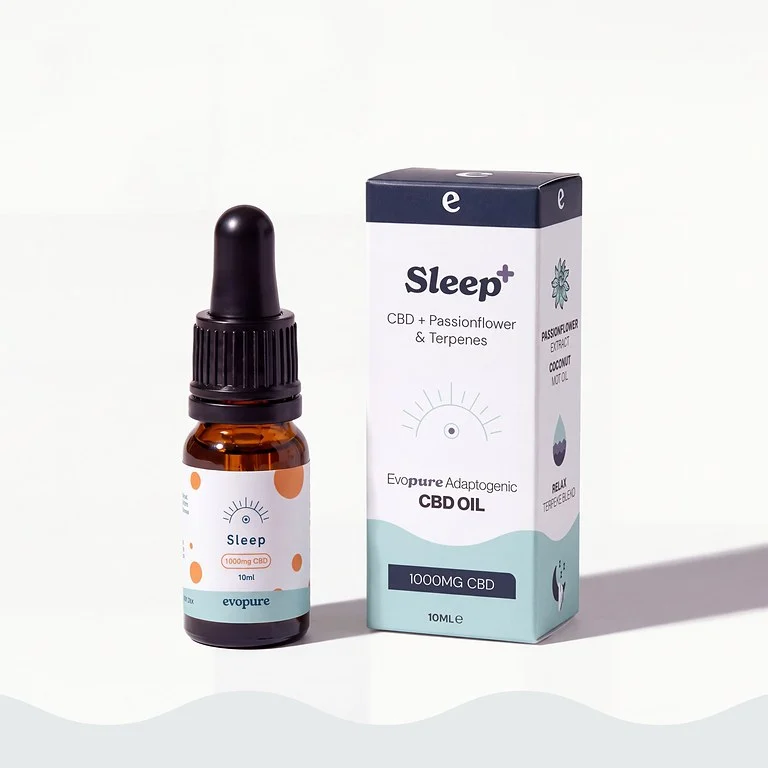
Others add a few drops of our Sleep CBD Oil, a broad spectrum oil with passion flower and a terpene blend, to their evening routine. CBD isn’t a treatment for sleep problems or nightmares. The FSA’s 10mg a day figure is precautionary advice rather than a legal limit, set while longer-term safety research continues. At Evopure we think it is a very cautious figure, and many adults use more. If you go above it, increase slowly, and check with your GP or pharmacist first if you take any medication.
When to see a GP
See a GP if:
- vivid dreams or nightmares are regular and distressing, or leave you scared to go to sleep
- they’re affecting your mood, energy or work
- they started after a new medicine (keep taking it until you’ve spoken to your GP or pharmacist)
- you have recurring dreams about a traumatic event, which can be a sign of PTSD
- you shout, punch or kick in your sleep, acting out your dreams. This can be REM sleep behaviour disorder, where the muscles don’t relax as they normally do in REM. It can be linked to some antidepressants and to conditions that affect the brain, such as Parkinson’s disease, so it’s worth getting checked, even if it seems minor.
Adults in England can refer themselves to NHS Talking Therapies for help with anxiety, depression or trauma. If you feel unable to cope or have thoughts of harming yourself, call 999, NHS 111 or Samaritans on 116 123.
FAQs
Why am I having vivid dreams all of a sudden?
Common triggers are stress, a few short nights, cutting back on alcohol or cannabis, a new medicine, coming off an antidepressant, pregnancy or a fever. Think about what changed in the week or two before they started.
Are vivid dreams a sign of illness?
Usually not. Most have an everyday cause. See a GP if they’re distressing, last for weeks, come with low mood, or if you act out your dreams in your sleep.
Is it normal to have vivid dreams every night?
Some people naturally remember their dreams more than others. Nightly vivid dreams are more likely if you wake often in the early hours, are stressed or are sleeping short. If they bother you, work through the causes above.
Do vivid dreams mean you are sleeping well?
Not necessarily. They show you’re getting REM sleep, but remembering lots of dreams often means you’re waking during or just after them.
Can magnesium cause vivid dreams?
Some people say so, but there’s no good research on it either way. If you notice it, try a lower dose or take it earlier in the evening.
How long do vivid dreams last after stopping alcohol or cannabis?
After cutting out alcohol, many people notice livelier dreams for a week or two. After stopping regular cannabis, strange dreams often last a few weeks. Speak to a GP before stopping if you have been drinking heavily.
Sources
- The Sleep Charity. Vivid dreams.
- Cleveland Clinic. Sleep basics.
- Harvard Health Publishing. REM sleep: what is it, why is it important, and how can you get more of it?
- Ebrahim IO et al (2013). Alcohol and sleep I: effects on normal sleep. Alcoholism: Clinical and Experimental Research.
- Bonnet U, Preuss UW (2017). The cannabis withdrawal syndrome: current insights. Substance Abuse and Rehabilitation.
- Tribl GG et al (2013). Dreaming under antidepressants: a systematic review on evidence in depressive patients and healthy volunteers. Sleep Medicine Reviews.
- NHS. Antidepressants.
- NHS. Side effects of propranolol.
- NHS. Side effects of melatonin.
- Electronic Medicines Compendium. Varenicline 0.5mg and 1mg tablets: summary of product characteristics.
- Electronic Medicines Compendium. Nicotine 24-hour transdermal patch: summary of product characteristics.
- Aspy DJ (published as Adventure-Heart DJ) et al (2018). Effects of vitamin B6 (pyridoxine) and a B complex preparation on dreaming and sleep. Perceptual and Motor Skills.
- NHS. Vitamins and minerals: B vitamins and folic acid.
- Lara-Carrasco J et al (2014). Disturbed dreaming during the third trimester of pregnancy. Sleep Medicine.
- Schredl M, Erlacher D (2020). Fever dreams: an online study. Frontiers in Psychology.
- Nielsen T, Powell RA (2015). Dreams of the Rarebit Fiend: food and diet as instigators of bizarre and disturbing dreams. Frontiers in Psychology.
- NHS. Night terrors and nightmares.
- NHS. Post-traumatic stress disorder (PTSD).
- Morgenthaler TI et al (2018). Position paper for the treatment of nightmare disorder in adults: an American Academy of Sleep Medicine position paper. Journal of Clinical Sleep Medicine.
- Dauvilliers Y et al (2018). REM sleep behaviour disorder. Nature Reviews Disease Primers.
This guide is general information, not medical advice. Evopure makes the Magnesium Glycinate Sleep Complex and Sleep CBD Oil.