














Last updated: 19 November 2026
Can you take magnesium with the contraceptive pill? Most people can. The BNF lists no interaction between magnesium and the hormones in the pill, and no official source says magnesium makes the pill less effective. The one catch is diarrhoea: high doses of magnesium can cause it, and diarrhoea lasting more than 24 hours can stop the pill working.
Checked against the BNF, the NHS, the product information for two common pills and the morning after pill, and PubMed on 19 November 2026. This is general information, not medical advice. Keep taking your pill exactly as prescribed.
What the BNF and NHS say
The BNF, the reference UK doctors and pharmacists use, keeps interaction lists for magnesium, for antacids (many contain magnesium) and for each contraceptive hormone. Checked on 19 November 2026:
| Source | Contraceptive or magnesium entry | What it means for you |
|---|---|---|
| BNF magnesium list (38 interactions) | No contraceptive hormone listed | No documented interaction |
| BNF antacid list (73 interactions) | Only ulipristal (ellaOne), the morning after pill | Tell the pharmacist about antacids |
| BNF lists for ethinylestradiol, levonorgestrel, desogestrel, drospirenone, norethisterone and etonogestrel | No magnesium or antacid entry | No documented interaction |
| NHS combined and mini pill pages | Magnesium not named among medicines that affect the pill | No special rule |
One general note on the BNF’s magnesium page applies to everyone. It says magnesium antacids “and other oral magnesium preparations” should preferably not be taken at the same time as other drugs, because they might impair absorption, and that some manufacturers suggest separating them by several hours. We found no study of magnesium supplements and the pill taken together.
Does magnesium make the pill less effective?
No source says it does. The medicines that make hormonal contraception fail are mostly “enzyme inducers”, which speed up the liver enzymes that clear the pill’s hormones. The Microgynon 30 product information says this happens especially through an enzyme called CYP3A4. The BNF’s examples of enzyme inducers include carbamazepine, phenytoin, topiramate, rifampicin and St John’s wort. Magnesium is not among them.
The NHS asks you to get advice before taking the combined pill if you take medicine for TB, epilepsy or HIV, or griseofulvin, lamotrigine or St John’s wort. If you take magnesium alongside any of those, the other medicine is the one to ask about. See St John’s wort and magnesium and lamotrigine.
Diarrhoea and the missed pill rules
This is the real link between magnesium and the pill. The Microgynon 30 product information says vomiting or diarrhoea may reduce how well the pill works by preventing full absorption. And the NHS says taking more than 400mg of magnesium a day for a short time can cause diarrhoea.
The NHS rules, whatever the cause:
- Combined pill. If you have diarrhoea for more than 24 hours, keep taking your pill as normal and use another method, such as condoms, until 7 days after it stops. If you’re sick less than 3 hours after a pill (4 hours for Qlaira or Zoely), take another straight away.
- Mini pill. It may not work if you have severe watery diarrhoea, or vomit within 2 hours of a traditional progestogen-only pill or 3 to 4 hours of a desogestrel or drospirenone pill. Speak to a pharmacist, sexual health clinic or GP, or call 111. You may need emergency contraception.
To keep it simple: stay at 400mg or less a day from supplements, as the NHS advises, and count any magnesium in indigestion remedies towards that total. If a magnesium product upsets your stomach, stop it and follow the rules above. More on this: magnesium side effects.
Magnesium and the morning after pill
Here there is a listed point, but it’s about antacids. The BNF says antacids might decrease the efficacy of ulipristal (ellaOne) for emergency contraception, rated theoretical. Its contraception guidance adds that the effectiveness of ulipristal in people using medicines that raise stomach pH is unknown, and that a copper IUD or levonorgestrel can be offered instead.
The ulipristal product information explains why: in a study, a stomach acid medicine (esomeprazole) lowered peak ulipristal levels by about 65%, and it says the clinical relevance for a single emergency dose is not known. The BNF lists no magnesium or antacid interaction with levonorgestrel (Levonelle).
If you need emergency contraception, don’t delay it. Tell the pharmacist about any antacids, indigestion remedies, stomach acid tablets or magnesium products you’ve taken, and let them choose.
Does the pill lower magnesium?
Possibly a little, but the evidence is thin. The NHS doesn’t list low magnesium as a side effect of the combined pill. A few small studies have looked at blood levels:
- A 2013 review listed magnesium among the nutrients that may be lower in people taking the pill, based mainly on studies comparing blood levels in users and non-users.
- A 2001 study of 50 women in Pakistan found lower blood magnesium after starting a combined pill.
- A 2025 study of 140 women in Bangladesh found lower average blood magnesium in pill users than non-users.
These studies are small, mostly compare different groups of people, and don’t show that the pill causes magnesium deficiency or that a supplement changes anything. If you’re worried, ask your GP whether a blood test makes sense rather than guessing. See signs of magnesium deficiency.
Most adults can get enough from food: the NHS says women aged 19 to 64 need 270mg a day and men 300mg. See how much magnesium per day.
Timing magnesium around your pill
No source sets a gap between magnesium and the pill, so we won’t invent one. What the sources do say:
- Your pill comes first. Take it at the same time each day, as your pack says. The mini pill has a tighter window, so never move your pill to fit a supplement.
- The BNF’s general advice is that oral magnesium is preferably not taken at the same time as other medicines. An easy routine: pill at your usual time and magnesium at a different time of day, or as your pharmacist suggests.
- Other medicines have set gaps. Levothyroxine, some antibiotics and gabapentin have their own rules.
Our hub on what not to take with magnesium lists every set gap, and the best time to take magnesium covers building a routine.
Who should check with a GP or pharmacist first
The BNF advises caution with magnesium supplements in kidney impairment, because of the risk of too much magnesium in the blood, and avoiding them when kidney function is very low.
Ask your GP or pharmacist before adding magnesium if you:
- have kidney disease, or have been told your kidney results are lower than normal
- take medicine for epilepsy, TB or HIV, or any other regular medicine
- take indigestion remedies or stomach acid tablets often
- are thinking of a product with herbal extracts
- are pregnant, trying for a baby or breastfeeding
iComing off the pill to try for a baby? That’s a GP or pharmacist question, including which supplements suit you. See magnesium in pregnancy. Using HRT rather than contraception? See magnesium and HRT.
Magnesium glycinate vs citrate vs antacids on the pill
No form has been studied with the pill, and the BNF lists none of them with contraceptive hormones. The practical differences are your stomach and the extras.
| Form | What to know on the pill |
|---|---|
| Magnesium glycinate (bisglycinate) | Magnesium bound to glycine. No BNF entry |
| Magnesium citrate | Magnesium bound to citric acid. No BNF entry |
| Magnesium antacids | Count towards your total. Mention them if you need the morning after pill |
| Any form | More than 400mg a day can cause diarrhoea (NHS) |
More on each: magnesium glycinate, magnesium citrate and magnesium glycinate side effects.
Where Evopure fits
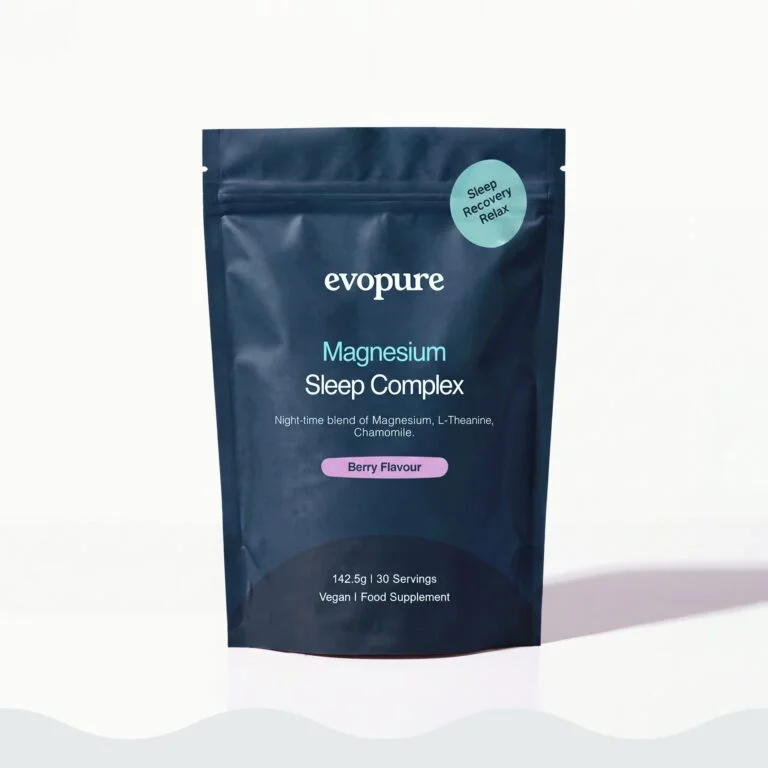
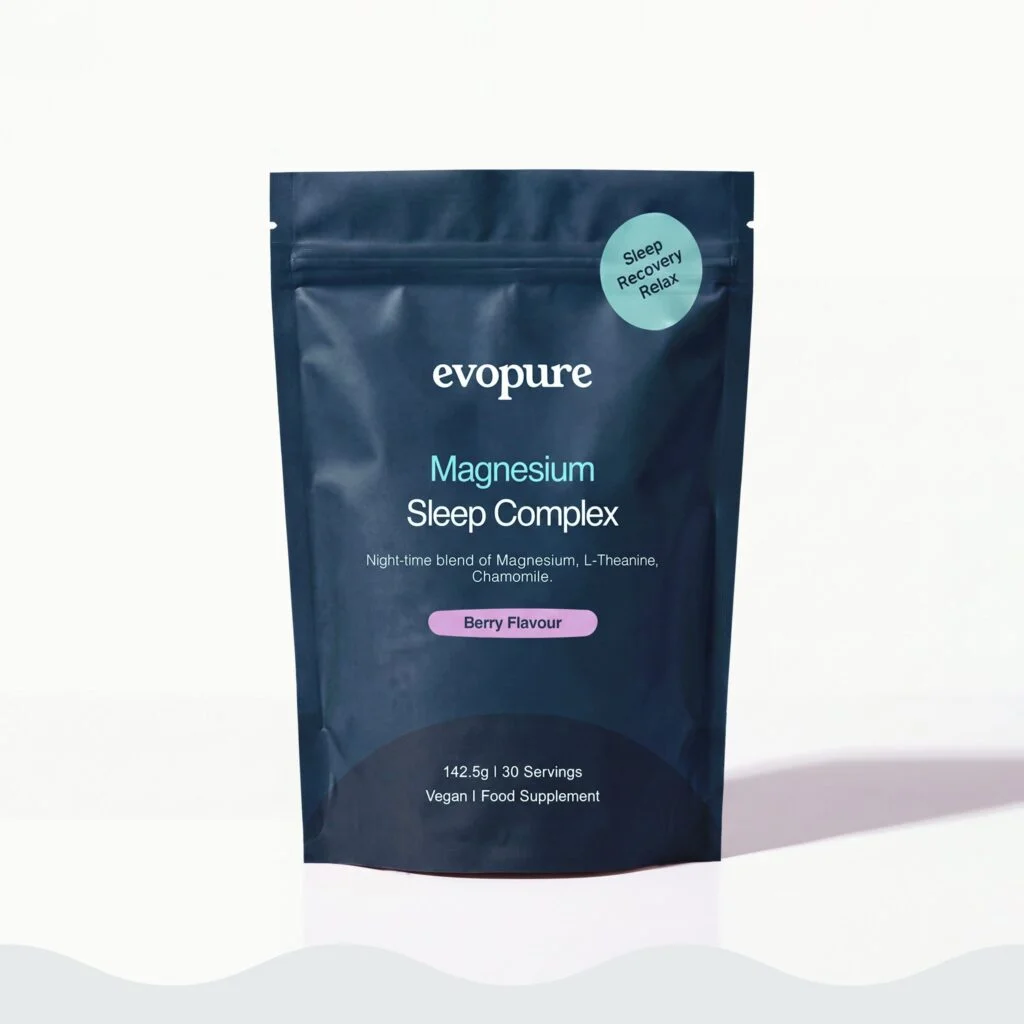
No source shows any of our products changing how the pill works, and we make no claims about hormones. If you’d like a magnesium supplement, our Magnesium Glycinate Sleep Complex is a berry drink powder with 290mg of magnesium (77% NRV) per 4.75g serving, from magnesium bisglycinate and citrate. To be upfront: it also contains glycine, L-theanine and extracts of chamomile, passionflower, hops and oat straw, so if you take other medicines, show the label to your pharmacist.
Our pick
Magnesium Glycinate Sleep Complex
Magnesium Glycinate Sleep Complex. Magnesium contributes to a reduction of tiredness and fatigue, to normal muscle function and to normal psychological function. A berry drink you can take at the same time each day, apart from your pill.
Add Magnesium Glycinate Sleep Complex to bag See ingredients and reviews
Rated 4.7 out of 5 from 15 ratings on the product page (checked 19 November 2026). We make it, so we’re not neutral. Vegan and made in the UK. Subscribe and save 25% on your first order, then 20%. New to Evopure? Join our emails for 20% off a one-off first order. Free UK delivery over £40. Adults only. We don’t recommend our products during pregnancy or breastfeeding.
Subscribe £17.99One-off £29.99
View productWhy only one product? Our Reishi hot chocolate contains a little natural caffeine and its pack says it isn’t for people taking medication. The FSA advises people taking any medication, including the pill, not to use CBD unless under medical direction: read CBD and the pill first. Prefer plain magnesium with no herbs? Ask your pharmacist for a single-ingredient product.
Wondering about drowsiness from the herbal extras? See does magnesium make you sleepy?
Sources 8
- BNF (NICE). Magnesium interactions, antacids interactions, combined hormonal contraceptives interactions, desogestrel interactions and ulipristal interactions. Checked 19 November 2026.
- BNF (NICE). Contraceptives, interactions and magnesium glycerophosphate (renal impairment). Checked 19 November 2026.
- NHS. Sickness or diarrhoea on the combined pill and how to take the combined pill (reviewed 15 February 2024); sickness or diarrhoea on the progestogen-only pill (reviewed 22 February 2024). Checked 19 November 2026.
- NHS. Side effects and risks of the combined pill (reviewed 15 February 2024) and vitamins and minerals: others (magnesium) (reviewed 3 August 2020). Checked 19 November 2026.
- emc. Microgynon 30 ED tablets: summary of product characteristics (revised 13 February 2023) and Ulipristal 30mg film-coated tablets: summary of product characteristics (revised 24 July 2023). Checked 19 November 2026.
- Palmery M et al. Oral contraceptives and changes in nutritional requirements. Eur Rev Med Pharmacol Sci, 2013. PMID 23852908.
- Hameed A et al. Effect of oral and injectable contraceptives on serum calcium, magnesium and phosphorus in women. J Ayub Med Coll Abbottabad, 2001. PMID 11873394.
- Begum A et al. Status of fasting serum glucose and serum magnesium among women having low dose oral contraceptive pill. Mymensingh Med J, 2025. PMID 40160044.
General information, not medical advice. Evopure makes food supplements and is not connected with the makers of any medicine named here.