Last updated: November 2026
Men need about 300mg of magnesium a day, according to the NHS, and most can get it from wholegrains, nuts, seeds, beans and greens. Magnesium contributes to normal muscle function, a reduction of tiredness and fatigue and normal psychological function. From supplements, 400mg or less a day is unlikely to cause harm; glycinate is gentle on the stomach.
Yet UK survey data suggests about 1 in 5 men aged 19 to 64 eat less than the minimum. Below: how much men need at every age, signs you might be low, what the research really shows for sleep, muscles, stress, blood pressure and testosterone, how alcohol affects magnesium, the best type and how to take it safely.
Magnesium for men in 30 seconds: aim for 300mg a day, mostly from food. If your diet is light on greens, beans, nuts and wholegrains, or you drink most weeks, a supplement of 100 to 300mg can fill the gap. Glycinate (bisglycinate) is the easy-going choice for an evening routine. Stay at 400mg or less a day from supplements, and check with your GP or pharmacist first if you have kidney disease or take regular medication.
How much magnesium does a man need?
The NHS says men aged 19 to 64 need 300mg of magnesium a day. The UK reference figure stays at 300mg for older men too, so your need doesn’t drop at 50, 60 or 70. Women need a little less, 270mg (see magnesium for women).
Many men fall short. In the latest National Diet and Nutrition Survey (2019 to 2023), men aged 19 to 64 averaged 273mg a day from food, about 91% of the target, and 20% ate less than 190mg a day. That lower figure (the LRNI) is the amount that is enough for only a small minority of people, so regularly eating less than it suggests your intake is likely to be too low.
| Age | Magnesium a day (UK) | Men eating less than the minimum (190mg) |
|---|---|---|
| Men 19 to 64 | 300mg | 20% |
| Men 65 to 74 | 300mg | 11% |
| Men 75 and over | 300mg | 18% |
Magnesium for men over 40, 50 and 60
The target is the same at every adult age, but it can get harder to hit if your appetite falls, you drink more, or you start long-term medicines such as acid reflux tablets or water tablets (more on those below). For the bigger picture on what is worth taking from your 40s onwards, see our guide to supplements for men over 40 and 50.
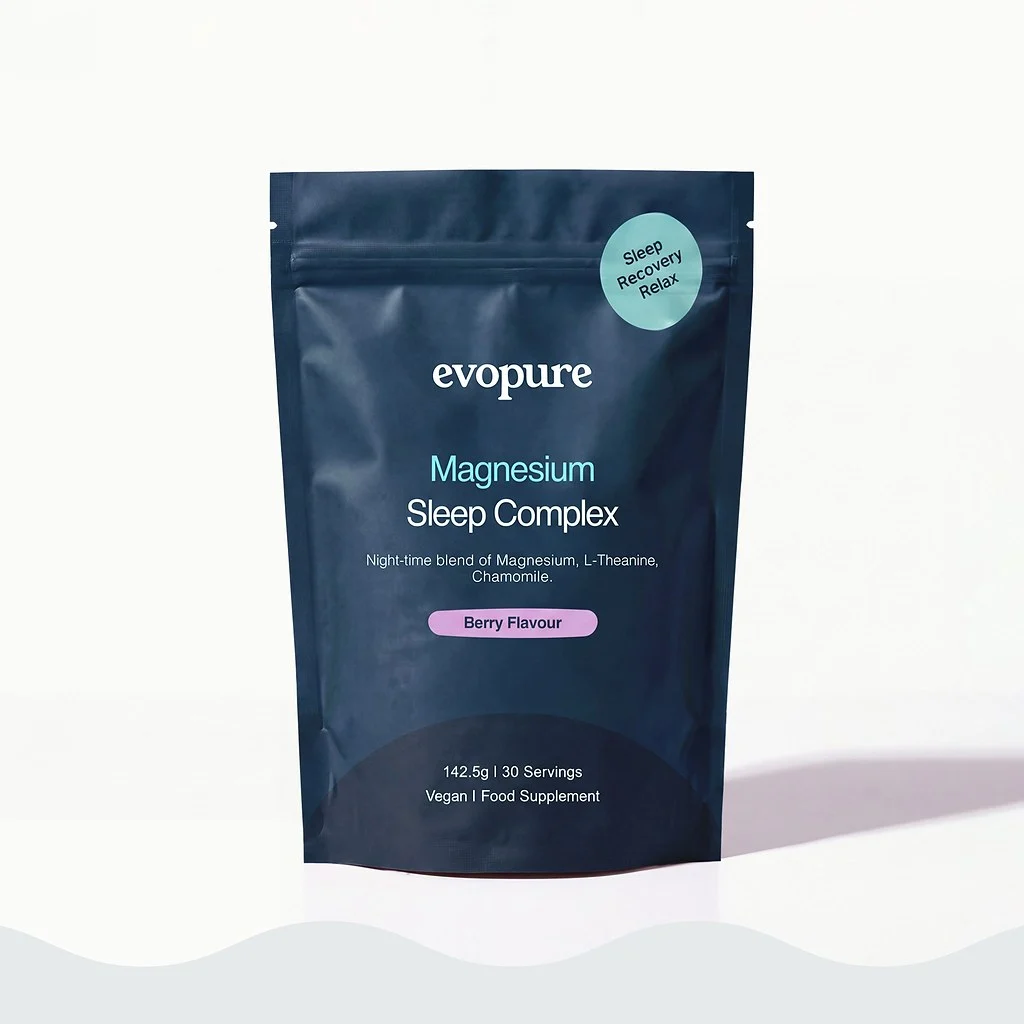
Our pick
Magnesium Glycinate Sleep Complex
Magnesium Glycinate Sleep Complex is a berry drink powder with 290mg of magnesium a scoop from bisglycinate and citrate, plus glycine and L-theanine. Magnesium contributes to a reduction of tiredness and fatigue.
Add Magnesium Glycinate Sleep Complex to bag See ingredients and reviews
Vegan and made in the UK. Subscribe and save 25% on your first order, then 20%. New to Evopure? Join our emails for 20% off a one-off first order. Free UK delivery over £45, 14-day returns on unopened items.
Subscribe £22.49One-off £29.99
View productWhat are the benefits of magnesium for men?
The proven benefits of magnesium for men are its authorised GB health claims: magnesium contributes to a reduction of tiredness and fatigue, normal energy-yielding metabolism, normal muscle function, normal functioning of the nervous system, normal psychological function, electrolyte balance, normal protein synthesis, the process of cell division and the maintenance of normal bones and teeth. Men need 300mg a day, says the NHS, mostly from food. Testosterone claims rest on small studies (see below).
Our pick, the Magnesium Glycinate Sleep Complex, gives 290mg of magnesium (77% NRV) per 4.75g serving, close to a man’s daily 300mg.
The FSA’s 10mg a day figure for CBD is precautionary advice rather than a legal limit, set while longer-term safety research continues. At Evopure we think it is a very cautious figure, and many adults use more. If you go above it, increase slowly, and check with your GP or pharmacist first if you take any medication.
Signs you might be low
Mild shortfalls often cause no obvious symptoms. When levels do drop, the UK medicines regulator lists muscle twitches, tremors, vomiting, tiredness and loss of appetite as signs to see a doctor about. Cramps, low mood and poor sleep are often blamed on magnesium too, but they have many causes.
Men more likely to run low include those who:
- eat few wholegrains, nuts, seeds, beans or green vegetables
- drink alcohol regularly or heavily
- take a proton pump inhibitor (such as omeprazole or lansoprazole) long term, or diuretics (water tablets)
- are over 75, when intakes dip again
iYour GP can check your level with a blood test if you have symptoms. Our guide to the signs of magnesium deficiency covers the full list and who is at risk.
What the research shows for men
Magnesium has a set of authorised health claims in Great Britain: it contributes to normal muscle function, a reduction of tiredness and fatigue, normal psychological function, normal functioning of the nervous system, normal energy-yielding metabolism, normal protein synthesis, electrolyte balance and the maintenance of normal bones and teeth. Beyond those, here is what studies show for the things men most often ask about. Most of these results are small or mixed, so treat them as research, not promises.
| Area | What studies show | Caveat |
|---|---|---|
| Sleep | A 2021 review of 3 trials in 151 older adults found people fell asleep about 17 minutes faster on magnesium than on placebo | Total sleep time didn’t improve significantly, and the evidence was rated low quality |
| Muscle cramps | A 2020 Cochrane review of 11 trials found magnesium is unlikely to prevent ordinary night cramps in older adults | It may still matter if you are genuinely low; get persistent cramps checked |
| Exercise and recovery | A 2017 review found the need for magnesium may rise with activity, and some small trials showed gains in measures such as leg strength | Mostly small studies; little sign of a boost if you already get enough |
| Stress | A 2017 review of 18 studies found hints of benefit for feelings of anxiety in people already prone to it | Study quality was poor, and none measured stress properly |
| Blood pressure | A 2016 analysis of 34 trials (2,028 people) found about 368mg a day for 3 months lowered blood pressure by about 2/1.8 mmHg | A small effect; not a replacement for prescribed treatment |
| Testosterone | A small 2011 trial and a study of 399 older Italian men linked magnesium with higher testosterone | Small or observational studies; no authorised claim (see below) |
| Type 2 diabetes risk | Across 40 long-term studies of over 1 million people, each extra 100mg a day from food was linked with about 19% lower risk | Observational: people who eat more magnesium also tend to eat better overall |
For sleep, magnesium is best seen as one part of a wind-down routine rather than a sleeping pill. Compare forms in our guide to the best magnesium for sleep. If cramps are your reason, read magnesium for cramps first, as stretching often matters more.
If you train hard, magnesium sits alongside protein, sleep and, for strength work, creatine. Our guide to magnesium for muscle pain covers post-workout aches in more detail. Stress in men often shows up as poor sleep, irritability and tiredness; see stress in men for what helps most.
Does magnesium increase testosterone?
Not in any proven way for most men. The claim online usually traces back to two studies:
- A small 2011 trial gave taekwondo athletes and inactive young men 10mg of magnesium per kg of body weight for 4 weeks and found higher free and total testosterone. That dose is about 800mg a day for an 80kg man, double the NHS 400mg guide for supplements.
- A 2011 study of 399 Italian men aged 65 and over found those with higher blood magnesium tended to have higher testosterone. It shows a link, not cause and effect.
There is no authorised health claim for magnesium and testosterone in Great Britain. The only mineral with an authorised testosterone claim is zinc, which contributes to the maintenance of normal testosterone levels in the blood. If you’re worried about low energy, low libido or erection problems, see your GP, who can check your testosterone with a blood test. Our guide to ashwagandha for men covers the other popular “testosterone” supplement honestly.
Alcohol and magnesium
Alcohol is one of the main causes of magnesium loss. A review of clinical and laboratory research found that drinking can make the kidneys pass two to three times more magnesium in urine, and that long-term heavy drinking lowers magnesium in muscle, heart, liver and brain tissue.
So if you drink most weeks, food matters even more. The NHS advises men and women not to drink more than 14 units a week on a regular basis, spread over 3 or more days. Alcohol also fragments sleep, which is why the late-night drink so often leads to a 3am wake-up; see alcohol and sleep.
Best magnesium for men
There isn’t one best magnesium for every man. The right form depends on your goal, your stomach and your budget. Here’s how the common types compare.
| Form | Good to know | Often chosen for |
|---|---|---|
| Glycinate (bisglycinate) | Magnesium bound to the amino acid glycine; gentle on the stomach | Evening routines and everyday use |
| Citrate | A common, good-value form; can loosen stools at higher doses | General top-ups, or if you’re also prone to constipation |
| Malate | Bound to malic acid; usually taken in the day | Daytime routines |
| L-threonate | Studied mainly for the brain, in small trials; usually pricier | People interested in the brain research |
| Oxide | Lots of magnesium per tablet, but one study found only about 4% was absorbed | Cheap tablets and some medicines |
For most men, glycinate or a glycinate and citrate blend is a sensible place to start. For every form side by side, see our guide to the 12 types of magnesium.
Our Magnesium Glycinate Sleep Complex is a berry-flavoured evening drink made with magnesium bisglycinate and magnesium citrate, giving 290mg of magnesium per serving, close to a man’s daily 300mg. It also contains glycine, L-theanine, chamomile, passionflower, hops and oat straw. Magnesium contributes to normal muscle function and to a reduction of tiredness and fatigue; the other ingredients don’t have authorised health claims. It’s for adults only. We don’t recommend our products during pregnancy or breastfeeding.
Food first: the best sources for men
Food is the best place to start, and a few swaps go a long way. Figures below are worked out from USDA FoodData Central values per 100g, for typical UK portions.
| Food and portion | Magnesium | Share of 300mg |
|---|---|---|
| Pumpkin seeds, roasted, 30g | 165mg | 55% |
| Almonds, roasted, 30g | 84mg | 28% |
| Cashews, roasted, 30g | 78mg | 26% |
| Spinach, boiled, 90g | 78mg | 26% |
| Brown rice, cooked, 180g | 70mg | 23% |
| Dark chocolate (70 to 85%), 25g | 57mg | 19% |
| Black beans, cooked, 80g | 56mg | 19% |
| Porridge oats, 40g dry | 55mg | 18% |
| Wholemeal bread, 2 slices (70g) | 53mg | 18% |
A day with porridge, a handful of almonds, wholemeal toast, beans and a portion of greens gets most men past 300mg without a supplement. See our full list of foods high in magnesium.
Who should check first?
iSpeak to your GP or pharmacist before taking magnesium if any of these apply:
- Kidney disease. Your kidneys clear extra magnesium. The BNF advises caution with magnesium supplements in kidney problems because of the risk of high magnesium levels, and to avoid them when kidney function is severely reduced.
- Some antibiotics. Magnesium reduces the absorption of tetracycline antibiotics such as doxycycline. The BNF advises taking them at least 2 to 3 hours apart.
- Bisphosphonates for bone health. Magnesium reduces the absorption of alendronic acid (take it at least 30 minutes before magnesium) and risedronate (keep at least 2 hours apart).
- Long-term acid reflux tablets (PPIs). The UK medicines regulator warns that PPIs such as omeprazole can lower magnesium, mostly after a year or more, and that doctors may check your levels.
- Diuretics (water tablets). Some can lower magnesium, especially alongside a PPI.
iIf you take several medicines, a pharmacist can quickly check timings for you.
How much to take and how
- Work out your gap. If you eat well, you may not need a supplement at all. If your diet is patchy, 100 to 300mg a day is usually plenty.
- Stay at 400mg or less from supplements. The NHS says this is unlikely to cause harm, while more than 400mg in a short time can cause diarrhoea.
- Take it with food, which is kinder to your stomach.
- Pick a time you’ll stick to. Many men take glycinate in the evening as part of a wind-down routine. See the best time to take magnesium.
- Split larger amounts into two doses, morning and evening, if loose stools are a problem. Our guide to magnesium side effects explains what to watch for.
- Give it a few weeks before judging how you feel, and cut back if it upsets your stomach.
iFeeling tired all the time is worth getting checked rather than self-treating; our guide to magnesium for energy explains where magnesium fits and when to see a GP.
Related guides
- For a flexible daily dose, see magnesium powder vs tablets.
- Looking for a present rather than a supplement plan? See our wellness gifts for him, from walking kit to warm evening drinks.
- More on the brain-focused form in our magnesium L-threonate guide.
- If you’ve come across CBD for this, read what the evidence says about CBD and erectile dysfunction.
- Taking zinc as well? Our guide to magnesium vs zinc compares the two and explains how to take them together.
- How much magnesium per day: UK amounts for men and women.
- Magnesium taurate is often marketed to men for heart health; here is what the evidence on magnesium taurate actually shows.
- Our Movember men’s health guide for simple sleep, stress and energy habits this November.
- If you’re looking at ZMA, read zinc benefits, side effects and the 25mg limit first.
- Comparing products? Our best magnesium supplement UK buying guide sets out what to look for on the label.
- Many products sold for men are multi-form blends; see is a magnesium complex better than one form?
- Buying for someone else? See our Christmas wellness gifts for men.
- Weighing up forms? Read magnesium threonate vs citrate vs glycinate.
- For a label-by-label look at a sports brand’s range, including ZMA, see Myprotein magnesium.
- Daily intake matters more than timing because stores build over weeks: see how long magnesium stays in your body.
- For men in their 60s and 70s, magnesium for older adults explains why intakes slip after 75 and what to check first.
- Tiredness, poor sleep and low mood in your 40s and 50s have many possible causes: see male menopause symptoms for the common ones.
-
For a ZMA and zinc and magnesium label checked, see Myvitamins magnesium.
- Looking for a present? See Christmas gifts for husband for evening routine and gym gift ideas.
- Men’s mental health month for the November dates and simple habits that help.
- Does tongkat ali increase testosterone?
Next step
Magnesium Glycinate Sleep Complex
Want an easy evening top-up? Evopure’s Magnesium Glycinate Sleep Complex gives 290mg of magnesium (77% NRV) per 4.75g serving from bisglycinate and citrate, in a berry drink. Magnesium contributes to normal muscle function and to a reduction of tiredness and fatigue.
Add Magnesium Glycinate Sleep Complex to bag See ingredients and reviews
Subscribe and save 25% on your first order, then 20%. New to Evopure? Join our emails for 20% off a one-off first order. Free UK delivery over £45. If you take any regular medicines, check with your GP or pharmacist first.
Subscribe £22.49One-off £29.99
View productSources 17
- NHS. Vitamins and minerals: others (magnesium).
- Office for Health Improvement and Disparities. National Diet and Nutrition Survey 2019 to 2023 (chapter 5 tables 5.26 and 5.41).
- Department of Health and Social Care. Great Britain nutrition and health claims (NHC) register.
- MHRA. Proton pump inhibitors in long-term use: reports of hypomagnesaemia.
- BNF. Magnesium interactions and magnesium glycerophosphate (renal impairment).
- NHS. The risks of drinking too much.
- Garrison SR, et al. Magnesium for skeletal muscle cramps. Cochrane Database Syst Rev, 2020.
- Mah J, Pitre T. Oral magnesium supplementation for insomnia in older adults. BMC Complement Med Ther, 2021.
- Zhang X, et al. Effects of magnesium supplementation on blood pressure. Hypertension, 2016.
- Boyle NB, et al. The effects of magnesium supplementation on subjective anxiety and stress. Nutrients, 2017.
- Zhang Y, et al. Can magnesium enhance exercise performance? Nutrients, 2017.
- Cinar V, et al. Effects of magnesium supplementation on testosterone levels of athletes and sedentary subjects. Biol Trace Elem Res, 2011.
- Maggio M, et al. Magnesium and anabolic hormones in older men. Int J Androl, 2011.
- Fang X, et al. Dietary magnesium intake and the risk of cardiovascular disease, type 2 diabetes and all-cause mortality. BMC Med, 2016.
- Romani AM. Magnesium homeostasis and alcohol consumption. Magnes Res, 2008.
- Firoz M, Graber M. Bioavailability of US commercial magnesium preparations. Magnes Res, 2001.
- USDA. FoodData Central (SR Legacy entries 170557, 170158, 170571, 168463, 169704, 170273, 173735, 173904, 172688).
This guide is general information, not medical advice. Evopure makes the Magnesium Glycinate Sleep Complex.