Last updated: 18 November 2026
Should you stop magnesium before surgery or a blood test? Follow your hospital’s instructions and tell the team. Before surgery, tell your surgeon, anaesthetist or pre-op nurse about every supplement, including magnesium, CBD and herbal products, and ask whether to pause each one. For most blood tests you needn’t stop, but say you take magnesium.
Checked against the NHS, the NHS Specialist Pharmacy Service, an NHS hospital leaflet, the UK Clinical Pharmacy Association’s Handbook of Perioperative Medicines, the BNF and Lab Tests Online UK on 18 November 2026. This is general information, not medical advice. Never stop a prescribed medicine to prepare for surgery or a test unless your team tells you to.
What NHS pre-op guidance says
Before planned surgery you’ll usually have a pre-operative assessment, in person, by video or by phone. The NHS says to make sure you know all the medicines, vitamins and herbal supplements you take, and that you’ll be given clear information on:
- whether you need to stop eating and drinking in the hours before your operation
- whether you should stop taking your usual medicines before going into hospital
- what to bring with you
Details vary between hospitals, so the NHS also says to check your own hospital’s information. In practice that means your pre-op letter or nurse sets the rules, including for supplements.
Tell your surgeon or anaesthetist about every supplement you take. That includes magnesium, CBD and herbal products such as passionflower and valerian, even if they are in a blend or a drink. If nobody asks, raise it yourself, and bring the packs or photos of the labels. Royal Papworth Hospital’s medicines leaflet (version 9, January 2025), for example, asks patients to tell the team about herbal preparations and over the counter remedies, because they may interact with medicines given in hospital.
Fasting is the one rule that applies to everything you swallow. The NHS says that if you’ve been told not to eat, you shouldn’t eat or drink anything, and you may be able to drink water but should check. A magnesium drink, tablet or capsule is not water, so don’t take it while you’re fasting unless your team says you can.
Should you stop magnesium before surgery?
Your hospital’s instructions come first. What NHS and clinical sources show is that the answer depends on why you take it:
| Your magnesium | What the sources say | What to do |
|---|---|---|
| Prescribed by a doctor (for example magnesium glycerophosphate or citrate for low magnesium) | UKCPA handbook: usually continue; consider checking magnesium, potassium and calcium before surgery | Don’t stop unless your team says so |
| Magnesium supplement you bought, plain or with herbs | NHS Specialist Pharmacy Service: stop complementary products at least 2 weeks before planned surgery. Royal Papworth Hospital: stop herbal preparations and supplements as soon as able before the operation | Tell the team and follow your own hospital’s instructions |
The handbook gives the reasons on both sides for prescribed oral magnesium: there’s a risk of low magnesium if it is stopped, and a risk of too much magnesium if it is continued, particularly with kidney problems. That’s why it suggests a blood check rather than a blanket rule.
It also notes that magnesium is likely to affect how well other tablets are absorbed, so manufacturers generally advise a gap of 2 to 3 hours where possible. Around an operation you may be given new tablets, such as antibiotics. The handbook says some antibiotics need a longer gap from magnesium (3 to 4 hours for quinolones and nitrofurantoin), as does oral iron. Our hub on what not to take with magnesium covers these, and magnesium and antibiotics goes into detail.
Magnesium blends with herbs
Many magnesium powders and “night-time” blends contain herbal extracts. The NHS Specialist Pharmacy Service, in its guidance for pharmacists (updated 16 July 2026), says people should stop complementary products at least 2 weeks before planned surgery. It says some can affect bleeding, and names valerian among products that can affect anaesthesia. The UK Clinical Pharmacy Association’s handbook adds that patients should be asked about herbal medicines specifically, because their use is not always disclosed.
Your hospital may use a different time frame, so follow your own letter. The point is to read your labels. If your magnesium product lists chamomile, passionflower, hops, valerian, ashwagandha or any other plant extract, tell the pre-op team it’s a herbal product, not just “magnesium”.
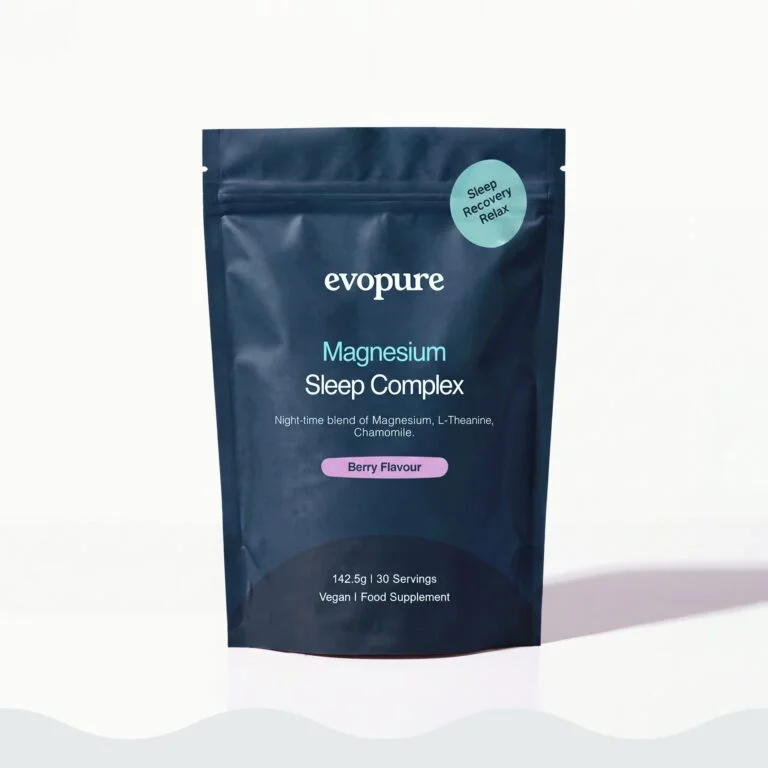
Our own Magnesium Glycinate Sleep Complex is one of these: it contains extracts of chamomile, passionflower, hops and oat straw, plus glycine and L-theanine. If your hospital asks you to stop herbal remedies, that includes it.
Other herbs people often take: see ashwagandha side effects, ginseng and CBD and valerian. If you take CBD, read CBD before surgery, which covers sedatives, bleeding and when to stop.
Why your anaesthetist needs to know
You may read that magnesium interacts with anaesthetic drugs. The BNF (checked 18 November 2026) lists intravenous magnesium, given into a vein in hospital, with several muscle relaxants used during anaesthesia, such as rocuronium. Those entries are about hospital use, not supplements, and we can’t tell you what they mean for your operation. Only your anaesthetist can judge that.
What you can do is give them the full picture: the magnesium product you take, how much, when you last took it, whether it contains herbs, and whether you have kidney problems, since your kidneys clear magnesium. They may want to check your magnesium level before surgery.
Should you stop magnesium before a blood test?
Usually not, unless the GP, nurse or specialist who booked it asks you to. The NHS says they should tell you if you need to prepare, for example by fasting (nothing but water) or by stopping certain medicines such as blood thinners for a short time.
| Test | Stop magnesium? | What to do |
|---|---|---|
| Routine bloods (blood count, cholesterol, thyroid) | Not unless told | Mention your supplements |
| Fasting blood test | Skip it until after the test | Water only; take it after the test |
| Magnesium level | Ask the person who booked it | Tell them your dose and when you last took it |
| Pre-op bloods | Follow your pre-op team | Bring your labels to the assessment |
Lab Tests Online UK, run by UK laboratory medicine specialists, says a magnesium blood test needs no preparation. It also says high magnesium results are rarely due to diet and are usually caused by an excretion problem, such as kidney failure, or by excessive supplementation, including magnesium-containing antacids or laxatives. A doctor reading a high result needs to know you take a supplement.
Low results matter too. The MHRA warns that long-term use of indigestion tablets called proton pump inhibitors, such as omeprazole, can cause low magnesium. If you take one, see magnesium and omeprazole. Taking biotin as well? Our biotin guide covers how it can affect some blood tests.
If you take CBD, read CBD and blood tests, which covers liver results. Booked for a colonoscopy instead? Bowel preparation has its own rules: see magnesium and CBD before a colonoscopy.
Who should ask first
Ask your pre-op team, GP or pharmacist about magnesium before surgery or a test if you:
- have kidney disease, or have been told your kidney results are lower than normal
- take a proton pump inhibitor such as omeprazole, or a water tablet (diuretic)
- take antibiotics, iron, alendronic acid or levothyroxine, which need a gap from magnesium
- take a magnesium product with herbal extracts, or anything that makes you drowsy
- are having bowel surgery: the UKCPA handbook says some people absorb less magnesium after part of the bowel is removed
- are pregnant or breastfeeding
Over 60? Your kidney results are worth asking about: see magnesium for older adults. Taking other regular medicines? See magnesium and blood thinners and magnesium and painkillers.
When to restart magnesium after surgery
As your team says. Ask before you leave hospital, and keep any discharge letter that mentions it. The UKCPA handbook says:
- Prescribed oral magnesium: restart as soon as the next dose is due, if still needed, with blood monitoring and kidney checks.
- Herbal medicines: withheld through the hospital stay and only restarted once you have recovered, including wound healing.
For a plain shop-bought supplement there’s no set rule, so ask. Two practical points: new tablets such as antibiotics may need a gap from magnesium, and the NHS says more than 400mg of magnesium a day for a short time can cause diarrhoea, which you won’t want after an operation. Having a knee replaced? See CBD after a knee replacement.
About our own magnesium drink
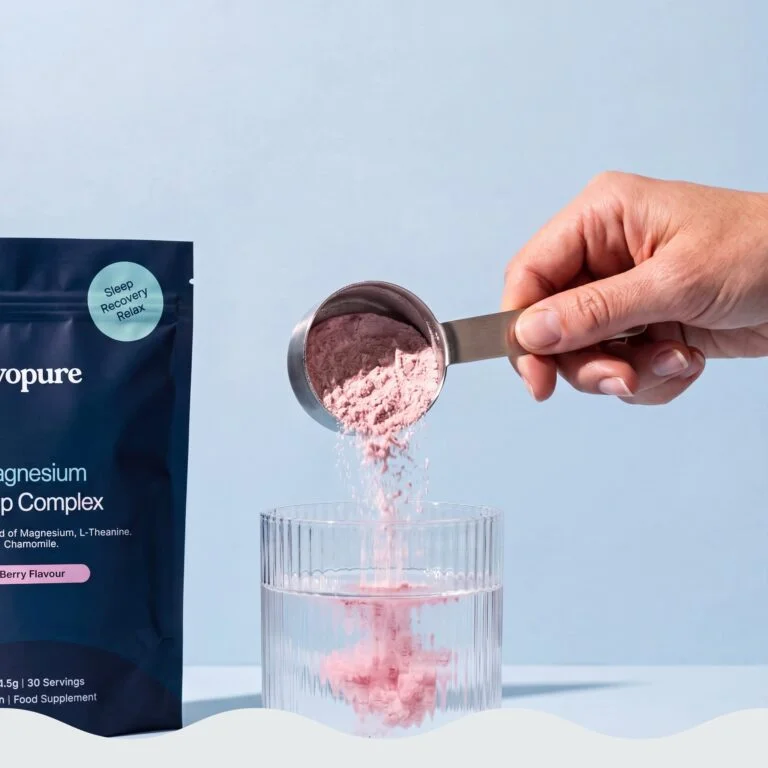
We make a magnesium drink, so here is what to tell your team if you take it. Our Magnesium Glycinate Sleep Complex is a berry drink powder with 290mg of magnesium per 4.75g serving, from magnesium bisglycinate and citrate. It also contains extracts of passionflower, chamomile, hops and oat straw, plus glycine and L-theanine. Treat it as a herbal product before surgery: show the label at your pre-op assessment and stop it when your hospital tells you to.
We’ve deliberately left product recommendations off this page. Before an operation, the right move is to tell your team and follow their instructions, not to start anything new. If you’d like a supplement afterwards, ask your team when it’s OK to restart, and see how much magnesium per day and magnesium side effects. Buying for someone after an operation? See our gifts for someone recovering from surgery. If you take CBD, read CBD before surgery.
Sources 11
- NHS. Having an operation: before surgery. Page last reviewed 9 July 2024; checked 18 November 2026.
- NHS. Blood tests. Page last reviewed 2 November 2023; checked 18 November 2026.
- UK Clinical Pharmacy Association. Handbook of Perioperative Medicines: magnesium citrate (oral replacement). Last review May 2024; checked 18 November 2026.
- NHS Specialist Pharmacy Service. Managing complementary products and conventional medicines (perioperative period). Last updated 16 July 2026; checked 18 November 2026.
- Royal Papworth Hospital NHS Foundation Trust. Surgery: your medicines (patient leaflet PI 36). Version 9, January 2025; checked 18 November 2026.
- UK Clinical Pharmacy Association. Handbook of Perioperative Medicines: herbal remedies position statement. Checked 18 November 2026.
- BNF (NICE). Magnesium interactions. Checked 18 November 2026.
- Lab Tests Online UK (Association for Laboratory Medicine). Magnesium. Checked 18 November 2026.
- MHRA (GOV.UK). Proton pump inhibitors in long-term use: reports of hypomagnesaemia. Drug Safety Update, published 11 December 2014.
- NHS. Vitamins and minerals: others (magnesium). Page last reviewed 3 August 2020; checked 18 November 2026.
- Ang-Lee MK et al. Herbal medicines and perioperative care. JAMA, 2001. PMID 11448284.
General information, not medical advice. Always follow the instructions from your surgical team, pre-op clinic or the person who booked your test. Evopure makes food supplements and is not connected with the makers of any medicine named here.