Last updated: 11 November 2026
Magnesium glycinate, often sold as magnesium bisglycinate, is magnesium bound to the amino acid glycine. It is one of the gentlest forms and is well absorbed, so it suits daily use and sensitive stomachs. People take it to top up their magnesium, which contributes to a reduction of tiredness and fatigue and to normal muscle function.
Magnesium glycinate at a glance
- What it is
- Magnesium bound to glycine (same as bisglycinate)
- How much is magnesium
- About 14%: 1,000mg of glycinate gives about 140mg
- UK daily need (NHS)
- 300mg a day for men and 270mg for women, mostly from food
- Supplement limit
- NHS: 400mg or less a day from supplements (EFSA: 250mg)
- When to take it
- Any time; many take it 30 to 60 minutes before bed
- Main side effect
- Loose stools at high doses, less often than with citrate or oxide
- Check with a GP or pharmacist
- Kidney disease, regular medicines, pregnancy or breastfeeding
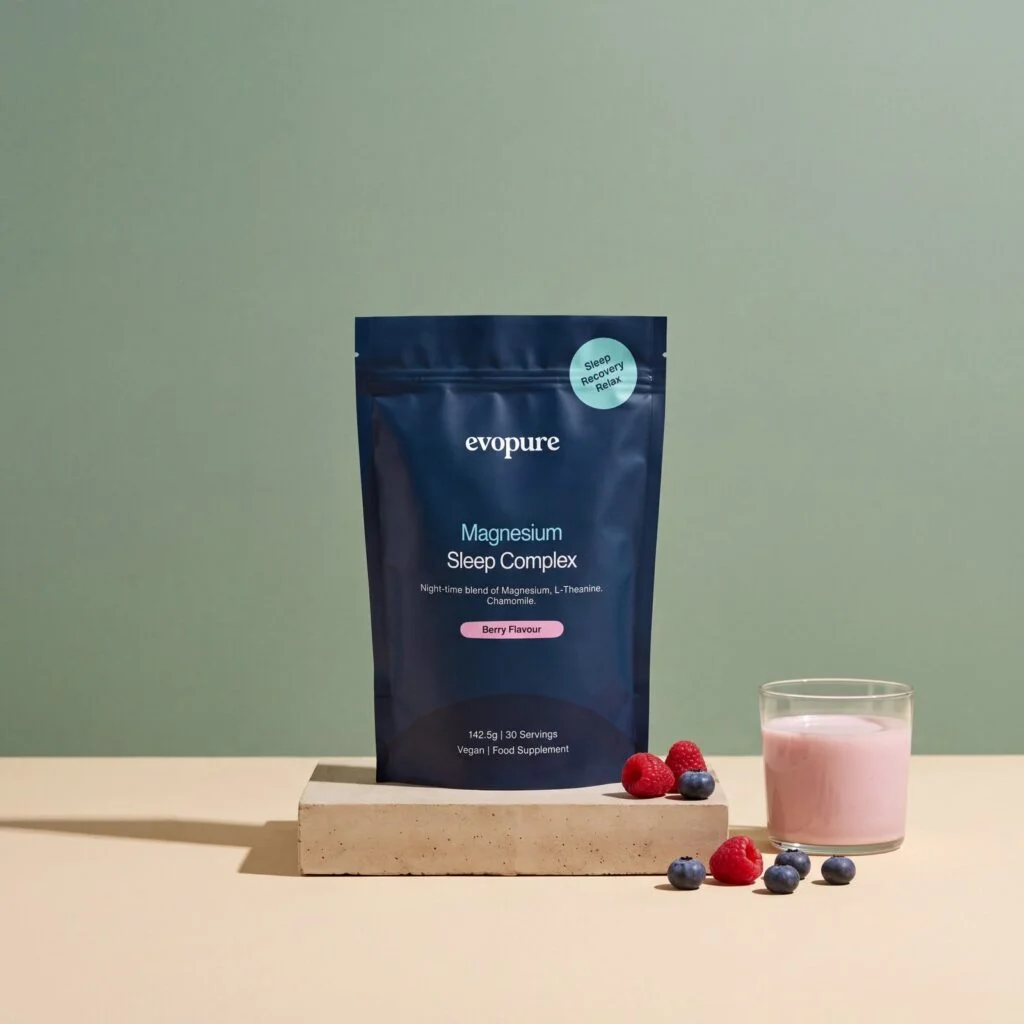
Our magnesium
Magnesium Glycinate Sleep Complex
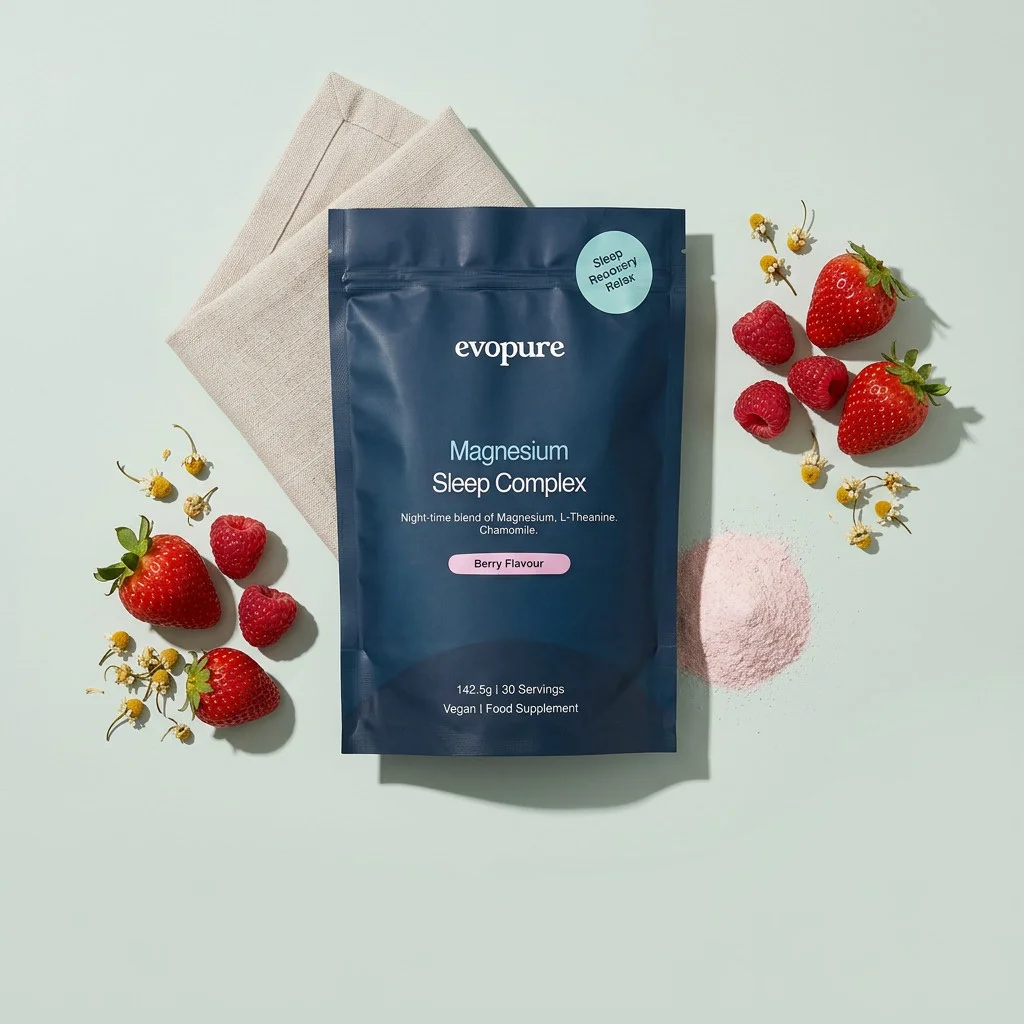
Magnesium Glycinate Sleep Complex is a berry drink powder with magnesium bisglycinate and citrate, glycine and L-theanine, giving 290mg of magnesium (77% NRV) per 4.75g serving. Magnesium contributes to a reduction of tiredness and fatigue. Vegan and UK-made.
Add Magnesium Glycinate Sleep Complex to bag See ingredients and reviews
Vegan and made in the UK. Subscribe and save 25% on your first order, then 20%. Free UK delivery over £45, 14-day returns on unopened items. New to Evopure? Join our emails for 20% off a one-off first order.
Subscribe £22.49One-off £29.99
View productWhat is magnesium glycinate?
Magnesium glycinate is a food supplement form of magnesium in which each magnesium atom is bound to two molecules of glycine, an amino acid. It is also sold as magnesium bisglycinate or magnesium glycinate chelate. It is about 14% magnesium by weight, is well absorbed and is less likely than citrate or oxide to loosen stools.
Magnesium on its own isn’t stable, so supplements bind it to a partner compound. Glycine is an amino acid your body also makes and uses, and that gentle partner is why glycinate suits sensitive stomachs and evening use.
What is magnesium bisglycinate?
Magnesium bisglycinate is the same compound as magnesium glycinate: one magnesium bound to two glycine molecules (“bis” means two). UK labels use both names. Check for “buffered” or magnesium oxide, which raises the magnesium per capsule with a cheaper form. Our guide to magnesium glycinate vs bisglycinate covers the label maths, and types of magnesium puts every form side by side.
What does magnesium glycinate do?
Magnesium glycinate tops up your magnesium in a gentle, well-absorbed form that rarely loosens stools. Magnesium contributes to a reduction of tiredness and fatigue, to normal muscle function and to normal psychological function. The NHS says adults need 270mg (women) to 300mg (men) a day. Evidence on glycinate for sleep or anxiety is small: one 2025 trial found a modest effect.
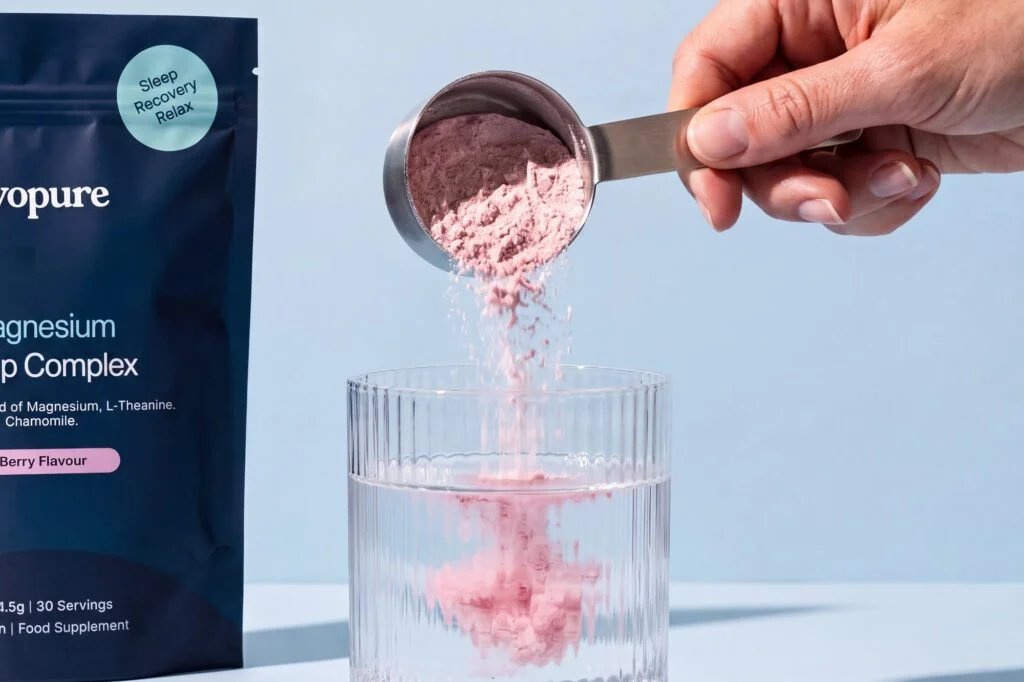
Magnesium glycinate benefits
The short answer: the benefits of magnesium glycinate are the benefits of magnesium, in a gentle, well-absorbed form. Magnesium contributes to a reduction of tiredness and fatigue, to normal psychological function, to the normal functioning of the nervous system and to normal muscle function.
In the UK, the authorised health claims for magnesium say it contributes to:
- a reduction of tiredness and fatigue
- normal functioning of the nervous system
- normal psychological function
- normal muscle function
- normal energy-yielding metabolism
- electrolyte balance
- the maintenance of normal bones and teeth
The honest part: these benefits come from magnesium itself, not glycine (which has no authorised claims), and most research uses magnesium in general. What makes glycinate stand out is that it is well absorbed and easy to take every day. Not sure you are low? See the signs of magnesium deficiency.
What does magnesium glycinate do for the body?
Magnesium glycinate gives your body magnesium in a well-absorbed, gentle form. In the body, magnesium contributes to a reduction of tiredness and fatigue, normal energy-yielding metabolism, electrolyte balance, the normal functioning of the nervous system, normal muscle function, normal psychological function and the maintenance of normal bones and teeth. These are its authorised health claims in Great Britain.
Is magnesium glycinate good for you?
For most healthy adults, yes. Magnesium glycinate is a gentle, well-absorbed way to top up a mineral that contributes to a reduction of tiredness and fatigue and to normal muscle function, as long as your total from supplements stays within the NHS guide of 400mg or less a day. It isn’t a treatment for any condition, and food comes first.
iCheck with your GP or pharmacist first if you have kidney disease, take regular medicines or are pregnant: see who should check first.
What people take magnesium glycinate for
Tiredness and energy
Magnesium contributes to a reduction of tiredness and fatigue. See magnesium for energy
Stress and anxiety
Magnesium contributes to normal psychological function; it isn’t an anxiety treatment. See magnesium for anxiety
Muscles and training
Magnesium contributes to normal muscle function. See magnesium glycinate for active people and magnesium for restless legs
PMS and period pain
A small University of Reading trial linked 200mg a day to fewer premenstrual fluid retention symptoms; period pain research is limited. See magnesium for PMS and water retention
Menopause and PCOS
See magnesium for menopause, magnesium for PCOS and magnesium benefits for women
Migraines
Most studies used other forms; ask your GP. See magnesium for migraines
Constipation
Glycinate rarely loosens stools; citrate is the usual pick. See magnesium for constipation
Men
Men need 300mg a day, women 270mg. See magnesium for men
Weight loss
Magnesium doesn’t burn fat. See magnesium for weight loss
Children
Ask a GP or pharmacist first. See magnesium for kids
iPregnant or breastfeeding? Check with your midwife or GP before taking any supplement. Our magnesium in pregnancy guide explains more.
Magnesium glycinate benefits for women
The benefits of magnesium glycinate for women are the authorised benefits of magnesium itself: it contributes to a reduction of tiredness and fatigue, to normal psychological function, to the normal functioning of the nervous system and to the maintenance of normal bones. The NHS says women aged 19 to 64 need 270mg a day, mostly from food, and glycinate is a gentle way to top up.
None of the authorised claims are specific to periods, PMS or menopause. Research has looked at those, and it is worth being clear about how much it shows:
| Topic | What the research shows | Authorised claim? |
|---|---|---|
| PMS | A small 1998 trial in 38 women linked 200mg of magnesium a day to fewer fluid retention symptoms by the second cycle. Larger trials are lacking. | No |
| Period pain | A 2016 Cochrane review found only a few small, low-quality trials of magnesium, so no firm conclusion is possible. | No |
| Menopause hot flushes | A 2015 trial in 289 women found 800mg or 1,200mg of magnesium oxide a day did no better than a placebo. | No |
| Bones | Magnesium contributes to the maintenance of normal bones. Calcium and vitamin D matter most for bones after menopause. | Yes (magnesium) |
| Tiredness | Magnesium contributes to a reduction of tiredness and fatigue. Heavy periods can also cause iron deficiency, which needs a GP blood test. | Yes (magnesium) |
| Pregnancy and breastfeeding | Speak to your midwife or GP before taking any supplement. | Not applicable |
Magnesium glycinate isn’t a treatment for PMS, period pain or menopause symptoms. If symptoms affect your daily life, the NHS advises seeing a GP, who can talk through proven options. For more on each stage of life, see magnesium benefits for women, magnesium for PMS and magnesium for menopause.
Magnesium glycinate for sleep
Glycinate is the usual evening choice. In a 2025 trial of 155 adults who slept poorly, 250mg of magnesium a day as bisglycinate, taken 30 to 60 minutes before bed, improved insomnia scores slightly more than a placebo after four weeks. The effect was small, and largest in people who ate the least magnesium.
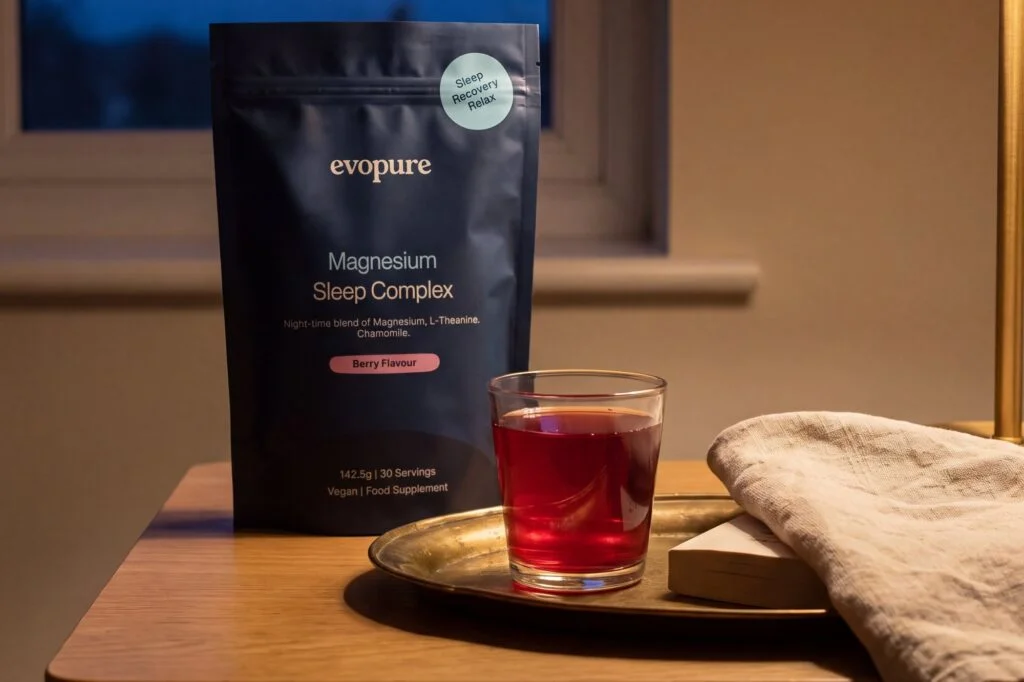
Choosing a product? Our guide to the best magnesium glycinate supplement in the UK compares nine on elemental magnesium, form and format.
Unlike melatonin, prescription-only in the UK, it is a food supplement. On the glycine half, see glycine for sleep.
Does magnesium glycinate make you sleepy?
Not in the way a sleeping tablet does. Magnesium glycinate isn’t a sedative: in the 2025 trial, daytime sleepiness changed no more than with the placebo, and the small change in sleep scores built up over four weeks of nightly use rather than after one dose. Many people simply take it 30 to 60 minutes before bed as part of a wind-down routine. What magnesium can claim is that it contributes to normal psychological function and to a reduction of tiredness and fatigue.
iIf you feel drowsy in the day after starting a magnesium product, check what else is in the blend and speak to a pharmacist. More on this in does magnesium make you sleepy?
Can magnesium glycinate make you tired the next day?
Some people say they feel groggy the morning after taking magnesium glycinate, but trials don’t show next-day sedation at usual doses. In a 2025 trial of 155 adults taking 250mg of magnesium a night as bisglycinate, daytime sleepiness and fatigue scores changed no more than with a placebo, and no one reported drowsiness as a side effect.
If you do feel tired the next day:
- Take it earlier: take it with your evening meal, not right before bed.
- Try a lower dose: start low and build up. The NHS says 400mg or less a day from supplements is unlikely to cause harm.
- Check the whole label: sleep blends often add herbal extracts, so look at everything in the product, not just the magnesium.
- Look at other causes: short or broken sleep, alcohol, low iron or vitamin D, thyroid problems and some medicines are common reasons for daytime tiredness. See why am I always tired? and still tired after 8 hours of sleep.
The NHS advises seeing a GP if you’ve felt tired for a few weeks and aren’t sure why.
For doses, timing and other forms at night, see our full guide to magnesium for sleep. If you’d rather drink it than swallow tablets, our best magnesium drink for sleep guide compares glycinate powders.
When to take magnesium glycinate: morning or night?
You can take magnesium glycinate at any time of day. Many people take it in the evening, 30 to 60 minutes before bed, but magnesium is about meeting your needs day after day, so taking it every day matters more than the clock. No trial we know of compares morning with evening doses.
- Winding down: 30 to 60 minutes before bed, the timing used in the 2025 trial.
- General top-up: whenever you will remember, such as with breakfast.
- Sensitive stomach: split larger amounts between morning and evening, with food. The NHS notes more than 400mg in a short time can cause diarrhoea.
- Away from some medicines: magnesium can reduce how well some antibiotics, osteoporosis medicines (bisphosphonates) and thyroid medicine (levothyroxine) are absorbed. Ask your pharmacist how far apart to take them.
Give it two to four weeks. See the best time to take magnesium, how long magnesium takes to work and how long magnesium stays in your body.
How long does magnesium glycinate take to work?
Give magnesium glycinate at least four weeks of daily use, and up to eight, before judging it. Sleep trials have measured their results at four weeks (a 2025 bisglycinate trial) and eight weeks (a 2012 trial in older adults). Some people say their evening wind-down feels calmer within a week or two, but there is little evidence on that.
Why it takes time: more than half of your body’s magnesium sits in your bones and less than 1% is in your blood, so topping up a low intake takes steady daily use. In the 2025 trial (155 adults, 250mg of magnesium a day as bisglycinate) the change was small, and largest in people who ate the least magnesium. For other forms, see how long magnesium takes to work.
How much magnesium glycinate should I take?
The short answer: most adults take 100 to 300mg of elemental magnesium a day from magnesium glycinate, which is roughly 700 to 2,100mg of the glycinate compound. The NHS says 400mg or less of magnesium a day from supplements is unlikely to cause harm. Labels can show either figure: 1,000mg of magnesium glycinate gives only about 140mg of magnesium.
One 4.75g serving of our Magnesium Glycinate Sleep Complex gives 290mg of magnesium, 77% of the NRV, from 1,000mg of magnesium bisglycinate and 900mg of magnesium citrate.
Why the gap: magnesium bisglycinate (C4H8MgN2O4) weighs about 172g per mole, of which magnesium is about 24g, so pure glycinate is roughly 14% magnesium. Real labels vary from about 11% to 20%, because some raw materials hold water or are buffered with magnesium oxide, so always read the elemental figure on the nutrition panel.
| Amount | Elemental magnesium | As magnesium glycinate (roughly) |
|---|---|---|
| NHS daily need, men 19 to 64 (mostly from food) | 300mg | 2,100mg |
| NHS daily need, women 19 to 64 (mostly from food) | 270mg | 1,900mg |
| NRV (the % on EU and UK labels) | 375mg | About 2,650mg |
| NHS guide for supplements (from the UK Expert Group on Vitamins and Minerals) | 400mg or less a day | 2,800mg or less |
| EFSA upper level for supplements, adults | 250mg a day | About 1,775mg |
| A “1,000mg magnesium glycinate” label | About 140mg | 1,000mg |
| A “500mg magnesium glycinate” capsule | About 70mg | 500mg |
| “200mg magnesium bisglycinate” (compound) | About 28mg | 200mg |
| One 4.75g serving of our Magnesium Glycinate Sleep Complex | 290mg | Bisglycinate and citrate blend |
290mg is close to the full NHS daily amount and inside the NHS 400mg guide. The European Food Safety Authority is more cautious: its upper level is 250mg a day of magnesium from supplements, set to avoid loose stools, and it doesn’t count the magnesium in food. If you also take a multivitamin, add the elemental figures together. The NHS says most people can get all they need from a varied diet, so see which foods contain magnesium, and how much magnesium per day for label maths on every form.
Is 200mg of magnesium bisglycinate enough?
It depends which 200mg the label means. 200mg of elemental magnesium from bisglycinate is a typical supplement dose: about two thirds of the NHS daily amount for men (300mg) and within the 400mg supplement guide. 200mg of the bisglycinate compound gives only about 28mg of magnesium, which is a small top-up.
200mg of elemental magnesium is 53% of the 375mg NRV. If your diet already includes nuts, seeds, wholegrains and leafy greens, that is plenty on top for most adults. Research doses are often a little higher: the 2025 bisglycinate trial used 250mg of magnesium a day. Whatever you choose, keep your total from all supplements at 400mg or less.
Is 400mg of magnesium glycinate a lot?
It depends whether the 400mg is the glycinate compound or the magnesium. 400mg of magnesium glycinate compound gives only about 56mg of elemental magnesium, a small top-up. 400mg of elemental magnesium is the top of the NHS guide, which says 400mg or less a day from supplements is unlikely to cause harm.
The European Food Safety Authority sets a lower upper level of 250mg a day of magnesium from supplements, mainly to avoid loose stools. One 4.75g serving of our Magnesium Glycinate Sleep Complex gives 290mg of magnesium, so you wouldn’t add a second magnesium product on top. If you take 400mg of elemental magnesium, count your multivitamin too, split the dose with food if your stomach is sensitive, and check with your GP or pharmacist first if you have kidney disease or take regular medicines.
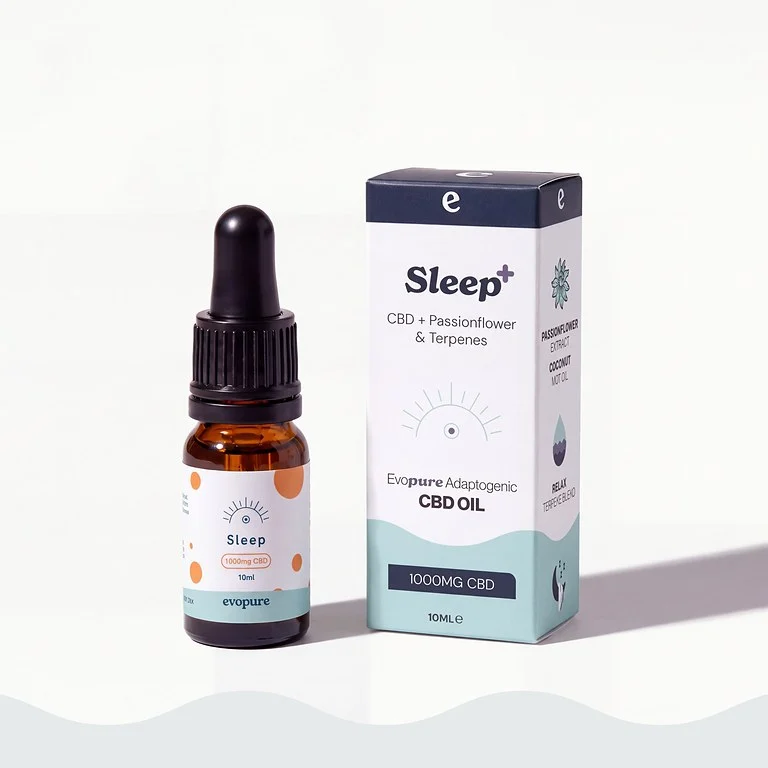
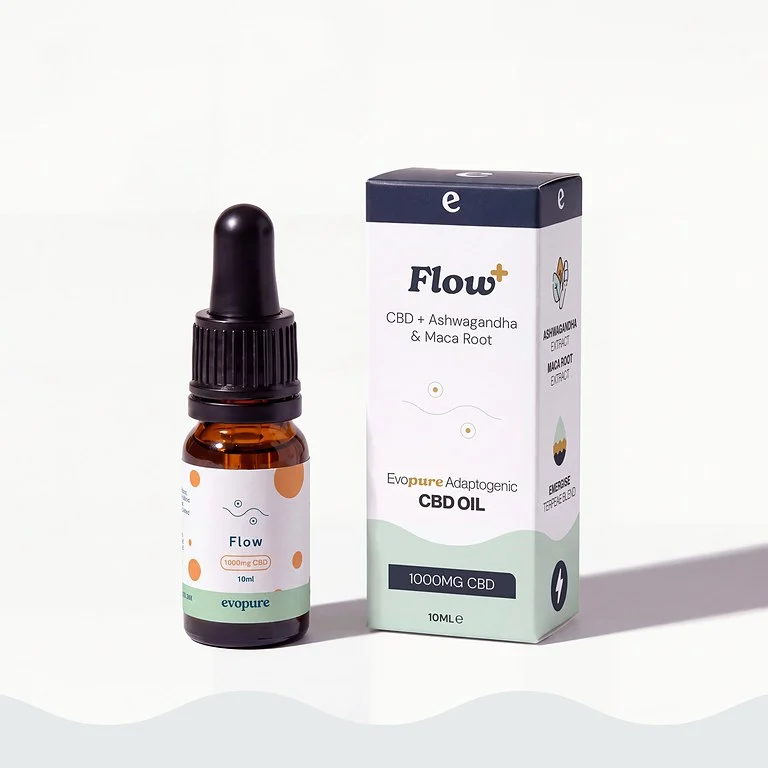
Our Magnesium Glycinate Sleep Complex is a berry-flavoured drink powder: magnesium bisglycinate and citrate, giving 290mg of magnesium per serving, with glycine, L-theanine, oat straw, hops, chamomile and passionflower (more on L-theanine). Some pair it with Sleep CBD Oil (broad spectrum CBD with passion flower and a terpene blend) or our reishi hot chocolate, which contains a little natural caffeine from cacao. In the daytime, Flow CBD Oil combines CBD with ashwagandha and maca.
The FSA’s 10mg a day figure is precautionary advice rather than a legal limit, set while longer-term safety research continues. At Evopure we think it is a very cautious figure, and many adults use more. If you go above it, increase slowly, and check with your GP or pharmacist first if you take any medication.
Our products are for adults (18+). We don’t recommend our products during pregnancy or breastfeeding.
Magnesium glycinate side effects and who should check first
Most people take glycinate without problems. Possible side effects, mostly at higher doses, include loose stools, nausea, stomach cramps and, occasionally, headaches or vivid dreams. Lowering the dose or taking it with food usually helps.
Does magnesium glycinate make you poop?
Magnesium glycinate is less likely to make you poop than citrate or oxide, which draw water into the bowel and act as mild laxatives. At normal doses glycinate usually has little effect on your bowels. Any form can cause loose stools in large amounts: the NHS says more than 400mg of magnesium in a short time can cause diarrhoea.
If loose stools happen, lower the dose or split it between meals. If constipation is why you’re asking, citrate is the usual choice: see magnesium for constipation.
Kidneys and heart: healthy kidneys pass out extra magnesium. Toxicity (low blood pressure, irregular heartbeat) is rare, mostly at very high doses or with kidney disease. Staying at or below 400mg a day from supplements keeps you well clear.
Gummies: check the magnesium and sugar per gummy; you may need several.
iSpeak to your GP or pharmacist first if you:
- have kidney disease
- take antibiotics, bisphosphonates for osteoporosis, levothyroxine or any regular prescription
- are pregnant or breastfeeding
For every form, interactions and safe limits, see magnesium side effects.
Magnesium glycinate vs other magnesium forms
Compared with other magnesium forms, magnesium glycinate is one of the gentlest on the gut and is well absorbed, but it holds less magnesium per gram (about 14%) than oxide (about 60%). Citrate is the usual pick for constipation, oxide is the cheapest, and malate and L-threonate are niche forms with less research behind them.
| Form | Gentle on the gut? | Usually chosen for | Full comparison |
|---|---|---|---|
| Glycinate | Yes, very | Daily use, evenings, sensitive stomachs | This guide |
| Bisglycinate | Same compound as glycinate | Same as glycinate | Magnesium bisglycinate vs glycinate |
| Citrate | Can loosen stools | Constipation, value | Magnesium glycinate vs citrate |
| Oxide | Often loosens stools | Cheap; dissolves poorly | Magnesium oxide |
| Malate | Yes | Daytime routines | Magnesium malate |
| L-threonate | Yes | Focus and memory (early research) | Magnesium L-threonate |
Glycinate suits gentle daily use; citrate suits you if you are also constipated. For more single forms, see how magnesium citrate compares, magnesium taurate vs glycinate, magnesium orotate vs glycinate and, for the citrate side, magnesium for bloating. Some magnesium supplements add vitamin B6; see magnesium and vitamin B6 for what that pairing does and doesn’t do.
Plain “magnesium” on a label usually means oxide or a mix; we explain what a magnesium complex is and whether blends are better. Glycinate can be taken alongside zinc at normal doses (see magnesium and zinc together), and many people weigh it up against ashwagandha. And sprays are different: why there is no real magnesium glycinate spray.
Choosing magnesium glycinate in the UK
- Check the elemental magnesium per serving, not the compound weight.
- Pick a format you will take: capsules or a powder drink (see magnesium powder vs tablets).
- Read the full ingredients for other forms, sweeteners or fillers.
Comparing products? See our buyer’s guide, best magnesium supplement UK: how to choose.
UK magnesium glycinate labels we’ve checked
Our label checks, brand by brand:
- High street: Boots, Holland and Barrett, Superdrug, Aldi and Home Bargains magnesium glycinate 1000mg.
- Supplement brands: Natures Aid (1,429mg of bisglycinate gives 280mg of magnesium), Nutravita, BioCare, Pure Encapsulations, Viridian, Solgar, Healthspan, New Leaf, Myprotein, Wild Nutrition and Vitabiotics Ultra Magnesium.
- Gummies and liquids: Bioglan, Novomins (glycinate blended with citrate), Zooki liquid sachets, and kids’ magnesium gummies: are they safe?
- Blends: Together Health is a seawater blend of five forms rather than glycinate.
Thorne, a US brand, lists Magnesium Bisglycinate powder at 200mg of magnesium per scoop, sweetened with monk fruit, and Magnesium Glycinate capsules at 120mg each (thorne.com, checked November 2026). Evopure isn’t connected with Thorne.
Choosing a powder? See the best magnesium glycinate powder guide for the label maths per scoop and UK powders side by side.
Related guides
- Taking a vitamin D supplement as well? See magnesium and vitamin D: can you take them together?
- Glycinate drink mixes are growing in the UK; see the Healthy Metal magnesium drink explained.
- Want it in a drink? Our sleepy girl mocktail recipe uses magnesium glycinate powder with tart cherry juice.
- Brand labels differ: Metagenics Magnesium Glycinate, for example, gives 100mg of magnesium from 740mg of bisglycinate.
- Comparing branded glycinate? Our New Nordic magnesium glycinate guide shows why “600mg” on the box isn’t the magnesium figure.
- Buying on the high street? Our Home Bargains magnesium glycinate guide shows how 1000mg of glycinate works out as 200mg of magnesium.
- Buying in a supermarket? Our Morrisons magnesium guide shows how 1000mg of glycinate works out as 200mg of magnesium.
-
For an example of the label maths, Myvitamins magnesium bisglycinate gives 112.5mg of magnesium from 1,000mg of bisglycinate.
-
Gummies can be hard to read: SPNutrition magnesium bisglycinate gummies show why compound weight and elemental magnesium matter.
- For a single-ingredient bisglycinate capsule with the label maths done, see Cytoplan Magnesium Bisglycinate.
- Not to be confused with magnesium glycerophosphate, the form used in UK prescription tablets.
- Some glycinate capsules are buffered with magnesium oxide to fit more magnesium in: Heights magnesium is one example, and the brand explains why.
- Seeing magnesium stearate on a glycinate label is normal; it is a flow agent, not a second magnesium form (see magnesium stearate).
Black Friday, 27 to 30 November: see our Black Friday magnesium and supplement deals.
Next step
Magnesium Glycinate Sleep Complex
If you want glycinate in an evening drink, our Magnesium Glycinate Sleep Complex gives 290mg of magnesium (77% NRV) per 4.75g serving from bisglycinate and citrate. Magnesium contributes to normal psychological function.
Add Magnesium Glycinate Sleep Complex to bag
Subscribe and save 25% on your first order, then 20%. Free UK delivery over £45. New to Evopure? Join our emails for 20% off a one-off first order. If you take any regular medicines, check with your GP or pharmacist first.
Subscribe £22.49One-off £29.99
View productSources 14
- NHS. Vitamins and minerals: magnesium.
- Schuster J et al (2025). Magnesium bisglycinate supplementation in healthy adults reporting poor sleep: a randomized, placebo-controlled trial. Nature and Science of Sleep.
- Abbasi B et al (2012). The effect of magnesium supplementation on primary insomnia in elderly: a double-blind placebo-controlled clinical trial. Journal of Research in Medical Sciences.
- Walker AF et al (1998). Magnesium supplementation alleviates premenstrual symptoms of fluid retention. Journal of Women’s Health.
- Park H et al (2015). Magnesium oxide for hot flashes: a randomized, double-blind, placebo-controlled trial (NCCTG N10C2, Alliance). Menopause.
- NHS. Iron deficiency anaemia.
- Pattanittum P et al (2016). Dietary supplements for dysmenorrhoea. Cochrane Database of Systematic Reviews.
- NHS. Melatonin.
- NHS. Tiredness and fatigue.
- NIH Office of Dietary Supplements. Magnesium: fact sheet for health professionals.
- PubChem. Magnesium glycinate (CID 84645): molecular formula and weight.
- European Food Safety Authority. Overview on tolerable upper intake levels (magnesium, version 11, August 2025).
- GOV.UK. Great Britain nutrition and health claims register.
- Balchem (Albion Minerals). Magnesium bisglycinate chelate: fully reacted and buffered forms.
This guide is general information, not medical advice. Evopure makes the Magnesium Glycinate Sleep Complex.