Last updated: 17 November 2026
Most medicines can be taken alongside magnesium, but a few need a gap because magnesium stops them being absorbed: tetracycline and quinolone antibiotics (2 to 3 hours), bone medicines such as alendronic acid, levothyroxine (4 hours) and gabapentin (2 hours). With kidney disease, water tablets or long-term omeprazole, check with your GP first.
iChecked against the BNF (the UK prescribing guide), NHS medicine pages, official medicine leaflets (SmPCs) and the MHRA in November 2026. This is general information, not medical advice. Your pharmacist can check your own list for free.
Medicines magnesium stops you absorbing
Magnesium can bind to some medicines in the gut so less gets into your blood. The BNF says magnesium antacids “and other oral magnesium preparations” should preferably not be taken at the same time as other medicines, and some manufacturers suggest several hours apart. These are the gaps it and the NHS give (checked 17 November 2026):
| Medicine | Gap from magnesium | Source |
|---|---|---|
| Doxycycline, lymecycline, minocycline and other tetracyclines | At least 2 to 3 hours | BNF |
| Ciprofloxacin, levofloxacin, moxifloxacin and ofloxacin | 2 to 3 hours | BNF |
| Alendronic acid | Take it at least 30 minutes before magnesium | BNF and NHS |
| Risedronate | At least 2 hours | BNF |
| Ibandronic acid | No magnesium for 6 hours before or 1 hour after | BNF |
| Levothyroxine | At least 4 hours (antacids) | BNF |
| Gabapentin | At least 2 hours (antacids) | NHS and BNF |
| Rosuvastatin and digoxin | 2 hours (antacids) | BNF |
| Iron tablets | Iron 1 hour before or 2 hours after (antacids) | BNF |
| Fexofenadine (Telfast) | 2 hours (antacids). See magnesium and antihistamines | BNF and NHS |
| Sulpiride | 2 hours (antacids). See magnesium and antipsychotics | BNF |
Some of these entries are written for antacids, such as indigestion remedies with magnesium hydroxide or trisilicate. No study has tested every one with a glycinate or citrate supplement, so the safe approach is to give a magnesium supplement the same gap. The BNF also notes magnesium antacids might damage enteric coatings, the coatings on tablets designed to dissolve past the stomach.
Antibiotics: doxycycline and ciprofloxacin
Tetracyclines (doxycycline, lymecycline, minocycline, oxytetracycline) and quinolones (ciprofloxacin, levofloxacin, moxifloxacin, ofloxacin) are the antibiotics that clash. The BNF says to keep magnesium 2 to 3 hours away. The NHS lymecycline page lists medicines and supplements containing magnesium, calcium, iron or zinc, and the ciprofloxacin page says to leave at least 2 hours between a dose and dairy or calcium-added drinks.
Amoxicillin, co-amoxiclav and most other common antibiotics have no magnesium entry in the BNF. Whatever the antibiotic, finish the course as prescribed: if spacing is awkward, pause the magnesium for a few days rather than the antibiotic. Our guide to magnesium and antibiotics has a day plan for each one. See also do antibiotics make you tired? and, for CBD, CBD and antibiotics.
Bone medicines: alendronic acid and risedronate
Bisphosphonates are absorbed poorly at the best of times. The NHS says to take alendronic acid on an empty stomach with plain tap water, at least 30 minutes before breakfast, drinks or any other medicine, and to tell your doctor about laxatives containing magnesium and supplements with calcium, iron, magnesium or zinc. The BNF gives at least 2 hours for risedronate and 6 hours before ibandronic acid. Our full guide to magnesium and alendronic acid has a simple routine for your weekly tablet day.
On a weekly tablet, the simplest fix is to skip magnesium that morning or have it in the evening. Magnesium has its own role in bones (it contributes to the maintenance of normal bones), covered in magnesium and bone health.
Levothyroxine and gabapentin
Levothyroxine: the NHS says take it on an empty stomach 30 to 60 minutes before breakfast and lists antacids and calcium and iron supplements among things that may not mix. The BNF gives at least 4 hours between levothyroxine and antacids. Our guide magnesium and levothyroxine has a simple daily timetable.
Gabapentin: the NHS says antacids reduce how much gabapentin your body takes in, so take an antacid at least 2 hours before or after your dose. Give a magnesium supplement the same gap. Gabapentin can make you drowsy, so if magnesium is part of an evening routine, ask your pharmacist how best to fit it in. If you take gabapentin for epilepsy, our guide to magnesium and epilepsy medication covers levetiracetam, valproate and phenytoin too.
Medicines that lower magnesium
Some medicines don’t clash with magnesium but slowly lower your level. These are reasons your GP may test your blood, not reasons to start a supplement on your own:
- Proton pump inhibitors (PPIs) such as omeprazole and lansoprazole. The MHRA warned in 2012 that long-term use (3 months or more, mostly over a year) can cause low magnesium. See magnesium and omeprazole.
- Loop and thiazide-type diuretics such as furosemide and indapamide. Their leaflets say they increase the magnesium you lose in urine.
- Tacrolimus and ciclosporin, used after a transplant and for some immune conditions. Their product information lists low magnesium, and your team checks it. See magnesium and immunosuppressants.
iLow magnesium can cause muscle twitches, tremors, tiredness and loss of appetite (MHRA): see signs of magnesium deficiency. If a test shows a low level, your doctor decides how to correct it, sometimes with a prescribed magnesium.
Heart and blood pressure medicines
- Blood pressure tablets: the BNF’s amlodipine entry is for magnesium given by injection in pregnancy, not supplements. Water tablets and kidney function are what matter: see magnesium and blood pressure medication.
- Statins: only rosuvastatin has a listed antacid interaction (2 hours apart). See magnesium and statins.
- Digoxin: antacids reduce its absorption (2 hours apart, BNF), and low magnesium or potassium raises the risk of digoxin side effects. Ask your GP before adding magnesium.
- Citalopram, escitalopram and other medicines that affect heart rhythm: no magnesium interaction, but low magnesium raises the risk, so your GP may check it. See magnesium and antidepressants.
Medicines with no magnesium interaction listed
Many everyday medicines have no magnesium or antacid entry in the BNF, including atorvastatin, simvastatin, sertraline, amoxicillin and metformin (checked 17 November 2026). Omeprazole has no direct interaction either, though long-term use can lower magnesium (above). Sleeping tablets such as zopiclone, zolpidem and diazepam have no entry either: see magnesium and sleeping tablets. The BNF magnesium list has no entry for venlafaxine, duloxetine, sumatriptan, donepezil or memantine either: see magnesium and venlafaxine, magnesium and sumatriptan and magnesium and dementia medication.
iNo entry does not mean no check is needed. Tell your pharmacist about any supplement, especially if you take several medicines, and keep to 400mg a day or less of magnesium from supplements (NHS).
Supplements to space from magnesium
- Iron: the NHS iron tablet page says to tell your pharmacist about supplements containing calcium, magnesium or zinc, and they’ll tell you the gap. Iron in the morning and magnesium in the evening works for many people. See iron tablets.
- Zinc: very high zinc (142mg a day) reduced magnesium absorption in a 1994 study. That is far above the NHS limit of 25mg a day from supplements, so normal amounts are fine. See magnesium vs zinc.
- Calcium: bone medicines and some antibiotics need spacing from both, and many people take calcium and magnesium at different times. See magnesium and calcium.
- Vitamin D: fine together. See magnesium and vitamin D.
- Melatonin, L-theanine and CBD: no known clash, but each has its own checks. See magnesium and melatonin, magnesium and L-theanine and CBD and magnesium.
- Passionflower and chamomile: no listed interaction with magnesium, and both are in many evening blends, including ours. See magnesium and passionflower together and magnesium and chamomile together.
- Other magnesium: laxatives, Epsom salts taken by mouth and indigestion remedies can contain magnesium too, so count them towards your total.
Magnesium and coffee
The BNF lists no interaction between magnesium and caffeine. Caffeine does make you pass a little more magnesium in your urine for a few hours. In one small study, two morning doses of caffeine added about 4mg to the magnesium lost over 24 hours, against the 270mg to 300mg a day the NHS says adults need.
That study, by Kynast-Gales and Massey (1994), gave 17 healthy adults two morning doses of caffeine; their kidneys held on to a little more magnesium overnight, but not enough to make up the difference. We checked the BNF magnesium interactions list on 18 November 2026: it has 38 entries, none for caffeine or coffee. If you take a medicine that needs a gap from magnesium, keep to that gap whatever you drink with it.
A simple daily routine
Most of the gaps above are easy to keep if your medicines and your magnesium sit at opposite ends of the day:
| Time | What |
|---|---|
| On waking | Levothyroxine or a weekly bone tablet, on an empty stomach with water |
| Breakfast | Other morning medicines and iron, as your pharmacist advises |
| Daytime | Antibiotic doses at least 2 to 3 hours from magnesium |
| Evening | Magnesium, for example as a drink after your evening meal |
Taking a medicine in the evening, such as simvastatin or gabapentin? Move the magnesium earlier instead. More in the best time to take magnesium.
Who should check with a GP first
Ask your GP or pharmacist before taking magnesium if you:
- have kidney disease or reduced kidney function. The kidneys control how much magnesium you keep, so extra can build up.
- take digoxin, a heart rhythm medicine, or citalopram or escitalopram with a heart condition.
- take a water tablet or have taken omeprazole or another PPI for months.
- take any of the medicines in the table above, or several regular medicines.
- have been told your magnesium, potassium or calcium is high or low.
- are pregnant or breastfeeding.
Too much magnesium from supplements mostly causes diarrhoea (NHS), and with kidney problems it can build up. See magnesium side effects, magnesium glycinate side effects and, if you’re over 60, magnesium for older adults.
Where Evopure fits
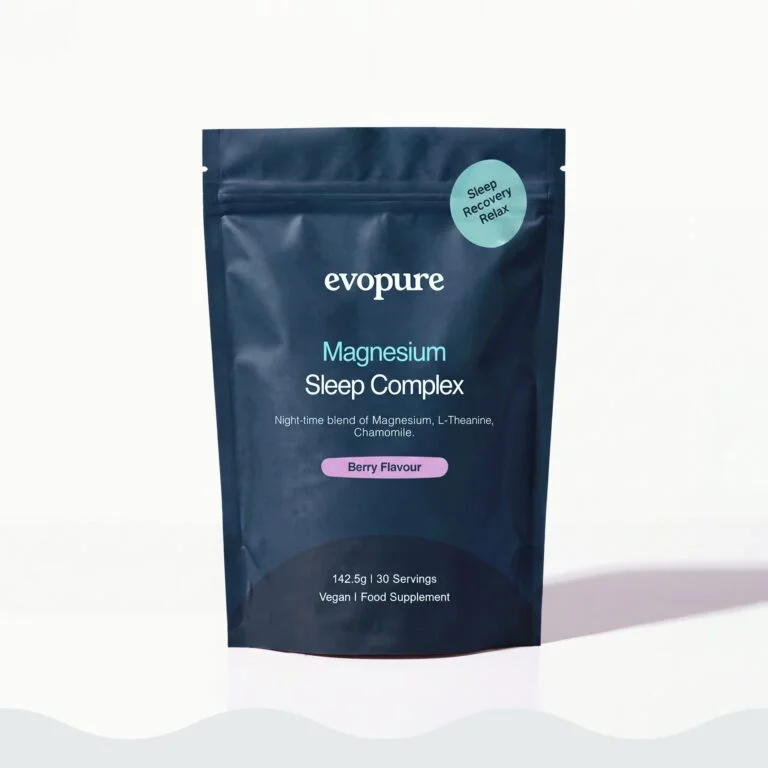
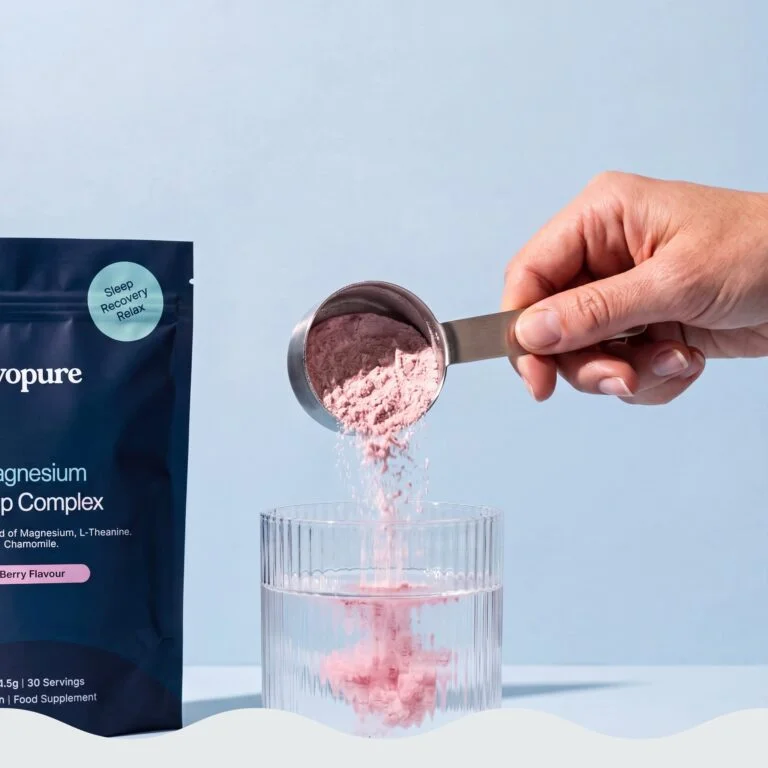
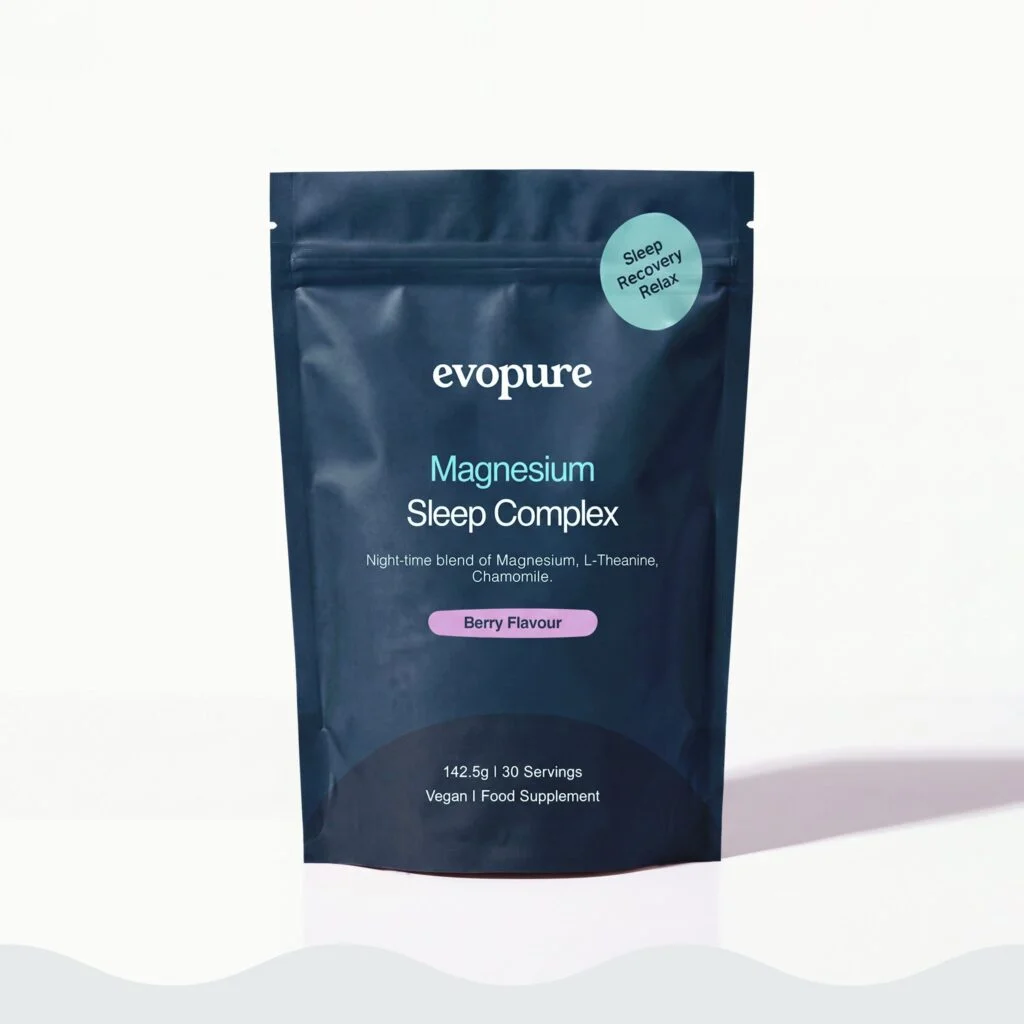
None of our products treats a medical condition or replaces a medicine. If your GP or pharmacist is happy for you to add magnesium, our Magnesium Glycinate Sleep Complex is a berry drink powder with 290mg of magnesium (77% NRV) per 4.75g serving, from magnesium bisglycinate and citrate, plus 500mg glycine and 100mg L-theanine. It isn’t an antacid, and as an evening drink it fits the routine above.
Our pick, once you’ve checked
Magnesium Glycinate Sleep Complex
Magnesium Glycinate Sleep Complex. Magnesium contributes to a reduction of tiredness and fatigue, to normal muscle function and to electrolyte balance. It is not another tablet to swallow.
Add Magnesium Glycinate Sleep Complex to bag See ingredients and reviews
Rated 4.7 out of 5 from 15 ratings on the product page (via Lipscore, checked 17 November 2026). We make it, so we’re not neutral. Vegan and made in the UK. Free UK delivery over £40.
Subscribe £22.49One-off £29.99
View productWhy only one product? Our Reishi hot chocolate pack says it isn’t for people taking medication, and the FSA advises people on any medication not to take CBD unless under medical direction (see can CBD interact with medication?). Comparing magnesium? See best magnesium supplement UK and magnesium glycinate.
Guides to specific medicines
- Magnesium and blood pressure medication: amlodipine, ramipril and diuretics
- Magnesium and antibiotics: doxycycline, ciprofloxacin and how long to wait
- Magnesium and statins: atorvastatin and rosuvastatin
- Magnesium and painkillers: ibuprofen, paracetamol, co-codamol and aspirin
- Magnesium and omeprazole: long-term PPIs and low magnesium
- Magnesium and levothyroxine: how many hours apart
- Magnesium and methotrexate: what the BNF lists, hydroxychloroquine, folic acid day and kidney checks
- Magnesium and antidepressants: sertraline and citalopram
- Magnesium and alcohol: drinking on magnesium glycinate and what the NHS says
- Magnesium and blood thinners: apixaban, rivaroxaban and warfarin
- Magnesium and metformin: kidneys, timing and glycinate
- Magnesium and iron tablets: how far apart to take them
- Magnesium and gabapentin: the 2 hour gap and pregabalin
- Magnesium and HRT: tablets, patches, gel and Utrogestan
- Magnesium and Mounjaro
- Magnesium and melatonin
- Magnesium and creatine: timing, doses and safety
- Should you stop magnesium before surgery or a blood test?: what to tell the pre-op team
- Magnesium and CBD before a colonoscopy: bowel preps that already contain magnesium
- Magnesium and allopurinol: gout tablets and the aluminium antacid gap
- Magnesium and prednisolone: steroid tablets, antacids and timing
- Magnesium and propranolol: what the BNF lists and dizziness
- Magnesium and lamotrigine: what the BNF lists, timing and kidney checks
- Magnesium and mesalazine: the 2-hour antacid gap, coated tablets and kidney checks
- Magnesium and breast cancer tablets: tamoxifen, anastrozole, letrozole and exemestane
- Magnesium and prostate medication: tamsulosin, finasteride and dutasteride (no BNF interaction; keep 2 to 3 hours from ciprofloxacin)
- Magnesium and heart medication: digoxin, amiodarone, sotalol, diltiazem and verapamil
- Magnesium and ADHD medication: Elvanse, methylphenidate, atomoxetine and timing
- Magnesium and Wegovy, Ozempic or Mounjaro: the 30 minute rule for the Wegovy pill and kidney checks
- Magnesium and diabetes medication: insulin, gliclazide and SGLT2 tablets
- Magnesium and amitriptyline: timing, constipation and kidney checks
- Magnesium and Viagra or Cialis: no BNF interaction, antacid data and timing
- Magnesium and sleeping tablets: zopiclone, zolpidem, diazepam and Nytol
- Magnesium and antihistamines: cetirizine, loratadine, Piriton and the fexofenadine gap
- Magnesium and epilepsy medication: levetiracetam, valproate, phenytoin and gabapentin
- Magnesium and antipsychotics: olanzapine, quetiapine, risperidone and the sulpiride antacid gap
- Magnesium and the contraceptive pill: no BNF interaction, diarrhoea and the missed pill rules
- Magnesium and alendronic acid: how long to wait on your weekly tablet day
- Magnesium and spironolactone: potassium, kidneys and timing
- Magnesium and venlafaxine or duloxetine: no BNF interaction, duloxetine capsules and constipation
- Magnesium and sumatriptan: no BNF interaction, timing and other triptans
- Magnesium and dementia medication: donepezil, memantine and timing
- Magnesium and immunosuppressants: tacrolimus, ciclosporin and low magnesium
For CBD and medicines, see can CBD interact with medication?
Next step
Magnesium Glycinate Sleep Complex
If your GP or pharmacist is happy for you to add magnesium, the Magnesium Glycinate Sleep Complex gives 290mg of magnesium per serving as an evening berry drink. Magnesium contributes to a reduction of tiredness and fatigue.
Add Magnesium Glycinate Sleep Complex to bag See ingredients and reviews
Subscribe and save 25% on your first order, then 20%. New to Evopure? Join our emails for 20% off a one-off first order. Free UK delivery over £40. Adults only. We don’t recommend our products during pregnancy or breastfeeding.
Subscribe £22.49One-off £29.99
View productSources 10
- BNF (NICE). Magnesium interactions and antacids interactions. Checked 17 November 2026.
- NHS. Alendronic acid with other medicines (reviewed 7 May 2025), gabapentin with other medicines (reviewed 19 February 2026), levothyroxine (reviewed 6 July 2026).
- NHS. Lymecycline with other medicines, doxycycline, ciprofloxacin (reviewed 9 October 2026) and ferrous sulfate with other medicines.
- NHS. Vitamins and minerals: others (magnesium) (magnesium and zinc).
- MHRA. Proton pump inhibitors in long-term use: reports of hypomagnesaemia. Drug Safety Update, April 2012.
- emc. Furosemide 20mg tablets SmPC and indapamide 2.5mg tablets SmPC (revised 2 April 2026).
- NIH Office of Dietary Supplements. Magnesium fact sheet for health professionals (updated 6 January 2026).
- Spencer H et al. Inhibitory effects of zinc on magnesium balance and magnesium absorption in man. J Am Coll Nutr, 1994.
- Kynast-Gales SA, Massey LK. Effect of caffeine on circadian excretion of urinary calcium and magnesium. J Am Coll Nutr, 1994. PMID 7836625.
- FSA (gov.uk). Cannabidiol (CBD) guidance.