Last updated: 17 November 2026
Yes, you can usually take magnesium with omeprazole: no direct interaction is known. The catch runs the other way. Taking omeprazole or another PPI for 3 months or more, and especially over a year, can lower your magnesium (MHRA). If you take it long term, ask your GP about a blood test before adding a supplement.
Checked against the MHRA Drug Safety Update, the BNF, NHS medicine pages and PubMed in November 2026. This is general information, not medical advice.
Why long-term omeprazole can lower magnesium
In April 2012 the MHRA, the UK medicines regulator, warned that proton pump inhibitors (PPIs) such as omeprazole can cause low blood magnesium, called hypomagnesaemia. Some cases appeared after 3 months of treatment, but most after a year. In most reported cases, magnesium levels recovered after magnesium replacement and stopping the PPI.
The likely reason is that PPIs reduce how much magnesium the gut absorbs, though a 2016 clinical review says the exact mechanism isn’t proven. A 2019 review of 16 observational studies with 131,507 people found:
| Finding (Srinutta 2019) | Result |
|---|---|
| Low magnesium in PPI users | 19.4% |
| Low magnesium in non-users | 13.5% |
| Odds of low magnesium on a PPI (adjusted) | About 1.7 times higher |
| High dose vs low dose PPI | About 2 times higher odds on a high dose |
These studies show a link, not proof of cause, and most people on omeprazole won’t develop low magnesium. The risk is higher if you also take digoxin or a diuretic, which the MHRA singles out. The NHS also says serious side effects are more likely if you take omeprazole for a year or more. More on long-term use in our guide to acid reflux.
Signs of low magnesium to mention to your GP
The MHRA tells patients on PPIs to look out for muscle twitches, tremors, vomiting, tiredness and loss of appetite. It says symptoms can begin slowly and be overlooked. Serious low magnesium can cause tiredness, muscle spasms (tetany), confusion, fits, dizziness and an abnormal heart rhythm.
Speak to your GP if you’ve taken omeprazole, lansoprazole or another PPI for more than a few months and notice muscle twitches, cramps, tremors, unusual tiredness or poor appetite.
Call NHS 111 if your heartbeat feels irregular, or you feel very dizzy or confused, and you take a PPI long term.
Call 999 if someone has a fit, collapses, or has chest pain.
Many of these symptoms have other causes, which is why a blood test matters. Our guide to the signs of magnesium deficiency lists them in more detail.
Should you take magnesium or get a blood test first?
Get a blood test first. The MHRA and the BNF advise doctors to consider checking magnesium before starting a PPI and from time to time during long-term use, especially with digoxin or diuretics. A test shows whether your level is actually low. Taking a supplement without a test means a low level could go unchecked.
If your level is low, your GP decides what to do. That may mean a prescribed magnesium (such as magnesium glycerophosphate), a lower PPI dose, a different medicine, or a review of whether you still need it. Don’t stop or cut down omeprazole on your own, and don’t try to fix a low level yourself with supplements.
Bought omeprazole from a pharmacy? The NHS says not to take it for longer than 2 weeks without seeing a doctor, and the MHRA asks doctors to count over-the-counter PPIs too. Tell your GP if you’ve been buying it regularly.
Lansoprazole and esomeprazole too
The MHRA warning covers the whole PPI class, not just omeprazole. The same advice applies to every medicine in this table: no known direct interaction with a magnesium supplement, but long-term use can lower your magnesium.
| PPI | Brand named by the MHRA | Low magnesium warning |
|---|---|---|
| Omeprazole | Losec | Yes |
| Lansoprazole | Zoton | Yes |
| Esomeprazole | Nexium | Yes |
| Pantoprazole and rabeprazole | Protium and Pariet | Yes |
If you take a PPI for acid reflux at night, our guide to acid reflux at night covers the lifestyle steps that can help alongside it.
Who should check with a GP first
Ask your GP or pharmacist before taking magnesium with a PPI if you:
- have taken a PPI for more than 3 months: ask for a magnesium blood test first.
- take digoxin or a diuretic (water tablet), such as furosemide or bendroflumethiazide.
- have kidney disease. Your kidneys control how much magnesium you keep, so extra can build up. Only take a supplement if your doctor advises it.
- take antibiotics, levothyroxine or a bone medicine such as alendronic acid, as magnesium can affect how well they are absorbed.
- are pregnant or breastfeeding.
The NHS omeprazole page says to tell your doctor or pharmacist about any vitamins or supplements before you start. If you’re over 60, magnesium for older adults explains why age adds to the risk of low magnesium. On blood pressure tablets as well? See magnesium for blood pressure. On a statin? See can you take magnesium with statins?
Which magnesium is gentle on the stomach?
Magnesium glycinate (or bisglycinate) is usually the gentlest form on the stomach, while citrate and oxide are more likely to loosen stools. That makes glycinate a common choice for people with a sensitive stomach, though no form has been tested specifically in PPI users. If your GP has found low magnesium, take what they prescribe.
Many indigestion remedies contain magnesium too, such as magnesium hydroxide or trisilicate. Count them towards your daily total. The BNF notes that magnesium antacids can damage enteric coatings, and omeprazole is gastro-resistant, so don’t take them at the same moment. See magnesium glycinate, magnesium oxide and magnesium glycinate side effects.
When to take magnesium with omeprazole
iKeep them apart for simplicity. The NHS says to take once-daily omeprazole at the same time each morning, with or without food. A magnesium supplement in the evening fits around that without any overlap. If you take omeprazole twice a day, ask your pharmacist for the best gap.
Our guide to the best time to take magnesium covers morning versus evening in more detail.
Where Evopure fits
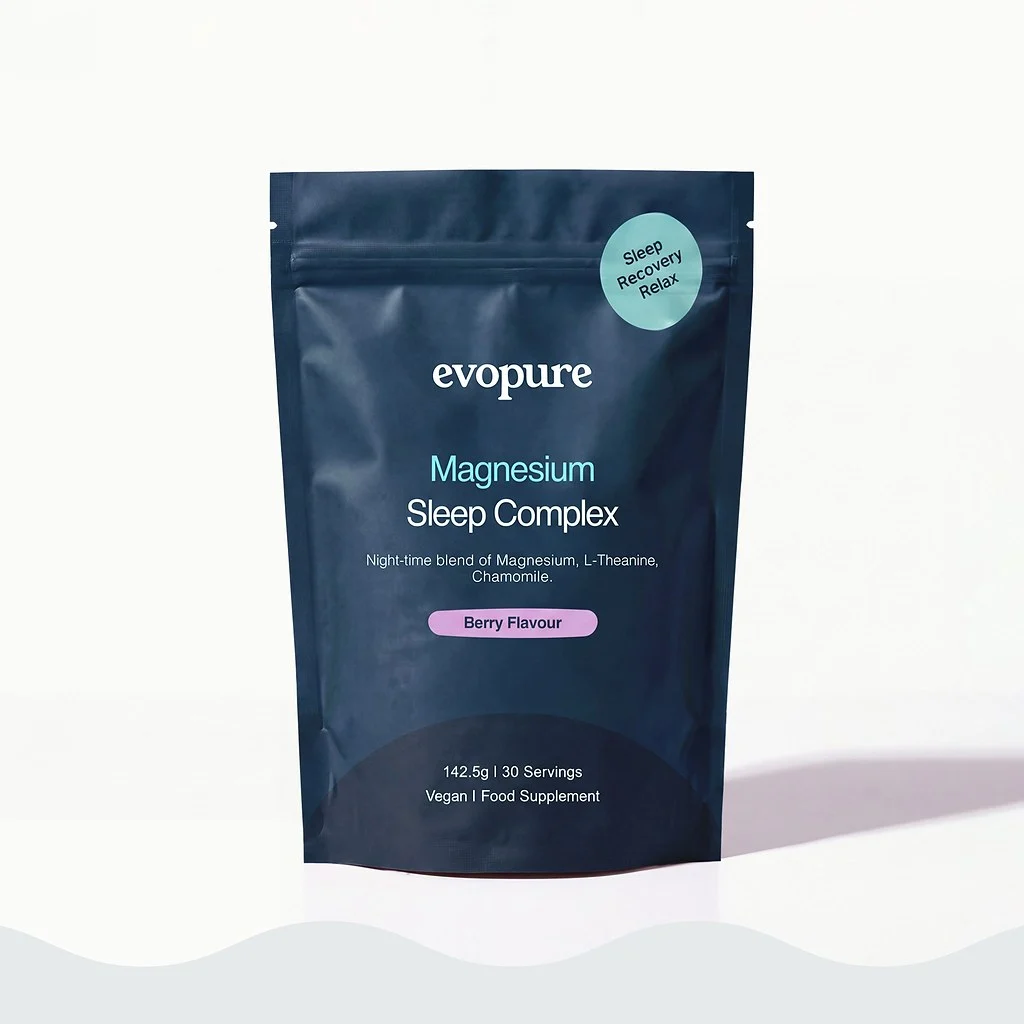
None of our products treats low magnesium or offsets the effects of omeprazole, and we don’t claim they do. If your blood test is fine and your GP or pharmacist is happy for you to add magnesium, our Magnesium Glycinate Sleep Complex is a berry drink powder with 290mg of magnesium (77% NRV) per 4.75g serving, from magnesium bisglycinate and citrate, plus 500mg glycine and 100mg L-theanine. No melatonin.
Our pick, once you’ve checked
Magnesium Glycinate Sleep Complex
Magnesium Glycinate Sleep Complex. Magnesium contributes to a reduction of tiredness and fatigue, to normal muscle function and to electrolyte balance. Have it in the evening if you take omeprazole in the morning.
Add Magnesium Glycinate Sleep Complex to bag See ingredients and reviews
Rated 4.7 out of 5 from 15 ratings on the product page (via Lipscore, checked 17 November 2026). We make it, so we’re not neutral. Vegan and made in the UK. Free UK delivery over £40.
Subscribe £22.49One-off £29.99
View productWhy only one product? Our Reishi hot chocolate pack says it isn’t for people taking medication, and the FSA advises people on any medication not to take CBD unless under medical direction (see can CBD interact with medication?). Comparing magnesium? See best magnesium supplement UK and magnesium glycinate powder.
How much magnesium is safe?
The NHS says adults need 300mg (men) or 270mg (women) of magnesium a day, and that 400mg or less a day from supplements is unlikely to cause harm. Doses above 400mg can cause diarrhoea. Count magnesium from indigestion remedies as well as supplements, and read the elemental magnesium on the label.
| Fact | Amount | Source |
|---|---|---|
| Daily need, men (19 to 64) | 300mg | NHS |
| Daily need, women (19 to 64) | 270mg | NHS |
| From supplements, unlikely to cause harm | 400mg a day or less | NHS |
| Our drink, per 4.75g serving | 290mg (77% NRV) | Product label |
Spinach, nuts, seeds, beans and wholemeal bread are good sources: see foods high in magnesium, how much magnesium per day and magnesium side effects.
Next step
Magnesium Glycinate Sleep Complex
If your magnesium level is normal and your GP or pharmacist is happy for you to add magnesium, the Magnesium Glycinate Sleep Complex gives 290mg of magnesium per serving as a berry drink. Magnesium contributes to a reduction of tiredness and fatigue.
Add Magnesium Glycinate Sleep Complex to bag See ingredients and reviews
Subscribe and save 25% on your first order, then 20%. New to Evopure? Join our emails for 20% off a one-off first order. Free UK delivery over £40. Adults only. We don’t recommend our products during pregnancy or breastfeeding.
Subscribe £22.49One-off £29.99
View productSources 8
- MHRA. Proton pump inhibitors in long-term use: reports of hypomagnesaemia. Drug Safety Update, April 2012 (checked 17 November 2026).
- BNF (NICE). Omeprazole: monitoring requirements and antacids interactions. Checked 17 November 2026.
- NHS. Omeprazole: how to take it, side effects and other medicines (side effects reviewed 17 September 2025).
- NHS. Vitamins and minerals: others (magnesium).
- Srinutta T et al. Proton pump inhibitors and hypomagnesemia: a meta-analysis of observational studies. Medicine (Baltimore), 2019.
- William JH, Danziger J. Magnesium deficiency and proton-pump inhibitor use: a clinical review. J Clin Pharmacol, 2016.
- NIH Office of Dietary Supplements. Magnesium fact sheet for health professionals (updated 6 January 2026).
- FSA (gov.uk). Cannabidiol (CBD) guidance.