Last updated: 11 November 2026
Magnesium and melatonin can usually be taken together: no interaction between them is known, and some studies have tested them in one supplement. In the UK, though, melatonin is a prescription-only medicine, so ask the doctor or pharmacist who prescribed it before adding magnesium, especially a sleep blend with herbs.
iBelow: the UK rules on melatonin, how the two differ, what the research on combining them shows, timing, what not to mix with melatonin and when to see a GP. This is general information, not medical advice.

Our pick
Magnesium Glycinate Sleep Complex
Magnesium Glycinate Sleep Complex contains no melatonin. It is a berry drink powder with 290mg of magnesium (77% NRV) per 4.75g serving, from magnesium bisglycinate and citrate, plus glycine, L-theanine, oat straw, hops, chamomile and passionflower. Magnesium contributes to a reduction of tiredness and fatigue and to normal psychological function.
Add Magnesium Glycinate Sleep Complex to bag See ingredients and reviews
Prescribed melatonin or any other medicine? Check with your prescriber or pharmacist first. Vegan and made in the UK. Free UK delivery over £40.
Subscribe £22.49One-off £29.99
View productCan you take magnesium and melatonin together?
Yes, magnesium and melatonin can usually be taken together. Magnesium isn’t on the NHS list of things that may not mix well with melatonin, and no interaction between the two has been reported. Because melatonin is a prescribed medicine in the UK, tell your prescriber or pharmacist about any supplement you add, including magnesium.
The bigger question is often what else is in the magnesium product. Many “sleep” magnesium blends add herbs such as passionflower, chamomile, hops or valerian, and some imported products add melatonin itself. Read the label so you don’t double up or add something that makes you drowsier the next morning.
Is melatonin legal in the UK?
Melatonin is legal in the UK but only on prescription. The NHS says it is only available with a prescription, so shops and UK websites can’t sell it over the counter as a supplement, unlike in the US. Doctors prescribe it for some sleep problems, such as short-term insomnia in people aged 55 and over, and sometimes for jet lag.
Melatonin gummies and “magnesium plus melatonin” products bought from abroad aren’t checked by UK regulators, and their labels can be inaccurate. Our full guide, can you buy melatonin in the UK?, covers gummies, bringing it in from abroad and how to ask your GP. For gummies without melatonin, see sleep gummies UK.
Magnesium vs melatonin: what is the difference?
Magnesium is a mineral you get from food that your body needs every day, while melatonin is a hormone your brain makes in the dark that helps set your body clock. In the UK, magnesium is sold freely as a food supplement, but melatonin tablets are a prescription medicine. They aren’t alternatives to each other.
| Question | Magnesium | Melatonin |
|---|---|---|
| What it is | A mineral (nutrient) from food | A hormone made by the pineal gland in the brain |
| UK status | Food supplement, sold freely | Prescription-only medicine |
| Typical amounts | NHS: adults need 270mg (women) to 300mg (men) a day; 400mg or less from supplements unlikely to harm | Prescribed dose, often 2mg slow-release for adults 55 and over, or 3mg for jet lag |
| Authorised claims | Contributes to a reduction of tiredness and fatigue, normal psychological function, normal muscle function | None as a supplement in the UK |
| Common side effects | Diarrhoea at high doses | Daytime sleepiness, headaches, feeling sick (NHS) |
Read more in how much magnesium per day and melatonin vs CBD.
Magnesium and melatonin together: what the research shows
Only a couple of small trials have tested magnesium and melatonin in one product, and both also used melatonin at amounts that are a medicine dose in the UK. They show the combination was tolerated, but they can’t tell you how much, if anything, the magnesium added on its own.
| Study | Who | What they took | What happened |
|---|---|---|---|
| Rondanelli 2011, Italy | 43 care home residents, average age 78, with insomnia | 5mg melatonin, 225mg magnesium and 11.25mg zinc nightly for 8 weeks | Better sleep questionnaire scores than placebo |
| Carlos 2024, Portugal | 35 adults with poor sleep | 1.9mg melatonin and 200mg magnesium in a coffee pod drink for 4 weeks | Some sleep scores better than placebo, but average sleep quality still rated poor. Several authors listed a company affiliation |
Neither trial had a magnesium-only group, so the melatonin is the likely driver. There are no authorised health claims for magnesium and sleep, and we don’t make any.
Does magnesium increase melatonin?
There is no good evidence that magnesium supplements raise melatonin in healthy adults. One small Iranian trial in 46 older adults with insomnia found higher blood melatonin after 500mg of magnesium a day for 8 weeks. That is above the NHS’s 400mg supplement guide, and the result hasn’t been repeated in larger trials.
Your own melatonin rises when it gets dark. Dim lights, less screen time before bed and morning daylight help keep that rhythm steady, as our guide to sleep hygiene explains. For why some people feel drowsy after magnesium, see does magnesium make you sleepy?
What should you not take with melatonin?
The NHS lists several medicines that may not mix well with melatonin, including some antidepressants such as fluvoxamine, zopiclone, warfarin, carbamazepine, ibuprofen and other NSAIDs, the combined contraceptive pill and HRT. It also advises avoiding alcohol and telling your doctor about any vitamins, herbal remedies or supplements.
- Herbal sleep products: passionflower, valerian, hops and chamomile are often combined with magnesium. Together with melatonin they might add to next-day drowsiness, so ask a pharmacist first.
- Magnesium and other medicines: magnesium can reduce how well some antibiotics, bisphosphonates and levothyroxine are absorbed. A pharmacist can tell you how far apart to take them.
- Kidney disease: don’t take magnesium supplements unless your doctor advises it.
- Driving: the NHS says not to drive or use machinery if melatonin makes you sleepy.
Never stop a prescribed medicine or change its dose to make room for a supplement. Our guides to alcohol and sleep and magnesium side effects have more.
When to take magnesium and melatonin
Take melatonin exactly as prescribed: the usual UK slow-release tablet is taken 1 to 2 hours before bed, after food. Magnesium can be taken at any time of day, ideally with food. Many people take it with their evening meal or as a drink in the evening, which keeps it separate from morning medicines.
If your magnesium product also contains herbs and your prescriber is happy, taking it at the same time each evening makes any effect on how you feel the next morning easier to spot. For the magnesium side, see magnesium glycinate and magnesium powder vs tablets.
Melatonin alternatives in the UK
There is no over-the-counter melatonin in the UK, so the NHS starts with sleep habits. For insomnia lasting 3 months or more, NICE recommends cognitive behavioural therapy for insomnia (CBT-I), which you can ask your GP about. Food supplements can sit alongside a routine, but none is authorised to claim it helps you sleep.
- A regular wind-down: our 60-minute bedtime routine
- Caffeine-free drinks in the evening: see best tea for sleep and chamomile tea
- What’s in common UK sleep products: best natural sleep aids UK, glycine, L-theanine and passionflower
- Crossing time zones: how to beat jet lag
When to see a GP
See a GP if changing your sleep habits hasn’t worked, you’ve had trouble sleeping for months, or it is affecting your daily life. Also see a GP if you snore loudly, stop breathing or gasp in your sleep, or feel very sleepy in the day, as these can be signs of sleep apnoea.
Speak to your prescriber or pharmacist before adding any supplement to prescribed melatonin, and if you feel drowsy the next day.
More on the different kinds of sleep problems in our insomnia guide and waking in the night.
Where Evopure fits
Evopure doesn’t sell melatonin, and none of our products contains it. Our Magnesium Glycinate Sleep Complex is a berry drink powder with 290mg of magnesium per 4.75g serving (from 1,000mg magnesium bisglycinate and 900mg magnesium citrate), 500mg glycine and 100mg L-theanine, plus oat straw, hops, chamomile and passionflower. Magnesium contributes to a reduction of tiredness and fatigue, to normal psychological function and to the normal functioning of the nervous system. The other ingredients are listed as ingredients only. It is vegan and made in the UK.
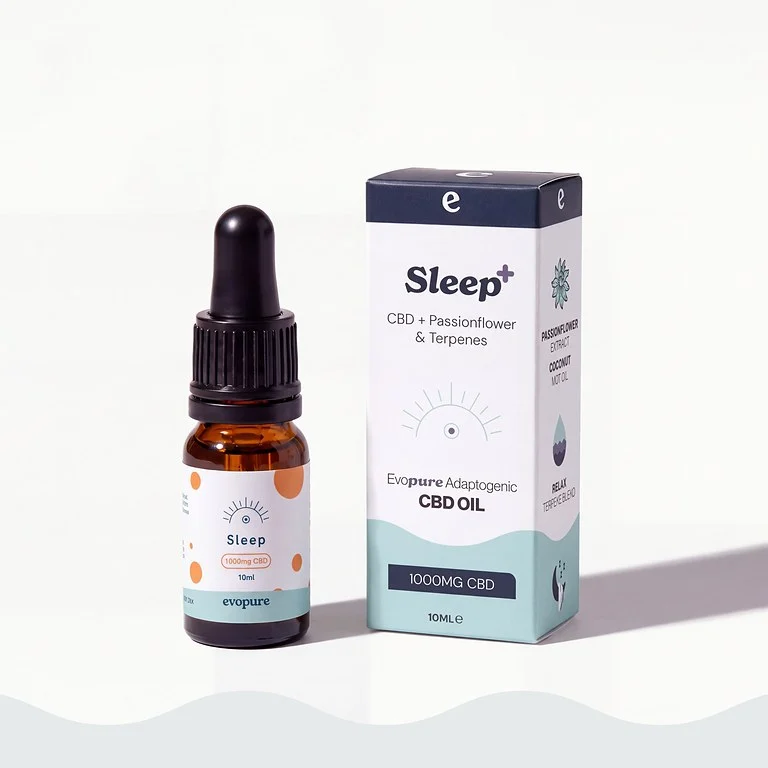
For adults who already use CBD, our Sleep CBD Oil is broad spectrum CBD with passionflower extract in MCT oil, with 0% THC, and is on the FSA public list. 10mg of CBD is about 0.2ml of the 500mg oil. The FSA’s 10mg a day figure is precautionary advice rather than a legal limit, set while longer-term safety research continues. At Evopure we think it is a very cautious figure, and many adults use more. If you go above it, increase slowly, and check with your GP or pharmacist first if you take any medication.
The Reishi Mushroom Adaptogenic Complex is a reishi hot chocolate with 0.5g reishi, 0.5g maca and 0.3g cinnamon per 8g. It contains a little natural caffeine from the cocoa, and the pack says it isn’t for people taking medication, so it isn’t for you if you take prescribed melatonin.
Next step
Magnesium Glycinate Sleep Complex
Want a magnesium drink with no melatonin in it? The Magnesium Glycinate Sleep Complex gives 290mg of magnesium per serving. If you take prescribed melatonin, check with your prescriber or pharmacist first.
Add Magnesium Glycinate Sleep Complex to bag See ingredients and reviews
Subscribe and save 25% on your first order, then 20%. New to Evopure? Join our emails for 20% off a one-off first order. Free UK delivery over £40. Adults only. We don’t recommend our products during pregnancy or breastfeeding.
Subscribe £22.49One-off £29.99
View productSources 8
- NHS. Melatonin.
- NHS. Insomnia.
- NHS. Vitamins and minerals: others (magnesium).
- emc. Circadin 2mg prolonged-release tablets: summary of product characteristics.
- NIH Office of Dietary Supplements. Magnesium fact sheet for health professionals.
- Rondanelli M et al. The effect of melatonin, magnesium, and zinc on primary insomnia in long-term care facility residents in Italy. J Am Geriatr Soc, 2011.
- Carlos RM et al. The effects of melatonin and magnesium in a novel supplement delivery system on sleep scores, body composition and metabolism. Chronobiol Int, 2024.
- Abbasi B et al. The effect of magnesium supplementation on primary insomnia in elderly: a double-blind placebo-controlled clinical trial. J Res Med Sci, 2012.