Last updated: 18 November 2026
Is magnesium OK to take with lamotrigine? The BNF lists no interaction between magnesium and lamotrigine, and the lamotrigine product information doesn’t mention magnesium or antacids. No official source sets a time gap. The NHS asks you to tell your doctor about any supplement, so check with your pharmacist first, especially if you have kidney problems.
Checked against the BNF, the NHS medicines page, two UK lamotrigine product information leaflets and PubMed on 18 November 2026. This is general information, not medical advice. Never stop lamotrigine, change your dose or switch brand without your doctor.
What the BNF and NHS say
The BNF is the reference UK doctors and pharmacists use. It keeps interaction lists for magnesium, for antacids (many indigestion remedies contain magnesium) and for lamotrigine itself. Here is what each shows, checked on 18 November 2026:
| Source | Magnesium or antacid entry | What it means for you |
|---|---|---|
| BNF magnesium list | No lamotrigine entry | No documented interaction |
| BNF antacid list | No lamotrigine entry | No documented interaction |
| BNF lamotrigine list | No magnesium or antacid entry | No documented interaction |
| Lamotrigine product information | No magnesium or antacid entry | No documented interaction |
We checked two UK product information leaflets for prescribers: Lamictal tablets (revised 5 November 2025) and a generic lamotrigine 25mg tablet (revised 20 August 2026). Neither mentions magnesium supplements or antacids in its interactions section. The only magnesium in them is magnesium stearate, a tiny amount used to make the tablets.
Two general notes on the BNF’s magnesium page apply to everyone. It says magnesium antacids “and other oral magnesium preparations” should preferably not be taken at the same time as other drugs, because they might impair absorption, and that some manufacturers suggest separating them by several hours. It also says magnesium antacids might damage enteric coatings. Standard lamotrigine tablets aren’t enteric coated, but other tablets you take might be.
The NHS lamotrigine page says some medicines, remedies and supplements may not mix well with lamotrigine, and asks you to tell your doctor if you take any other medicines, herbal remedies, vitamins or supplements. It doesn’t name magnesium.
Does lamotrigine lower magnesium?
Not as far as the evidence shows. The NHS lamotrigine page, the BNF and the UK product information don’t list low magnesium as a side effect. Two reviews of medicines and magnesium (2019 and 2021) name diuretics, proton pump inhibitors, some antibiotics and some cancer drugs as causes of low magnesium. Lamotrigine isn’t mentioned in either.
If low magnesium does come up, other tablets are the more likely cause:
- Long-term indigestion tablets. The MHRA says proton pump inhibitors (PPIs) such as omeprazole and lansoprazole can cause low magnesium, mostly after a year or more of use. See magnesium and omeprazole.
- Water tablets (diuretics). These change how much magnesium your kidneys keep. See magnesium and blood pressure medication.
iIf you are worried your magnesium is low, ask your GP whether to add it to your next blood test rather than guessing. Stopping magnesium before a blood test explains what to tell the lab.
Timing magnesium around lamotrigine
No source sets a gap between magnesium and lamotrigine, so we won’t invent one. Here is what the sources do say:
- Lamotrigine can be taken with or without food, once or twice a day as your doctor advises, the NHS says. The product information says food slightly delays how fast it is absorbed but not how much.
- Swallow standard tablets whole with a glass of water. You can break them in half if needed, but don’t chew or crush them. Dispersible tablets are dissolved in a glass of water first.
- Always take your full prescribed dose, never just part of a tablet, the NHS says.
- The BNF’s general advice is that oral magnesium is preferably not taken at the same time as other medicines. If you’d like a routine that follows it, ask your pharmacist how far apart to keep them, based on everything you take.
If you also take a medicine that does have a set gap from magnesium, such as levothyroxine, some antibiotics or alendronic acid, that gap comes first. Our hub on what not to take with magnesium lists them all, and the best time to take magnesium covers building a routine.
Drowsiness and dizziness and herbal extras
The NHS lists dizziness or drowsiness, tiredness, problems sleeping, feeling sick and diarrhoea among the common side effects of lamotrigine. If you feel dizzy or drowsy, it says not to drive, ride a bike or use machinery until it passes.
That matters for what else is in a magnesium product, more than for the magnesium itself:
- Herbal extras. Many evening magnesium drinks and capsules add herbs such as passionflower, hops, chamomile or valerian. The NHS says there’s often little information on how supplements mix with medicines, so show the label to your pharmacist.
- Too much magnesium. The NHS says taking more than 400mg of magnesium a day for a short time can cause diarrhoea. If you already get loose stools on lamotrigine, a gentler form and a lower dose make it easier to tell what is causing what.
- One change at a time. Don’t start magnesium in the same week as a dose change or a new medicine, so you and your doctor can see clearly what any new symptom is linked to.
Rash is the one to know. The BNF tells patients to see their doctor straight away if a rash or signs of an allergic-type reaction develop on lamotrigine, and the NHS lists skin reactions among its serious side effects. A rash after you start any new product needs a doctor’s opinion the same day, not a wait-and-see.
Never stop or change lamotrigine on your own
Lamotrigine is prescribed for epilepsy and for bipolar disorder. Whatever your reason for taking it, the same rules apply:
- Don’t stop suddenly. The BNF says to avoid abrupt withdrawal and to taper off over 2 weeks or longer, unless a serious skin reaction means a doctor stops it sooner. The NHS says keep taking it for as long as your doctor advises.
- Don’t change brand on your own. The BNF says some people need to stay on one manufacturer’s lamotrigine. If your tablets look different at the pharmacy, ask before taking them.
- Missed a dose? The NHS says skip it and take the next one at the usual time. Never take 2 doses to make up.
- Magnesium isn’t a replacement for lamotrigine, and nothing on this page suggests otherwise. Talk to your doctor or specialist team if you want to change your treatment.
Restarting after a gap is also a doctor’s job: the BNF says the starting dose steps should be repeated if lamotrigine is restarted after more than 5 days off. For CBD with medicines like lamotrigine, which raises different questions, see will CBD interact with medication? For lamotrigine specifically, see CBD and lamotrigine.
Other medicines taken with lamotrigine
The NHS lists medicines that may not mix well with lamotrigine: some other epilepsy medicines such as sodium valproate and carbamazepine, some mental health medicines such as risperidone, antibiotics such as rifampicin, some HIV medicines, and hormonal contraceptives such as the combined pill. If you take an antipsychotic such as risperidone, see magnesium and antipsychotics. Here is what the BNF magnesium and antacid lists show for medicines people on lamotrigine often ask about, checked on 18 November 2026:
| Medicine | BNF magnesium or antacid entry | Our guide |
|---|---|---|
| Sodium valproate or carbamazepine | Neither is on the magnesium or antacid list | Ask your pharmacist |
| Gabapentin | Antacids reduce its absorption: take gabapentin 2 hours after | Magnesium and gabapentin |
| Pregabalin | Not on either list | Ask your pharmacist |
| Some antibiotics | Gaps needed for several | Magnesium and antibiotics |
Painkillers are a common add-on too: see magnesium and painkillers. For other epilepsy medicines, see magnesium and epilepsy medication. If you drink, the NHS says it’s best not to drink too much on lamotrigine because it may make you feel sleepy; magnesium and alcohol covers the magnesium side.
Who should check with a GP or pharmacist first
Your kidneys matter for both. The BNF advises caution with lamotrigine in kidney failure because a breakdown product may build up, and the NHS says lamotrigine may not be suitable if you have a liver or kidney condition. The BNF also advises caution with magnesium supplements in kidney impairment, because of the risk of too much magnesium in the blood, and avoiding them when kidney function is very low.
Ask your GP, specialist team or pharmacist before adding magnesium if you:
- have kidney disease, or have been told your kidney results (eGFR or creatinine) are lower than normal
- have liver problems
- have had a rash or allergic reaction on lamotrigine before
- also take a PPI such as omeprazole, a water tablet or several other regular medicines
- take any product with herbal extracts and are on medicines that make you drowsy
- are pregnant, planning a pregnancy or breastfeeding (the BNF says lamotrigine levels are checked and doses adjusted around pregnancy)
Get help if you have taken more lamotrigine than prescribed: the NHS says to contact 111. Call 111 too if you think you are having a serious side effect, and go to A&E or call 999 for signs of a severe allergic reaction, such as a swollen throat or difficulty breathing.
Over 60? It is worth asking about your kidney results. See magnesium for older adults.
Magnesium glycinate vs citrate vs oxide on lamotrigine
No form of magnesium has been studied as a supplement with lamotrigine, and the BNF doesn’t list any of them with it. The practical differences are your stomach and the label.
| Form | What to know on lamotrigine |
|---|---|
| Magnesium glycinate (bisglycinate) | Magnesium bound to glycine. No BNF entry. Usually gentle on the stomach |
| Magnesium citrate | No BNF entry. More likely to loosen stools |
| Magnesium oxide | No BNF entry. More likely to loosen stools |
| Magnesium antacids | Not on the lamotrigine list. General spacing note applies |
Whichever you choose, the NHS says 400mg or less a day from supplements is unlikely to cause harm, and adults need 300mg (men) or 270mg (women) a day in total, mostly from food. More on each form: magnesium glycinate, magnesium citrate and magnesium oxide. Taking both glycinate and citrate? See magnesium glycinate and citrate together.
Where Evopure fits
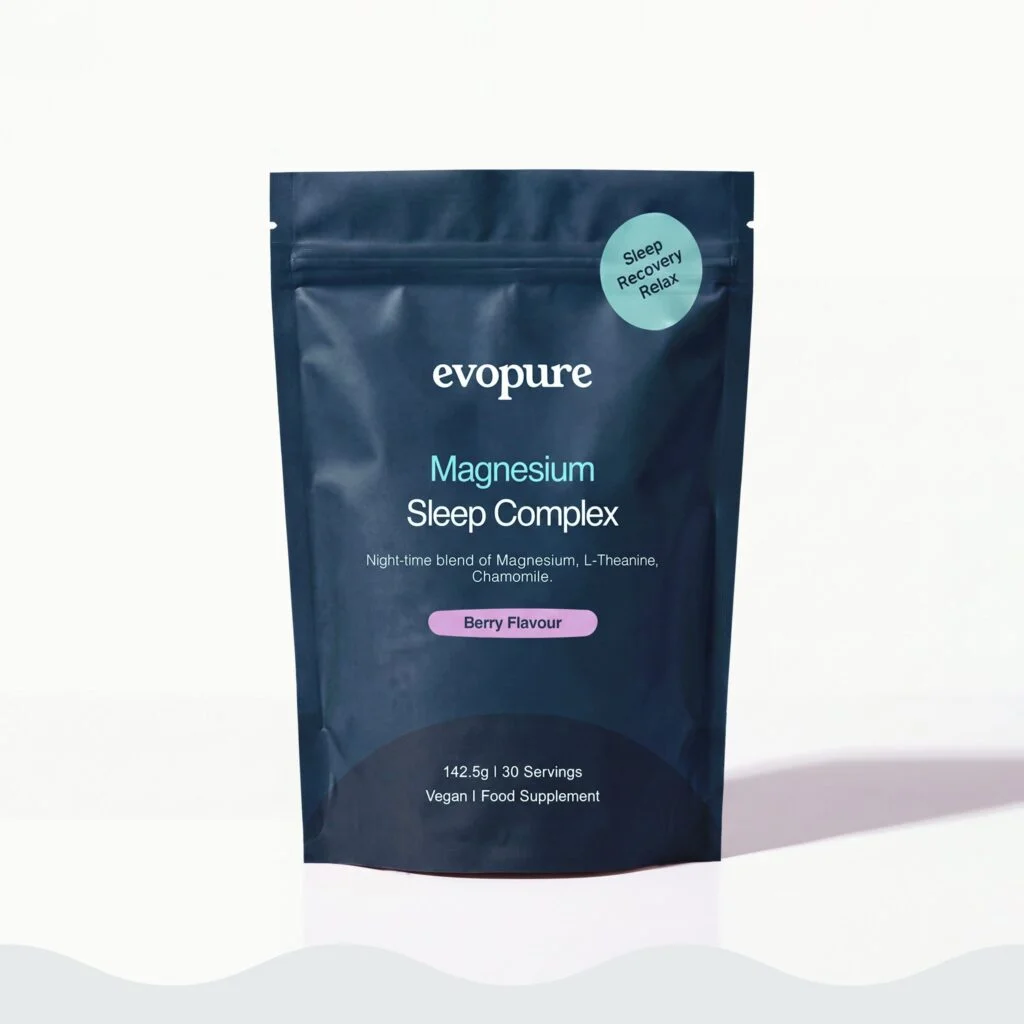
None of our products changes how lamotrigine works or does anything for the conditions it treats, and we don’t claim they do. If your pharmacist or specialist team is happy for you to add a magnesium supplement, our Magnesium Glycinate Sleep Complex is a berry drink powder with 290mg of magnesium (77% NRV) per 4.75g serving, from magnesium bisglycinate and citrate. To be upfront: it also contains glycine, L-theanine and extracts of chamomile, passionflower, hops and oat straw, so show the label to your pharmacist. That matters more on lamotrigine, which can make you drowsy or dizzy, and if you take other medicines that make you drowsy.
Our pick, once your pharmacist is happy
Magnesium Glycinate Sleep Complex
Magnesium Glycinate Sleep Complex. Magnesium contributes to a reduction of tiredness and fatigue. A berry drink you can take at the same time each day.
Add Magnesium Glycinate Sleep Complex to bag See ingredients and reviews
Rated 4.7 out of 5 from 15 ratings on the product page (via Lipscore, checked 18 November 2026). We make it, so we’re not neutral. Vegan and made in the UK. Free UK delivery over £40.
Subscribe £22.49One-off £29.99
View productWhy only one product? Our Reishi hot chocolate contains a little natural caffeine, and its pack says it isn’t for people taking medication. The FSA advises people on any medication not to take CBD unless under medical direction, so we don’t suggest our CBD here. Would you rather have plain magnesium with no herbs? Ask your pharmacist for a single-ingredient product: that’s a fair choice too.
How much is sensible? See how much magnesium per day and magnesium side effects for what too much looks like.
Next step
Magnesium Glycinate Sleep Complex
Check with your pharmacist, keep taking lamotrigine exactly as prescribed, and keep magnesium to a set time of day. The Magnesium Glycinate Sleep Complex gives 290mg of magnesium per serving as a berry drink. Magnesium contributes to a reduction of tiredness and fatigue.
Add Magnesium Glycinate Sleep Complex to bag See ingredients and reviews
Subscribe and save 25% on your first order, then 20%. New to Evopure? Join our emails for 20% off a one-off first order. Free UK delivery over £40. Adults only. We don’t recommend our products during pregnancy or breastfeeding.
Subscribe £22.49One-off £29.99
View productTaking other medicines too? Our guide to what not to take with magnesium lists every medicine that needs a gap from magnesium.
Sources 9
- BNF (NICE). Magnesium interactions, antacids interactions and lamotrigine interactions. Checked 18 November 2026.
- BNF (NICE). Lamotrigine (renal impairment, treatment cessation, prescribing and patient advice) and magnesium glycerophosphate (renal impairment) drug pages. Checked 18 November 2026.
- emc. Lamictal Tablets: summary of product characteristics (sections 4.5 and 5.2). Revised 5 November 2025.
- emc. Lamotrigine 25mg tablets: summary of product characteristics (section 4.5). Revised 20 August 2026.
- NHS. Lamotrigine: how to take it, side effects, who can take it and taking it with other medicines. Page last reviewed 12 January 2026.
- NHS. Vitamins and minerals: others (magnesium). Reviewed 3 August 2020.
- MHRA (GOV.UK). Proton pump inhibitors in long-term use: reports of hypomagnesaemia. Drug Safety Update, published on GOV.UK 11 December 2014.
- Liamis G et al. An overview of diagnosis and management of drug-induced hypomagnesemia. Pharmacol Res Perspect, 2021. PMID 34278747.
- Gröber U. Magnesium and Drugs. Int J Mol Sci, 2019. PMID 31035385.
General information, not medical advice. Evopure makes food supplements and is not connected with the makers of any medicine named here.