Last updated: 17 November 2026
Can you drink alcohol with magnesium? For most adults, yes. The BNF, the UK prescribing guide, lists no interaction between magnesium and alcohol (checked 17 November 2026). But alcohol makes your kidneys lose more magnesium, so regular heavy drinking can leave you low. Magnesium won’t prevent a hangover or undo a drink.
Checked against the BNF, NHS pages and PubMed in November 2026. General information, not medical advice.
Can you drink alcohol with magnesium?
No direct interaction is listed. The BNF’s magnesium page lists 38 interacting medicines, and alcohol isn’t one of them. The BNF’s alcohol page lists 323 interactions, none with magnesium. So a glass of wine on a day you’ve had your usual magnesium isn’t a known problem for a healthy adult.
Three things are still worth knowing:
- Alcohol pulls magnesium out through your kidneys. Over time, regular heavy drinking is linked to low magnesium (more below).
- Magnesium doesn’t make drinking any safer. It won’t lower your blood alcohol, protect your liver or stop a hangover.
- The amount you drink matters most. The NHS advises men and women not to drink more than 14 units a week on a regular basis, spread over 3 or more days, with several drink-free days.
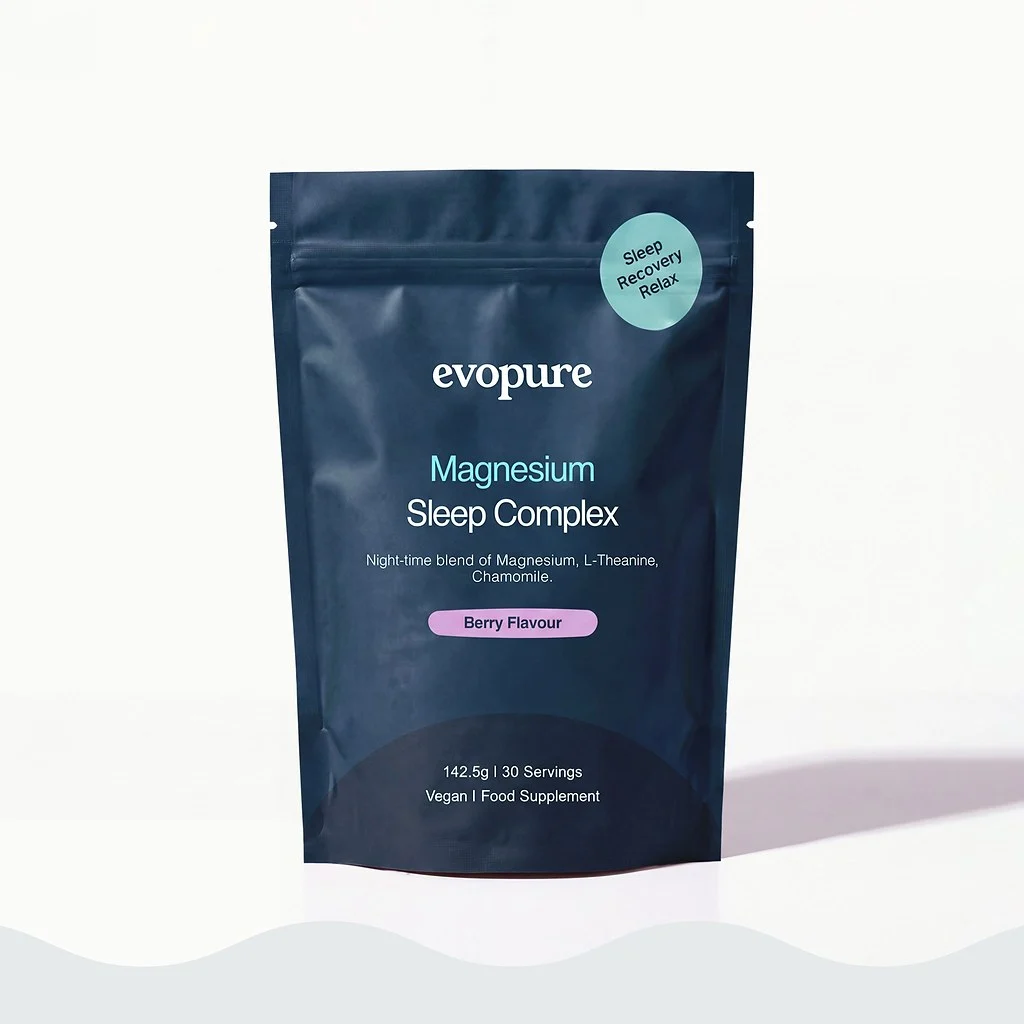
Our pick for your alcohol-free evenings
Magnesium Glycinate Sleep Complex
Magnesium Glycinate Sleep Complex, a berry drink powder with 290mg of magnesium (77% NRV) per 4.75g serving, from magnesium bisglycinate and citrate. Magnesium contributes to a reduction of tiredness and fatigue and to normal muscle function. It isn’t a hangover remedy, and it contains herbal extracts, so we suggest it for nights you’re not drinking.
Add Magnesium Glycinate Sleep Complex to bag See ingredients and reviews
Rated 4.7 out of 5 from 15 ratings on the product page (checked 17 November 2026). We make it, so we’re not neutral. Vegan and made in the UK. Subscribe and save 25% on your first order, then 20%. New to Evopure? Join our emails for 20% off a one-off first order. Free UK delivery over £40.
Subscribe £22.49One-off £29.99
View productDoes alcohol lower magnesium?
It can. A review in the Journal of the American College of Nutrition described alcohol as acting quickly as a “magnesium diuretic”: it causes a prompt rise in the magnesium lost in urine. A later review put the rise at 2 to 3 times normal.
One evening’s drinking is a short-term loss. The bigger concern is regular heavy drinking. A 2021 meta-analysis of 25 studies found blood magnesium was markedly lower in people with long-term alcohol dependence, and that the kidneys didn’t hold on to magnesium as they normally would when levels fell.
| Fact | Amount | Source |
|---|---|---|
| Low-risk drinking guideline | No more than 14 units a week | NHS |
| 14 units looks like | 6 pints of average-strength beer or 10 small glasses of lower-strength wine | NHS |
| Magnesium needed a day | 300mg men, 270mg women (19 to 64) | NHS |
| From supplements, unlikely to cause harm | 400mg a day or less | NHS |
The NHS says most people can get the magnesium they need from a varied diet: see foods high in magnesium and how much magnesium per day. If you drink a lot and are worried, ask your GP about a blood test rather than guessing. Our guide to the signs of magnesium deficiency explains what doctors look for.
Magnesium glycinate after drinking: is it OK the same night?
Plain magnesium glycinate has no listed interaction with alcohol, so a usual dose on an evening you’ve had a drink isn’t a known problem. A few practical points:
- It won’t help you sober up. Only time clears alcohol from your body.
- If you’ve been sick or your stomach is upset, skip it that night. Sip water and have your magnesium another day. The NHS says high doses of magnesium can cause diarrhoea.
- Check the label for extras. Many night-time magnesium products add herbs such as chamomile, passionflower or hops, or melatonin in some imported products. Melatonin is prescription-only in the UK, and the NHS says to check its leaflet for advice on alcohol. Our own drink contains herbal extracts, which is why we suggest it for alcohol-free evenings.
- Don’t take more to “make up” for a night out. Stay within 400mg a day from supplements, as the NHS advises.
More on glycinate itself: magnesium glycinate and magnesium glycinate side effects.
How long after drinking can you take magnesium?
No source we checked sets a gap. The BNF and NHS give no timing rule for magnesium and alcohol, so “wait 2 hours” or “wait 12 hours” advice online is guesswork rather than guidance.
A simple routine works better than a stopwatch: take magnesium at the time that suits your day, with food if it upsets your stomach, and keep to it on drinking and non-drinking days alike. Timing matters more for medicines that magnesium affects, such as some antibiotics and levothyroxine: see the best time to take magnesium.
Does magnesium prevent a hangover?
There’s no good evidence that it does. A BMJ systematic review of hangover remedies found no compelling evidence that any conventional or complementary remedy prevents or treats a hangover, and said the most effective way to avoid one is to drink in moderation or not at all. Magnesium has no authorised health claim for hangovers.
Taking magnesium before a night out won’t stop alcohol pulling magnesium through your kidneys, and it isn’t a licence to drink more. For what actually helps the morning after, see our honest hangover guide, and for the anxious feeling some people get, hangxiety.
Alcohol and magnesium and sleep
A drink before bed can make you drowsy, but a 2013 review of studies in healthy volunteers found that alcohol disrupts sleep in the second half of the night. Our guide to alcohol and sleep explains why and how long before bed to stop.
Magnesium won’t cancel that out. It has no authorised sleep claim. What it can claim is that it contributes to a reduction of tiredness and fatigue and to normal psychological function. If you’re looking for a different evening habit, our best bedtime drink guide compares warm, alcohol-free options.
Magnesium citrate and alcohol
No interaction is listed for magnesium citrate either. The thing to know is its effect on your gut: the BNF lists diarrhoea, soft stools and stomach irritation with high doses of magnesium citrate. A heavy night can upset your stomach too, so if you take citrate and have been drinking, it may be kinder to wait until your stomach has settled.
See magnesium citrate and magnesium side effects.
If you take medicines too
Here the medicine matters more than the magnesium or the drink:
- Some medicines shouldn’t be mixed with alcohol, including sleeping tablets such as zopiclone and some antibiotics. Check the leaflet or ask a pharmacist.
- Some medicines need a gap from magnesium, such as doxycycline, ciprofloxacin, levothyroxine and alendronic acid. See magnesium and antibiotics and magnesium and levothyroxine.
- Some medicines lower magnesium, such as long-term omeprazole and some water tablets. See magnesium and omeprazole.
The full list is in what not to take with magnesium.
Who should talk to a GP first
Speak to your GP or pharmacist before taking magnesium if you:
- regularly drink more than 14 units a week, or think you might be dependent on alcohol. A blood test is better than guessing.
- have kidney disease. The BNF advises avoiding magnesium citrate in severe kidney impairment.
- take any of the medicines above, or several regular medicines.
Don’t stop drinking suddenly if you’re dependent. The NHS says this can be very dangerous, and that you should get advice first. Call 999 for severe withdrawal symptoms such as hallucinations, severe shaking or seizures.
Free, confidential help is listed on the NHS alcohol support page. If you’re cutting down, our guides to Dry January, damp drinking and alcohol-free drinks may help.
Where Evopure fits
None of our products is a hangover remedy, and we make no claims about alcohol for them. Two fit alcohol-free evenings:
- Magnesium Glycinate Sleep Complex: a berry drink with 290mg of magnesium per 4.75g serving, plus 500mg glycine, 100mg L-theanine, oat straw extract (300mg) and hops, chamomile and passionflower extracts (200mg each). No melatonin.
- Reishi Mushroom Adaptogenic Complex: a hot chocolate made with cocoa, coconut sugar, reishi mushroom (0.5g), maca root (0.5g), cinnamon and stevia per 8g serving. A warm, alcohol-free nightcap; it contains a little natural caffeine from the cocoa. The pack says it isn’t for pregnant or breastfeeding women or people taking medication.
Why no CBD here? The BNF lists alcohol with CBD because both can cause drowsiness. If you’re wondering about the two together, read CBD and alcohol first. More swaps for a nightcap are in alcohol-free nightcaps, and our best magnesium supplement UK guide compares forms.
Next step
For your alcohol-free evenings, the Magnesium Glycinate Sleep Complex gives 290mg of magnesium per serving as a berry drink. Magnesium contributes to a reduction of tiredness and fatigue. Prefer something warm? The Reishi Mushroom Adaptogenic Complex is a hot chocolate (rated 5.0 from 22 ratings; contains a little natural caffeine).
Add Magnesium Glycinate Sleep Complex to bag See ingredients and reviews
Add Reishi Mushroom Adaptogenic Complex to bag See ingredients and reviews
Subscribe and save 25% on your first order, then 20%. New to Evopure? Join our emails for 20% off a one-off first order. Free UK delivery over £40. Adults only. We don’t recommend our products during pregnancy or breastfeeding. If you take any medicines, check with your GP or pharmacist first.
Sources 12
- BNF (NICE). Magnesium interactions (38, none with alcohol), alcohol interactions (323, none with magnesium) and magnesium citrate (side effects, kidney impairment). Checked 17 November 2026.
- NHS. The risks of drinking too much. Reviewed 10 September 2026.
- NHS. Alcohol units. Reviewed 27 August 2024.
- NHS. Alcohol support. Reviewed 17 August 2026.
- NHS. Alcohol use disorder. Reviewed 24 April 2026.
- NHS. Vitamins and minerals: others (magnesium).
- NHS. Melatonin. Reviewed 6 November 2026.
- Rivlin RS. Magnesium deficiency and alcohol intake: mechanisms, clinical significance and possible relation to cancer development (a review). J Am Coll Nutr, 1994. PMID 7836619.
- Romani AM. Magnesium homeostasis and alcohol consumption. Magnes Res, 2008. PMID 19271417.
- Vanoni FO et al. Magnesium metabolism in chronic alcohol-use disorder: meta-analysis and systematic review. Nutrients, 2021. PMID 34200366.
- Pittler MH et al. Interventions for preventing or treating alcohol hangover: systematic review of randomised controlled trials. BMJ, 2005. PMID 16373736.
- Ebrahim IO et al. Alcohol and sleep I: effects on normal sleep. Alcohol Clin Exp Res, 2013. PMID 23347102.