Last updated: 17 November 2026
Magnesium and levothyroxine: how many hours apart? Keep them at least 4 hours apart. Take levothyroxine first thing on an empty stomach, then magnesium later in the day. The BNF advises at least 4 hours between levothyroxine and antacids, many of which contain magnesium, and a levothyroxine leaflet for doctors says 4 to 5 hours.
Checked against the BNF, the levothyroxine summary of product characteristics (SmPC), NHS pages and PubMed on 17 November 2026. This is general information, not medical advice. Never change your levothyroxine dose or timing without your GP or pharmacist.
Can you take magnesium with levothyroxine?
Most people can take both, just not at the same time. Magnesium can reduce how much levothyroxine your gut absorbs if you swallow them together, and a lower dose getting through could leave your thyroid levels off target over time. Spacing them out avoids that.
The NHS lists antacids and other indigestion treatments, and calcium and iron supplements, among the things that may not mix well with levothyroxine. It asks you to tell your doctor about any vitamins or supplements you take. Magnesium isn’t named on that list, but it is a mineral that behaves in a similar way, and many indigestion remedies contain it. Our guide to magnesium glycinate side effects covers the other medicines to space it from.
Why magnesium affects levothyroxine
Levothyroxine is “incompletely and variably absorbed” from the gut, according to its UK product information. Minerals such as calcium and iron can bind to it in the gut, so less is absorbed. Until recently nobody had tested magnesium directly.
A 2025 Swiss trial (the ThyroMag trial) did. Fifteen healthy adults took a single 1mg dose of levothyroxine on its own, with magnesium aspartate and with magnesium citrate, and the researchers measured thyroxine in the blood for 6 hours.
| Taken with levothyroxine | Thyroxine absorbed | What it means |
|---|---|---|
| Nothing | Baseline | Comparison |
| Magnesium aspartate | 12% lower | A clear drop |
| Magnesium citrate | 7% lower | Smaller and not statistically certain |
The effect was smaller than reported for calcium and iron, but the authors still advise people with an underactive thyroid to keep levothyroxine and magnesium apart, especially when their TSH (thyroid stimulating hormone) needs to stay in a narrow range. It was a small, single-dose study in people with healthy thyroids, so it can’t tell you what daily use does.
How many hours apart?
At least 4 hours is the gap UK prescribing sources use for minerals and antacids. There’s no separate BNF entry for magnesium supplements, so 4 hours is the cautious choice; your pharmacist may suggest a different gap for your routine.
| What you take | Gap from levothyroxine | Source |
|---|---|---|
| Magnesium supplement | At least 4 hours (cautious) | By analogy with antacids; ask your pharmacist |
| Antacids and indigestion remedies | At least 4 hours | BNF; SmPC says 4 to 5 hours |
| Calcium supplements | At least 4 hours | BNF; SmPC says 4 to 5 hours |
| Iron tablets | At least 4 hours | BNF; SmPC says 4 to 5 hours |
| Breakfast, tea or coffee | 30 to 60 minutes after | NHS |
BNF interactions checked 17 November 2026; SmPC revised 16 October 2026. If you take calcium supplements, iron tablets or a magnesium and calcium combination, the same gap applies to each.
A simple daily timetable
The easiest routine keeps levothyroxine at one end of the day and magnesium at the other:
- On waking: levothyroxine with a glass of water, on an empty stomach.
- 30 to 60 minutes later: breakfast, tea or coffee, as the NHS advises.
- Evening: magnesium, well over 4 hours after your levothyroxine.
Taking levothyroxine at the same time every day matters more than the exact hour, because your dose is set by blood tests taken on your usual routine. If your GP has asked you to take levothyroxine at bedtime instead, ask your pharmacist where magnesium fits. More on timing in our guide to the best time to take magnesium.
Underactive thyroid and magnesium
A 2018 study of 1,257 adults in China found that people with severely low blood magnesium were more likely to have an underactive thyroid and Hashimoto’s thyroiditis. That shows a link, not that low magnesium causes thyroid problems, and no trial shows magnesium supplements treat an underactive thyroid.
iTiredness, feeling cold and low mood can come from an underactive thyroid or from low magnesium, and the two are easy to mix up. If you’re worried about either, ask your GP for a blood test rather than guessing with supplements. Magnesium is not a replacement for levothyroxine.
Which magnesium is best with hypothyroidism?
No form of magnesium treats hypothyroidism, and there’s no good evidence that one form is better for people on levothyroxine. In the small ThyroMag trial, citrate reduced levothyroxine absorption a little less than aspartate, but the authors still advise keeping any magnesium apart from it.
Choose on what suits you: magnesium glycinate is often picked because it’s usually gentle on the stomach, while magnesium citrate and magnesium oxide are more likely to loosen stools. Compare forms in our best magnesium supplement UK guide.
Whatever the form, keep to the NHS limit: 400mg a day or less of magnesium from supplements is unlikely to cause harm, and higher doses can cause diarrhoea. Adults need 300mg (men) or 270mg (women) a day in total, mostly from food. See how much magnesium per day.
Who should check with a GP or pharmacist first
Ask before adding magnesium if any of these apply:
- You have kidney problems, as magnesium can build up.
- You’ve just started levothyroxine or changed dose, and your blood tests aren’t settled yet.
- You also take omeprazole or another acid reducer, which can affect levothyroxine too (see magnesium and omeprazole).
- You take several other medicines, or you’re pregnant.
- Your thyroid results have been hard to keep steady.
Speak to your GP or a pharmacist if you feel sick, have diarrhoea, headaches or trouble sleeping on levothyroxine. The NHS says these can mean your dose isn’t right.
Call NHS 111 if you take levothyroxine and get a high temperature with a fast or irregular heartbeat, feel dizzy or faint, or notice yellowing of your skin or eyes.
Starting or stopping a regular supplement is worth mentioning at your next thyroid blood test, so your results can be read in context. Taking biotin as well? It can affect thyroid test results.
Where Evopure fits
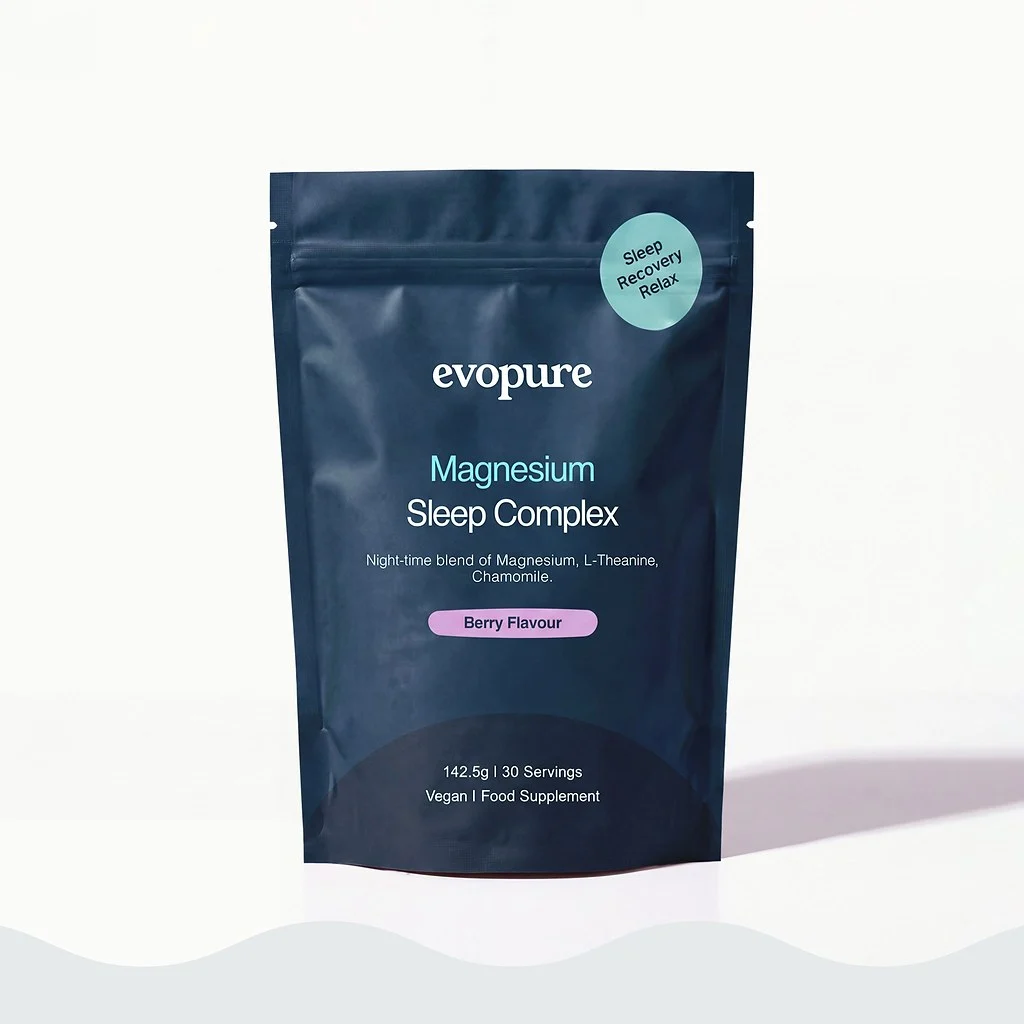
None of our products treats a thyroid condition or changes how levothyroxine works, and we don’t claim they do. If your GP or pharmacist is happy for you to add magnesium, our Magnesium Glycinate Sleep Complex is a berry drink powder with 290mg of magnesium (77% NRV) per 4.75g serving, from magnesium bisglycinate and citrate, plus 500mg glycine and 100mg L-theanine. As an evening drink, it sits well over 4 hours from a morning levothyroxine tablet.
Our pick, once you’ve checked
Magnesium Glycinate Sleep Complex
Magnesium Glycinate Sleep Complex. Magnesium contributes to a reduction of tiredness and fatigue, to normal muscle function and to electrolyte balance. Have it in the evening, at least 4 hours after your levothyroxine.
Add Magnesium Glycinate Sleep Complex to bag See ingredients and reviews
Rated 4.7 out of 5 from 15 ratings on the product page (via Lipscore, checked 17 November 2026). We make it, so we’re not neutral. Vegan and made in the UK. Free UK delivery over £40.
Subscribe £22.49One-off £29.99
View productWhy only one product? Our Reishi hot chocolate pack says it isn’t for people taking medication, and our Flow CBD Oil contains ashwagandha, which isn’t suitable with a thyroid condition unless your GP agrees (see ashwagandha and thyroid medication). Thinking about CBD? Read CBD and levothyroxine and can CBD interact with medication? first.
Next step
Magnesium Glycinate Sleep Complex
If your GP or pharmacist is happy for you to take magnesium alongside levothyroxine, the Magnesium Glycinate Sleep Complex gives 290mg of magnesium per serving as an evening berry drink. Magnesium contributes to a reduction of tiredness and fatigue.
Add Magnesium Glycinate Sleep Complex to bag See ingredients and reviews
Subscribe and save 25% on your first order, then 20%. New to Evopure? Join our emails for 20% off a one-off first order. Free UK delivery over £40. Adults only. We don’t recommend our products during pregnancy or breastfeeding.
Subscribe £22.49One-off £29.99
View productTaking other medicines too? Our guide to what not to take with magnesium lists every medicine that needs a gap from magnesium, and those that lower it.
Sources 7
- NHS. Levothyroxine: a medicine for an underactive thyroid. Reviewed 6 July 2026.
- BNF (NICE). Levothyroxine: interactions (antacids, calcium, iron: separate by at least 4 hours). Checked 17 November 2026.
- emc. Levothyroxine 100mcg tablets: summary of product characteristics (sections 4.5 and 5.2). Revised 16 October 2026.
- Attinger MC et al. Randomized crossover trial on drug-drug interactions of levothyroxine with magnesium citrate and magnesium aspartate (ThyroMag). Clin Transl Sci, 2025.
- Wang K et al. Severely low serum magnesium is associated with increased risks of positive anti-thyroglobulin antibody and hypothyroidism. Sci Rep, 2018.
- NHS. Underactive thyroid (hypothyroidism). Reviewed 28 April 2025.
- NHS. Vitamins and minerals: others (magnesium).