Last updated: 17 November 2026
Yes, you can take magnesium with most antibiotics, but not at the same time as some. The BNF says keep magnesium at least 2 to 3 hours apart from tetracyclines such as doxycycline and lymecycline, and 2 to 3 hours from quinolones such as ciprofloxacin. Amoxicillin, co-amoxiclav and cefalexin have no listed magnesium interaction. Ask your pharmacist.
Checked against the BNF, NHS medicine pages and PubMed on 17 November 2026. This is general information, not medical advice. Never stop an antibiotic course early or skip doses to fit a supplement around it.
Magnesium with each antibiotic
Magnesium only matters for two groups of antibiotics. In the gut it binds to tetracyclines and quinolones, so less of the antibiotic gets into your blood and it may not work as well. For the antibiotics GPs prescribe most, such as amoxicillin, there is no magnesium interaction in the BNF. Here is what the BNF lists for oral magnesium, checked 17 November 2026.
| Antibiotic group | Examples | BNF advice for oral magnesium |
|---|---|---|
| Tetracyclines | Doxycycline, lymecycline, minocycline, oxytetracycline | Separate by at least 2 to 3 hours |
| Quinolones | Ciprofloxacin, levofloxacin, ofloxacin, moxifloxacin | Separate by 2 to 3 hours |
| Nitrofurantoin | Macrobid, Macrodantin | Magnesium trisilicate antacid lowers absorption (no advice on timing) |
| Penicillins and cephalosporins | Amoxicillin, co-amoxiclav, flucloxacillin, cefalexin | None listed |
| Others | Clarithromycin, azithromycin, metronidazole, trimethoprim | None listed |
The same binding happens with iron, zinc and calcium, so the gaps below apply to those supplements too.
Doxycycline and lymecycline (tetracyclines)
For doxycycline, lymecycline, minocycline, oxytetracycline and tetracycline, the BNF says magnesium “decreases the absorption” and the manufacturer advises separate administration by at least 2 to 3 hours (checked 17 November 2026). For antacids the BNF goes further: they “greatly decrease” doxycycline absorption.
How big is the effect? In a 1989 study in 10 healthy volunteers, an aluminium and magnesium hydroxide antacid cut the amount of doxycycline in the blood by about 85% and left levels too low to work. The US National Institutes of Health is more cautious than the BNF, saying these antibiotics should be taken at least 2 hours before or 4 to 6 hours after a magnesium supplement.
- The simple rule: take your doxycycline or lymecycline first, and leave magnesium until at least 4 hours later. If that is hard to fit in, pause the magnesium until the course ends.
- Long courses: lymecycline for acne usually runs for at least 8 weeks (NHS), and the NHS says doxycycline is also used for acne, rosacea and to prevent malaria when travelling. Agree a daily routine with your pharmacist rather than guessing.
- Iron and zinc too: the NHS doxycycline page names medicines and supplements containing iron or zinc, plus antacids and indigestion treatments, as ones that may not mix well.
Ciprofloxacin and levofloxacin (quinolones)
For ciprofloxacin, levofloxacin, ofloxacin and moxifloxacin, the BNF says magnesium decreases absorption and the manufacturer advises separate administration by 2 to 3 hours. For antacids, which often contain magnesium, it gives a firmer rule: take ciprofloxacin or levofloxacin 2 hours before or 4 hours after the antacid (all checked 17 November 2026).
The timing matters. In a 1989 study, an aluminium and magnesium antacid taken 5 to 10 minutes before ciprofloxacin left only about 15% of the usual amount absorbed. Taken 2 hours before, it was about 23%, and 4 hours before, about 70%. Antacid taken 6 hours before, or 2 hours after, ciprofloxacin made no difference.
The NHS also says not to take ciprofloxacin with dairy products or drinks with added calcium, such as plant milk, and to leave a gap of at least 2 hours. If you take magnesium, have it at least 2 hours after ciprofloxacin and at least 4 to 6 hours before the next dose, or pause it for the course. Taking tamsulosin or finasteride too? See magnesium and prostate medication.
Amoxicillin and co-amoxiclav (Augmentin)
Most people can take magnesium with amoxicillin. The BNF lists no magnesium or antacid interaction for amoxicillin, flucloxacillin, phenoxymethylpenicillin (penicillin V) or cefalexin. In the same 1989 study, an aluminium and magnesium antacid had no meaningful effect on how amoxicillin, cefalexin or co-amoxiclav (Augmentin) were absorbed.
No gap is needed for these, but there are two practical points:
- Penicillin V has its own food rule. The NHS says to take it 30 minutes before eating or at least 2 to 3 hours after food. Keep magnesium with a meal at another time.
- Diarrhoea is a common side effect of amoxicillin (NHS). High doses of magnesium can loosen stools too, so if you get diarrhoea, pause your magnesium until it settles. Stop amoxicillin and call a doctor or 111 if diarrhoea is severe or contains blood or mucus.
The same goes for clarithromycin and azithromycin: the BNF lists no magnesium interaction, though clarithromycin interacts with many other medicines, so mention everything you take.
Nitrofurantoin and trimethoprim for UTIs
For nitrofurantoin, the BNF lists one magnesium entry: the antacid magnesium trisilicate decreases its absorption, with no advice on timing. The NHS nitrofurantoin page (reviewed 9 October 2026) also lists antacids as medicines that may not mix well. To be safe, avoid magnesium antacids during the course and keep any magnesium supplement a couple of hours away from each dose.
iFor trimethoprim, the BNF lists no magnesium or antacid interaction (checked 17 November 2026). Speak to a GP or pharmacist if your symptoms don’t improve.
Antacids and laxatives count too
Supplements are not the only source of magnesium. Many indigestion remedies and some laxatives contain magnesium, and the BNF’s advice on antacids with tetracyclines and quinolones is stricter than for supplements. Check the label for:
- magnesium hydroxide, magnesium carbonate or magnesium trisilicate (indigestion and heartburn remedies)
- magnesium hydroxide or magnesium sulfate (some laxatives, including Epsom salts)
- calcium carbonate, iron or zinc (many antacids, multivitamins and mineral supplements)
The BNF also says magnesium antacids might damage the enteric coating on some tablets. If you need an indigestion remedy during an antibiotic course, ask the pharmacist which one to use and when. Our guides to acid reflux, magnesium for constipation, iron tablets, zinc and calcium supplements cover the spacing for each, and what not to take with magnesium lists every medicine that needs a gap.
A simple day plan
Fit magnesium around the antibiotic, never the other way round. Take each antibiotic dose exactly as the label says. These examples follow the BNF gaps with room to spare.
| Antibiotic | Typical times | Magnesium |
|---|---|---|
| Doxycycline once a day | 8am | Evening, at least 4 hours later |
| Doxycycline or ciprofloxacin twice a day | 8am and 8pm | About 2pm, or pause it for the course |
| Lymecycline once a day (acne) | Morning | Evening, at least 4 hours later |
| Amoxicillin three times a day | Spread through the day | No gap listed: any time |
If the plan feels fiddly, stopping magnesium for a short course is fine for most people. The NHS says you should be able to get all the magnesium you need from a varied diet: see foods high in magnesium. If you also take levothyroxine, it needs its own gap: see magnesium and levothyroxine. More on timing in the best time to take magnesium.
Who should check with a pharmacist first
Ask your pharmacist or GP before taking magnesium during an antibiotic course if you:
- have kidney disease or reduced kidney function. Your kidneys clear extra magnesium, and the BNF advises caution with prescribed magnesium because of the risk of high levels.
- take several regular medicines, such as levothyroxine, bone medicines, blood pressure tablets or warfarin.
- have diarrhoea, or are being sick, on the antibiotic.
- are pregnant or breastfeeding.
Keep taking the antibiotic until you’ve finished it all, even if you feel better (NHS). Call NHS 111 if you have bloody diarrhoea, signs of an allergic reaction or you feel very unwell. Call 999 if you have swelling of the lips, mouth or throat, or trouble breathing.
iLow magnesium has its own causes and signs: see signs of magnesium deficiency, and ask your GP for a blood test rather than guessing. Over 60? Magnesium for older adults covers the extra checks. Blood pressure tablets are covered in magnesium and blood pressure tablets.
Where Evopure fits
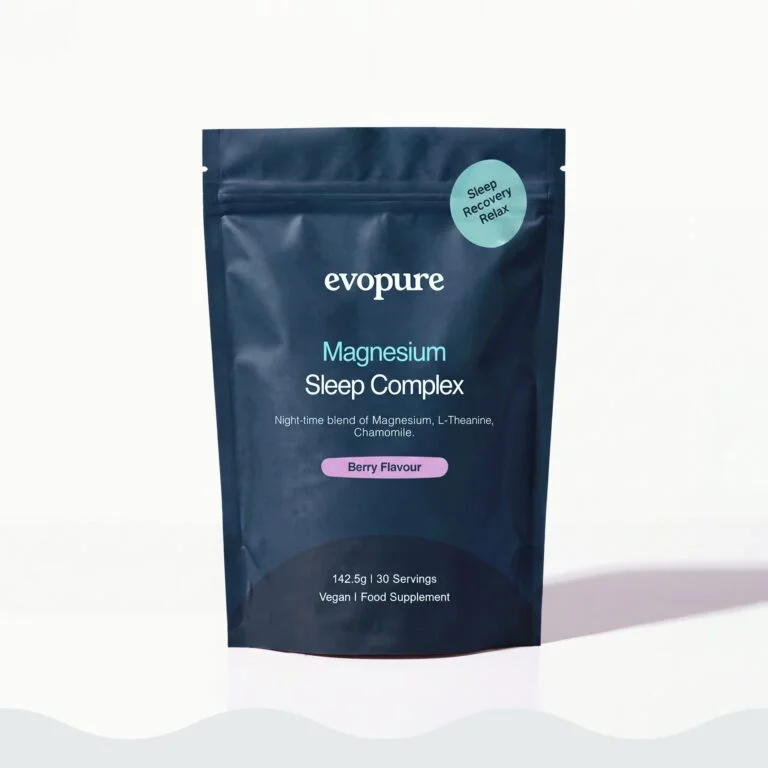
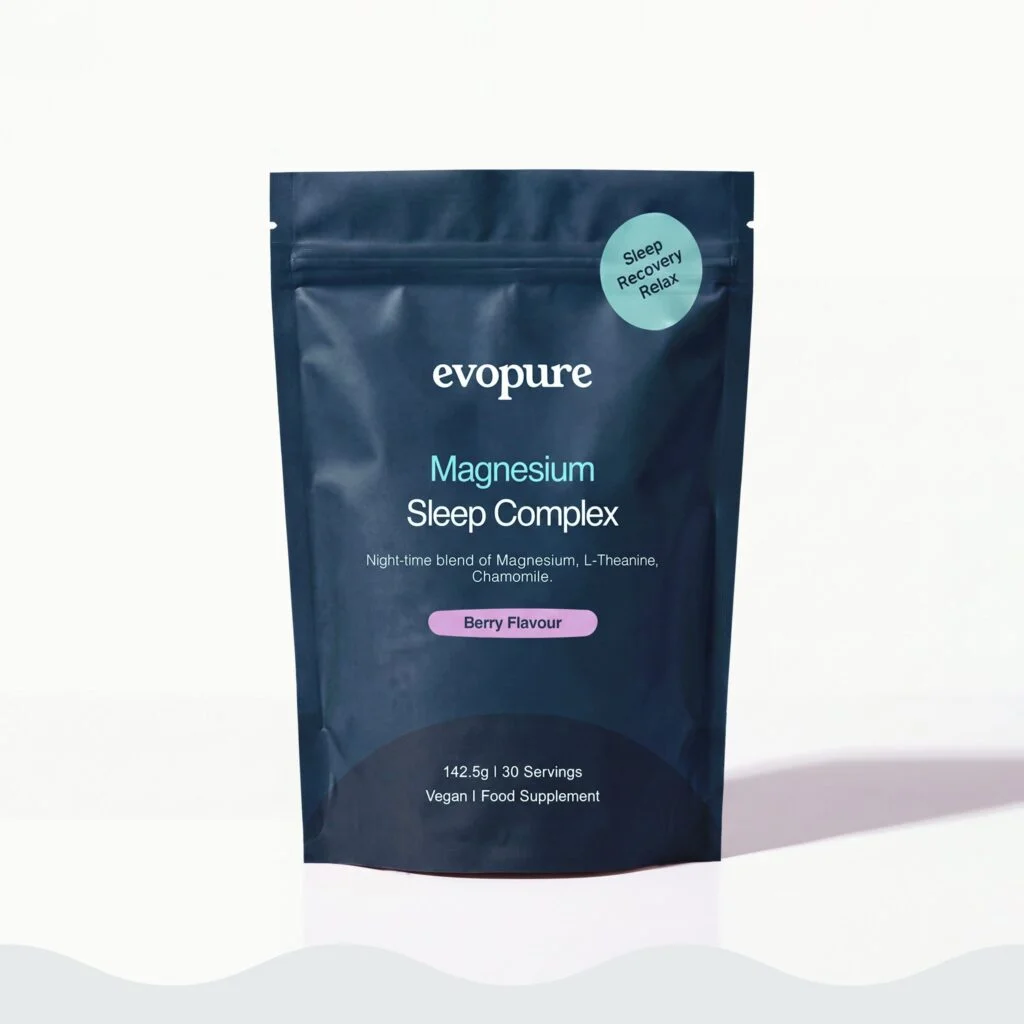
None of our products treats infections or changes how antibiotics work, and we don’t claim they do. If you want to keep taking magnesium during a course, our Magnesium Glycinate Sleep Complex is a berry drink powder with 290mg of magnesium (77% NRV) per 4.75g serving, from magnesium bisglycinate and citrate, plus glycine and L-theanine. As an evening drink, it is easy to keep well away from a morning antibiotic.
Our pick, once you’ve checked the timing
Magnesium Glycinate Sleep Complex
Magnesium Glycinate Sleep Complex. Magnesium contributes to a reduction of tiredness and fatigue, to normal muscle function and to electrolyte balance. On doxycycline, lymecycline or ciprofloxacin, have it at least 4 hours after your dose.
Add Magnesium Glycinate Sleep Complex to bag See ingredients and reviews
Rated 4.7 out of 5 from 15 ratings on the product page (via Lipscore, checked 17 November 2026). We make it, so we’re not neutral. Vegan and made in the UK. Free UK delivery over £40.
Subscribe £22.49One-off £29.99
View productWhy only one product? Our Reishi hot chocolate pack says it isn’t for people taking medication, and the FSA advises people on any medication not to take CBD unless under medical direction. For CBD, see CBD and antibiotics. Comparing forms? See magnesium glycinate and magnesium glycinate side effects.
How much is sensible? The NHS says adults need 300mg (men) or 270mg (women) a day, and that 400mg or less a day from supplements is unlikely to cause harm. Doses above 400mg can cause diarrhoea. See how much magnesium per day and, if you take zinc as well, magnesium vs zinc.
Next step
Magnesium Glycinate Sleep Complex
Once your pharmacist has helped you plan the timing, the Magnesium Glycinate Sleep Complex gives 290mg of magnesium per serving as an evening berry drink. Magnesium contributes to a reduction of tiredness and fatigue.
Add Magnesium Glycinate Sleep Complex to bag See ingredients and reviews
Subscribe and save 25% on your first order, then 20%. New to Evopure? Join our emails for 20% off a one-off first order. Free UK delivery over £40. Adults only. We don’t recommend our products during pregnancy or breastfeeding.
Subscribe £22.49One-off £29.99
View productDo antibiotics make you tired?
Tiredness on antibiotics is usually down to the infection itself, poor sleep or a stomach upset, rather than the antibiotic. Our guide do antibiotics make you tired? goes through amoxicillin, flucloxacillin and the rest, and when to see a GP. Getting over a cold or flu at the same time? See how to get rid of a cold.
Sources 10
- BNF (NICE). Magnesium interactions and antacids interactions. Checked 17 November 2026.
- BNF (NICE). Interactions for doxycycline, lymecycline, ciprofloxacin, levofloxacin, nitrofurantoin, amoxicillin, cefalexin and trimethoprim. Checked 17 November 2026.
- NHS. Doxycycline (reviewed 5 September 2025), lymecycline (13 April 2026), ciprofloxacin (9 October 2026) and nitrofurantoin (9 October 2026).
- NHS. Amoxicillin (side effects reviewed 2 June 2025) and phenoxymethylpenicillin (1 September 2026).
- NHS. Vitamins and minerals: others (magnesium).
- NIH Office of Dietary Supplements. Magnesium fact sheet for health professionals: interactions with medications (updated 6 January 2026).
- Deppermann KM et al. Influence of ranitidine, pirenzepine, and aluminum magnesium hydroxide on the bioavailability of various antibiotics, including amoxicillin, cephalexin, doxycycline, and amoxicillin-clavulanic acid. Antimicrob Agents Chemother, 1989.
- Nix DE et al. Effects of aluminum and magnesium antacids and ranitidine on the absorption of ciprofloxacin. Clin Pharmacol Ther, 1989.
- Miyata K et al. Antacid interaction with new quinolones: dose regimen recommendations based on pharmacokinetic modeling of clinical data. Int J Clin Pharmacol Ther, 2007.
- FSA (gov.uk). Cannabidiol (CBD) guidance.