Last updated: 10 November 2026
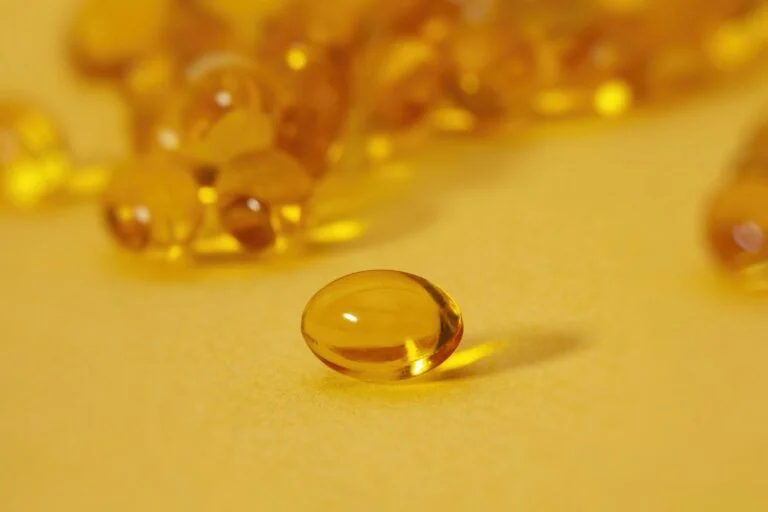
Astaxanthin is a red carotenoid pigment made by the microalga Haematococcus pluvialis, and it is what gives salmon, trout, prawns and krill their pink colour. As a supplement it usually comes in 4 to 12mg softgels. In Great Britain, the authorised algae form is limited to 8mg of astaxanthin a day.
Astaxanthin is sold mainly for skin, eyes and exercise recovery. Below: what it is, how much to take, its UK legal status, what the studies really show (many are small and paid for by makers), side effects, who should avoid it, and how to read a label.
Our pick
Magnesium Glycinate Sleep Complex
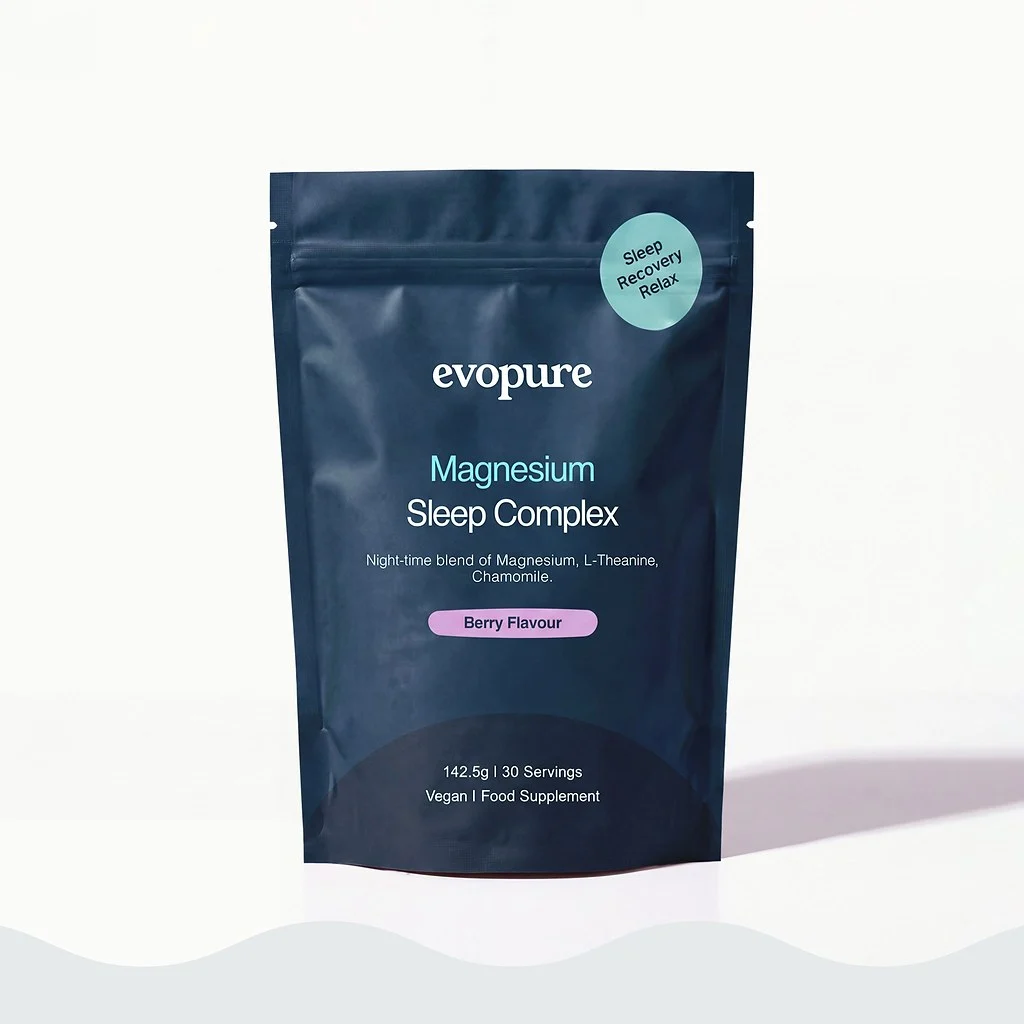
Evopure doesn’t sell astaxanthin. If tiredness or post-exercise fatigue is what you’re trying to fix, Evopure’s Magnesium Glycinate Sleep Complex is a berry drink powder with 290mg of magnesium (77% NRV) per 4.75g serving, from magnesium bisglycinate and citrate. Magnesium contributes to normal muscle function and to a reduction of tiredness and fatigue. Vegan and made in the UK.
Add Magnesium Glycinate Sleep Complex to bag See ingredients and reviews
Subscribe and save 25% on your first order, then 20%. New to Evopure? Join our emails for 20% off a one-off first order. Free UK delivery over £45.
Subscribe £22.49One-off £29.99
View productWhat is astaxanthin?
Astaxanthin is a fat-soluble carotenoid, in the same pigment family as beta-carotene and lutein, but deep red. The microalga Haematococcus pluvialis makes large amounts of it when stressed by strong light, and animals that eat the algae, or the krill and shrimp that eat it, store the colour in their flesh and shells.
| Astaxanthin fact | The detail |
|---|---|
| What it is | A red carotenoid (a xanthophyll) |
| Main supplement source | Oleoresin from the alga Haematococcus pluvialis |
| Typical supplement dose | 4 to 12mg a day, in an oil softgel |
| GB authorised limit | 8mg of astaxanthin a day (40 to 80mg of oleoresin) |
| EFSA safety view (2020) | 8mg a day from supplements is safe for adults |
| EFSA acceptable daily intake | 0.2mg per kg body weight from all sources: 14mg at 70kg |
| UK age guidance | FSA 2026 assessment: adults and teenagers aged 14 and over |
| Authorised health claims | None in Great Britain |
| Check first if | Pregnant, breastfeeding, on regular medicines, or allergic to shellfish (krill products) |
Astaxanthin is often called a “super antioxidant” in adverts. That phrase comes mostly from lab tests, not from proof of health effects in people, and there are no authorised health claims for astaxanthin in Great Britain.
How much astaxanthin should you take a day?
Most astaxanthin supplements give 4 to 12mg a day, and skin trials mostly used 3 to 6mg. In Great Britain the authorised algae form is limited to 8mg of astaxanthin a day for food supplements, the amount the European Food Safety Authority (EFSA) judged safe for adults in 2020. Take it with a meal that contains some fat.
- Read the astaxanthin figure, not the oleoresin figure. A label may say “astaxanthin oleoresin 100mg” with 5mg of astaxanthin inside. The 8mg limit refers to astaxanthin itself.
- Count every product. Krill oil, some fish oils, eye formulas and “skin” blends can all contain astaxanthin.
- Diet adds a little. EFSA’s safety assessment included astaxanthin from eating salmon, trout and shellfish on top of 8mg from supplements, and still found it safe for adults.
Is 12mg of astaxanthin too much?
12mg of astaxanthin a day is more than the 8mg a day authorised for food supplements in Great Britain, so a UK-compliant product shouldn’t provide it in its daily dose. A 2019 safety review of 87 human studies found no safety concerns with natural astaxanthin, including 35 studies at 12mg a day or more, but most were short. Sticking to 8mg or less is the sensible choice.
Is astaxanthin legal in the UK?
Yes. Astaxanthin-rich oleoresin from Haematococcus pluvialis algae is an authorised novel food in England, Scotland and Wales, for use in food supplements at up to 8mg of astaxanthin a day. It must be called “astaxanthin” on the label. It is the only astaxanthin entry on the FSA’s register of authorised novel foods (checked November 2026).
- Children: in a 2026 safety assessment, the Food Standards Agency (FSA) and Food Standards Scotland concluded the oleoresin is safe for adults and teenagers aged 14 and over, and recommended a label line saying younger children shouldn’t take it. EFSA had found that children under 14 taking 8mg a day could go over the safe intake.
- EU difference: since 2023 the EU has allowed lower doses for some younger age groups. Great Britain sets its own rules after Brexit, so UK products should follow the GB conditions.
- Synthetic astaxanthin: it is used in fish feed to colour farmed salmon. The authorised supplement form in Great Britain is the algae oleoresin.
Novel food rules exist because a food without a history of use in Europe before May 1997 needs a safety assessment first. For another example, see our guide to vitamin K2, and for how high-dose supplements add up, can you overdose on vitamins?
What are the benefits of astaxanthin?
The benefits of astaxanthin are not proven. Small trials suggest it may help skin moisture and wrinkles, ease screen-related eye strain and reduce a marker of muscle damage after exercise, but most studies are short, small and funded by astaxanthin makers. Reviews found no effect on cholesterol, blood sugar or exercise performance.
| Research area | What studies found | How strong |
|---|---|---|
| Skin (wrinkles, moisture) | A 2021 review of 11 studies (6 randomised) found better skin texture, wrinkles and moisture at 3 to 6mg a day | Small, mostly Japanese women, many company-funded |
| Skin and sun | 4mg a day for 10 weeks reduced UV redness and moisture loss in 23 people | One small trial, run by the maker |
| Eye strain from screens | A 6-week trial in 40 adults (combined with lutein and anthocyanin) and an 84-day trial in 64 children reported less eye strain | Small, company-funded |
| Exercise recovery | A 2026 review of 24 trials found lower creatine kinase (a muscle damage marker) but no better VO2max, time trials or power | Moderate, mixed |
| Cholesterol and blood sugar | A review of 7 trials (280 people) found no significant effect | Review, no effect |
Does astaxanthin work for skin?
Astaxanthin may modestly help skin, but the evidence is thin. The 2021 review that found better moisture and fewer fine lines also warned that most trials were small, done mainly in healthy Japanese women, and often funded by companies selling astaxanthin. Sunscreen still does far more for sun damage than any supplement. For other skin options, see collagen supplements, vitamin C, which contributes to normal collagen formation for the normal function of skin, and reishi and skin.
Is astaxanthin good for your eyes?
Studies on astaxanthin and tired eyes are early. Most tested people with screen-related eye strain over a few weeks, some used combination products, and the makers often paid for them. If your eyes feel tired a lot, see our guides to heavy, tired eyes, dry eyes and whether blue light glasses work, and see an optician for any change in your sight.
Does astaxanthin help exercise recovery?
The best evidence is for a lower creatine kinase level after exercise, a blood marker of muscle damage. That isn’t the same as feeling less sore or performing better, and the same review found no gain in endurance or power. A 2024 review found bigger effects at 20mg or more a day, which is above the GB limit. Sleep, protein and rest matter more; see muscle recovery: how long it takes.
Which foods contain astaxanthin?
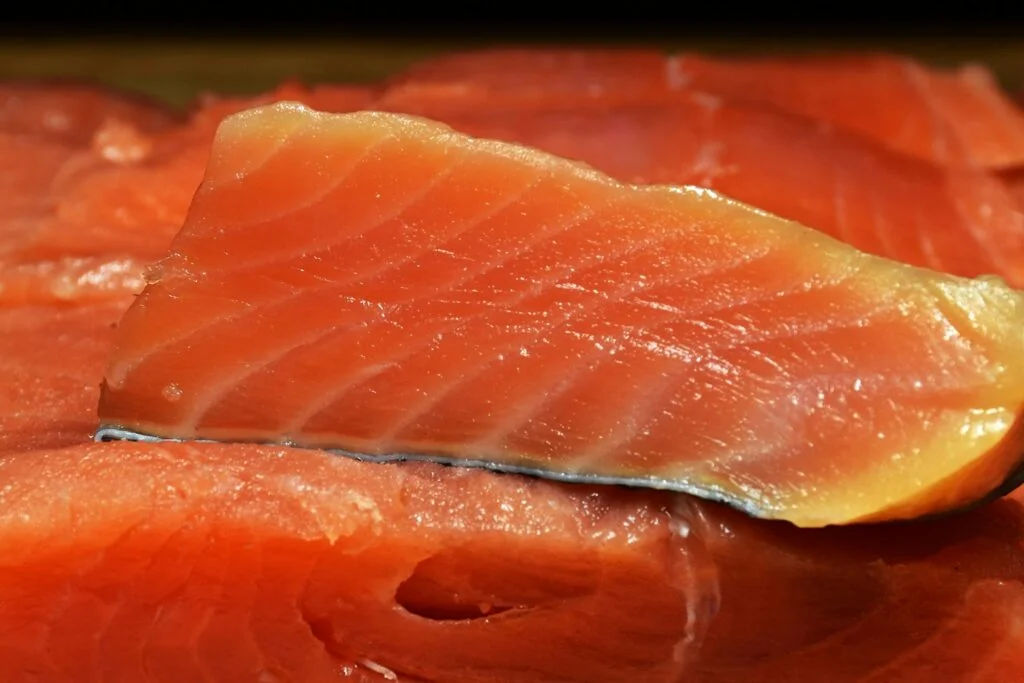
Wild salmon, trout, prawns, shrimp, crab, lobster, krill and salmon roe contain astaxanthin, because they eat algae or the small creatures that feed on it. Farmed salmon get it from colour added to their feed. The amount in a portion is far lower than a supplement dose, and varies a lot between wild and farmed fish.
Oily fish is worth eating for its omega-3 fats anyway: the NHS advises at least 2 portions of fish a week, 1 of them oily. Krill oil supplements contain small amounts of astaxanthin alongside EPA and DHA; see our omega-3 guide for krill oil vs fish oil. For a wider eating pattern, see the anti-inflammatory diet guide.
Astaxanthin side effects and who should avoid it
Astaxanthin is well tolerated by healthy adults at up to 8mg a day, and trials have reported few side effects. It hasn’t been tested properly in pregnancy, breastfeeding or young children, and studies on interactions with medicines are limited.
- Pregnancy and breastfeeding: there isn’t enough safety data, so avoid it unless your midwife or GP advises otherwise.
- Children under 14: the FSA’s 2026 assessment limits use to adults and teenagers aged 14 and over.
- Regular medicines: interaction studies are few, so check with your GP or pharmacist first, especially if you take blood thinners, blood pressure medicines or several medicines at once.
- Shellfish allergy: krill oil and shrimp-derived products carry a crustacean allergen warning. Algae astaxanthin doesn’t come from shellfish, but check the label.
- Stomach upset: take it with food; stop if it disagrees with you.
- Before surgery or a new diagnosis: tell your doctor about every supplement you take.
iIf you are taking astaxanthin for a health problem such as eye trouble, skin changes or tiredness, see your GP or optician first so the cause is found. Ongoing tiredness has many causes; our guide why am I always tired? covers the common ones.
How to choose an astaxanthin supplement
Choose an astaxanthin supplement that states the astaxanthin content in mg (not just the oleoresin weight), gives 8mg or less a day, names Haematococcus pluvialis as the source, and comes in an oil-based softgel. Avoid big “antioxidant” promises; no health claims are authorised for astaxanthin in Great Britain.
| Label check | What to look for |
|---|---|
| Amount | Astaxanthin in mg per daily dose, 8mg or less |
| Source | Haematococcus pluvialis algae oleoresin |
| Format | Softgel in oil (fat helps absorption) |
| Age line | Not for children under 14 |
| Allergens | Crustacean warning if from krill or shrimp |
| Claims | No disease or “anti-ageing” promises |
Comparing antioxidant supplements more widely? See our guides to resveratrol, coenzyme Q10, vitamin E, supplements for women over 40 and supplements for men over 50.
Next step
Magnesium Glycinate Sleep Complex
If what you really want is more energy after training or a long day, start with sleep, food and rest. For a supplement with authorised wording, Evopure’s Magnesium Glycinate Sleep Complex gives 290mg of magnesium (77% NRV) per 4.75g serving, plus 500mg glycine and 100mg L-theanine, in a berry drink powder. Magnesium contributes to a reduction of tiredness and fatigue and to normal muscle function.
Add Magnesium Glycinate Sleep Complex to bag
Subscribe and save 25% on your first order, then 20%. New to Evopure? Join our emails for 20% off a one-off first order. Free UK delivery over £45. If you take any regular medicines, check with your GP or pharmacist first. We don’t recommend our products during pregnancy or breastfeeding.
Subscribe £22.49One-off £29.99
View productAlready use CBD? Our Broad Spectrum CBD Oil is on the FSA public list. The FSA advises healthy adults to take no more than 10mg of CBD a day: about 0.2ml of the 500mg (0.1ml of the 1,000mg) gives 10mg. Adults only. Our Reishi Mushroom Adaptogenic Complex is a reishi hot chocolate powder and contains a little natural caffeine from cacao.
The FSA’s 10mg a day figure is precautionary advice rather than a legal limit, set while longer-term safety research continues. At Evopure we think it is a very cautious figure, and many adults use more. If you go above it, increase slowly, and check with your GP or pharmacist first if you take any medication.
Sources 16
- EFSA Panel on Nutrition, Novel Foods and Food Allergens (2020). Safety of astaxanthin for its use as a novel food in food supplements. EFSA Journal 18(2):5993.
- Food Standards Agency. Register of authorised novel foods: astaxanthin-rich oleoresin from Haematococcus pluvialis algae (NOVEL-17).
- FSA and Food Standards Scotland (2026). Assessment on astaxanthin-rich oleoresin from Haematococcus pluvialis algae used as a novel food (RP2213).
- Department of Health and Social Care. Great Britain nutrition and health claims (NHC) register. GOV.UK.
- NHS. Fish and shellfish.
- Ambati RR et al (2014). Astaxanthin: sources, extraction, stability, biological activities and its commercial applications. Marine Drugs.
- Brendler T, Williamson EM (2019). Astaxanthin: how much is too much? A safety review. Phytotherapy Research.
- Ng QX et al (2021). Effects of astaxanthin supplementation on skin health: a systematic review of clinical studies. Journal of Dietary Supplements.
- Ito N et al (2018). The protective role of astaxanthin for UV-induced skin deterioration in healthy people. Nutrients. Authors employed by the manufacturer.
- Kizawa Y et al (2021). Effects of anthocyanin, astaxanthin, and lutein on eye functions. Journal of Clinical Biochemistry and Nutrition. Company-sponsored.
- Hecht KA et al (2025). Astaxanthin improved acute and chronic digital eye strain in children. Advances in Therapy. Company-sponsored.
- Liu S et al (2026). The effects of astaxanthin supplementation on exercise recovery biomarkers and exercise performance: a systematic review and meta-analysis. Nutrients.
- Liu C et al (2024). Effects of astaxanthin supplementation on fatigue, motor function and cognition: a meta-analysis. Biological Research for Nursing.
- Ursoniu S et al (2015). Lipid profile and glucose changes after supplementation with astaxanthin: a systematic review and meta-analysis. Archives of Medical Science.
- Mercke Odeberg J et al (2003). Oral bioavailability of the antioxidant astaxanthin in humans is enhanced by incorporation of lipid based formulations. European Journal of Pharmaceutical Sciences.
- FSA. Cannabidiol (CBD) guidance.
This guide is general information, not medical advice. Evopure doesn’t sell astaxanthin; we make CBD oils and capsules, a magnesium drink powder and a reishi hot chocolate.